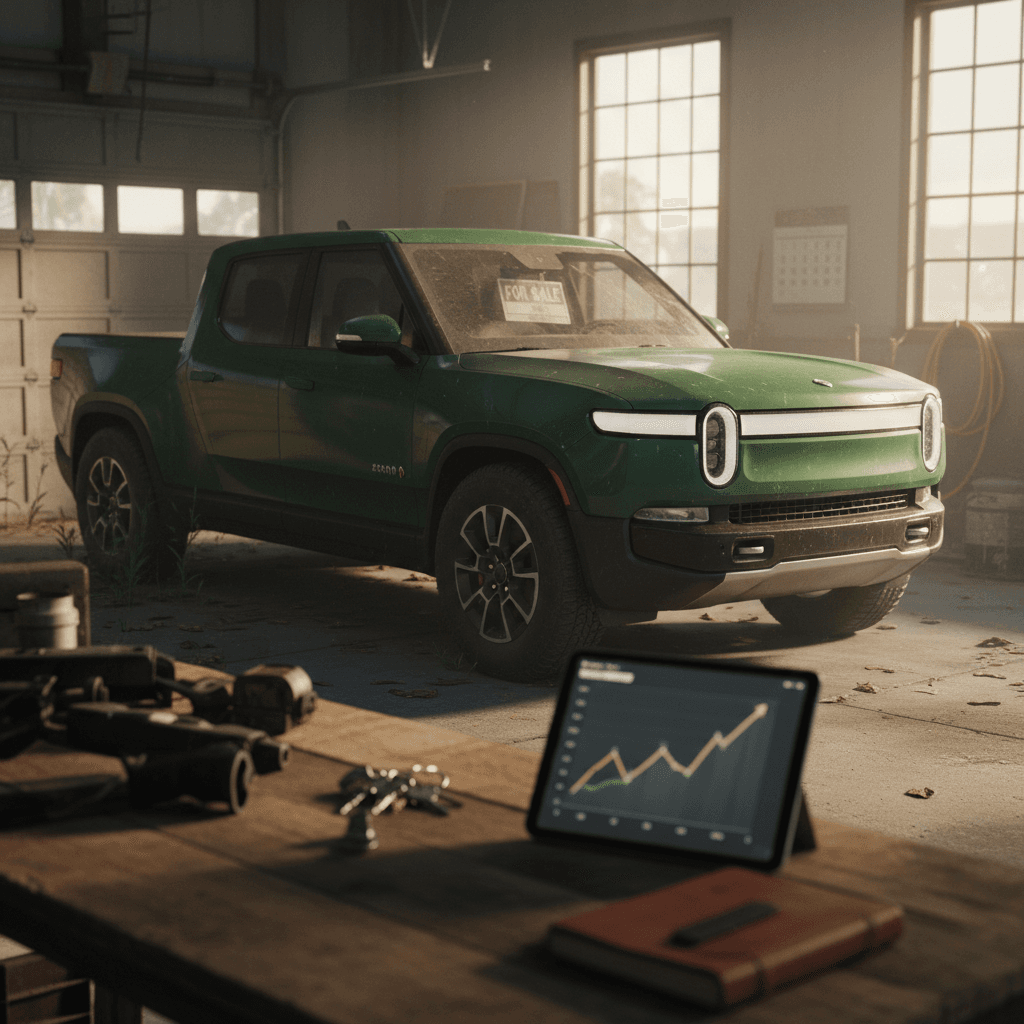
If you’re asking yourself, “What is my Rivian R1T worth?” you’re not alone. Early Rivian buyers are starting to sell or trade their trucks, and the used market is finally mature enough that you can get a data-driven answer instead of guesswork. Your exact number depends on year, mileage, battery, configuration and condition, but there are some clear patterns you can lean on.
Quick snapshot
How much is my Rivian R1T worth today?
The cleanest way to think about what your Rivian R1T is worth is to anchor it to today’s new MSRP, then adjust for depreciation, mileage, options and condition. For context, a 2025–2026 R1T Dual Motor Standard battery has a sticker price around the low-$70,000s, and heavily optioned Tri Motor Max trucks can crest the $100,000 mark.
Rivian R1T value at a glance (early 2026)
Those numbers are directional, not a quote. They do tell you two important things: first, your R1T has probably held value better than the average EV; second, there’s still meaningful depreciation baked into any trade‑in or sale, so the details of your specific truck really matter.
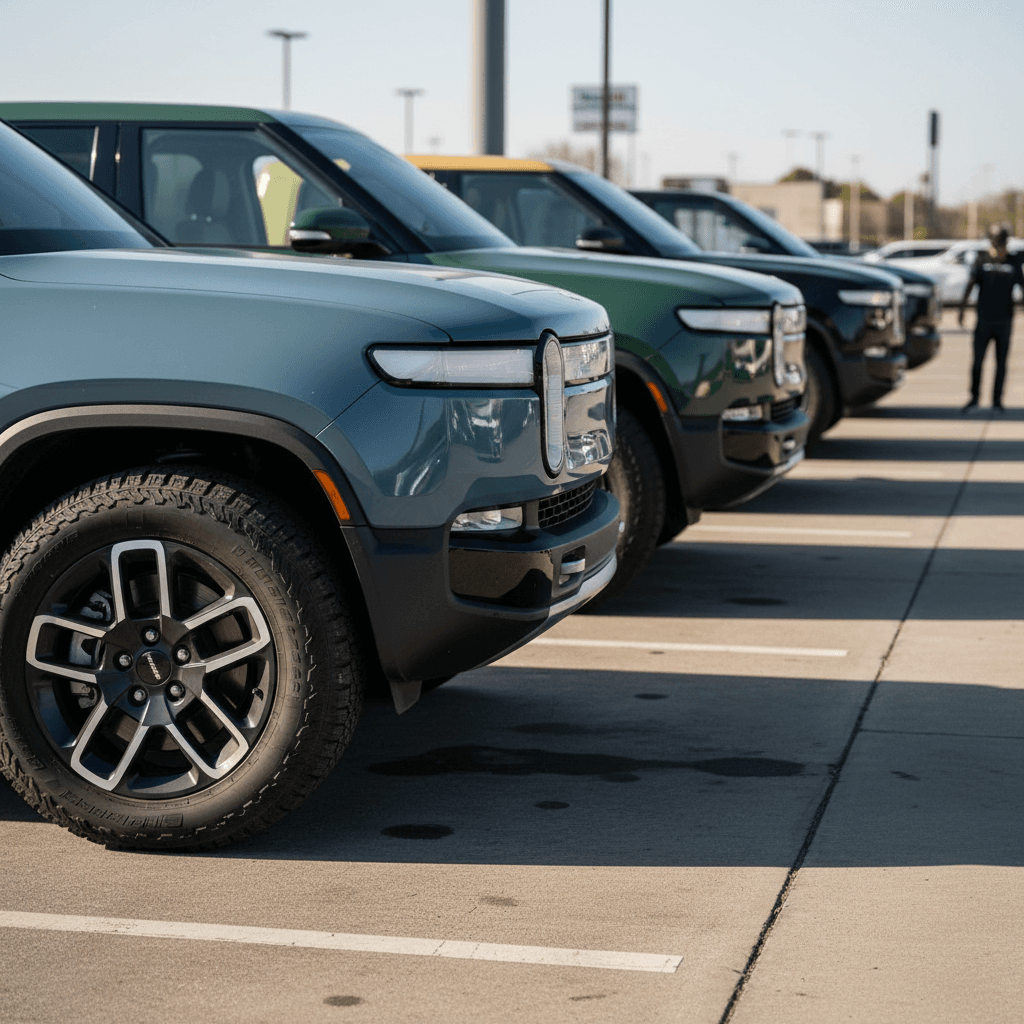
How Rivian R1T values compare to other EVs
Big picture, EVs have taken a depreciation hit over the last couple of years. Analyses of the U.S. market in 2025 found that electric vehicles depreciate roughly 30% faster than gas cars over five years, shedding nearly 59% of their original value versus about 46% for the average vehicle. Trucks tend to do a little better than sedans and crossovers, and the R1T in particular has held up relatively well.
R1T is a relative bright spot
Rivian R1T
- Strong enthusiasm among early adopters and adventure‑focused buyers.
- Limited supply keeps prices firmer than mass‑market EVs.
- Real‑world capability (towing, off‑road, performance) supports demand.
Typical EV sedan/SUV
- Much heavier discounting on the new side hurts used values.
- Model cycles and software features moving quickly.
- Fleet and rental off‑loads can flood supply in some segments.
Key factors that determine your R1T’s value
Used values are never one‑size‑fits‑all. Two Rivian R1Ts that look nearly identical in photos can be worth wildly different amounts once you dig into the details. These are the levers that matter most when someone prices your truck, whether it’s a dealer, an online buyer, or a private‑party shopper.
What moves R1T value up or down?
Think in terms of year, spec, miles, condition and confidence.
Model year & generation
Battery pack & motor setup
Mileage & usage
Condition & history
Options & packages
Battery & warranty peace of mind
Don’t ignore software and OTA updates
Real-world value ranges by year and trim
Every VIN is different, but you can ballpark your Rivian R1T’s worth by looking at its age, configuration, and miles relative to new‑truck MSRP. Think of these as directional guardrails in the U.S. market as of early 2026, your local conditions, options list, and battery health can shift you above or below.
Approximate Rivian R1T value ranges (early 2026)
Assumes clean history and average U.S. mileage for the year; high‑spec trucks with low miles and verified battery health can sit at or above the top end of the range.
| Model year & type | Typical miles | Trade‑in ballpark | Private‑party ballpark |
|---|---|---|---|
| 2022 Dual Motor / Large pack | 30k–45k | $48,000–$58,000 | $52,000–$62,000 |
| 2023 Dual Motor / Large or Max | 20k–35k | $55,000–$68,000 | $60,000–$73,000 |
| 2024 Dual Motor / Max, well‑optioned | 10k–25k | $60,000–$75,000 | $65,000–$80,000 |
| 2025 Dual or Tri Motor, low miles | 5k–15k | $65,000–$82,000 | $70,000–$88,000 |
| Launch‑edition, heavily optioned, very low miles | <10k | Highly case‑by‑case | Sometimes above new‑equivalent MSRP if spec is rare |
These are estimates, not offers. Use them as a starting point before you get live bids.
Why ranges matter more than single numbers
How battery health impacts R1T resale value
With an electric truck, the battery pack is the single most expensive component, and it’s what makes or breaks real‑world usability. Buyers know this, which is why perceived battery risk is baked into every used EV price. For a Rivian R1T, that means the story your charging habits and mileage tell really matters.
- If your truck still delivers close to its original EPA range in your usual driving, that’s a strong signal to buyers.
- Visible degradation or range loss can push your R1T toward the lower end of typical value ranges, especially for high‑miles trucks.
- Documented fast‑charging‑only usage (DC fast 100% of the time) may raise eyebrows, even if the pack still looks healthy.
- A proper battery diagnostic, ideally with cell‑level insight rather than just dash‑display range, goes a long way toward reassuring buyers.
How Recharged helps on the battery question
Ready to find your next EV?
Browse VehiclesWays to find out what your R1T is worth
Once you understand the big levers, year, spec, miles, condition, battery health, the next step is getting real numbers. The smartest approach is to triangulate: use pricing tools, look at actual listings, and collect a few offers. Here’s how to do that without spending your whole weekend refreshing browser tabs.
Three ways to get a real R1T value
Use multiple sources so you’re not anchored to a single lowball (or overly optimistic) number.
1. Online valuation tools
2. Market comps on listing sites
3. Live offers from buyers
Five‑step checklist to sanity‑check any offer
1. Compare to new MSRP
Look up current pricing for a similarly equipped new R1T. If an offer implies your nearly new, low‑mile truck has lost 40–50% of its value already, that’s a red flag.
2. Adjust for mileage and condition
Benchmark against a "typical" truck (say, 12,000–15,000 miles/year). Add value if yours is cleaner or lower‑mileage, subtract if it’s heavily used or has accident history.
3. Factor in tax credit differences
New‑vehicle incentives and tax credits change over time. In some cases, a used R1T can be more attractive if buyers don’t qualify for new‑car credits, or less attractive if they do.
4. Account for options that matter
Max Pack, performance upgrades, off‑road packages and popular colors can justify a premium, but not always dollar‑for‑dollar. Confirm that the buyer is actually adding value for these.
5. Don’t ignore fees and convenience
A slightly lower headline price with free pickup, no reconditioning hassles, and faster payment can be a better real‑world outcome than chasing the very top dollar privately.
How to get top dollar for your Rivian R1T
You can’t control macro EV pricing trends, but you can absolutely control how your particular R1T shows up in the market. The goal is simple: remove reasons for a buyer to discount your truck, and highlight everything that sets it apart. That’s true whether you list it yourself, trade it at a Rivian store, or work with a platform like Recharged.
Practical moves that meaningfully boost value
These are boring but effective ways to close the gap between "wholesale" and "retail" pricing.
Detail like a pro
Fix small issues up front
Organize your records
Tell the right story in photos
Lean on EV‑specific expertise
Selling options: dealer trade-in vs. marketplaces vs. Recharged
Once you have a sense of what your Rivian R1T is worth, you still have to decide *how* to turn it into cash (or equity for your next EV). Each path has its own economics and hassle factor. The "best" choice depends on whether you care more about squeezing every last dollar out, or having someone else do the legwork.
Where to sell your Rivian R1T: pros and cons
A side‑by‑side look at the main channels Rivian owners use today.
| Sales channel | Typical price vs. market | Effort & time | Key pros | Key cons |
|---|---|---|---|---|
| Franchise or local dealer trade‑in | Lowest (wholesale‑oriented) | Very low | Fast, simple, can roll equity into next purchase | Often thousands below what the truck could fetch elsewhere |
| DIY private‑party sale | Highest potential | High | Maximum control over price and buyer, no middleman margin | Takes time, requires marketing and screening buyers, may involve test‑drive risk |
| Generalist online car‑buying site | Mid‑low | Low | Easy online quotes and pickup, faster than private sale | Conservative on newer EVs they don’t fully understand yet |
| Recharged instant offer or consignment | Mid‑high | Low‑mid | EV‑specialist pricing, battery‑health‑driven valuations, nationwide EV‑focused audience | You may get slightly less than a unicorn private‑party sale, but with far less friction |
You’re trading off time, hassle, and risk against price. There’s no universal right answer, only what’s right for you.
How Recharged fits into your options
- Expert EV valuation that accounts for options and battery health, not just book values.
- A Recharged Score Report that helps justify a strong asking price to the next owner.
- Nationwide marketing, digital paperwork, and logistics handled for you, with optional pickup.
Rivian R1T value FAQs
Frequently asked questions about R1T value
Bottom line: what your R1T is really worth
Your Rivian R1T’s true value isn’t a single magic number, it’s a range shaped by model year, spec, mileage, condition, battery health, and how you choose to sell. The encouraging news is that, so far, the R1T has weathered the EV depreciation storm better than many peers, thanks to its capability and a still‑enthusiastic buyer base.
If you’re serious about selling, start by benchmarking against new MSRP, get a couple of online valuations, then collect real offers. From there you can decide whether a quick, low‑friction sale through an EV‑focused buyer like Recharged or a more involved private‑party listing is right for you. Either way, going in with data, and a clear story about your truck’s condition and battery health, will put you in a much stronger position when you ask, “What is my Rivian R1T worth?”