If you’re asking yourself, “What is my Mercedes EQB worth?” you’re not alone. The compact luxury EV SUV segment is shifting fast, and EQB prices have been adjusting with it. The good news: with the right data and a little prep, you can get a realistic value for your EQB and position it to sell quickly without leaving money on the table.
Quick snapshot of current EQB values
How much is my Mercedes EQB worth right now?
Let’s ground this in what the market is actually doing today. The Mercedes EQB entered the U.S. for the 2022 model year, so every EQB on the road is still relatively new. That helps preserve value, but EV price cuts across the industry have put pressure on used values too.
Mercedes EQB value at a glance (early 2026)
Those are market averages. Your EQB’s number will move up or down based on things like model year, mileage, trim (250+, 300 4MATIC, 350 4MATIC), options, color, accident history, and, critically for an EV, battery health.
Start with a ballpark, then refine
Key factors that drive Mercedes EQB value
What moves your EQB price up or down
Nine levers that explain 90% of your value
Model year
Mileage
Trim level
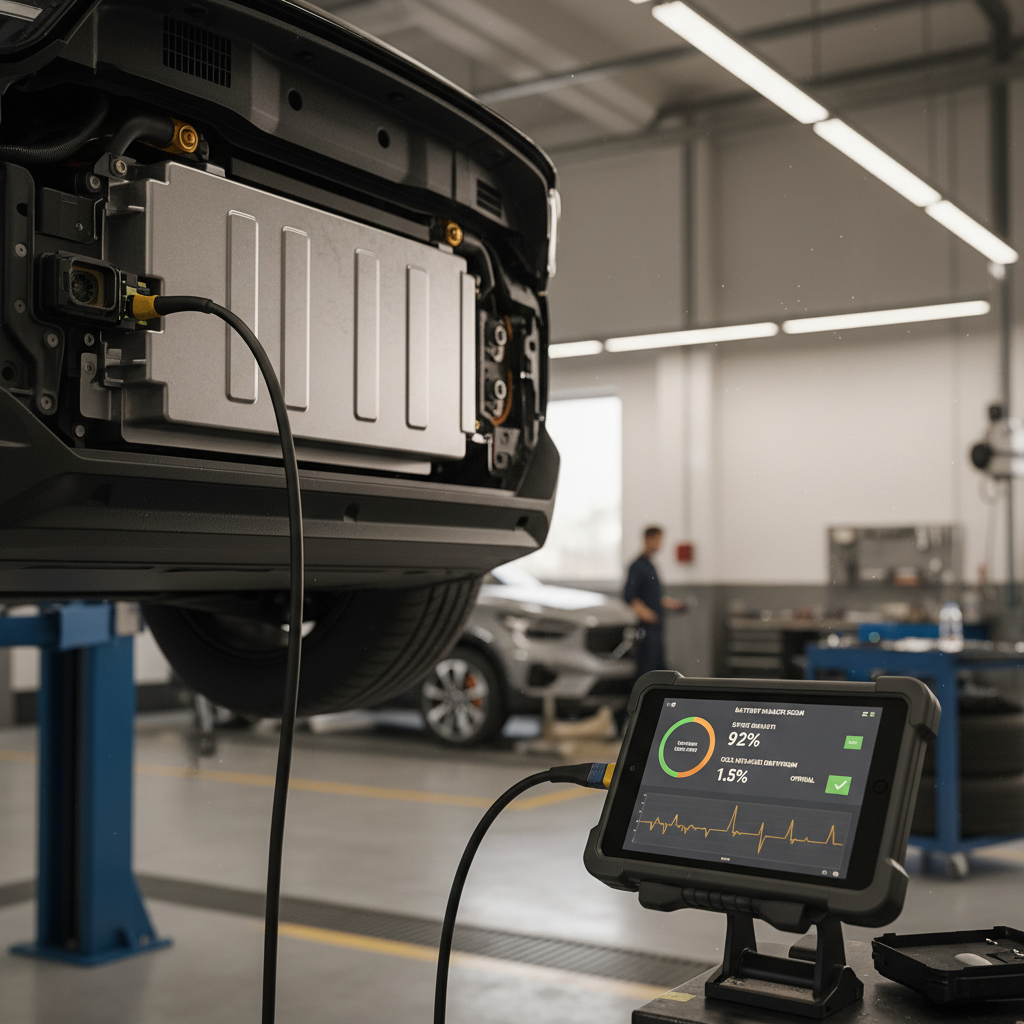
Battery health
Accident history
Color & options
Location
Market conditions
Financing & demand
Don’t ignore incentive hangovers
EQB depreciation: what to expect by year
Depreciation, the rate at which your EQB loses value over time, is where many owners get surprised. Luxury EVs can drop faster than comparable gas SUVs early on, then level out. Data from cost‑to‑own studies of the EQB show roughly $6,000 per year in average depreciation over the first five years of ownership for a new example, with the steepest drop in the first one to two years.
Illustrative Mercedes EQB depreciation curve
Approximate retention vs. original MSRP in typical conditions. Your numbers will vary by trim, mileage and condition.
| Age of EQB | Typical mileage | Approx. value vs. original MSRP | What that looks like in practice |
|---|---|---|---|
| 1 year old | ~12,000 mi | ~80–85% | A 2025 EQB that listed new around $55k might still sell in the mid‑$40,000s if it’s clean and low‑mile. |
| 2 years old | ~24,000 mi | ~70–75% | A 2024 EQB with average miles may live in the high‑$30,000s to low‑$40,000s range. |
| 3 years old | ~36,000 mi | ~60–65% | Early 2023 models with typical use often drop into the low‑ to mid‑$30,000s. |
| 4–5 years old | ~48–60,000 mi | ~50–60% | As warranties age and range anxiety around degradation appears, pricing tends to flatten in the mid‑$20,000s to low‑$30,000s. |
Use this as a directional guide, not a quote. Live market listings and battery health tell the real story.
EV vs. gas depreciation
Trim, battery and options: how they change your number
1. Trim level (250+ vs. 300 vs. 350)
The EQB lineup in the U.S. centers on three main trims: EQB 250+ (single‑motor FWD), EQB 300 4MATIC, and EQB 350 4MATIC. When new, the 300 and 350 commanded several thousand dollars more than the 250+ thanks to all‑wheel drive and stronger performance. In the used market, they still typically fetch a premium, especially in snow states, provided range and condition are comparable.
If you’re driving a 300 or 350 4MATIC, expect your EQB to sit toward the upper end of any valuation range you see online, all else equal.
2. Battery size & efficiency
All EQBs use a similar battery pack architecture, but real‑world range can differ by trim and wheel size. Shoppers care less about the exact kWh number and more about, "How far will this actually go on a charge today?" If your EQB still returns range close to its original EPA rating in normal driving, you’re in better shape than an identical trim that’s already lost a noticeable chunk of usable range.
Having documentation, dealer service records, a battery health report, or screenshots of consistent range at certain state‑of‑charge levels, can justify stronger offers.
Options and packages matter too, but usually as tie‑breakers. A panoramic roof, premium audio, driver‑assist packages and attractive wheel designs will help your EQB stand out in search results, but they rarely add dollar‑for‑dollar value compared with what you paid originally.
How to get a real‑world EQB value in 10 minutes
Quick process to answer “What is my Mercedes EQB worth?”
1. Gather the basics
Write down your EQB’s <strong>model year, trim, mileage, VIN, options and ZIP code</strong>. These are the inputs most pricing tools and buyers will ask for first.
2. Check 2–3 pricing tools
Run your info through at least two online valuation tools (for example, a trade‑in estimator and a private‑party tool). Note the <strong>trade‑in, private‑party and retail</strong> ranges for your specific trim.
3. Scan live listings
Search major listing sites for Mercedes EQBs that match your year, trim and mileage. Filter to your region and sort by price. This tells you what real sellers are actually asking, and how your car compares.
4. Adjust for condition
Be honest about your EQB’s condition. Cosmetic dings, worn tires, curb‑rashed wheels and cabin wear all push you toward the lower end of the range. Fresh detailing, good tires and documented maintenance support the higher end.
5. Factor in battery and warranty
If you have proof of strong battery health or remaining factory warranty coverage, you can comfortably lean higher in your range. If not, or if range has declined more than expected, consider staying conservative.
6. Decide on your selling channel
Your EQB is worth different amounts depending on whether you <strong>trade it in, sell it yourself, or use a specialist EV marketplace</strong> like Recharged. Pick the path that fits your timeline and risk tolerance.
Where Recharged fits in
Ready to find your next EV?
Browse VehiclesPricing cheat sheet: trade‑in vs. private sale vs. marketplaces
What your EQB is "worth" depends on how you sell it
Use this high‑level comparison to calibrate your expectations before you start taking offers.
| Selling channel | Typical price level vs. market | Pros | Cons |
|---|---|---|---|
| Dealer trade‑in | Lowest (often 10–20% under private party) | Fastest and easiest, potential tax savings when rolling into another purchase. | You sacrifice value for convenience; dealers price in reconditioning, margin and risk. |
| Private‑party sale | Highest headline price | Maximum control over price, widest spread of potential buyers. | Requires marketing, screening buyers, meeting strangers and handling paperwork. |
| General online car buyers | Mid‑range | Quick appraisal, nationwide offers, easy logistics. | Prices can be conservative on newer or niche EVs if their data is thin. |
| Specialist EV marketplace (like Recharged) | Upper‑mid, closer to "fair retail" | EV‑savvy buyers, battery health verified, expert help with pricing and marketing. | Not every region is covered; process can take a bit longer than an instant trade‑in. |
Illustrative only, actual numbers depend on your specific EQB and local market.
How battery health can make or break your EQB price
With gas SUVs, buyers obsess over mileage and maintenance. With an EQB, those still matter, but usable range and battery health sit right alongside them. Two EQBs with the same odometer reading can carry very different values if one still gets close to its original range on a full charge and the other struggles to hit a comfortable highway number.
- Noticeable range loss (for example, needing a charge much sooner on familiar routes) can spook buyers and push offers lower.
- Dashboard warnings, DC fast‑charging throttling or battery‑related service history will all get attention during serious negotiations.
- Conversely, evidence of gentle charging habits, frequent Level 2 charging, limited DC fast charging, and avoiding regular 100% charges, can reassure buyers.
Use data, not just promises
7 tips to increase what your Mercedes EQB is worth
Practical moves that can add real dollars
1. Time your sale around payments & warranty
If you’re near the end of a lease or major warranty milestone, selling a few months earlier can keep your EQB in a more desirable window for buyers.
2. Get a pre‑sale inspection
A clean bill of health from a trusted shop, or a specialist EV report like the Recharged Score, reduces uncertainty. Fewer unknowns equals stronger offers.
3. Fix low‑hanging cosmetic issues
Touch up curb‑rashed wheels, fix cheap trim pieces, and handle obvious paintless dent‑repair items. These relatively small expenses can support a higher asking price and faster sale.
4. Refresh tires and brakes if they’re borderline
If your tires are nearly done or brakes are close to replacement, buyers will mentally subtract that cost. Replacing them can put your EQB at the top of its price bracket.
5. Detail the EV, inside and out
Professional detailing, especially steam cleaning and odor removal, matters a lot in a family‑oriented SUV like the EQB. Clean cars photograph better and feel better on test drives.
6. Organize records and charging history
Gather service receipts, software update records, and any charging logs you have. A neat folder (or PDF) of documentation is a quiet but powerful value signal.
7. Use high‑quality photos and honest descriptions
Whatever channel you pick, showcase your EQB with bright, clear photos and a description that mentions both features and flaws. Serious buyers respect transparency.
What drags EQB values down fast
Is now a good time to sell a Mercedes EQB?
In early 2026, the EQB sits in a mixed but workable spot. On one hand, broader EV price softness and aggressive discounting on new models have pulled used values down from their peaks. On the other, the EQB remains one of the more practical compact luxury EV SUVs, and Mercedes has scaled back other EQ models in the U.S., which helps focus demand on the ones that remain.
Reasons to consider selling now
- Values are still supported by relatively low total EQB volume on the road.
- Battery and tech feel current compared with first‑wave EVs, keeping shopper interest strong.
- You can leverage remaining warranty coverage as a selling point if you move before major expirations.
Reasons you might wait
- If you’re upside‑down on a loan, a few more payments may help your equity catch up.
- In some markets, seasonal demand (for example, winter for AWD models) can nudge prices up slightly.
- If you’re replacing it with another EV, waiting for specific incentives or employer programs might be worthwhile.
Ultimately, the right time to sell is when your personal math lines up: you’ve got a clear idea of what your EQB is worth, you know what you’re replacing it with, and you’ve chosen a selling channel that balances convenience with value.
FAQ: Mercedes EQB value and selling questions
Frequently asked questions about Mercedes EQB values
When you ask, “What is my Mercedes EQB worth?” you’re really asking how your specific SUV stacks up against a fast‑moving EV market. By looking beyond a single online estimate, factoring in trim, mileage, battery health, condition and the way you choose to sell, you can land on a realistic number and a strategy to reach it. If you’d like EV‑specialist help with valuation, battery diagnostics and finding the right buyer, Recharged is set up to make that process simple, transparent and on your terms.