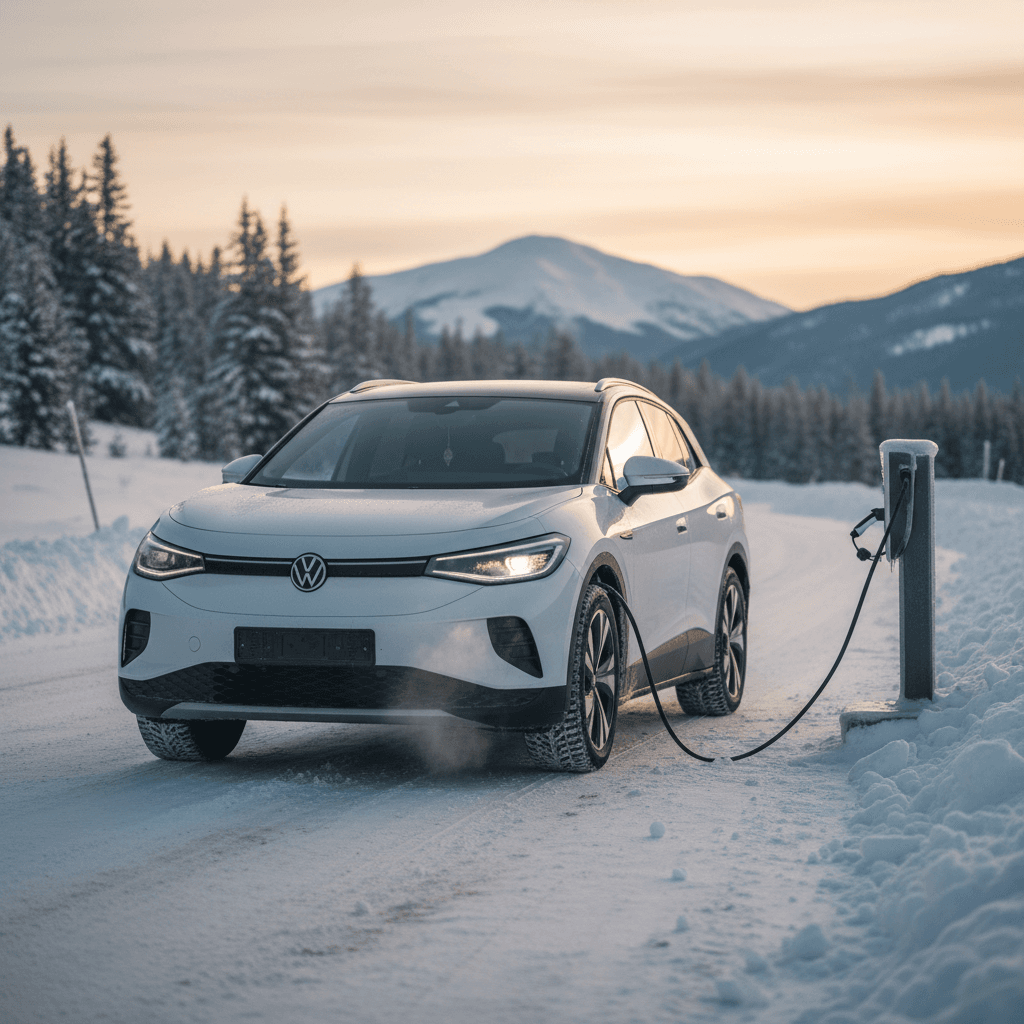
If you drive a VW ID.4 without a heat pump, winter can feel like a rude awakening. The EPA sticker promises over 240 miles, but once the temperature drops, your range readout shrinks fast, especially if you like a warm cabin. Let’s walk through what you can realistically expect from VW ID.4 winter range without a heat pump, why it happens, and what you can do to stay comfortable without constantly hunting for a charger.
Quick context
Overview: VW ID.4 winter range without a heat pump
Cold weather hits every EV’s range, but the VW ID.4 feels it more when it relies on a resistive heater instead of a heat pump. The battery has to do double duty: keep itself in a comfortable temperature window and power a relatively energy-hungry cabin heater. The result is a noticeable drop in available miles, especially on short trips and at highway speeds.
VW ID.4 winter range at a glance (without heat pump)
Important range reality check
How much winter range loss to expect in a VW ID.4 without a heat pump
Real-world owners of the VW ID.4 without a heat pump commonly report 20–40% range loss in cold weather, depending on temperature, speed, and how you use cabin heat. That’s a big spread, so it helps to anchor it to some rough, conservative expectations.
Approximate VW ID.4 winter range without a heat pump
Illustrative estimates based on typical owner experiences in the U.S. Your results will vary by speed, wind, elevation, tires, and driving style.
| Model / Battery | EPA Rated Range* | Mild Weather (50–60°F) | Cold (20–30°F) | Very Cold (0–15°F) |
|---|---|---|---|---|
| ID.4 Standard / 62 kWh (smaller pack) | ~209 mi | 170–180 mi | 125–150 mi | 100–130 mi |
| ID.4 Pro / 82 kWh RWD | ~275 mi | 230–250 mi | 165–210 mi | 140–180 mi |
| ID.4 AWD Pro / 82 kWh | ~255 mi | 210–230 mi | 160–200 mi | 135–175 mi |
Assumes a healthy battery and normal highway/commuter driving with cabin heat on.
About these numbers
If you’re used to gas cars where winter just means slightly worse fuel economy, this can feel dramatic. But for an EV, a 30% winter hit is frustratingly normal. The question isn’t “Can I stop this entirely?” but rather “How do I manage it so it doesn’t manage me?”
Why cold weather hurts VW ID.4 range
To make sense of the VW ID.4’s winter range without a heat pump, it helps to separate what’s happening in the battery from what’s happening in the cabin.
Two big winter energy drains
The battery chemistry and your comfort are at odds on cold mornings.
1. Cold battery chemistry
EV batteries are happiest in a moderate temperature range. In the cold:
- The chemical reactions inside the cells slow down.
- Internal resistance increases, so you lose more energy as heat.
- The car may limit power and charging speed to protect the pack.
The result: you get fewer usable miles per kWh, especially until the pack warms up.
2. Cabin heating load
Your VW ID.4 has to warm a big glass-and-metal box from freezing to comfortable. Without a heat pump, it uses a resistive heater, basically an electric space heater on wheels.
- At cold start, the heater can draw several kW.
- Short trips never give the battery a chance to warm up efficiently.
- Cranking the cabin to 75°F+ magnifies the effect.
Comfort is non‑negotiable, but it comes straight out of your range budget.
Think in kW, not just miles
Heat pump vs. resistive heat in the ID.4: what actually changes
On paper, the VW ID.4 with a heat pump simply uses energy more efficiently to warm the cabin. In practice, that translates into noticeably better winter efficiency, especially on longer drives in moderate cold. But it’s not magic, and it doesn’t erase winter penalties entirely.
Without a heat pump (resistive only)
- Cabin heat is created by passing electricity through heating elements.
- Efficiency is roughly fixed, more heat equals more power draw.
- On cold starts, the heater can be one of the biggest energy consumers.
- Short city drives can feel brutally inefficient in winter.
With a heat pump
- Works like a reversible air conditioner, moving heat instead of just creating it.
- Can deliver more heat per kWh than a resistive system in many conditions.
- Biggest benefits in the “everyday cold” range (20–40°F).
- Still loses some efficiency in extreme cold and at highway speeds.
What this means for you
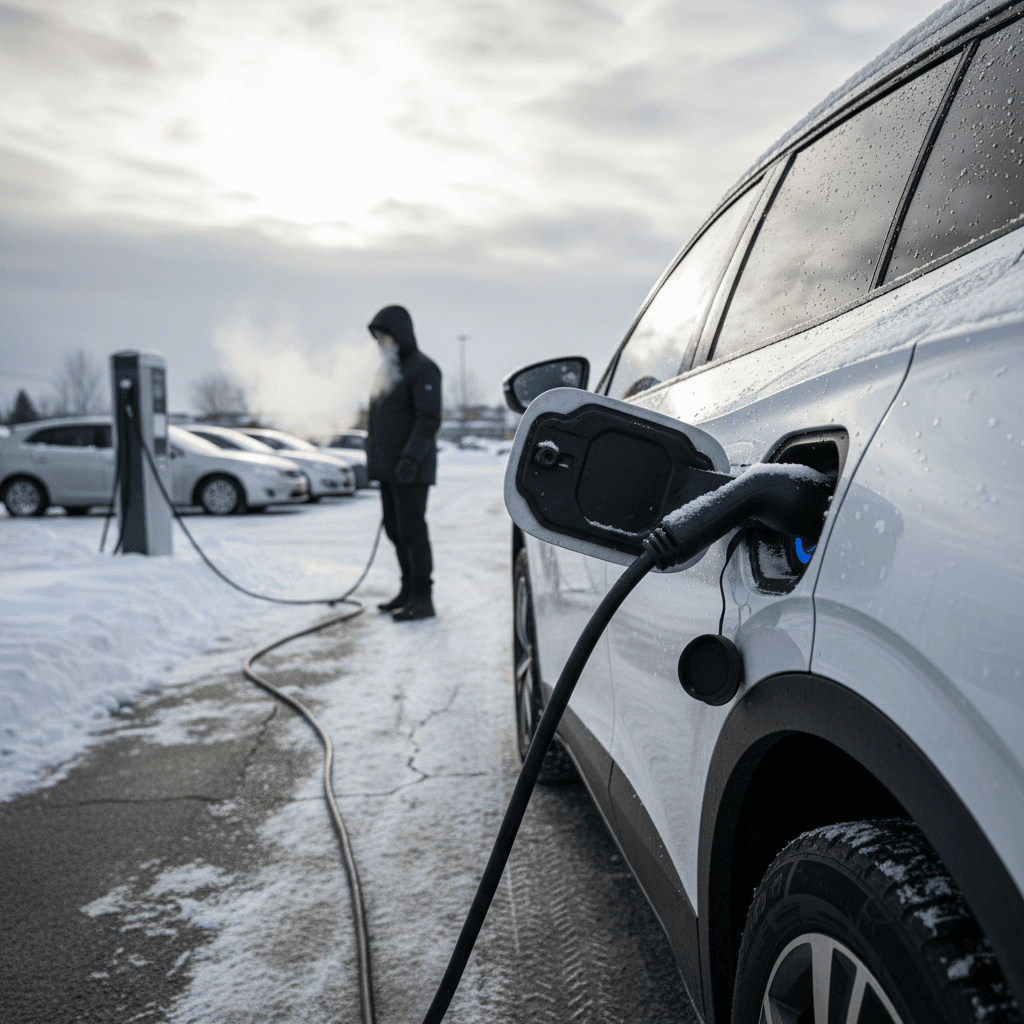
Real-world driving scenarios & winter trip planning
Range anxiety usually doesn’t show up on a spec sheet, it shows up on a dark, cold evening when the car says 60 miles and you’ve got 45 to go. Let’s translate winter behavior into a few common VW ID.4 use cases.
- Daily suburban commute (round-trip 40–60 miles): Even with a 30–40% winter range hit and no heat pump, most ID.4 trims can handle this easily, especially if you charge at home overnight.
- Weekend highway visit (150–180 miles each way): Now you’re in planning territory. In cold weather, assume you’ll need at least one DC fast charge each way and don’t plan around a 0% arrival, aim to arrive with 10–20% left.
- Ski trip or mountain driving: Climbing grades, cold temps, and roof boxes all pile on. Build in more buffer, precondition while plugged in, and plan more frequent, but shorter, charging stops.
Beware of “first leg shock”
9 ways to improve ID.4 winter range without a heat pump
You can’t change physics, but you can stack the deck in your favor. Here are practical, ID.4‑specific habits that meaningfully improve winter range without making you miserable.
Practical winter range checklist for VW ID.4 owners
1. Precondition while plugged in
Use scheduled departure or the app to <strong>warm the cabin and battery while the car is still charging</strong>. That way, a chunk of the heating load comes from the grid, not your battery.
2. Start with a full, or full enough, charge
On truly cold days, give yourself more buffer. For longer drives, charging to 90–100% occasionally in winter is reasonable if you’re going to use that energy soon after.
3. Use seat and steering wheel heaters first
Seat and wheel heaters sip energy compared with blasting cabin heat. You can often keep the cabin a few degrees cooler while still feeling comfortable.
4. Dial back the set temperature
Dropping the climate control from, say, 74°F to 68–70°F can shave a meaningful chunk off power draw over a long drive.
5. Avoid lots of short, cold starts
If you can chain errands into one longer trip, you warm the pack once instead of starting from stone‑cold multiple times. That improves efficiency for the whole outing.
6. Check tire pressure regularly
Cold air drops tire pressure. Underinflated tires increase rolling resistance and hurt range. Set pressures to the recommended value when the tires are cold.
7. Use Eco mode when range matters
VW’s Eco modes can soften throttle response and tame HVAC use. When you’re stretching range, that gentle squeeze on power and heat is your friend.
8. Manage highway speeds
Aerodynamic drag climbs fast above 65 mph. In winter, a steady 65 can use much less energy than an eager 75, sometimes the difference between a relaxed and a nail‑biting arrival.
9. Keep your charging stops flexible
Instead of always charging to 100%, consider <strong>shorter, more frequent fast‑charge stops</strong>. It often keeps you in the battery’s sweet spot and reduces stress about a single long leg.
Build a “mental reserve”
Winter range vs. battery health: what’s normal and what’s not
It’s easy to mistake winter range loss for permanent battery degradation. In reality, they’re related but different issues.
Temporary winter effects
- Reduced range in cold is mostly a temperature issue, not a sign your pack is dying.
- As the battery and weather warm up, your range rebounds.
- Charge speeds at DC fast chargers are often slower until the pack warms.
Long-term battery health
- Measured over years and charged cycles, not a single season.
- Big swings in state of charge (always 0–100%) and constant fast charging matter more than a few cold winters.
- The VW ID.4’s battery management system works hard to protect the pack from abuse.
How to sanity‑check your battery
Considering a used VW ID.4 without a heat pump
If you’re shopping for a used VW ID.4, you’ll quickly notice that not every car has a heat pump, and that option may or may not matter to you depending on where you live. The good news: a well‑priced ID.4 without a heat pump can be an excellent value, especially if you understand its winter quirks.
Pros and cons of a used ID.4 without a heat pump
How to decide if it fits your climate and driving style.
Potentially lower purchase price
Cars without a heat pump can sometimes be priced a bit lower than comparable models with the option, especially in warmer regions where buyers don’t prioritize it.
Mild-climate friendly
If you live somewhere where winters are brief and rarely dip below freezing, the lack of a heat pump is far less important than overall battery health and charging access.
Extra planning in cold climates
In northern states or Canada, plan for:
- More noticeable winter range loss.
- More reliance on preconditioning and smart driving habits.
- A bit more trip planning for long winter drives.
When you’re evaluating a specific used ID.4, look beyond the spec sheet. Ask about winter behavior, home charging, and real-world range. Tools like the Recharged Score battery health diagnostics can give you an objective view of the pack’s condition so you’re not guessing based on a single chilly test drive.
How Recharged can help
FAQ: VW ID.4 winter range without a heat pump
Common questions about VW ID.4 winter range
Key takeaways for VW ID.4 winter driving without a heat pump
A VW ID.4 without a heat pump isn’t a lost cause in cold weather, it’s just honest about physics. You’ll see a meaningful winter range hit, especially on short, cold starts and at highway speeds with the heater running. But with smart preconditioning, judicious use of seat and wheel heaters, and realistic trip planning, you can keep your drives comfortable and your range anxiety low.
If you’re shopping used, don’t let the absence of a heat pump automatically take an otherwise great ID.4 off your list. Focus on battery health, charging access, and your real daily needs. And if you’d like help matching the right EV to your climate and commute, Recharged’s EV specialists and battery‑health‑verified vehicles are built to take the guesswork out of going electric.