If you’re eyeing a VW ID. Buzz as the ultimate electric family hauler or camper, you’ve probably run into one big question: what’s the real‑world highway range? EPA and WLTP numbers look fine on paper, but long, fast interstate runs are where EV promises meet physics. Let’s look at what owners and testers are actually seeing from the VW ID. Buzz on the highway, and how to plan trips without white‑knuckle range anxiety.
Quick answer: highway range in one glance
VW ID. Buzz range basics: EPA, WLTP and battery sizes
Before talking about “VW ID Buzz real world range highway,” it helps to separate the official numbers from what actually happens at 70–75 mph.
Official VW ID. Buzz range ratings (U.S. & Europe)
How EPA and WLTP figures frame expectations before real‑world highway use.
| Market / version | Battery (usable) | Drivetrain | Official range rating | Test cycle |
|---|---|---|---|---|
| U.S. LWB RWD (Pro S / Pro S Plus) | ≈86 kWh | RWD | 234 miles EPA | EPA combined |
| U.S. LWB AWD 4Motion | ≈86 kWh | AWD | 231 miles EPA | EPA combined |
| EU SWB standard battery | ≈77–79 kWh | RWD | ~249–283 miles WLTP (version‑dependent) | WLTP mixed |
| EU LWB big battery | ≈85–86 kWh | RWD / AWD | ~281–293 miles WLTP (version‑dependent) | WLTP mixed |
Remember: these are mixed‑driving tests, not pure highway at 75 mph.
Those numbers are for mixed driving at moderate speeds, with a warm battery and gentle acceleration baked into the lab cycle. Real life at 75 mph, with luggage, kids, roof boxes or crosswinds, is a different story.
Don’t confuse WLTP with U.S. highway range
Real‑world highway range tests: What reviewers are seeing
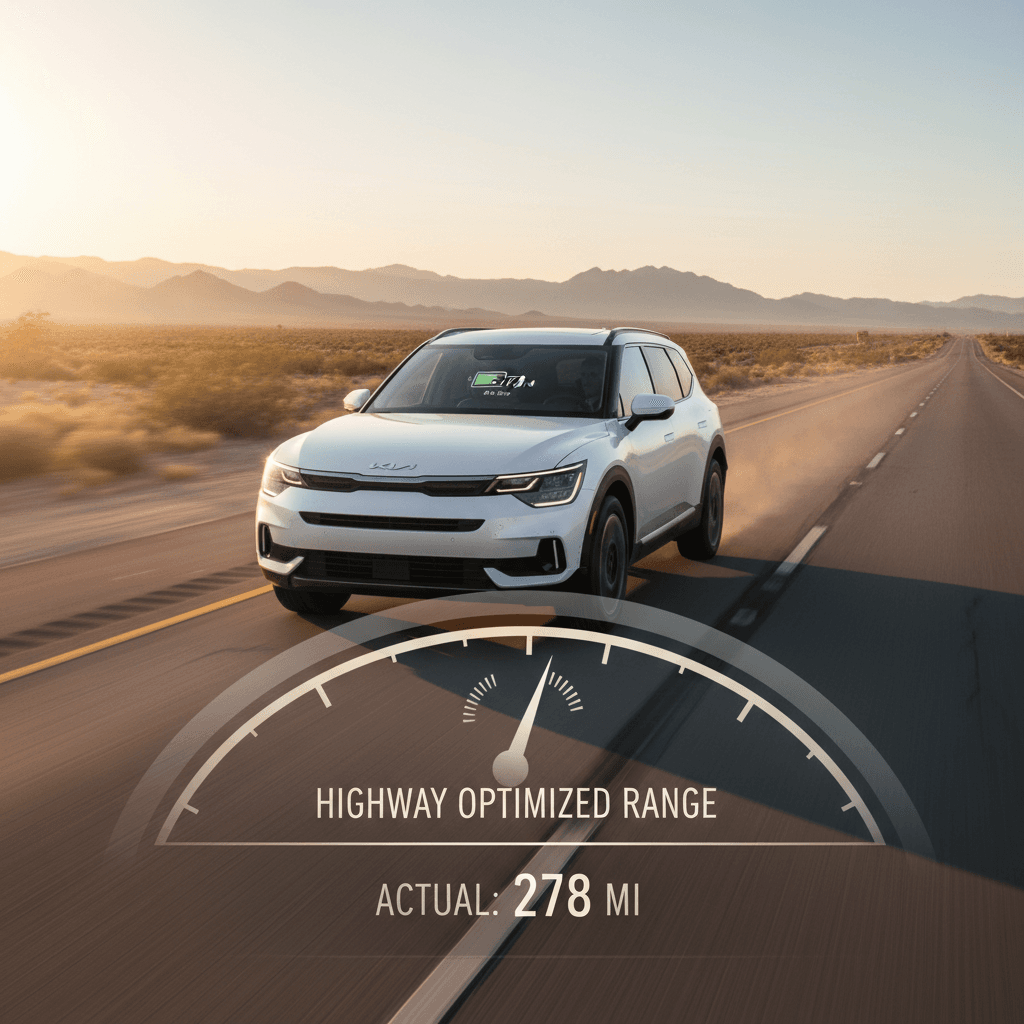
Independent testers have now put the ID. Buzz through standardized highway‑range routines, typically at a constant 70–75 mph. Those numbers are more useful for road‑trip planning than any official label.
VW ID. Buzz: summarized highway range test results
The exact numbers vary with temperature, grade, wind and how carefully the test driver holds speed. But a pattern emerges: the ID. Buzz’s highway range is heavily efficiency‑limited by its shape and weight, not its absolute battery size.
The Buzz is a brick, with charm
Why highway driving cuts VW ID. Buzz range
If you’ve owned a sleeker EV before, you may be surprised how quickly the ID. Buzz’s range drops once you hit interstate speeds. Three factors do most of the damage: aerodynamics, mass and climate control.
Three reasons highway range is lower than the sticker
Understanding these makes your "VW ID Buzz real world range highway" expectations much more realistic.
1. Aerodynamics
2. Weight
3. Climate & heating
Slow down for a big range boost
RWD vs AWD (4Motion) and GTX: Which ID. Buzz goes farther?
On paper, the rear‑drive ID. Buzz goes slightly farther than the AWD 4Motion variants. In the U.S., the difference is small, roughly 234 vs 231 miles EPA. In practice, the gap on the highway is modest but real, especially in bad weather.
RWD ID. Buzz (single motor)
The rear‑drive versions are the efficiency play:
- Lower drivetrain losses at cruise.
- Slightly lighter overall weight.
- EPA combined rating up to 234 miles in the U.S.
On a calm day at 70–72 mph, many owners and testers see 170–190 miles of realistic highway range from a full charge before they’re down to the last 5–10%.
AWD / GTX ID. Buzz (dual motor)
The dual‑motor AWD (4Motion) and GTX models trade a bit of range for traction and power:
- Slightly lower EPA or WLTP ratings.
- Extra motor and hardware add weight.
- More tempting to drive quickly, which hurts efficiency.
In real‑world highway testing around 75 mph, the AWD vans tend to land in the 160–190‑mile band depending on conditions.
Which is better for road trips?
Weather, load and speed: How much range you’ll actually see
Real‑world owners care less about lab cycles and more about questions like, “Can I do 160 miles at 75 mph with my family and luggage without sweating bullets?” Here’s how the big variables move the needle.
Typical VW ID. Buzz highway range by scenario
Approximate usable miles from 100% down to roughly 5–10% state of charge.
| Scenario (LWB battery) | Speed & conditions | Likely usable highway range |
|---|---|---|
| Mild day, RWD, light load | 70 mph, 60–70°F, little wind | ~180–200 miles |
| Mild day, AWD, family + gear | 72–75 mph, 60–70°F | ~165–190 miles |
| Cold winter trip, no heat pump | 70–75 mph, ~32°F, heater on | ~130–160 miles |
| Hot summer, AC blasting, roof box | 70–75 mph, 90°F, headwind | ~135–170 miles |
| Eco‑conscious driving, 65 mph | 65 mph, mild weather, no roof box | ~200–215 miles if you’re gentle |
These are directional examples, not guarantees, always leave a margin for weather and traffic.
Roof boxes and racks are range killers
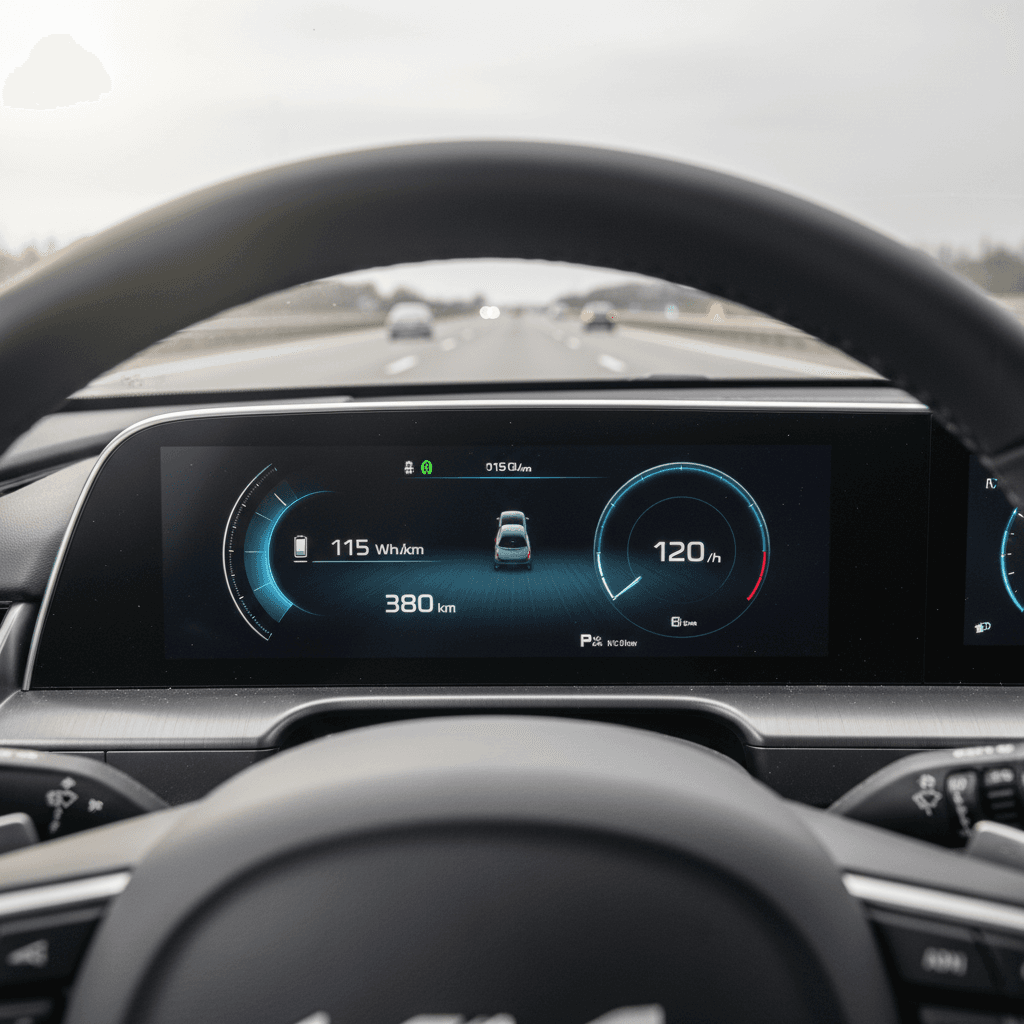
Planning road trips in a VW ID. Buzz
So how do you turn these numbers into a stress‑free road trip? The ID. Buzz’s range is merely adequate by 2026 standards, but its fast‑charging speeds and big battery make it a capable cruiser if you plan intelligently.
Road‑trip strategy: turning 180 miles of range into a great day
Four principles that matter more than squeezing every last mile from the pack.
1. Think in 120–150‑mile legs
2. Use the ID. Buzz’s DC fast‑charge strengths
3. Choose charger‑dense corridors
4. Arrive low, leave with enough
Highway trip checklist for ID. Buzz owners
Confirm your real consumption first
Before a big trip, do a short 30–50‑mile loop at your intended highway speed and note the kWh/100 mi or mi/kWh. That gives you a personalized baseline instead of relying on someone else’s test.
Plan chargers with redundancy
On long rural stretches, always have a backup fast charger or Level 2 site within your remaining range. Apps from Electrify America, PlugShare and A Better Routeplanner are useful companions here.
Precondition the battery before fast charging
Use the nav to route to a DC fast charger so the Buzz can warm or cool the pack en route. A properly preconditioned battery hits peak charging speeds sooner.
Manage HVAC intelligently
In cold weather, rely more on seat and steering‑wheel heaters than cranking cabin heat. In summer, start pre‑cooling while still plugged in at home or the hotel.
Watch elevation profiles
Long climbs at highway speed chew through range, but you’ll often recoup some on the descent. Navigation tools that show elevation can prevent surprises.
Considering a used ID. Buzz? Range questions to ask
Because Volkswagen is pausing U.S. imports after the 2025 model year and planning a relaunch around 2027, early U.S. ID. Buzz vans are likely to show up on the used market in growing numbers. If you’re browsing a used ID. Buzz, especially from a marketplace like Recharged, highway range should be front‑of‑mind.
Key range‑related questions
- Which battery and drivetrain? Confirm whether the van is RWD or AWD and which battery pack it has; this alone can swing highway range by 10–15 miles.
- How has it been used? Lots of DC fast charging and heavy towing or roof loads won’t necessarily kill the pack, but they do add stress over time.
- Any software updates? VW has rolled out over‑the‑air updates that affect charging behavior and efficiency. Make sure the van is on current software.
How Recharged can help
Every EV sold through Recharged comes with a Recharged Score Report that includes:
- Independent battery health diagnostics, so you’re not guessing about degradation.
- Real‑world range estimates based on that pack’s condition, not just its original EPA rating.
- Fair‑market pricing and expert EV specialists who can talk honestly about whether an ID. Buzz fits your highway‑heavy use case.
If you expect lots of interstate miles with the family, those details matter more on an ID. Buzz than on a slipperier crossover.
Think in use‑cases, not just miles
VW ID. Buzz highway range FAQ
Frequently asked questions about VW ID. Buzz real‑world highway range
The VW ID. Buzz isn’t a long‑legged highway champ in the way some streamlined crossovers are, but that was never really its mission. It’s a rolling living room with retro charm, modern safety tech and a battery big enough to make 120–150‑mile legs perfectly workable when you plan around fast chargers. If you go in expecting about 70–85% of the official rating at U.S. interstate speeds, and you’re honest about your family’s appetite for breaks, you’ll likely find the ID. Buzz to be a capable, if range‑hungry, road‑trip partner. And if you’re hunting for one on the used market, tools like Recharged’s battery‑health‑driven Recharged Score can give you a much clearer picture of what the van will actually do for you on the open road.