If you’re looking at a large, all‑electric family SUV in 2026, the **Volvo EX90 real world range** is probably near the top of your checklist. On paper, Volvo quotes up to around 300–310 miles, but owners and testers rarely see those numbers outside of perfect conditions. This guide walks through what you can realistically expect from the EX90 in day‑to‑day driving, how 2026 updates change the picture, and what that means if you’re considering a new or used EX90.
Quick answer
Volvo EX90 range basics for 2026
Key 2026 Volvo EX90 range numbers
The EX90 is Volvo’s three‑row, all‑electric flagship SUV, built on the same basic platform as the Polestar 3. It uses a large **battery pack of roughly 111 kWh gross (about 107 kWh usable)** and dual‑motor all‑wheel drive in most trims. In the U.S., 2024–2025 models launched with EPA estimates around **300–310 miles**, depending on wheel size and tune. That puts it squarely in the mix with other big EV SUVs like the Kia EV9 and Mercedes‑Benz EQS SUV, though it’s not a range leader like a Tesla Model X Long Range.
For 2026, Volvo’s focus isn’t on inflating the headline range number. Instead, they’ve moved the EX90 to an **800‑volt electrical architecture** across the lineup, designed to keep **charging times competitive** even as the vehicle remains heavy and safety‑focused. That’s good news for road‑trippers: you might not add miles as fast as a Tesla at a Supercharger, but the EX90 is less likely to feel painfully slow on DC fast chargers than some early 400‑V competitors.
EPA, WLTP and real‑world: how the numbers compare
Official ratings
- EPA (U.S.): roughly 300–310 miles depending on wheel size and trim.
- WLTP (Europe): up to about 600 km (373 miles) on the most efficient spec, thanks to a more optimistic test cycle.
- Factory consumption figures for mixed driving fall in the low‑ to mid‑20s kWh/100 km (roughly mid‑30s kWh/100 mi).
Why real‑world is lower
- EPA and WLTP assume moderate temperatures and gentle driving.
- Big, boxy SUVs like the EX90 are hit hard by **highway speeds and headwinds**.
- Climate control loads (HVAC, seat heaters, defrost) matter more on an EV than a gas SUV.
- Most owners don’t drive down to 0% or up to 100% every time, which reduces usable trip range.
Don’t anchor on WLTP
Highway range tests: what reviewers are seeing
Highway tests are the best way to understand **real‑world range for road‑trip scenarios**, because they run at steady speeds that expose aerodynamic drag and efficiency losses. One major U.S. outlet ran a 2025 EX90 through its standardized 70‑mph road‑trip test and measured **about 247 miles** from 100% down to 5% state of charge. That’s a sizable drop from the roughly 300‑mile EPA estimate, but not unusual for a tall, heavy, three‑row EV.
How the EX90 behaves on the highway
Approximate real‑world outcomes owners and testers are reporting at steady 65–75 mph in mild weather, based on mixed public data and our synthesis of early results.
| Scenario | Speed | Conditions | Approx. Consumption | Realistic Highway Range |
|---|---|---|---|---|
| Best case | 65 mph | Mild temps, light load, 20" wheels | ~31–33 kWh/100 mi | 270–290 mi |
| Typical | 70 mph | Mild temps, family + cargo, 21" wheels | ~35–37 kWh/100 mi | 240–260 mi |
| Fast lane | 75+ mph | Mild temps, 22" wheels | High‑30s to low‑40s kWh/100 mi | 210–240 mi |
| Winter | 65–70 mph | Cold weather, winter tires, heat on | Low‑40s+ kWh/100 mi | 190–230 mi |
These numbers assume a healthy battery and relatively flat terrain. Elevation, headwinds and cold weather can all pull them down further.
A simple rule of thumb
City and mixed driving: everyday EX90 range
The EX90 is actually at its best in **city and mixed suburban driving**. Lower speeds reduce aerodynamic drag and let the powertrain harvest more energy through **regenerative braking**. Owners posting early efficiency figures in temperate weather have reported stretches down in the **high‑20s to low‑30s kWh/100 mi** in gentle mixed use, especially on the more efficient non‑Performance tunes.
- In a **typical commute mix (35–55 mph, some stop‑and‑go)**, you’re often looking at **260–300 miles** of real‑world range if you start around 90–100% and drive down into the low teens.
- With lots of **short, cold starts in winter**, the HVAC overhead matters more; range can drop into the **200–230‑mile** territory for the same battery window.
- Because Volvo recommends charging to **around 90% for daily use**, many owners will find their practical day‑to‑day “full” range feels more like **220–260 miles** unless they regularly top off to 100% for trips.
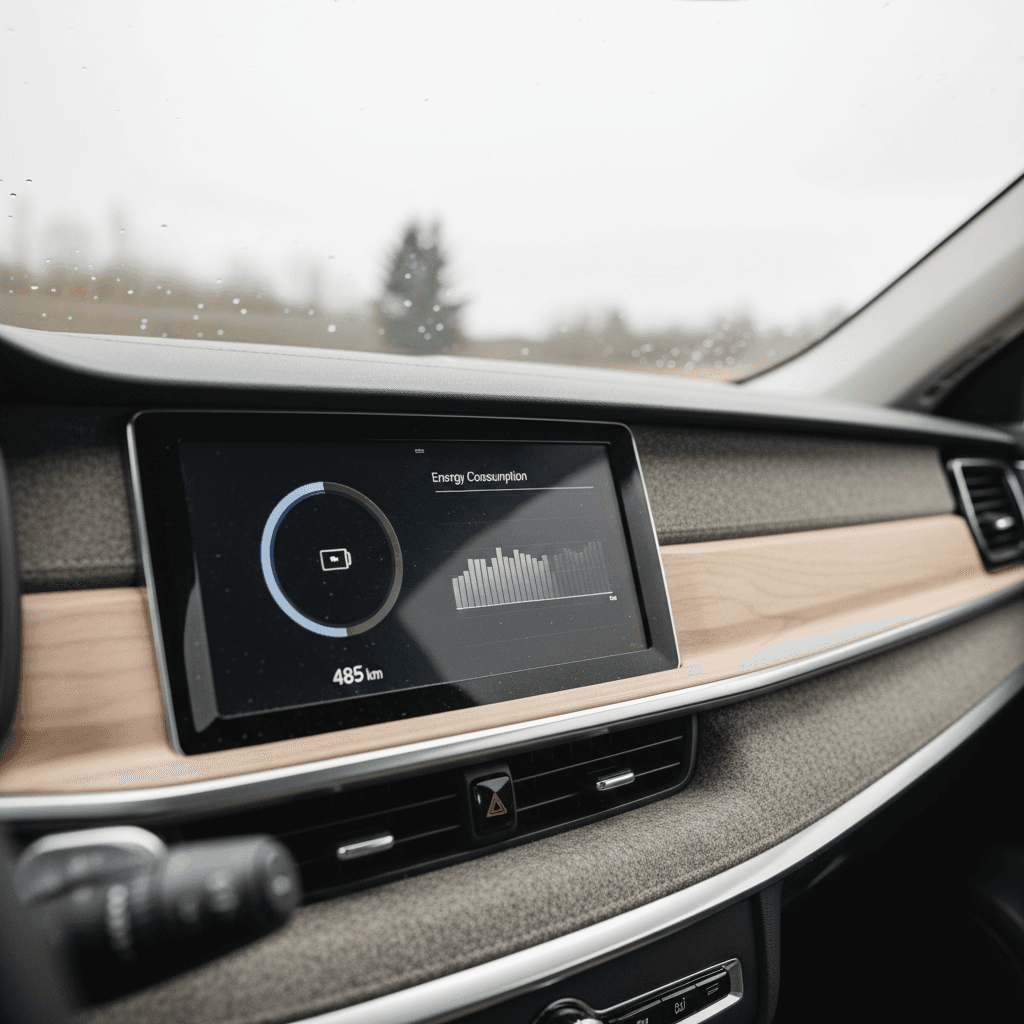
6 factors that shrink or boost Volvo EX90 range
What really moves the needle on EX90 range
You can’t change the battery size, but you can control many of these variables.
1. Temperature
Like every EV, the EX90 loses range in the cold. Below freezing, expect **15–30% less real‑world range**, especially on short trips where the battery and cabin never fully warm up.
2. Speed & aerodynamics
The EX90 is tall and heavy. Above about **70 mph**, aerodynamic drag ramps up and consumption climbs quickly. Sticking closer to 65 mph can easily buy you **20–30 extra miles** per charge.
3. Wheels & tires
Bigger 21" and 22" wheels with sporty or winter tires look great but hurt efficiency. If range matters more than stance, choose the **smallest wheel package** available.
4. Weight & cargo
Roof boxes, bike racks and a fully loaded cabin add drag and weight. With skis on the roof and seven passengers, don’t be surprised if you lose another **10–15%** of range.
5. Drive mode & regen
Smoother acceleration and stronger regenerative braking help. The EX90’s software can’t break physics, but using its range‑optimized modes and avoiding jack‑rabbit starts noticeably improves efficiency.
6. Charging habits
Living mostly between **20–80%** state of charge is great for battery health and also changes your practical range. For road trips, plan legs that use **60–70% of the pack** rather than aiming for 0–100% every time.
Beware first‑winter shock
2026 updates: 800‑V architecture, charging and range
For the 2026 model year, Volvo has rolled the EX90 onto a full **800‑volt electrical architecture**. The battery capacity and basic dual‑motor layout remain broadly similar to earlier years, but the higher system voltage unlocks several practical benefits:
- **Faster DC fast charging** on compatible 800‑V chargers, with Volvo targeting up to **250 kW peak** under ideal conditions.
- Improved efficiency at high charging power, which reduces heat and can make repeated fast‑charge stops gentler on the pack.
- Better alignment with growing 800‑V infrastructure (and future Volvo/Polestar models), which should help long‑term support and software tuning.
Does 800‑V change real‑world range?
Realistically, 2026 EX90 drivers can expect **similar or slightly improved efficiency** versus early builds as software matures and Volvo refines thermal management. If you’re shopping used, later‑build 2025s and 2026s are the ones most likely to benefit from those incremental improvements.
Volvo EX90 vs rivals: range comparison
Context matters. The EX90 isn’t trying to be the longest‑range EV on sale; it’s a safety‑obsessed, tech‑heavy, three‑row family hauler. Here’s how its **official range and typical highway results** roughly stack up against key rivals as of 2026.
2026 big EV SUV range comparison (approximate)
Headline EPA/WLTP numbers and realistic highway expectations for popular three‑row or large‑cabin EVs.
| Model & trim (2026) | Battery (usable, approx.) | Official range (max trim) | Typical 70‑mph range |
|---|---|---|---|
| Volvo EX90 (dual‑motor) | ~107 kWh | ~300–310 mi EPA | ~240–260 mi |
| Kia EV9 RWD Long Range | ~99–100 kWh | Up to ~304 mi EPA | ~240–260 mi |
| Mercedes‑Benz EQS SUV 450+ | ~108 kWh | Low‑ to mid‑300s mi EPA | ~260–280 mi |
| Tesla Model X Long Range | High‑90s kWh | Mid‑300s mi EPA | ~280–320 mi |
| Rivian R1S (Large pack) | ~105–109 kWh | Mid‑ to high‑300s mi EPA | ~260–300 mi |
Figures are rounded and will vary by wheel size, trim and conditions, but they’re useful for ballpark expectations.
Where the EX90 fits
Maximizing range in your Volvo EX90
Practical steps to stretch EX90 range
1. Use preconditioning
When plugged in, preheat or precool the cabin through the Volvo app. This uses grid power instead of battery energy and warms the pack, which improves both range and DC fast‑charging performance, crucial in winter.
2. Drive in the most efficient mode
Choose the EX90’s **range‑friendly drive modes** for everyday use. They soften throttle response and encourage more efficient acceleration without turning the car into a slug.
3. Watch your highway speed
Every 5 mph over about 65 mph costs you. Cruising at 70 instead of 80 can keep you closer to the **mid‑200‑mile** highway range band rather than falling into the low‑200s.
4. Be smart about wheels and tires
If range matters more than looks, skip the biggest wheel option and avoid aggressive off‑road or winter tread patterns unless you really need them. Rolling resistance adds up quickly on a 7‑seat SUV.
5. Use charging stops strategically
On trips, it’s often faster to **charge from ~10–15% to 60–70%** at higher power and drive on, instead of waiting all the way to 100%. Plan your stops where the EX90 can take advantage of strong 800‑V hardware.
6. Keep software and navigation updated
Volvo is actively refining EX90 software. Updates can improve **range prediction, thermal management and charging behavior**. Keep the car up to date and use the built‑in route planner so it can precondition for DC chargers.
Range considerations when buying a used EX90
Because the EX90 launched in 2024 and is already seeing incremental hardware and software changes, **battery health and build year** really matter if you’re shopping used. Early‑build 2024s may not have all of the 800‑V refinements and software improvements that 2025–2026 examples enjoy, and individual cars will show different levels of degradation depending on how they were charged and driven.
What to ask or verify
- DC fast‑charge history: A car that lived on DC fast charging may have more degradation than one mostly charged at home.
- Software version: Confirm it’s on the latest available version and that any known charging bugs or range‑estimation quirks have been addressed.
- Wheel and tire setup: If a used EX90 has very large wheels or off‑spec tires, your range may be worse than official numbers suggest.
How Recharged helps
If you’re considering a used Volvo EX90, buying through Recharged means you get a Recharged Score battery and range report with each vehicle. Our diagnostics look at:
- Measured battery health versus original capacity.
- Realistic projected range based on that specific car.
- Charging behavior and any fault histories we can see.
That takes the guesswork out of whether an EX90 will still deliver the range your family needs.
Consider a trade‑in or upgrade path
FAQ: Volvo EX90 real‑world range in 2026
Frequently asked questions about Volvo EX90 range
Bottom line: is the Volvo EX90’s range enough?
If you’re cross‑shopping big EV SUVs in 2026, the Volvo EX90 offers **solid, if not class‑leading, real‑world range**. Expect roughly **240–280 miles** per charge in typical use, with more available in gentle mixed driving and less in harsh winter or at high autobahn‑style speeds. It trades some efficiency for safety hardware, a calm cabin and a genuinely usable third row, a balance many families are happy to accept.
For most U.S. households that do a mix of commuting, errands and a few road trips a year, the EX90’s real‑world range is **more than adequate**, especially paired with 2026’s quicker DC fast charging. If you’re looking at a used EX90 or want a clear picture of battery health before you buy, working with a specialist like Recharged, and leveraging our Recharged Score battery and range diagnostics, can ensure the numbers on paper match what you’ll see on the road.