If you’re eyeing a Volvo EX30, or already have one in the driveway, the big question is simple: how long does the Volvo EX30 battery really last? Battery lifespan affects everything from daily range to long‑term value, especially if you’re thinking ahead to resale or buying used. The good news: with reasonable care, an EX30’s battery should easily outlast the typical ownership period.
Quick answer
Why Volvo EX30 battery lifespan matters
In an EV like the EX30, the high‑voltage battery is the single most expensive component. Unlike a gas car where engines and transmissions fail, what determines long‑term value here is how much usable range the battery can still provide. That affects:
- How far you can comfortably drive on a charge without planning around chargers
- Whether a winter commute still feels easy or suddenly tight on range
- Your monthly fast‑charging spend if you’re topping up more often
- Future resale value if you decide to trade in or sell your EX30
If you’re considering a used EX30, battery lifespan isn’t a theoretical concern, it’s the difference between a great deal and a car that feels tired before your loan is paid off.
Volvo EX30 battery specs at a glance
Volvo EX30 battery options
High‑level look at the EX30 battery packs available in the U.S. market and what they mean for range and daily use.
| EX30 variant | Battery type | Usable capacity (approx.) | EPA range (approx.) | Drive layout |
|---|---|---|---|---|
| Single Motor Core | LFP (standard range) | ~51 kWh | ~200–215 miles | RWD |
| Single Motor Extended Range | NMC (long range) | ~69 kWh | ~275–290 miles | RWD |
| Twin Motor Performance | NMC (long range) | ~69 kWh | ~265–280 miles | AWD |
Battery size influences both range and thermal management, but driving and charging habits often have a bigger impact on long‑term health than pack size alone.
LFP vs NMC in simple terms
How long does a Volvo EX30 battery last in years and miles?
Typical Volvo EX30 battery lifespan expectations
You won’t find a single magic number because battery lifespan depends heavily on how and where you drive. But based on current EV data, chemistry, and Volvo’s own confidence in the EX30 pack, it’s reasonable to expect:
- Around 8 years / 100,000–150,000 miles where the battery is still well inside warranty and usually above ~70% of original capacity.
- 10–15 years of useful life for most owners before range loss becomes a day‑to‑day headache, especially if you start with the larger pack.
- Even beyond that, the car is typically still drivable, just with shorter range, rather than the battery “dying” overnight.
Think of the EX30 battery more like the human body aging than a light switch. Capacity declines slowly. Your job as an owner is to slow that curve, and Volvo has already done a lot of the hard work through thermal management and software.
What the Volvo EX30 battery warranty really covers
Volvo, like most established automakers, backs the EX30’s high‑voltage battery with a long warranty. While exact terms can vary by market and model year, the pattern is consistent:
Typical Volvo EX30 battery warranty coverage
Check your specific warranty booklet for exact numbers, but here’s the general idea.
Time and mileage
Volvo typically covers the high‑voltage battery for 8 years or around 100,000–150,000 miles (whichever comes first). Exact mileage varies by region and model year, so read your warranty booklet.
Capacity guarantee
Automakers usually warrant that the battery will not fall below about 70% of original capacity during the warranty period. If it does, you may qualify for repair or replacement under warranty.
Watch the fine print
For shoppers considering a used Volvo EX30, a remaining battery warranty can be a major safety net. A two‑ or three‑year‑old EX30 that still has five or six years of battery coverage left will feel a lot more secure than one that’s about to age out of that protection.
Volvo EX30 battery degradation: what to expect over time
EV batteries rarely degrade in a straight line. Most show a small drop in the first year or two, then a slower, steadier decline. For an EX30, a reasonable expectation with normal use might look like this:
Illustrative Volvo EX30 degradation curve
Rough example of how an EX30’s usable battery capacity might decline with normal mixed use. Real‑world results vary by climate, driving style, and charging habits.
| Vehicle age | Estimated remaining capacity | What it feels like day‑to‑day |
|---|---|---|
| Year 1–2 | ~95% | Range looks almost identical to new; small drop is easy to miss. |
| Year 3–5 | ~90% | You may notice 10–20 fewer miles on a full charge, mostly on long trips. |
| Year 6–8 | ~80–85% | Range loss is noticeable but still workable for many commutes. |
| Year 9–12 | ~70–80% | You’ll feel the difference; winter and highway driving need more planning. |
Capacity loss is usually most noticeable early on, then stabilizes. Careful charging and storage can keep you toward the lower end of these ranges.
Aim to be “average or better”
6 factors that shorten or extend your EX30’s battery life
Key factors that influence Volvo EX30 battery lifespan
1. Charging to 100% every day
Topping off to 100% and letting the car sit there, especially in hot weather, adds stress to the cells. Reserve full charges for road trips and set your EX30’s charge limit lower for daily driving.
2. Regular deep discharges
Frequently driving down to very low states of charge (think under 10%) before plugging in is also hard on the pack. Try to keep everyday use between roughly 20–80% when practical.
3. Frequent DC fast charging
The EX30 loves fast charging when you need it, but <strong>relying on DC fast chargers for most charging</strong> can gradually accelerate degradation compared with mostly Level 2 home or workplace charging.
4. Extreme heat
High temperatures are the enemy of battery life. The EX30 has active cooling, but parking in the hot sun fully charged day after day still isn’t ideal. Shade or a garage goes a long way.
5. Climate and winter use
Cold doesn’t usually damage batteries long‑term, but it does temporarily reduce range and forces the pack to work harder to stay warm. Short trips in very cold weather may show more energy use.
6. Mileage and driving style
Higher annual mileage simply means more charge cycles. Aggressive driving warms the battery faster and can nudge degradation up compared with a calmer driving style.
How to maximize your Volvo EX30 battery lifespan
Daily driving strategy
- Set a charge limit around 70–80% for everyday use (or follow Volvo’s recommended range in your owner’s manual).
- Plug in more often rather than waiting for the battery to be very low, topping from 40% to 70% is easier on the pack than 5% to 100%.
- Use scheduled charging so charging finishes close to when you leave, instead of sitting at a high state of charge for hours.
- Park smart, a shaded spot or garage is kinder to the battery than a baking hot driveway.
Road‑trip and occasional heavy use
- Charge to 90–100% when you need maximum range; that’s what the pack is there for.
- Rely on fast charging when needed, but don’t treat the DC fast charger like your daily fuel pump if you have access to Level 2 at home or work.
- Precondition before fast charging when the car offers it, warming or cooling the battery into its ideal range improves both speed and battery health.
- Don’t worry about the occasional long day. It’s repeated extremes, not one big trip, that really move the needle on degradation.
Target: simple, sustainable habits
Charging habits: the single biggest lever on EX30 longevity
When owners ask, “How long does a Volvo EX30 battery last?” what they’re really asking is, “Given how I’ll actually use this car, what can I expect?” Charging behavior is where you have the most influence. Here’s a practical framework you can actually live with.
Three real‑world charging patterns, and what they mean
Most EX30 drivers fall into one of these camps.
Home‑base charger
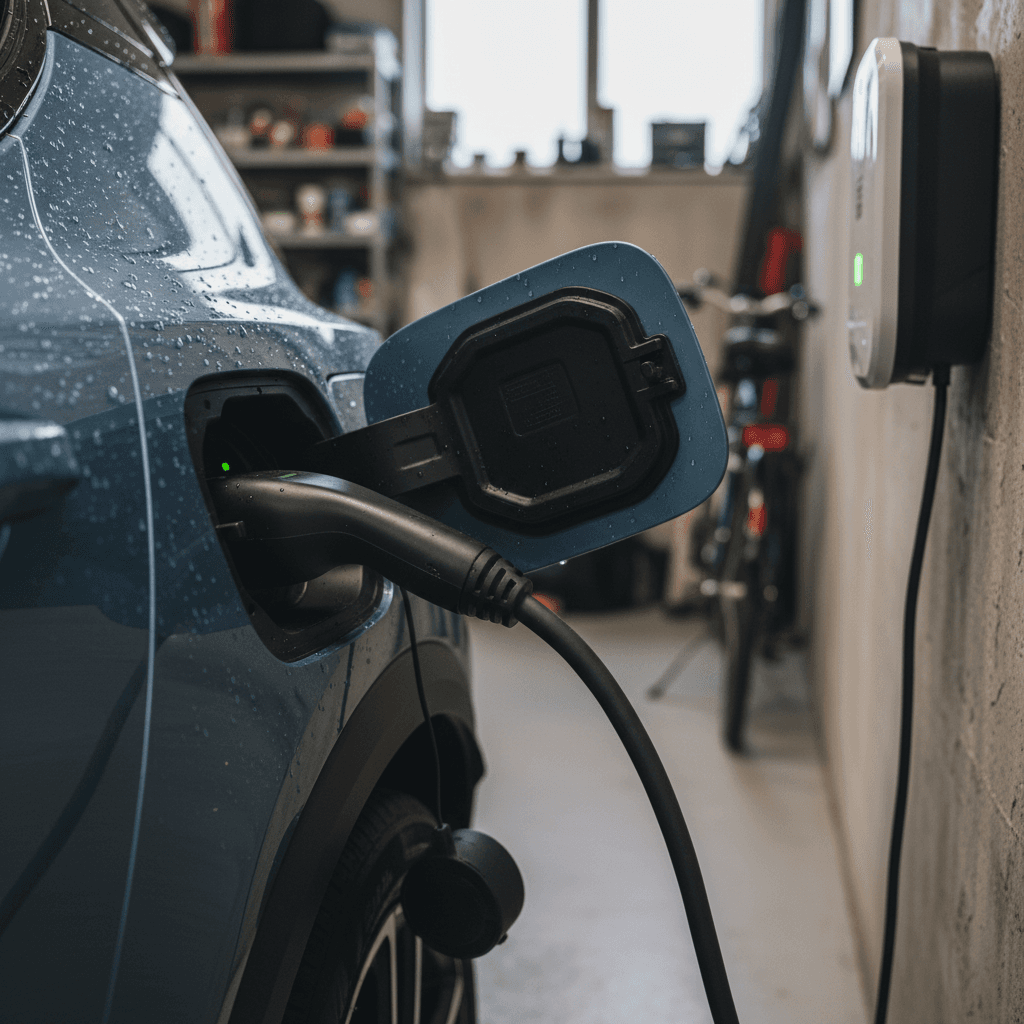
You charge mostly on a Level 2 unit at home or work, plug in most nights, and rarely hit 100% except for trips. This is ideal for battery health. Expect slower degradation and excellent long‑term range.
Fast‑charge commuter
You rely heavily on public DC fast charging because home charging is tough (apartment, street parking). Lifespan will still be fair, but degradation may be somewhat faster. It pays to use Level 2 whenever you can.
Mixed charger
You use home Level 2 when convenient and fast charging for trips or busy weeks. This is where many EX30 owners land and is generally very compatible with long battery life if you keep daily charge limits reasonable.
Apartment dweller?
Buying a used Volvo EX30? Battery health checklist
Because the EX30 is still relatively new, most used examples will show very low degradation. Still, it pays to verify battery health, especially if you plan to keep the car for many years. Use this checklist when you’re evaluating a pre‑owned EX30.
Used Volvo EX30 battery due diligence
1. Review the service history
Ask for documented service records. Look for any <strong>battery‑related warnings, software updates, or repairs</strong>. A clean history with regular maintenance is a good sign.
2. Confirm remaining battery warranty
Check the in‑service date and mileage. A used EX30 with several years of battery warranty left offers extra peace of mind and can justify a higher price.
3. Check range at a known state of charge
On a fully charged battery, compare the projected range on the display to what Volvo advertised for that trim. A modest gap is normal; a very large gap can hint at heavier degradation or lots of high‑speed driving.
4. Look for repeated DC fast‑charging use
Frequent long‑distance road trips often show up as high mileage in a short timeframe and owner comments about using fast chargers. That’s not a deal‑breaker, but <strong>it’s useful context</strong> for future degradation.
5. Drive it in mixed conditions
Take a decent test drive that includes highway and surface streets. Notice whether the state‑of‑charge gauge falls in a way that feels consistent with miles driven and your expectations.
6. Get an independent battery health report
Whenever possible, have the battery health <strong>measured with professional diagnostics</strong> rather than relying only on the dashboard estimate.
How Recharged evaluates Volvo EX30 battery health
If you’d rather not become a battery detective yourself, this is exactly where a specialist marketplace helps. At Recharged, every EV we list, including the Volvo EX30, comes with a Recharged Score Report that goes deeper than a basic odometer reading.
What the Recharged Score tells you about an EX30
Battery health isn’t a mystery, if you have the right tools.
Verified battery health
We use specialized diagnostics to evaluate actual usable capacity, not just the car’s guess. That helps you understand how much range the EX30 can realistically deliver today.
Degradation context
The report benchmarks a given EX30’s battery health against what we’d expect for its age and mileage. That way, you can see whether a car is aging better, worse, or right on target.
Fair market pricing
Because we factor battery health into valuation, pricing on Recharged is aligned with the car’s real long‑term usefulness, not just its trim and odometer reading.
Ready to find your next EV?
Browse VehiclesYou can finance your EX30, arrange a trade‑in or sale, and get nationwide delivery through a fully digital experience, backed by EV specialists who can walk you through the report and what it means for long‑term battery life.
FAQ: Volvo EX30 battery lifespan and ownership
Frequently asked questions about Volvo EX30 battery life
Bottom line: how long the Volvo EX30 battery really lasts
The Volvo EX30 battery isn’t a ticking time bomb, it’s a long‑life component designed to go the distance. With sensible charging habits and normal driving, you can reasonably expect a decade or more of solid service and somewhere in the neighborhood of 150,000–200,000 miles before degradation becomes a real constraint for most owners.
If you’re shopping used, the key is to verify, not guess. That’s where tools like the Recharged Score Report come in, giving you a clear picture of battery health, fair market pricing that reflects it, and EV‑savvy support from first click to delivery. Whether you buy an EX30 through Recharged or elsewhere, go in with your eyes open, ask the right questions, and your EX30’s battery should serve you well for years to come.