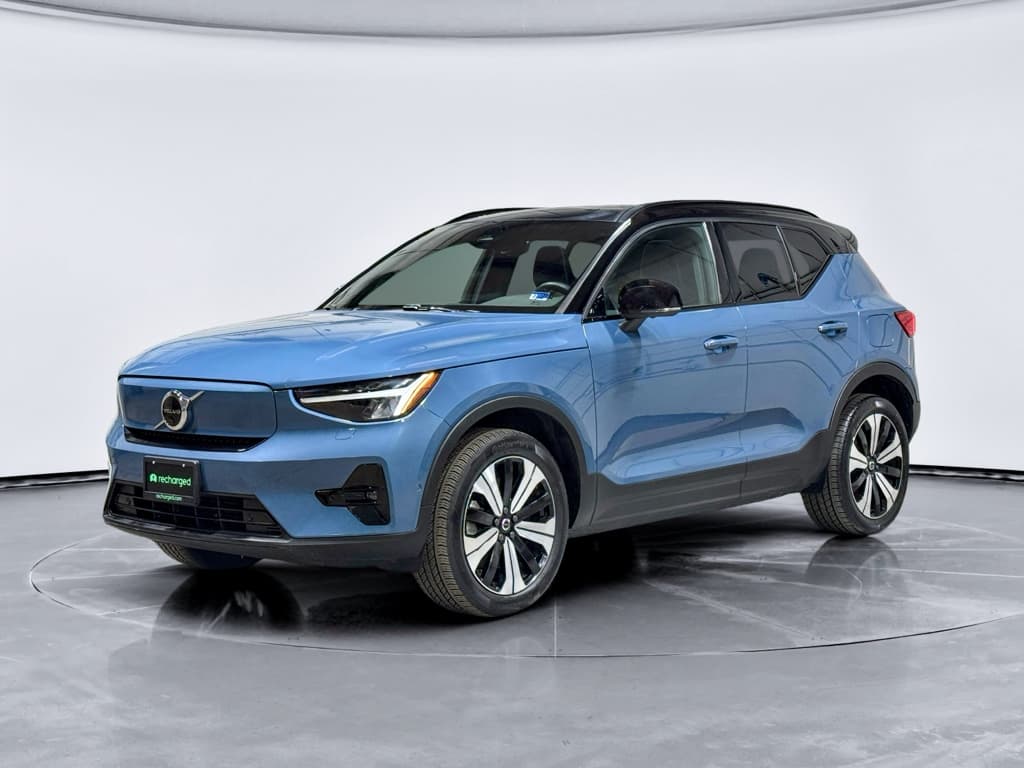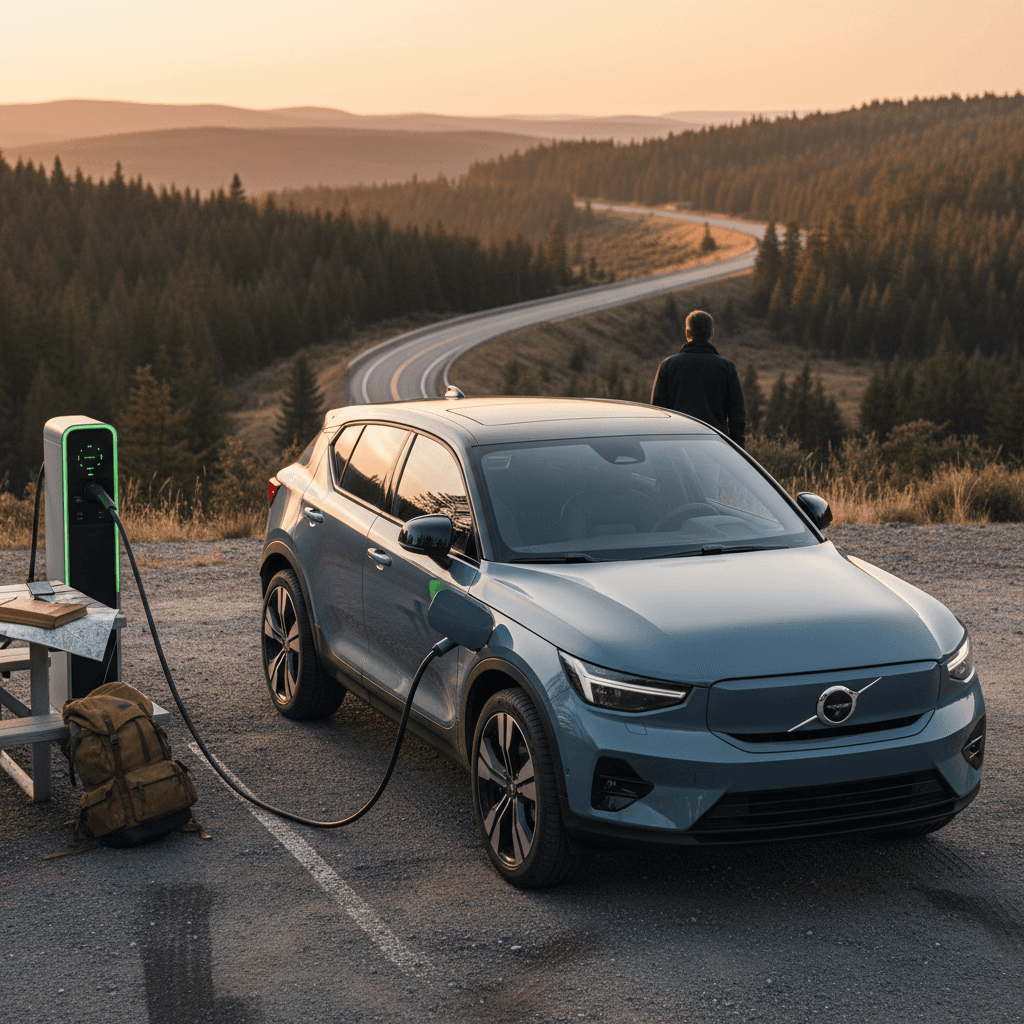
The Volvo C40 Recharge is a quick, comfortable electric crossover, but long-distance driving exposes every EV’s truths: real-world range, charging curve, and how patient you are at 2 a.m. next to a humming DC fast charger. With the right strategy, though, the Volvo C40 Recharge is perfectly capable of road trips, it just rewards planning and a light right foot more than a big gas tank ever did.
Key idea for C40 road trips
Why the Volvo C40 Recharge Can Road Trip Just Fine
Volvo C40 Recharge: Long-Distance Basics at a Glance
On paper, the C40 Recharge’s EPA and WLTP numbers look competitive. In practice, real-world testing shows that on the highway, where you’ll spend most of a road trip, you should think in terms of 170–230 mile usable legs, depending on your model year, battery, speed, and weather. That’s plenty to string together a full driving day with two or three focused DC fast charges instead of living at the plug all afternoon.
Think in legs, not full range
Know Your Specific C40 Recharge Range
“Volvo C40 Recharge” now covers a small family of cars. The early 2022–2023 dual‑motor cars with the ~75 kWh usable pack behave differently on the highway than a 2024+ single‑motor extended‑range car with the more efficient rear motor and roughly 79 kWh usable battery. Before you plan a 600‑mile day, figure out which C40 you actually have and what it can realistically do between chargers.
Highway Range Expectations by C40 Recharge Variant
Approximate, real‑world highway legs many drivers report at typical U.S. freeway speeds (65–75 mph), in mild weather with sensible driving.
| Model / pack | Rated range (approx.) | Typical highway leg | Notes |
|---|---|---|---|
| 2022–2023 Twin Motor (~75 kWh usable) | ≈220–230 mi EPA | ≈170–190 mi | Quick and grippy but less efficient; consumption often in the high 30s kWh/100 mi on fast interstate runs. |
| 2024+ Twin Motor (~75 kWh usable, updated motors) | ≈250–260 mi EPA | ≈190–210 mi | More efficient motors, software can decouple the front motor, improving cruising range. |
| 2024+ Single Motor (~79 kWh usable) | ≈250–260 mi EPA | ≈200–220 mi | Rear‑drive, better efficiency at highway speeds than the older AWD cars. |
| 2024+ Single Motor Extended Range (82 kWh pack) | ≈270–290 mi WLTP | ≈210–230 mi | Best long‑distance C40; the bigger pack plus efficient motor buys you an extra 20–30 miles of comfort zone. |
Use these numbers as planning baselines, not guarantees. Elevation, wind, speed, temperature, and load all matter.
EPA and WLTP are not guarantees
The best way to nail down your own number is to drive a familiar route at your normal freeway speed, reset the trip meter, and see what you consume over at least 50–100 miles. If your C40 averages 32 kWh/100 mi and your usable battery is around 75 kWh, you’re looking at roughly 230 miles theoretical to 0%, but for road trips you should plan more like 70–80% of that as your comfortable leg length.
Smart Speed and Driving Style on the Highway
Why 5 mph matters so much
Above about 55 mph, aerodynamic drag starts to dominate and the C40’s sleek roofline can’t change physics. The jump from 70 to 80 mph can easily cost 10–20% of your usable highway range. On a 200‑mile leg, that’s the difference between arriving with a comfortable 15% buffer and sweating into the station at 3%.
If your schedule allows, cruising at 68–72 mph instead of camping in the left lane is the single biggest lever you control for long-distance efficiency.
Driving style that helps, not hurts
- Use one‑pedal driving and regen in traffic or rolling hills so the car recaptures more energy instead of burning it off in friction brakes.
- Avoid hard bursts of acceleration; the C40 is quick, but full‑throttle blasts punish your consumption.
- Use cruise control on steady stretches; it’s calmer and usually more efficient than chasing gaps.
- Anticipate slowdowns so you ease off early and let regen do the work.
A simple rule of thumb
Build a Charging Strategy That Works for the C40
The C40 Recharge can accept up to roughly 150–200 kW of DC fast charge depending on model year and pack, but like every EV it charges fastest at low to mid state of charge. Long-distance driving is less about “how long to 100%?” and more about how to stack quick 10–60% or 10–80% stops so you’re rarely charging in the slow upper part of the curve.
Core Charging Rules for Long-Distance C40 Driving
Follow these and your stops feel short and predictable instead of endless and random.
Arrive low, leave mid
The C40 charges harder when the battery is warm and under ~60–70%. Aim to arrive at fast chargers around 10–20% state of charge and leave somewhere around 60–80%, depending on the next leg.
30 minutes is the benchmark
On a strong 150–200 kW DC station with a warm pack, most C40 variants will go from roughly 10–80% in about 30 minutes. Don’t waste 25 extra minutes crawling from 80 to 100% unless you have a huge gap to the next charger.
Plan 80–140 mile hops
For comfort, plan stops 80–140 miles apart rather than pushing single long stints. That keeps you within easier towing and rerouting distance if a station is down, and gives you flexibility to skip a charger if the car is sipping energy that day.
Older vs newer C40s at fast chargers
- Whenever possible, navigate to the charger in the car’s Google Maps so the C40 can precondition the battery before you arrive, improving initial charge speed.
- Prefer high-power 150–250 kW DC sites over 50 kW urban fast chargers for long hops; save slow chargers for lunch or overnight.
- Use the charging session time for real breaks, bathroom, food, stretch, so the car finishes before you’re antsy to leave.
- Set a charge limit around 80–90% for road-trip days; you almost never need 100% unless the next leg is truly remote.
Using Google Built-In and Apps to Plan Stops
One of the Volvo C40 Recharge’s quiet superpowers is that it runs Google built‑in. That means native Google Maps on the center screen with EV‑aware routing, plus the ability to run your favorite charging apps right in the car. On a long trip, that tech is the difference between a relaxed, scripted day and an improvised scavenger hunt for kilowatts.
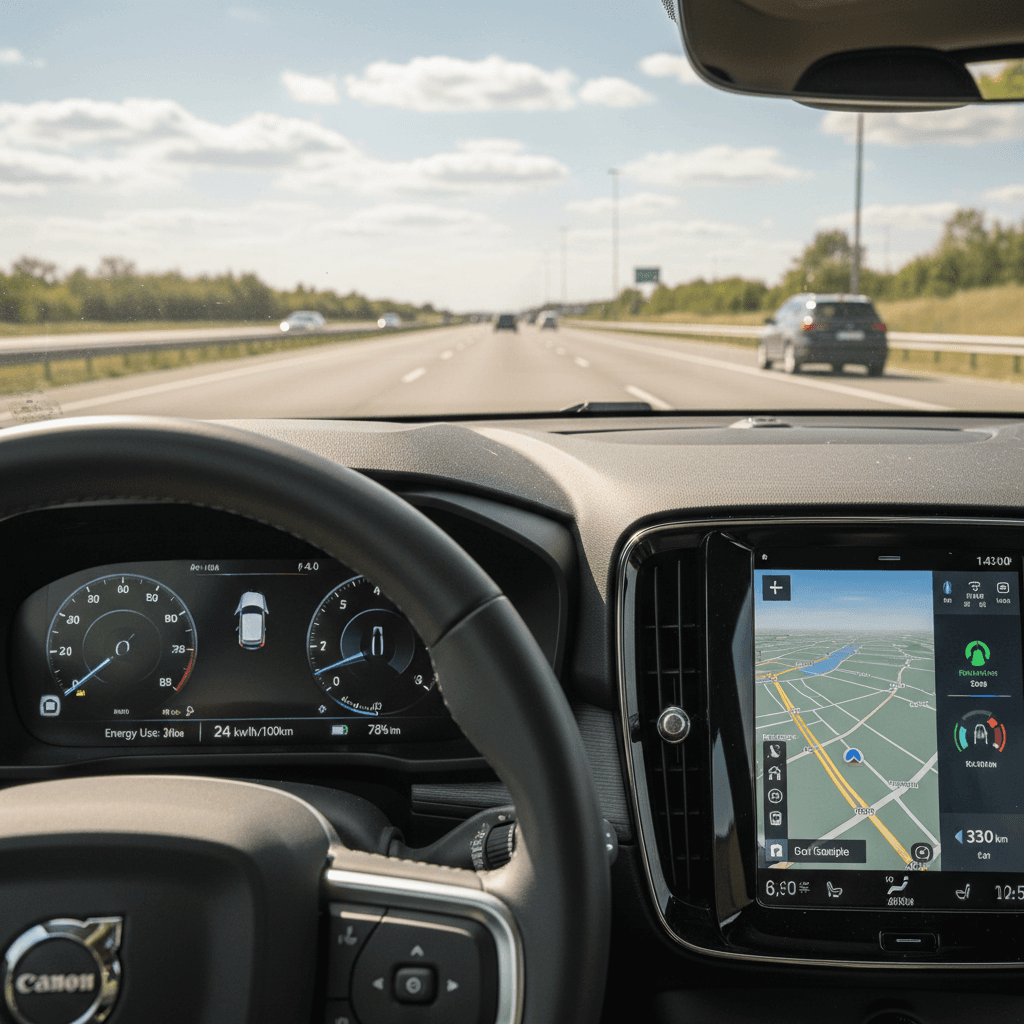
Inside the C40: Google Maps EV routing
- Enter your destination and let Google Maps suggest charging stops based on your state of charge and recent driving efficiency.
- Watch the predicted arrival percentage; if it nosedives as you speed up, either slow down or accept a mid‑route top‑off.
- Choose chargers with amenities you like, restrooms, 24/7 lighting, food, because an efficient car doesn’t fix a miserable stop.
Outside the C40: Key planning apps
- A Better Routeplanner (ABRP) for deep what‑if planning (speed, temperature, wind, SOC targets).
- PlugShare or ChargeHub for crowd‑sourced reliability data, recent check‑ins, photos, and comments about broken stalls.
- Network apps (Electrify America, EVgo, etc.) for look‑ahead on station status and pricing.
Do the rough plan on your phone the night before, then let the car handle the real‑time adjustments.
Save a Plan B for each critical stop
Climate Control and Weather: How to Keep Range Steady
Weather is the invisible hand on your C40’s range. Cold batteries are less eager to give up energy or accept fast charge, and moving a brick of warm air around a bluff‑front crossover in a headwind takes real power. Your job on a long drive isn’t to suffer, but to use the tools you already have to blunt those losses.
Weather & Climate Control Tips for Better C40 Range
Stay comfortable while keeping your consumption in check.
Precondition while plugged in
Before a winter leg, set departure time in the Volvo app so the cabin and battery are warmed while you’re still on shore power. You leave with a warm pack and full regen instead of wasting the first 20 miles heating everything from the battery.
Lean on seat & wheel heaters
Direct heat, seats and steering wheel, uses less energy than blasting hot air at the whole cabin. In cool weather, you can often run a lower cabin setpoint, stay comfortable, and save a few percent over a long stint.
Account for wind and rain
Strong headwinds and heavy rain increase drag and rolling resistance. If your predicted arrival SOC is dropping faster than expected, assume wind is taking its cut and slow down or add a short top‑off stop.
Don’t ignore winter margins
Packing, Tires, and Aero: How Your Setup Hurts or Helps
The Volvo C40 Recharge is shaped like a wind‑tunnel fever dream compared with a brick SUV, but you can still sabotage it with overstuffed cargo, under‑inflated tires, and boxy accessories. For long-distance driving, treat efficiency the way you’d treat noise in a luxury car, something you continuously work to reduce.
- Check tire pressures the morning you leave, ideally set to the door‑jamb spec on cold tires. Under‑inflation is silent range theft and can easily cost several percent over a long day.
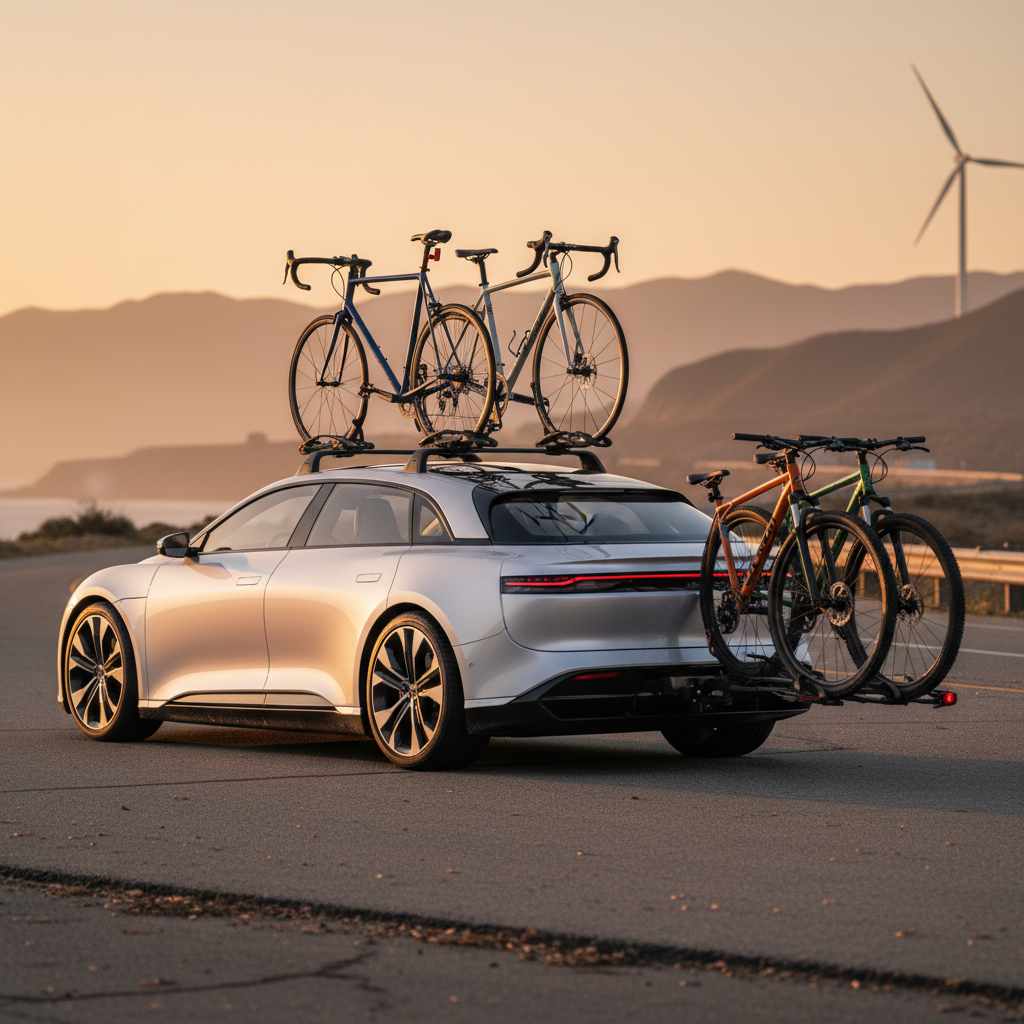
- If you must run a roof box or rack, keep your speed conservative; aero add‑ons hurt more at 75 mph than at 55 mph.
- Pack heavy items low and centered to keep the car stable; weight costs energy, but poor balance also affects comfort and confidence.
- If you’ve fitted more aggressive tires for snow or off‑road looks, expect higher consumption and plan your legs shorter, especially at higher speeds.
Light, quiet, efficient
Battery Health, Long Trips, and Used C40s
Long-distance driving inevitably raises the question of battery health, especially if you’re shopping for a used Volvo C40 Recharge or planning to keep yours for the long haul. The good news: the chemistry Volvo uses in the C40 has, so far, shown fairly modest degradation for most owners, even with plenty of fast‑charging and highway use.
How road trips affect the pack
- Frequent DC fast charging is fine in moderation; the car’s thermal management keeps things within its comfort zone.
- Driving from 10–70% or 15–80% day after day is actually a healthy pattern, keeping you out of the extremes for most of the cycle.
- The worst‑case scenario is leaving the car hot and full at 100% for days in hot weather. Road trips rarely do this, you drive off the charge almost immediately.
Shopping used? Ask for real data
If you’re considering a used C40, don’t settle for guesswork about how it will handle long-distance duty.
- Look for a battery health report or diagnostic that shows usable capacity versus new.
- Review the seller’s typical charging pattern, lots of short DC blasts vs. gentle Level 2 at home.
- Ask for recent road‑trip stats: consumption over a long drive, how much charge was added at a fast charger, and how quickly.
On Recharged, every C40 listing includes a Recharged Score Report with battery health diagnostics and real‑world charging performance, so you know what kind of road-trip partner you’re getting before you sign.
Battery warranties still have your back
Pre-Trip Checklist for a Volvo C40 Road Trip
Volvo C40 Recharge Road Trip Checklist
1. Dial in your real range
Run at least one 50–100 mile freeway test at your planned cruising speed and note your average kWh/100 mi. Use that number to estimate a conservative leg length for trip planning.
2. Update software and charging apps
Check for any Volvo software updates before you leave, and sign into key charging network apps on your phone (and, if you like, on the car’s Google Play) so payment is painless at the first stop.
3. Map primary and backup chargers
Use a tool like A Better Routeplanner and PlugShare to choose primary DC fast chargers and at least one backup within 10–20 miles for each critical stop.
4. Set sensible charging targets
Plan to pull in around 10–20% and leave around 60–80% at most DC stops. Only charge higher when the next leg demands it or you’re stopping overnight.
5. Prep for weather
If it’s cold, set departure preconditioning in the Volvo app and assume shorter legs with more buffer. In heat, lean on cabin auto mode and keep the car shaded when parked.
6. Check tires, cables, and accessories
Verify tire pressures against the door‑jamb placard, pack your portable charging cable or adapter if you use one, and tidy any aero‑unfriendly gear like roof boxes or open racks.
FAQ: Volvo C40 Recharge Long-Distance Travel
Frequently Asked Questions About C40 Recharge Road Trips
The Bottom Line on C40 Recharge Road Trips
Long-distance driving in a Volvo C40 Recharge is less about hero numbers and more about rhythm: 100–150 mile legs, 25–35 minute DC fast charges, a cruising speed that doesn’t fight physics, and a route that always has a Plan B. Get those pieces right and the car’s smooth power, quiet cabin, and Google‑based brains make it an easy, almost decadent way to cross states without burning a drop of fuel.
If you’re considering a C40 Recharge, especially a used one, for regular road trips, focus on the specific battery, motor setup, and real‑world highway behavior, not just the brochure range. With a verified Recharged Score Report, transparent pricing, and EV‑savvy support, Recharged can help you find a C40 that matches your appetite for miles as well as your taste for Scandinavian cool.