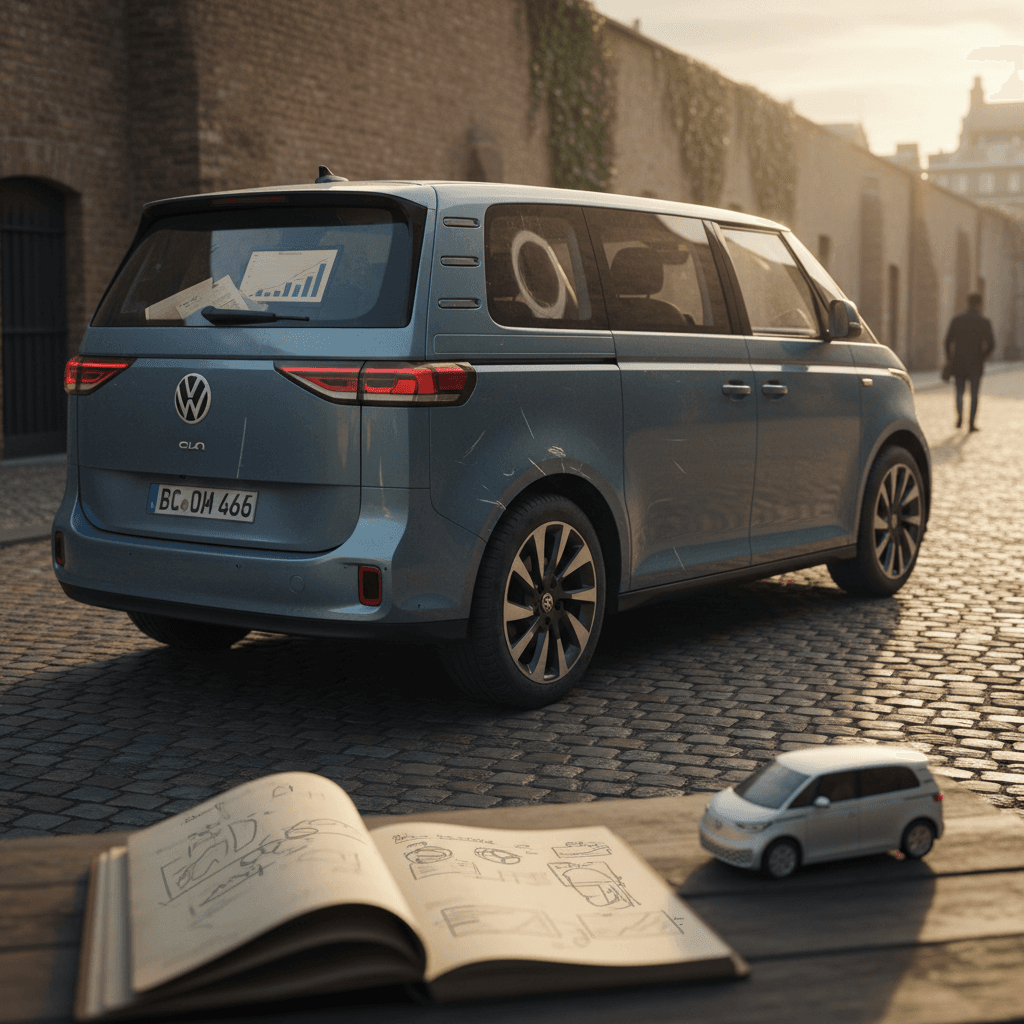
If you’ve fallen for the charm of the Volkswagen ID. Buzz, you’re not alone. But once the nostalgia wears off and you start looking at $60,000‑plus window stickers, a hard question appears: **what will a Volkswagen ID. Buzz be worth after 5 years**, and will you regret that number when it’s time to sell or trade?
Quick take
Why 5‑Year Value Matters for the ID. Buzz
With the ID. Buzz, Volkswagen isn’t just selling an electric van, it’s selling a lifestyle. Problem is, the lifestyle is priced like a luxury SUV. When you’re spending $60,000–$70,000 on what is essentially a family hauler, **5‑year value becomes a big piece of the total cost of ownership**, right alongside charging costs and insurance.
- Most buyers finance or lease over 3–6 years, so 5‑year value heavily influences your equity position.
- The ID. Buzz is a niche EV in a fast‑moving market, technology, range, and incentives are shifting quickly.
- Volkswagen has already signaled it will pause U.S. imports for the 2026 model year and return with an update around 2027, which can rattle long‑term confidence.
A paused model year is a red flag for value
What We Know About ID. Buzz Pricing Today
To talk about **Volkswagen ID. Buzz value after 5 years**, we first need to ground ourselves in what these vans actually cost new in the U.S. right now.
2025 Volkswagen ID. Buzz U.S. Pricing Snapshot
Approximate starting MSRPs before destination and incentives for the 2025 ID. Buzz.
| Trim | Drivetrain / Seats | Approx. MSRP (2025) |
|---|---|---|
| Pro S | RWD, 3‑row | $61,500 |
| Pro S Plus | RWD, 3‑row | $65,000 |
| 1st Edition | RWD, 3‑row | $67,000 |
| Pro S Plus 4MOTION | AWD, 3‑row | $69,500 |
| 1st Edition 4MOTION | AWD, 3‑row | $71,500 |
Real‑world transaction prices are often several thousand dollars below MSRP due to heavy discounting and lease support.
Deep discounts are already here
ID. Buzz Value Benchmarks We Can Use
How Much Will a Volkswagen ID. Buzz Be Worth After 5 Years?
No one has a full 5‑year resale history for the ID. Buzz yet, the European version only launched in 2022 and the U.S. in 2024. So to estimate **Volkswagen ID. Buzz value after 5 years**, we triangulate from several places: early U.S. discounting, depreciation on the mechanically similar ID.4, and broader EV resale data.
Scenario 1: You Pay Full MSRP
Let’s say you buy a 2025 ID. Buzz Pro S Plus 4MOTION at around $69,500 MSRP, before fees.
- Conservative 5‑year value (45% of MSRP): about $31,000
- Optimistic 5‑year value (55% of MSRP): about $38,000
That’s $31,500–$38,500 in depreciation over five years, roughly $6,000–$7,500 per year, not counting interest or taxes.
Scenario 2: You Buy at a Big Discount
Now imagine you negotiate a heavily discounted van, say $56,000 out‑the‑door on a Pro S that stickered at $62,000.
- If the market still treats it like a $62k van, 45–55% of MSRP is $28,000–$34,000 after five years.
- Now your actual depreciation from what you paid is more like $22,000–$28,000.
This is why **buying right matters more than ever** with the ID. Buzz.
Rule of thumb for 5‑year value
Why the ID. Buzz May Depreciate Faster Than You Think
Emotionally, the ID. Buzz feels like a future classic. Financially, it behaves more like a high‑priced niche EV in a rapidly evolving segment. Here are the headwinds pushing **Volkswagen ID. Buzz value after 5 years** downward.
Key Forces Pushing ID. Buzz Values Down
Most of these have nothing to do with how much you personally love the van.
High starting price
The ID. Buzz is priced like a premium SUV but built on hardware similar to the cheaper ID.4. That gap makes big discounts, and softer resale, almost inevitable.
Mid‑pack range
Real‑world range is closer to modest 200‑something‑mile numbers, while newer rivals are creeping toward 300–350 miles. Every jump in EV range makes older vans feel “short‑legged.”
Skipped 2026 model year
VW’s decision to pause U.S. imports for 2026 sends a signal: demand isn’t matching expectations. That uncertainty can spook used‑market buyers and lenders.
Software reputation
Earlier ID‑series vehicles earned a reputation for clunky software and slow updates. Even if it improves, that story lingers in shoppers’ minds and in online reviews.
Crowded 3‑row EV field
Rivals like the Kia EV9 and various 3‑row SUVs offer more range, more power, or more luxury for similar money, making a used ID. Buzz a tougher sell unless the price undercuts them.
EV market volatility
Used EV prices in general have been bumpy, with incentives, rapid tech changes, and shifting sentiment causing sharper swings than most gas vehicles.
The worst‑case depreciation trap
Factors That Help the ID. Buzz Hold Its Value
It’s not all doom and gloom. There are real reasons to think the ID. Buzz will avoid the absolute worst EV depreciation curves, especially if you buy or sell wisely.
- Iconic design and emotional pull: The Microbus heritage is real. A lot of people want an ID. Buzz for reasons that have nothing to do with spreadsheets, which supports demand in the used market.
- Practical shape: As an electric van with three rows and real cargo room, the Buzz solves a problem for families and small businesses that SUVs don’t always handle gracefully.
- Shared tech with the ID.4: Underneath the retro shell is familiar MEB platform hardware. Parts and know‑how will be shared with the more common ID.4, which helps with long‑term serviceability.
- Growing comfort with used EVs: As shoppers get more educated about battery health and charging, the fear premium baked into early EV depreciation should ease, especially for vehicles with good battery test results.

Battery health is everything for used value
Lease vs. Buy: How to Play ID. Buzz Depreciation
Because **Volkswagen ID. Buzz value after 5 years** is likely to land around 45–55% of MSRP, your financing choice matters. This is one EV where leasing isn’t just a convenience, it can be a strategic hedge.
Choosing Between Leasing and Buying an ID. Buzz
1. Use leasing to offload risk
On a lease, the bank, Volkswagen Credit or otherwise, takes the hit if 3‑ or 5‑year values come in lower than forecast. You simply hand back the keys and walk away, minus wear‑and‑tear fees.
2. Watch for inflated residuals
When VW wants to boost leases, it may assume a higher future value (residual) than is realistic. That lowers your payment now, but also means buying out the lease later can be poor value.
3. Consider buying CPO instead of new
A 2‑ or 3‑year‑old ID. Buzz that’s already taken the steepest part of its depreciation curve can be a smarter long‑term buy than a heavily financed new one.
4. If you buy new, negotiate hard
Every dollar you knock off the purchase price reduces future depreciation pain. With the discounts already showing up, you should treat MSRP as a wish, not a rule.
5. Plan your exit before you sign
Go in with a time horizon: keep for 3 years and swap? Drive it for 8–10 and ignore resale? Your answer should guide whether leasing, long‑term financing, or paying cash makes sense.
Why some shoppers lease, then buy used
Shopping Used: How to Spot a Fairly Priced ID. Buzz
Fast‑moving incentives, dealer discounts, and patchy sales data make early ID. Buzz pricing noisy. Here’s how to keep your head when you’re shopping used, especially 3–5 years from now when more vans start hitting the secondary market.
ID. Buzz Used Pricing Signals to Watch
Simple cues that help you decide whether an asking price makes sense based on age and usage.
| Age / Miles | Battery Health | Reasonable Price Target | Red Flag Territory |
|---|---|---|---|
| 3 years / ~36k mi | Documented, minimal degradation | 60–70% of original MSRP | Under 50% or over 80% of MSRP |
| 5 years / ~60k mi | Good battery test, clean history | 45–55% of original MSRP | Under 35% or over 65% of MSRP |
| 5+ years / high miles | Noticeable degradation or spotty service | Aggressive discounts expected | Any price that assumes "collector" status |
Think in terms of **% of original MSRP** plus battery health and equipment, not just the mileage on the odometer.
Don’t overpay for nostalgia
Used ID. Buzz Buying Checklist
1. Confirm original MSRP and options
Ask for the original window sticker or build sheet so you can anchor the asking price to what the van actually cost new.
2. Get a professional battery health report
A detailed battery diagnostic is more important than a traditional compression test ever was on a gas van. It tells you how much real‑world range you’re buying.
3. Review software and recall history
Check that major software updates and recalls have been addressed. Skipped updates can hint at an inattentive owner and lower long‑term support.
4. Compare to EV and gas alternatives
Price the ID. Buzz against similarly capable EVs (like the Kia EV9) and against gas minivans. If it’s priced higher with fewer strengths, keep walking.
5. Factor in charging reality
If your regular routes require DC fast charging, make sure the Buzz’s charging speed and network access won’t hold you back compared with other choices.
How Recharged Evaluates ID. Buzz Value
When an ID. Buzz shows up at Recharged, whether as a trade‑in, consignment, or instant offer, it doesn’t just get a once‑over and a gut‑feel number. We lean on our **Recharged Score Report** to put hard numbers behind that warm, fuzzy Microbus glow.
Inside a Recharged Score for the ID. Buzz
Why our value estimates often look different (and more realistic) than a quick trade‑in quote.
Battery & charging health
We run detailed diagnostics on the ID. Buzz’s high‑voltage battery and charging system, then translate that into an easy‑to‑read battery health score. Strong results can justify a higher price; weak results mean we price accordingly.
Real‑world usage profile
Highway commuter? Occasional road‑trip van? City shuttle? We examine mileage, DC fast‑charging history where available, and service records to understand how hard the van has been worked.
Fair market pricing
We benchmark against comparable ID. Buzz sales, ID.4 trends, other 3‑row EVs, and even gas vans. The goal isn’t to squeeze every last dollar, but to land at a transparent, defensible value that works for both buyer and seller.
Flexible selling options
You can trade in, get an instant offer, or list on consignment through Recharged. Either way, our pricing is anchored in data, not wishful thinking about future collectability.
Ready to find your next EV?
Browse VehiclesHow this helps you
Frequently Asked Questions About ID. Buzz Value
Volkswagen ID. Buzz Value After 5 Years: FAQs
Bottom Line: Is the ID. Buzz a Good 5‑Year Bet?
If you judge the Volkswagen ID. Buzz strictly by spreadsheets, its **5‑year value story** is mixed. You’re looking at something like **half its original MSRP after five years**, give or take, with extra volatility because it’s a niche EV in a fast‑moving market. But cars are never just spreadsheets, and the ID. Buzz is proof. For the right owner, a family road‑tripper, a small business that wants rolling brand identity, an EV fan with a soft spot for the old Microbus, the joy and utility can absolutely justify the depreciation, especially if you buy smart.
Your best move is to treat the ID. Buzz like what it is: a lovable, imperfect, modern EV with real‑world financial trade‑offs. **Negotiate hard or shop used, protect the battery, and think about your exit plan before you sign.** And if you’d rather not do all that math alone, you can lean on Recharged for battery‑health‑verified listings, fair market pricing, financing, and expert guidance from your first search to your final signature.