If you’re getting ready to sell your Volkswagen ID. Buzz, you’re dealing with a rare, in-demand EV that buyers actively search for. A clear, step‑by‑step Volkswagen ID. Buzz selling checklist helps you prove battery health, justify your asking price, and avoid headaches with test drives and paperwork.
Who this checklist is for
Why a Volkswagen ID. Buzz selling checklist matters
Unlike a typical gas minivan, a used ID. Buzz lives or dies on three things: verified battery health, charging performance, and clear proof that it’s been well cared for. Early data from the used market shows wide spreads between lightly used examples with clean history and those with spotty records or cosmetic issues. A checklist forces you to gather everything buyers (and lenders) want to see before they even ask.
What makes selling an ID. Buzz different
Three EV‑specific factors that can move your price thousands of dollars
Battery health is center stage
Buyers want proof that your pack still holds strong capacity, not just reassurance that it “drives fine.” A documented state of health makes negotiation easier.
Fast‑charging behavior
Real‑world DC fast‑charging performance matters for road‑trip buyers. Notes or reports from fast‑charge sessions can signal a healthy ID. Buzz.
Niche but high demand
The ID. Buzz is still relatively scarce in the U.S. That means high interest, but also buyers who have done serious homework and will scrutinize details.
Start early
Step 1: Know your ID. Buzz specs and options
Serious EV shoppers compare trims and equipment in detail. If you can clearly explain which ID. Buzz configuration you’re selling, you’ll attract better‑qualified buyers and defend your asking price.
- Year, trim, and drivetrain (for example, 2025 ID. Buzz Pro S Plus 4MOTION)
- Battery size and range rating from the window sticker or Monroney label
- Wheel size and tire type (20‑inch aero vs 19‑inch, all‑season vs summer)
- Interior layout (six‑seat vs seven‑seat, upholstery type, color combo)
- Driver‑assist packages (Travel Assist, Park Assist, 360° camera, etc.)
- Optional equipment: tow hitch, upgraded audio, dual power sliding doors, roof rails
Where to find specs
- Original window sticker or digital copy from your dealer
- VW account or MyVW app build sheet
- Service invoice headers (often list trim and drivetrain)
- VIN decoder on Volkswagen’s website or trusted VIN‑lookup services
How to present them
- Open your listing with a simple build summary in bullet points.
- Highlight high‑value options (AWD, larger battery, premium audio).
- Call out things families care about: seating layout, sliding doors, safety tech.
Don’t guess on range or battery size
Step 2: Document battery health and charging history
Battery condition is the single biggest unknown for many EV shoppers. Volkswagen backs the ID. family’s pack with a long battery warranty, but buyers still want more than a promise. The more objective data you can provide, the stronger your position when negotiating.
Volkswagen battery warranty basics (ID. family)
Battery health & charging checklist
1. Capture current state of charge and rated range
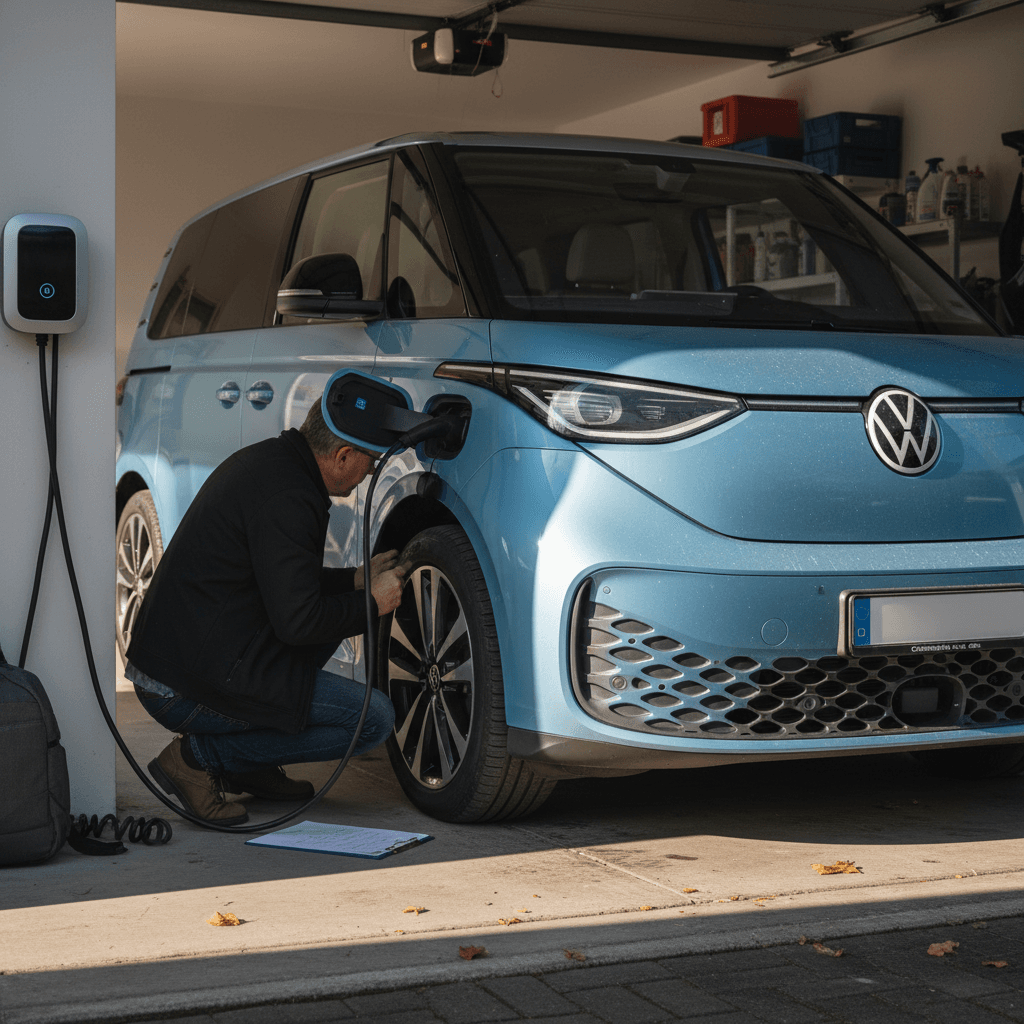
Fully charge your ID. Buzz to 100% on Level 2 at home and photograph the dash readout for estimated remaining range. This gives buyers a real‑world snapshot they can compare to new‑vehicle numbers.
2. Get a professional battery health report
Use a reputable EV diagnostics service, such as the <strong>Recharged Score battery health report</strong>, to measure state of health, DC fast‑charging behavior, and any cell imbalance. Attach the report PDF to your listing.
3. Summarize charging habits
In your description, explain how you typically charge (mostly home Level 2, occasional fast‑charging on trips). Mention if you routinely avoid sitting at 100% charge for long periods.
4. Collect fast‑charge examples
If you’ve used DC fast‑charging, note typical peak power (for example, “usually peaks around 170–190 kW from 10–40%”) and how long it takes to go from 10–80% under normal conditions.
5. Confirm warranty status
Check the in‑car menu or MyVW app for in‑service date, and call your VW dealer if needed. Buyers want to know exactly how much battery warranty coverage remains in years and miles.
Leverage third‑party battery data
Step 3: Service records, recalls, and condition report
EVs need less routine service than gas vans, but the ID. Buzz still has tires, brakes, software updates, and open‑campaign checks. A clean, organized paper trail signals that you’ve treated the vehicle like the long‑term investment it is.
- Download maintenance history from your VW dealer portal or ask the service department to print it.
- Gather invoices for tire rotations, alignments, and any brake work.
- Confirm software updates and TSBs (technical service bulletins) are completed.
- Check for open recalls and get them addressed before listing.
- Note any accidents, insurance claims, or bodywork, buyers will likely find them via history reports anyway.
Be honest about damage
Step 4: Cosmetic prep, detailing, and small fixes
The ID. Buzz’s appeal is as much about style as utility. Buyers are paying for a rolling design statement. That means cosmetic details matter more than you might expect on a regular minivan.
Detailing checklist before you list
1. Professional exterior wash and decontamination
Have the paint decontaminated and waxed or ceramic‑coated, especially on two‑tone color schemes where grime stands out. Clean the charge port door and rear hatch thoroughly.
2. Interior deep clean
Shampoo carpets, clean seat fabrics or leatherette, and scrub sliding‑door tracks. Families will inspect third‑row seating and cargo areas for stains and smells.
3. Fix minor dings and curb rash
A mobile paintless dent repair (PDR) visit and wheel touch‑ups are often cheaper than the price drop buyers will demand for visible damage in listing photos.
4. Address warning lights
If any warning lights are on, airbag, tire pressure monitoring, stability control, resolve them before listing. An illuminated dash cluster is a red flag on test drives.
5. Remove personal add‑ons
Roof boxes, stickers, aftermarket lighting, or bolt‑on graphics may not match buyer tastes. Either remove them or be clear they’re easily reversible.
Think like a buyer walking up
Step 5: Pricing your Volkswagen ID. Buzz realistically
Because the ID. Buzz is still new in the U.S. market, pricing can feel murkier than for a common crossover. Early used listings in 2025 show a wide band depending on miles, trim, and equipment, with many clean examples still holding a premium over other three‑row EVs.
How to build a realistic ID. Buzz asking price
Use multiple data points, then adjust for options and condition.
| Step | What to check | How it helps |
|---|---|---|
| 1 | Kelley Blue Book, NADA, Black Book | Baseline trade‑in and private‑party ranges based on mileage and zip code. |
| 2 | Online listings (Recharged, major marketplaces, VW dealers) | Shows real asking prices for similar trims and mileage bands. |
| 3 | Auction results and dealer listings | Reveals what ID. Buzz vans are actually selling for when they move quickly. |
| 4 | Options & battery health adjustments | Add value for AWD, larger battery, rare colors, and a clean battery report; discount for cosmetic or battery concerns. |
| 5 | Local demand | Some urban and coastal markets pay stronger premiums for ID. Buzz vans than rural areas. |
These are reference sources and adjustments, not firm valuations.
Price with negotiation room, but not too much
Step 6: Photos and listing that sell the story
Your photos and description are where you separate your ID. Buzz from a generic used‑car listing. Lean into what makes the van special, design, practicality, EV running costs, while backing it up with concrete information.
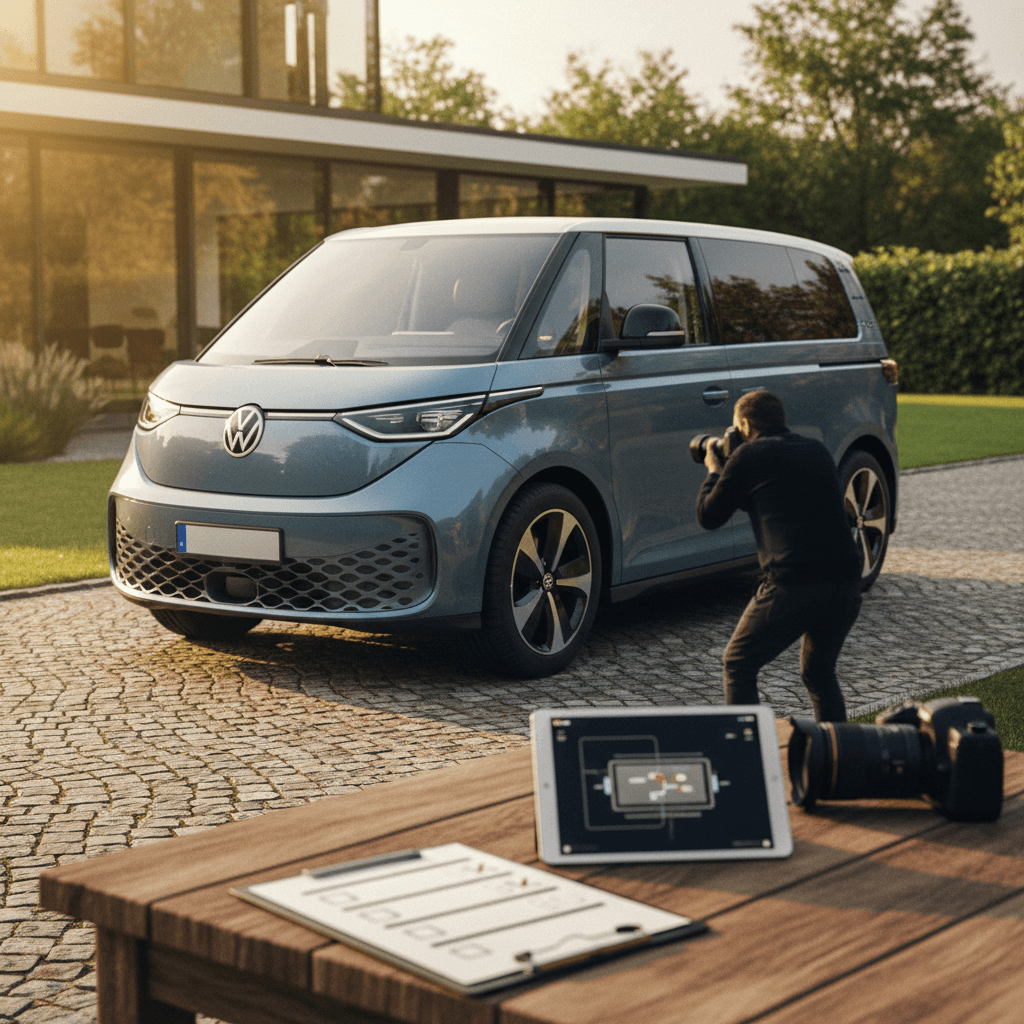
Must‑have photo set for an ID. Buzz sale
Think like a professional listing photographer
Exterior walk‑around
- Front 3/4 view from both sides
- Side profile, rear 3/4 view
- Close‑ups of wheels and tires
- Any dings, repairs, or scratches, show them clearly
Interior & seating
- Driver cockpit, steering wheel, and screens on
- All seating rows from multiple angles
- Cargo area with seats up and folded
- Detail shots of upholstery and trim
EV‑specific details
- Charge port open and plugged into Level 2
- Instrument cluster at 100% charge showing range
- Any home charging equipment included
- Battery health report screenshot or printed copy
Writing listing copy that works
1. Start with a clear headline
Include year, trim, battery/drivetrain, and one highlight, for example: “2025 VW ID. Buzz Pro S Plus 4MOTION – 86 kWh, 7‑seat, 1‑owner.”
2. Tell a short, honest ownership story
Explain how you used the van (commuter, family hauler, road‑trip machine), why you’re selling, and where it’s been garaged. Buyers love a narrative that matches the condition they see.
3. Call out battery and warranty details
Include remaining battery and bumper‑to‑bumper warranty time/miles, plus any third‑party battery report or fast‑charging notes.
4. List factory options in bullets
Use a clean bullet list for major features: AWD, seating layout, driver‑assist tech, premium audio, tow package, roof rails, etc.
5. Disclose known flaws
Mention cosmetic flaws, prior repairs, or quirks (for example, “small curb rash on rear right wheel,” “minor stain in third‑row carpet”). It builds trust and filters out perfection‑only buyers.
Step 7: Screening buyers, test drives, and remote sales
The ID. Buzz attracts a mix of EV veterans and first‑time electric buyers who fell in love with the look. Your job is to separate serious shoppers from tire‑kickers, protect yourself on test drives, and have a plan if the right buyer is out of state.
Screening buyers
- Use your listing to answer common questions up front so messages focus on logistics, not basics.
- Ask whether the buyer has driven EVs before and if they have home charging arranged.
- Confirm they’re pre‑approved for financing or ready with funds before scheduling long test drives.
Test drive safety
- Meet in a public place with security cameras, ideally near a bank or police‑station parking lot.
- Check and photograph the buyer’s driver’s license before they drive.
- Ride along for the test drive; don’t send an ID. Buzz out alone with a stranger.
Never hand over keys without ID
If you’re open to selling your ID. Buzz to an out‑of‑area buyer, spell out how you’ll handle inspections, shipping, and payment. Many serious EV shoppers are willing to travel or ship a vehicle for the right spec and battery report.
Step 8: Paperwork, payment, and handover checklist
Closing the sale is where even well‑prepared sellers get tripped up. EVs add a few twists, like home chargers and charging app accounts, but the basic structure is familiar: secure payment, transfer title, and document the condition you’re handing over.
Close‑the‑deal checklist for your ID. Buzz
1. Choose a safe payment method
For private sales, bank‑to‑bank wire, cashier’s check verified at the issuing bank, or an escrow service are your safest options. Avoid peer‑to‑peer apps for large transactions.
2. Complete bill of sale and title
Fill out a bill of sale with VIN, mileage, sale price, and as‑is language. Sign and date the title exactly as your state requires to avoid registration delays for the buyer.
3. Capture final condition photos
Take a full photo set of the ID. Buzz on handover day, inside, outside, and the odometer, to document condition in case of later disputes.
4. Remove plates and cancel insurance (as required)
States differ on whether plates stay with the vehicle. Know your rules, and call your insurer to cancel or transfer coverage once the sale is complete.
5. Transfer accessories and charging gear
Hand over both key fobs, cargo covers, floor mats, owner’s manuals, and any Level 1 or Level 2 charging cables you agreed to include in the sale.
6. Reset and disconnect digital accounts
Factory‑reset infotainment, remove the ID. Buzz from your MyVW account, and sign out of any navigation, streaming, or charging apps linked to the vehicle.
How Recharged can help you sell an ID. Buzz
If you’d rather not manage all of this yourself, Recharged is built around making used‑EV transactions smoother, especially for higher‑value models like the ID. Buzz. You can request an instant offer, trade the van in toward another EV, or use a consignment‑style sale where Recharged does the heavy lifting.
Recharged options for ID. Buzz sellers
Pick the path that fits your timeline and risk tolerance
Instant offer or trade‑in
Get a fast value range for your ID. Buzz based on real EV market data and battery health. Skip private‑sale logistics and apply the value toward your next EV if you’d like.
Consignment‑style selling
Let Recharged market your ID. Buzz to EV‑focused buyers, manage test drives, and handle paperwork, while you retain ownership until it sells.
Recharged Score battery report
Even if you sell privately, a Recharged Score battery health report can anchor your asking price and reassure buyers about long‑term pack health.
Ready to find your next EV?
Browse VehiclesWhy this matters for ID. Buzz sellers
Volkswagen ID. Buzz selling checklist: FAQ
Common questions when selling a VW ID. Buzz
Key takeaways before you list your ID. Buzz
Selling a Volkswagen ID. Buzz isn’t just about setting a price and snapping a few photos. It’s about proving that your van’s battery, charging performance, and condition live up to the promise of its design. If you follow this Volkswagen ID. Buzz selling checklist, gathering records, documenting battery health, pricing from real data, and presenting clean photos, you’ll attract more serious buyers and have more leverage when it’s time to negotiate.
If you’d rather have help, Recharged can step in at almost any stage, whether you just want a Recharged Score battery report to strengthen a private listing, an instant offer to avoid the hassle, or a consignment‑style sale with nationwide EV‑focused marketing. Either way, a little preparation now is what turns your ID. Buzz from “just another used EV” into the standout listing shoppers are willing to pay for.