If you’re looking at a Volkswagen ID. Buzz roof rack weight limit, you’re probably trying to answer one of two questions: “Can I run a cargo box and bikes on the roof?” or “Will this van safely support a rooftop tent?” The answer is yes, within some very specific numbers and caveats that VW hides in the fine print.
Why roof load matters more on an EV
VW ID. Buzz roof rack weight limit: the short answer
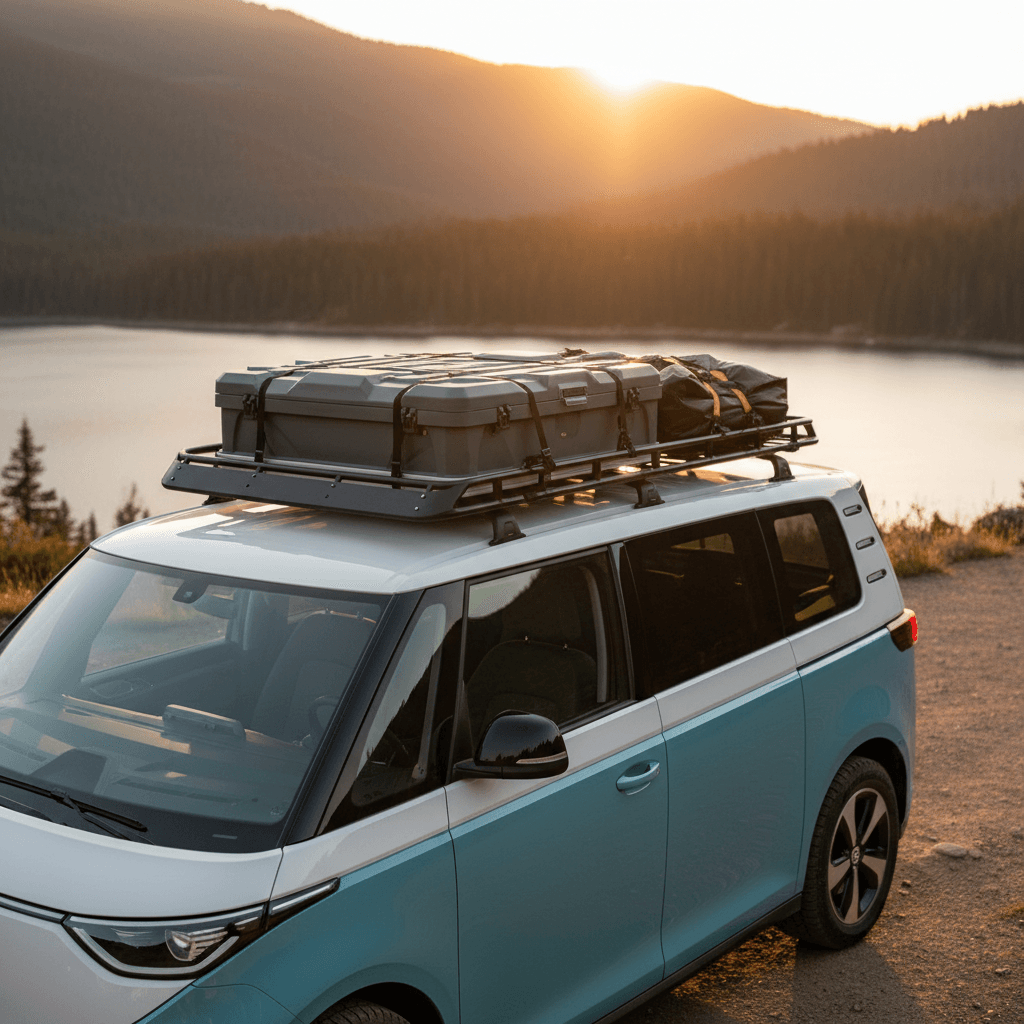
Volkswagen specifies a maximum dynamic roof load of around 100 kg (220 lb) for the ID. Buzz, depending on exact variant and market. That figure is in line with what you’ll see on many ID. Buzz‑specific crossbars and racks, which are often rated to 100 kg as well when weight is evenly distributed across the system.
- That number is **dynamic** – it applies while you’re driving, cornering, and braking.
- The 100 kg (220 lb) includes **everything above the roof skin**: the rack itself, mounting feet, boxes, bikes, boards, tent, and any accessories.
- Aftermarket racks or accessories may have a **lower rating** – you must respect the lowest number in the chain.
Always check your exact model
Key numbers for Volkswagen ID. Buzz roof loads
Dynamic vs static roof loads on the ID. Buzz
When you start reading roof‑rack and rooftop‑tent literature, you’ll see two very different kinds of weight numbers. For an ID. Buzz owner, understanding the difference is crucial.
Two kinds of roof load you need to know
Both matter on your ID. Buzz, but in different ways
Dynamic roof load
Dynamic = while you’re driving. This is the number Volkswagen publishes in the manual.
- Covers braking, cornering, potholes, and crosswinds.
- Usually around 100 kg / 220 lb for the ID. Buzz.
- Includes rack, mounts, box, bikes, tent – everything above the roof.
- You must never exceed this while the van is moving.
Static roof load
Static = when the van is parked. Think rooftop tent with people sleeping inside.
- Higher than dynamic because the forces are lower and spread out.
- Rack companies often quote rough rules like up to ~3× dynamic as a design target.
- Volkswagen rarely publishes a static figure; you’re expected to stay within dynamic limits for safety margin.
- Support from all four wheels and the structure of the van share the load.
The non‑negotiable rule
Cargo vs passenger ID. Buzz: does roof load change?
The ID. Buzz family includes both the ID. Buzz Cargo work van and the multi‑passenger versions, including the long‑wheelbase three‑row model coming to North America. Structurally, the roof shells are engineered to the same crash and rollover standards, but trim, glass, and roof options can change the rating on paper.
ID. Buzz Cargo (panel van)
- Typically uses a “normal roof” height with steel panels.
- Often rated around 100 kg dynamic roof load in European body‑builder guides.
- Many commercial rack systems (Sortimo, work bars, platforms) are designed around that 100 kg figure.
- Ideal base if you’re planning full‑time trades use or a heavier rack system.
Passenger ID. Buzz (5–7 seats)
- Roof load is often similar on paper, but check for differences with glass roofs or rails.
- Factory‑fit roof‑rail kits and dealer accessories will always respect VW’s official limit.
- Aftermarket aero bars (Thule, Rhino‑Rack, etc.) are often rack‑rated to 75–100 kg, but vehicle limit still rules.
- Height matters more here, add a box and you’re flirting with some parking‑garage clearances.
Where to find the real number
What you can safely carry on an ID. Buzz roof rack
Once you know you’re working with roughly 100 kg (220 lb) on the roof, you can start to do the fun math. The catch is that racks and accessories eat into that number fast.
Example ID. Buzz roof rack setups and weights
Approximate weights to help you budget against a 100 kg / 220 lb dynamic roof load. Always verify the actual weights of your gear.
| Setup | Rack weight | Gear weight | Total on roof | Within 100 kg? |
|---|---|---|---|---|
| Slim aero crossbars + small cargo box | 8–12 kg (18–26 lb) | 15–25 kg (33–55 lb) | 23–37 kg (51–82 lb) | Comfortably yes |
| Crossbars + large roof box (family road trip) | 8–12 kg (18–26 lb) | 25–35 kg (55–77 lb) empty | 33–47 kg (73–104 lb) | Yes, plus luggage margin |
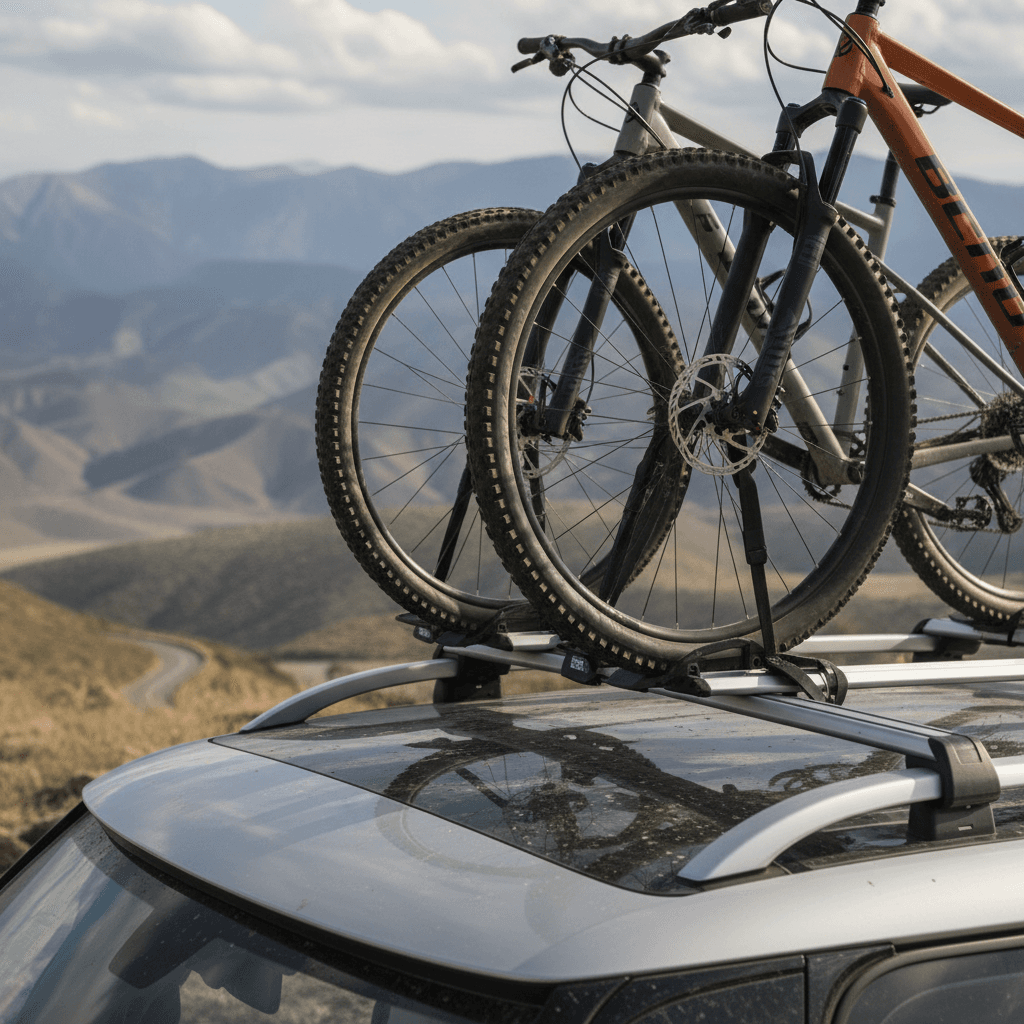
| Crossbars + 2 bikes on upright carriers | 8–12 kg (18–26 lb) | 30–40 kg (66–88 lb) total | 38–52 kg (84–115 lb) | Yes, but mind crosswinds |
| Crossbars + 4 bikes | 8–12 kg (18–26 lb) | 60–80 kg (132–176 lb) total | 68–92 kg (150–203 lb) | Usually yes, but very close to limit |
| Full platform rack + recovery gear | 30–40 kg (66–88 lb) | 30–40 kg (66–88 lb) | 60–80 kg (132–176 lb) | Yes, limited extra capacity |
| Platform rack + small soft‑shell RTT | 30–40 kg (66–88 lb) | 45–60 kg (99–132 lb) tent only | 75–100 kg (165–220 lb) | Right at the limit – pack carefully |
These examples assume an ID. Buzz with a 100 kg roof‑load rating; if your vehicle or rack is rated lower, adjust accordingly.
Don’t forget the little stuff
Can the Volkswagen ID. Buzz handle a rooftop tent?
This is the big fantasy for a lot of ID. Buzz owners: surfboards on one side, rooftop tent on the other, and the van as a rolling electric beach shack. It’s possible, but you have to be disciplined about the numbers and the mounting hardware.
- Most compact hard‑shell and soft‑shell rooftop tents weigh 45–75 kg (100–165 lb) before you add crossbars or a platform.
- Many quality racks for the ID. Buzz weigh 25–40 kg (55–88 lb) on their own.
- Add two adults and gear and you’re well beyond the vehicle’s dynamic number, which is why static vs dynamic understanding is critical.
If you want to run a rooftop tent
- Choose the lightest tent that meets your needs.
- Use a rack system that spreads the load across as many factory mounting points as possible.
- Keep other roof gear minimal, no spare tires or heavy boxes up top.
- Drive well below highway speeds in gusty wind or on rough roads.
What we don’t recommend
- Over‑building with huge platforms and steel accessories “just in case.”
- Loading the tent with heavy gear while driving, treat it as sleeping space, not a storage shed.
- Assuming static roof numbers from a rack brand override VW’s own limits.
- DIY mounting that ignores the ID. Buzz’s factory fixing points or structure.
A safer camping alternative
How roof weight and racks affect range and handling
Beyond the pure numbers, the way your ID. Buzz feels on the road changes when you load the roof. You’re not just adding weight, you’re changing the van’s shape and its center of gravity.
What you’ll notice when you add a rack and gear
Some of it is subtle, some is not
Range loss
Expect a **5–15% hit in range** at highway speeds with a loaded box or bikes. The ID. Buzz already has a big frontal area; a tall box turns it into a brick in the wind.
More wind noise
Even aero bars will add **some whistle or roar**, especially in crosswinds. Boxes and bikes are louder than bare bars.
Body roll & crosswinds
Extra mass up high makes the van **lean more in corners** and feel busier in gusty wind. You’ll feel it most on sweeping highway ramps.
Re‑think your speed
Real‑world loading tips for your ID. Buzz
Engineers calculate roof loads on paper, but the way you pack is what keeps you out of trouble. Think of your ID. Buzz like a rolling house: heavy stuff in the basement, light stuff in the attic.
- Put heavy items low and between the axles, inside the cabin or cargo area, not on the roof.
- Reserve the roof for **bulky but relatively light** gear: duffels, bedding, skis, boards, empty coolers, camp chairs.
- Keep long items like boards and kayaks **centered and supported** on both bars; don’t cantilever them off the back.
- Tighten rack and accessory fasteners on a schedule, check them after the first trip, then every few thousand miles.
- If you’re close to the roof limit, consider lowering your **overall payload** inside the van to give yourself margin.
A packing strategy that works
Checklist: before you load the roof
Quick safety checklist for ID. Buzz roof loads
1. Confirm your vehicle’s roof rating
Open the owner’s manual or technical data and note the <strong>maximum roof load</strong> for your exact ID. Buzz model, year, and roof type.
2. Add up all the components
Weigh or look up the weight of the <strong>rack, feet, box, bikes, boards, tent, and accessories</strong>. Add them together, don’t guess.
3. Respect the lowest number
If your rack is rated to 75 kg but the vehicle is rated to 100 kg, your practical limit is <strong>75 kg</strong>, not 100 kg, and vice versa.
4. Check mounting points and torque
Make sure crossbars or platforms are mounted only to <strong>approved fixing points</strong>, and that all fasteners are torqued to spec.
5. Test fit in your real world
Measure total height with the rack and gear installed. Compare it to <strong>garages, carports, and ferry or parking‑garage restrictions</strong> you use regularly.
6. Do a short, loaded shakedown run
Before a big trip, drive a short loop with the roof fully loaded. Listen for noises, watch for unusual sway, and retighten everything when you get home.
Buying a used ID. Buzz with a roof rack or tent
If you’re shopping the used market, a Volkswagen ID. Buzz that already wears a roof rack or camper setup can be a huge win, or a red flag, depending on how it was used. This is where a structured inspection and good data really matter.
What to inspect on a used ID. Buzz
- Look closely at the **roof skin and gutters** for dents, ripples, or cracking around mounting points.
- Check for **rust or corrosion** where brackets clamp onto painted metal.
- Inspect the **interior headliner** for water stains that could indicate roof‑rack‑related leaks.
- Ask how the previous owner used it: cargo box and bikes is very different from heavy trades gear or an oversized tent.
How Recharged can help
On Recharged, every used EV, including ID. Buzz models as they enter the market, comes with a Recharged Score Report. That means:
- Verified battery health, so you know how roof‑rack drag will really affect your range.
- Fair‑market pricing that reflects modifications and accessories.
- EV‑specialist guidance on whether a specific build (racks, tents, lifts) is a smart match for your trips.
You can handle the whole purchase online, arrange financing or trade‑in, and have the van delivered, no drama at the dealership.
Volkswagen ID. Buzz roof rack FAQ
Frequently asked questions about ID. Buzz roof loads
The Volkswagen ID. Buzz gives you plenty of freedom to carry gear on the roof, as long as you play by the numbers. Think of 100 kg (220 lb) as your working dynamic roof limit, subtract your rack and accessories, and use whatever’s left for the light, bulky stuff that makes life on the road better. If you’re dreaming about rooftop tents or turn‑key camper builds, take an extra beat to study the technical data, choose the right hardware, and be honest about how you’ll really use the van. And when you’re ready to find a used ID. Buzz with the right mix of range, roof options, and accessories, Recharged can help you sort the smart setups from the science projects.