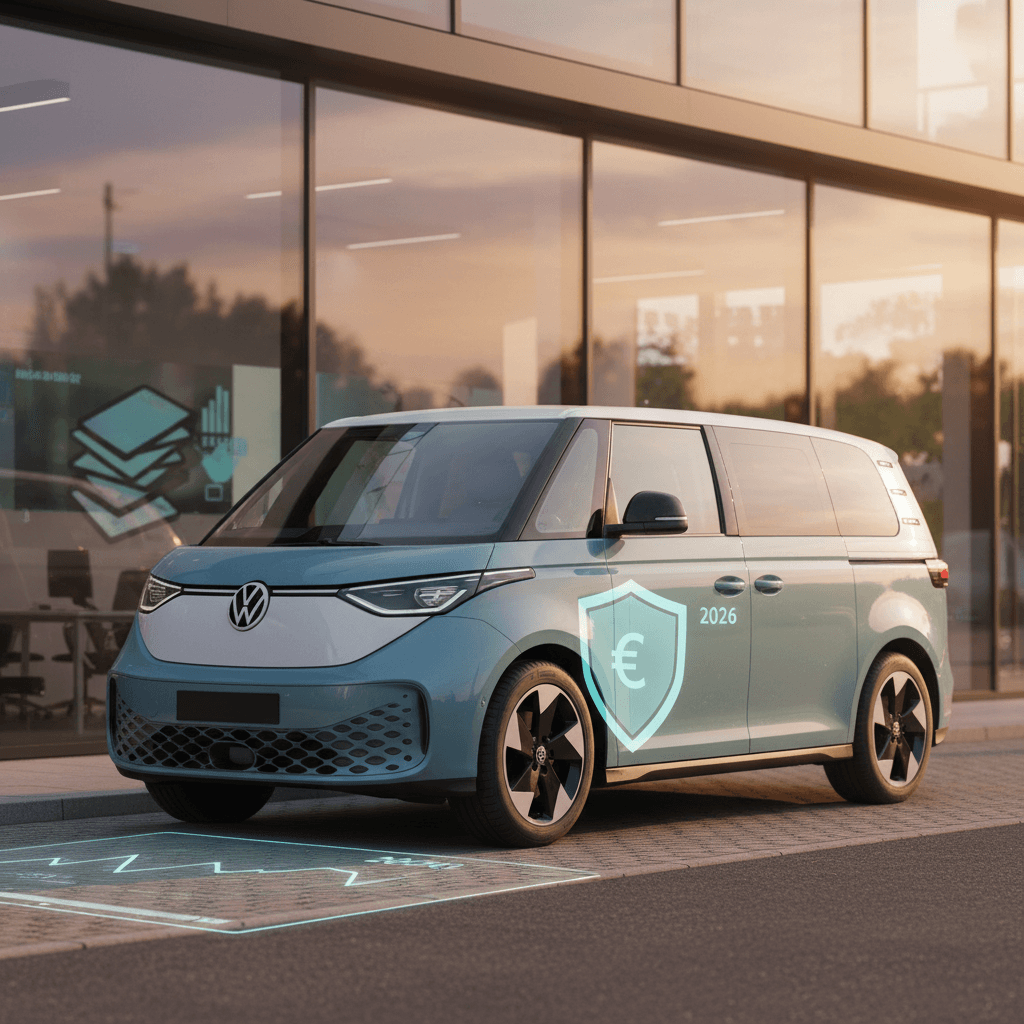
If you’re eyeing a Volkswagen ID. Buzz for its retro looks and family-friendly space, you also need a realistic picture of what Volkswagen ID. Buzz insurance cost in 2026 will look like. Because the Buzz is a large, high-value electric van, it won’t insure like a compact hatchback, and knowing that up front can save you some sticker shock at renewal time.
Quick take
Overview: Where ID. Buzz Insurance Lands in 2026
Insurers don’t yet publish neat nationwide averages for the ID. Buzz the way they do for long‑established models, but we can triangulate from a few reliable benchmarks in 2025–2026:
- Average full‑coverage car insurance in the U.S. is around $2,300 per year for 2025–2026 across all vehicle types.
- Minivans, in general, tend to be cheaper to insure than many SUVs, roughly $1,800–$1,900 per year on average, because they’re family‑oriented and see more cautious use.
- Full‑coverage insurance for electric vehicles often runs 10–50% higher than comparable gas models, thanks to higher repair and replacement costs.
The ID. Buzz is a three‑row electric van with plenty of glass, complex electronics, and a price tag that, in U.S. spec, sits well above a typical minivan. Put that together, and you’re looking at premiums that are usually above mainstream minivans and compact EVs, but not necessarily in the same territory as a Tesla Model X or other top‑end luxury rigs.
Where the ID. Buzz Sits in the 2026 Insurance Picture
How Much Does Volkswagen ID. Buzz Insurance Cost in 2026?
Because the ID. Buzz is just hitting American driveways and Volkswagen has already signaled there will be a pause for the 2026 model year before an update, there isn’t a single tidy “national average” yet. That said, looking at quotes shared by early owners and how similar‑priced EVs are rated, a realistic working range for Volkswagen ID. Buzz insurance cost in 2026 looks like this:
Estimated 2026 Volkswagen ID. Buzz Insurance Cost (U.S.)
Ballpark full‑coverage premiums for typical U.S. drivers insuring a new or nearly new Volkswagen ID. Buzz in 2026.
| Driver profile | Estimated annual premium | Monthly equivalent | How it compares |
|---|---|---|---|
| Very strong profile (excellent record, low‑risk ZIP, older driver) | $1,800–$2,300 | $150–$190 | Roughly in line with mainstream minivans and cheaper EVs. |
| Average profile (clean or minor tickets, typical suburb) | $2,300–$3,200 | $190–$265 | Above national average, similar to many mid‑priced EV crossovers. |
| Higher‑risk profile (young driver, dense city, prior claims) | $3,200–$4,500+ | $265–$375+ | Can quickly approach or exceed premiums on luxury EVs. |
These ranges assume clean driving records, average credit, and standard commuting use. Your own quote can fall outside these bands.
A word on wild quotes
Early owner anecdotes back this up. Some drivers have reported Buzz premiums landing slightly above other EVs in the driveway, such as a Rivian R1T, while others found quotes only marginally higher than a prior gas Atlas. The key is that the spread is wide, and the only way to know where you fall is to plug your own details into multiple carriers.
Why Volkswagen ID. Buzz Insurance Isn’t Cheap
Even though minivans typically enjoy lower insurance costs, the ID. Buzz brings several ingredients that push rates upward:
What Pushes ID. Buzz Insurance Up
Four big reasons the Buzz doesn’t insure like a base minivan.
High vehicle value
Complex EV hardware
Repair network & parts
Limited historical data
The good news on safety
8 Factors That Change Your ID. Buzz Insurance Rate
Every insurer uses its own formula, but the major levers are familiar. With a large electric family hauler like the Buzz, some of them matter even more than usual.
Key Rating Factors for Volkswagen ID. Buzz Insurance
1. Your driving record
Accidents, speeding tickets, and at‑fault claims will push your ID. Buzz premium up quickly. A squeaky‑clean record is one of the biggest discounts you can earn.
2. Where you live and park
Dense urban ZIP codes, high theft areas, and street parking usually cost more than quiet suburbs and locked garages. With a high‑visibility van like the Buzz, secure overnight parking helps.
3. Annual mileage and use
A Buzz used for family road trips and heavy commuting racks up more exposure than one that mostly runs local errands. Expect higher rates for high‑mileage or business use.
4. Coverage levels and deductibles
Low deductibles ($250–$500) and high liability limits mean better protection but higher premiums. Increasing your collision/comprehensive deductibles can meaningfully cut costs, if you can afford the out‑of‑pocket risk.
5. Driver age and experience
Younger drivers, especially under 25, will see outsized increases if they’re rated as primary operators on a Buzz. Consider whether teens really need to be listed as primary drivers on your most expensive vehicle.
6. Credit‑based insurance scores
In most states, insurers use credit‑based scores as a risk proxy. Strong credit typically translates to lower premiums; in a few states this practice is restricted or banned.
7. Prior insurance history
Gaps in coverage, frequent carrier hopping, or a history of late payments can be red flags. A stable insurance history often earns you better pricing.
8. Safety and telematics programs
Choosing a trim with more active safety tech or enrolling in a usage‑based “good driver” program can unlock discounts, especially helpful on a newer, pricier EV like the ID. Buzz.
Trim, Usage & Location: How They Shift Your Premium
Even within the ID. Buzz lineup, your exact configuration and how you use the van change the quote insurers spit out. Here’s how to think about those variables.
Higher trims vs. base models
- More equipment, bigger wheels, panoramic glass, premium audio, can drive up repair costs after a claim.
- Stronger performance (if a dual‑motor or higher‑output version is offered) may nudge rates higher versus a base rear‑drive model.
- On the flip side, extra safety tech (enhanced driver‑assist packages) can earn small discounts with some carriers.
Family shuttle vs. heavy commuter
- Using the Buzz mainly as a family people‑mover for school, sports, and errands usually means moderate annual miles and mainstream pricing.
- Use it as a long‑distance commuter or gig‑work vehicle and insurers may classify it as higher exposure, especially if mileage spikes above 15,000–20,000 miles per year.
- Be honest about your usage; mis‑classifying can cause headaches at claim time.
How Location Affects 2026 ID. Buzz Insurance
Illustrative examples of how the same driver and Buzz can see very different quotes, depending on location and garaging.
| Garaging situation | Risk profile | Typical impact on premium |
|---|---|---|
| Downtown in a large metro, street‑parked | Higher theft, more traffic, more claims | Often the highest ID. Buzz rates. |
| Inner‑ring suburb, garage‑parked | Moderate traffic, lower theft, secure parking | Usually mid‑pack premiums. |
| Smaller town, garage‑parked | Lower claim frequency, less congestion | Can be significantly cheaper, sometimes hundreds less per year. |
Exact numbers will vary by insurer, but the pattern, big city vs. suburb vs. rural, is very real.
Pro tip if you’re moving
7 Ways to Lower Your Volkswagen ID. Buzz Insurance Costs
You can’t change the fact that the Buzz is a pricey electric van, but you have more control than you might think over your final bill. Here are practical steps that often move the needle in 2026.
- Shop more than one carrier. Some insurers are currently very conservative on new EVs; others are more aggressive because they want the business. Get at least three quotes, and revisit them at renewal once more ID. Buzz data exists.
- Bundle home and auto. If you own a home or condo, bundling your Buzz with property coverage can knock 10–25% off, depending on the carrier.
- Right‑size your deductibles. Moving from a $500 to $1,000 collision/comprehensive deductible can shave meaningful dollars off an expensive EV policy, just make sure you can cover that bigger out‑of‑pocket bill if needed.
- Use telematics or “good driver” programs. Many companies now offer usage‑based insurance that monitors braking, time of day, and mileage. Safe patterns can earn sizable discounts, especially when the baseline premium is high.
- Limit high‑risk drivers. If you have teenage drivers in the household, think carefully before listing them as primary on the Buzz. A cheaper, older car for practice can make more sense financially.
- Ask about EV‑specific discounts. Some insurers offer small credits for electric vehicles, advanced safety tech, or low annual mileage, each one helps offset the Buzz’s higher repair costs.
- Maintain good credit and clean history. Over time, avoiding lapses in coverage, late payments, and claims builds a profile insurers reward with lower rates. On an expensive EV, those percentage discounts add up quickly.
Leasing as a risk‑management tool
Insuring a Used Volkswagen ID. Buzz
With Volkswagen pausing U.S. ID. Buzz imports for the 2026 model year and planning a refreshed version later in the decade, lightly used Buzz vans will be especially interesting. Insurance behaves a little differently once that first big depreciation hit is behind you.
New vs. Used ID. Buzz: Insurance Differences
What tends to change once the Buzz isn’t brand‑new anymore.
Vehicle value drops
Financing requirements
Coverage strategy
Buying used through a specialist marketplace like Recharged also gives you a clearer view of the vehicle’s total cost picture. Every Buzz we sell includes a Recharged Score battery health report, so you’re not guessing about pack condition, something traditional insurers generally don’t measure, but that absolutely matters to you as an owner.

How Insurance Fits Into ID. Buzz Total Ownership Cost
It’s easy to focus on monthly payments and forget that insurance is one of the biggest ongoing costs of car ownership, especially on EVs.
Insurance vs. fuel and charging
On a gasoline minivan, fuel often dominates your monthly operating costs. With an electric like the Buzz, especially if you charge at home on a favorable rate plan, insurance can rival or exceed your annual charging bill.
That makes it worth treating insurance as part of the vehicle decision itself, not a footnote you’ll handle later at the dealership.
Insurance vs. depreciation
EVs have seen faster early‑life depreciation than many equivalent gas models. The ID. Buzz is no exception, given its high MSRP and niche appeal. Over your first 3–5 years, depreciation and insurance together will likely be the two biggest line items in your cost of ownership.
Running those numbers before you buy, or lease, helps you decide which term length and mileage strategy actually fits your budget.
Don’t forget taxes and fees
How Recharged Helps You Make the Numbers Work
At Recharged, we look at the ID. Buzz, and every used EV we list, as a complete ownership story, not just a cool spec sheet. Insurance is a big chapter in that story.
- Every Buzz includes a Recharged Score battery health report, so you’re not over‑paying for a van with a tired pack.
- Our pricing tools benchmark fair‑market values, which can help keep collision/comprehensive portions of your premium rational instead of inflated.
- If you’re financing, our EV‑friendly financing options can be modeled alongside realistic insurance estimates to keep your total monthly cost where you want it.
- Considering a trade‑in or instant offer on your current EV or gas vehicle? A stronger equity position going into a Buzz makes higher insurance easier to swallow.
- With nationwide delivery and EV‑specialist support, we can talk through how insurance, charging, and depreciation work together before you ever sign paperwork at home or at our Richmond, VA Experience Center.
Bring a real quote to the table
Volkswagen ID. Buzz Insurance Cost 2026: FAQ
Common Questions About ID. Buzz Insurance
Bottom Line: Budgeting Smart for ID. Buzz Insurance
The Volkswagen ID. Buzz is one of the most character‑rich family EVs on the road, but like any large, premium‑priced electric vehicle, it comes with real insurance costs attached. In 2026, most drivers should assume Buzz insurance will sit above the U.S. average and budget accordingly, especially if you live in a dense metro area or have younger drivers in the house.
The upside is that you’re not powerless. Smart carrier shopping, thoughtful coverage choices, and a realistic look at your total cost of ownership can keep the numbers manageable. If you’re considering a used ID. Buzz, Recharged can help you pair a van with strong battery health and fair market pricing to an insurance strategy that actually fits your life, so you get the nostalgia, the space, and the EV benefits without blowing up your budget.