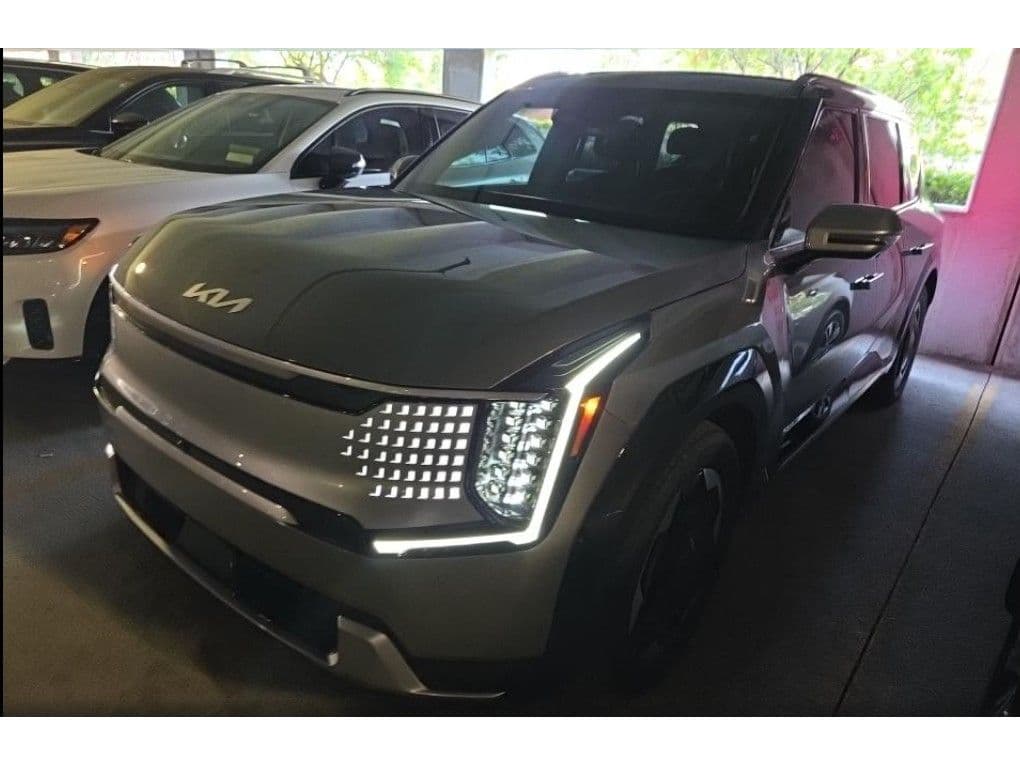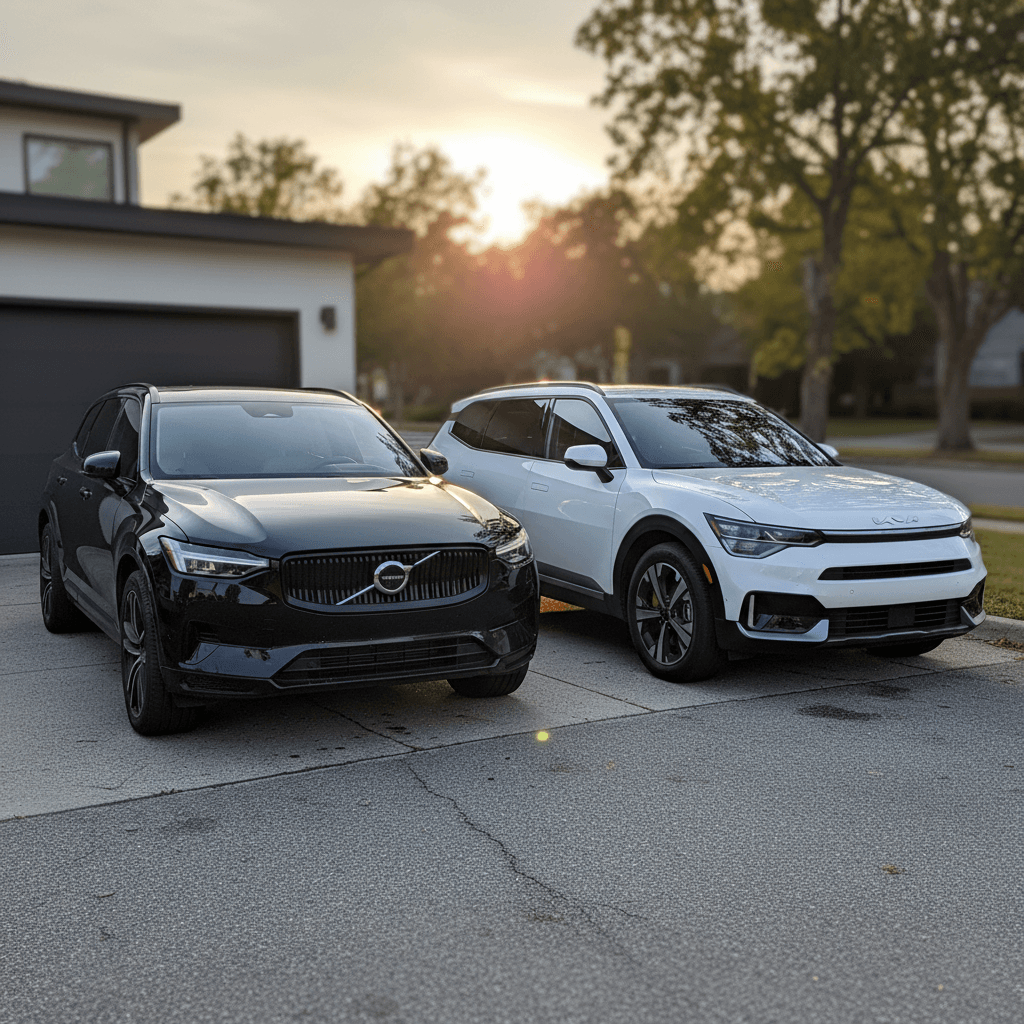
If you’re shopping the used EV market in 2026 and you want a proper three-row family hauler, your short list probably boils down to a used Volvo EX90 or a used Kia EV9. Both are big, bold electric SUVs, both claim to replace the family minivan, and both promise luxury without gasoline. But they deliver those promises in very different ways.
Model years in this guide
Why this Volvo EX90 vs Kia EV9 comparison matters in 2026
The EX90 and EV9 are pioneers: they’re the first widely available three-row electric SUVs that regular families can actually live with. Tesla’s Model X is expensive and fussy, Rivian’s R1S is adventurous but niche, and Mercedes’ EQS SUV is priced in a different tax bracket. A used EX90 or EV9 gives you genuine 7-seat capability, serious safety tech, and long-range road-trip ability for substantially less than new pricing.
By 2026, both models have a couple of years of real-world data on range, reliability, and depreciation. That makes now a smart time to shop them used, if you understand their differences and how to evaluate battery health. That last part is exactly where Recharged’s battery diagnostics and Recharged Score come in.
Quick specs: used Volvo EX90 vs Kia EV9 at a glance
Core specs for early EX90 and EV9 (U.S. models)
Representative trims you’re most likely to see used in 2026. Exact numbers vary slightly by wheel size and configuration.
| Model | Typical used trim | Drivetrain | Battery (usable kWh) | EPA range (mi, approx.) | 0–60 mph (sec) | Max DC fast charge | Max towing |
|---|---|---|---|---|---|---|---|
| Volvo EX90 | Twin Motor Plus/Ultra | Dual-motor AWD | ~107 | up to ~300 | around 4.7–5.7 | up to 250 kW | 5,000 lb |
| Kia EV9 | Light LR RWD / Wind / Land AWD | RWD or AWD | 76–99.8 | 223–304 | ~5.7–8.0 (trim-dependent) | up to 230–240 kW | 5,000 lb |
Specs shown are manufacturer or EPA estimates for early model years; always verify the exact vehicle you’re considering.
How to use the specs table
Price and value in the used market
Used Volvo EX90 pricing in 2026
The EX90 launched as a luxury flagship, with new prices for early U.S. models hovering around the high-$70,000s for Twin Motor Plus and climbing from there. On the used market by 2026, you should expect:
- Higher asking prices than an equivalent EV9
- Better standard equipment (Lidar, advanced safety, upscale materials)
- Fewer high-mileage examples, since many are still relatively new
In other words, the EX90 plays in the same space as a BMW iX or Rivian R1S, but with Volvo’s softer, safety-first persona.
Used Kia EV9 pricing in 2026
The EV9 was always positioned as the value three-row EV. New MSRP for 2024/2025 Light trims started in the mid–$50,000s, with well‑equipped Wind and Land trims climbing into the $60Ks and GT-Line into the low‑$70Ks. By 2026, used shoppers benefit from:
- Noticeable depreciation on higher trims, especially GT-Line
- More inventory and broader spec variety (RWD, AWD, short/long range)
- Closer pricing to a loaded gasoline Telluride than to a German luxury EV
For many families, a used EV9 hits the sweet spot of features vs. monthly payment.
How EX90 vs EV9 value typically shakes out
Don’t shop on price alone
Range, efficiency, and charging experience
Both SUVs are capable long‑distance machines, but they achieve it in slightly different ways. The EX90 leans on a large battery and efficient aero, while the EV9 rides on Hyundai‑Kia’s 800‑volt E-GMP platform, which is a bit of a charging wizard.
Range and charging: where the miles really come from
What you can realistically expect from a used Volvo EX90 or Kia EV9 in 2026.
Real‑world range expectations
Volvo EX90: With around 107 kWh and dual‑motor AWD as standard, most owners will see real‑world highway range a bit under headline numbers once you factor in speed, weather, and cargo. Think upper‑200s miles on a good day with sensible driving.
Kia EV9: Trims vary more. Base RWD with the smaller pack can feel modest for cross‑country use, but the long‑range RWD and AWD versions can realistically deliver mid‑200s to low‑300s miles in mixed driving when driven smoothly.
Fast‑charging behavior
EX90: On paper, DC fast charging up to roughly 250 kW means strong highway capability. In practice, charge curves depend heavily on software updates and battery temperature. Volvo tends to prioritize longevity over sheer speed.
EV9: The E-GMP platform is one of the fastest‑charging in the business. When conditions are right, the EV9 can jump from low state‑of‑charge to a useful level in well under half an hour, making it a road‑trip rockstar.
Look beyond peak kW numbers
For North American owners in 2026, the charging story also includes the NACS (Tesla connector) transition. Newer EV9s and EX90s will increasingly support NACS either from the factory or via adapters, opening up access to Tesla’s Supercharger network and making both models far more flexible on long trips.
Space, comfort, and family practicality
Volvo EX90: Scandinavian sanctuary
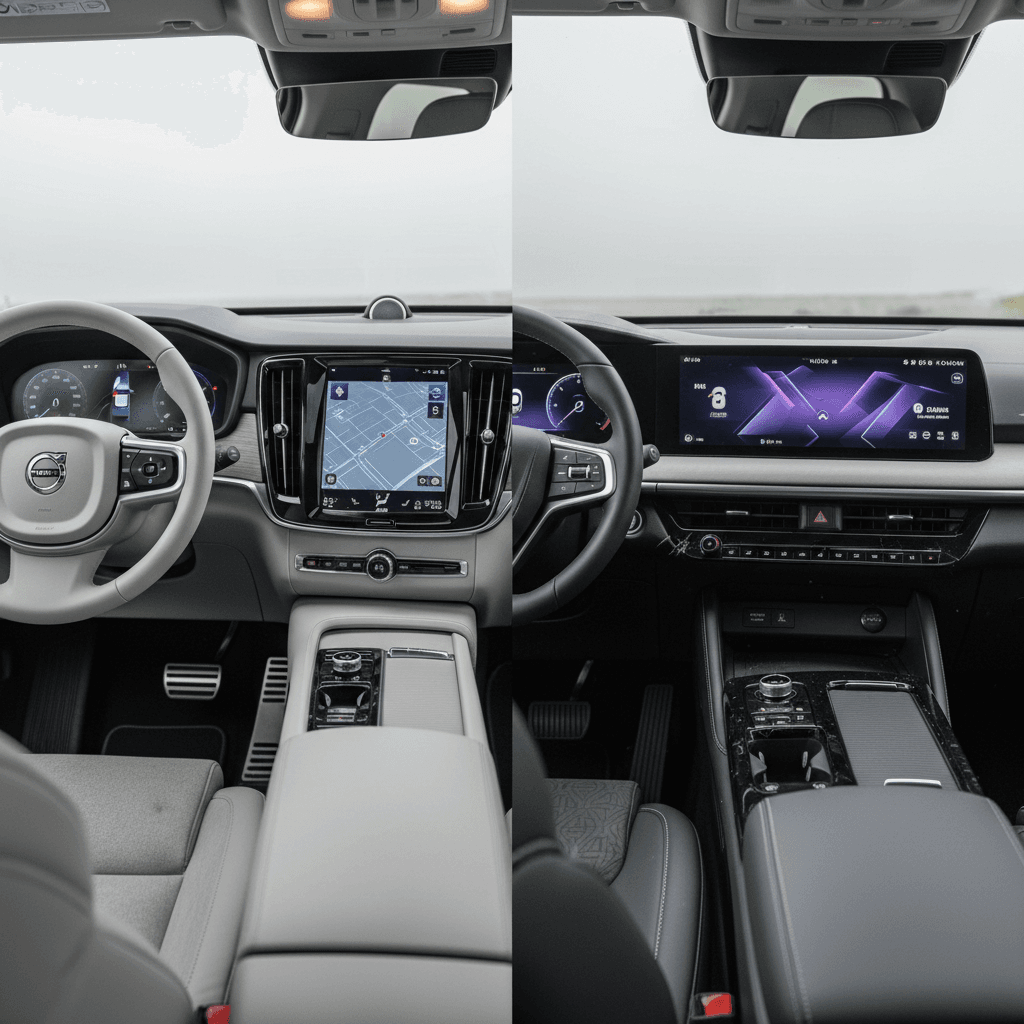
The EX90’s cabin is exactly what you expect from modern Volvo: light, airy, and calming. Materials feel expensive, the design is restrained, and road noise is well hushed. It’s closer to a rolling spa than a family bus.
- Seating: Comfortable in all three rows, though the third row is still best for kids or shorter adults.
- Cargo: With all seats up, space behind the third row is modest, but fold rows and you get a proper cargo cave.
- Controls: Centered around a large vertical touchscreen; minimalist physical buttons may be love‑it or hate‑it.
Kia EV9: Family lounge with attitude
The EV9 interior is more concept‑car‑brought‑to‑life. It’s bold, angular, and full of clever storage. Higher trims can feel nearly as upmarket as the Volvo, albeit with a different design language.
- Seating: Three rows that genuinely work, especially in 7‑seat configurations. Optional captain’s chairs turn it into a rolling living room.
- Cargo: Boxy roofline and long wheelbase give the EV9 very useful family‑road‑trip space.
- Controls: Wide dual screens and more physical controls than the Volvo; slightly easier for EV newcomers.
Car‑seat reality check
Performance and driving character
On paper, these are heavy, high‑roof family appliances. On the road, they’re surprisingly different characters. The EX90 channels the calm confidence of a high‑end European SUV, while the EV9 has just a hint of mischievousness baked in, especially in its more powerful trims.
- Volvo EX90: Dual‑motor AWD and a big battery mean strong straight‑line shove, especially in higher‑output versions. Steering is light but accurate; the whole package is tuned for composure, not thrills.
- Kia EV9: Power varies widely by trim. Base RWD models are adequate but not exciting; long‑range and dual‑motor trims feel properly brisk. The chassis feels more playful, especially at city speeds, without losing the planted highway demeanor families need.
- Towing: Both are rated up to about 5,000 lb when properly equipped. As with any EV, expect range to drop roughly in half when you’re pulling a blunt‑fronted camper through the air. Plan your charging stops with that in mind.
Performance vs. tires
Safety tech and driver-assistance
Volvo has built its entire modern brand around safety, and the EX90 is effectively its technology flagship. Kia, meanwhile, has quietly become one of the leaders in mainstream driver‑assistance. On a used lot in 2026, you’re looking at two of the safest family vehicles money can buy, just with different philosophies.
How the EX90 and EV9 approach safety
Different toolkits, same end goal: keep your family out of trouble.
Volvo EX90 safety story
The EX90 piles on sensor hardware, including roof‑mounted lidar on many early builds, plus a dense suite of cameras and radars. Expect advanced collision avoidance, lane‑keeping, cross‑traffic alerts, and increasingly capable hands‑on driver‑assist as software matures.
Volvo tends to tune its systems conservatively. That can mean fewer surprises in traffic, but also more frequent alerts if you drive assertively.
Kia EV9 safety story
The EV9 leans on a comprehensive but more conventional radar‑camera setup. Kia’s Highway Driving Assist and related tools have a reputation for feeling confident but approachable. Adaptive cruise and lane‑centering on the EV9 can take a big bite out of highway fatigue.
On used examples, double‑check that important safety features weren’t part of a removed option package, especially on early base trims.
Model‑year updates matter
Ownership costs, depreciation, and battery health
When you buy used, you’re really buying two things: a remaining battery and a bundle of running costs. Both EX90 and EV9 sidestep oil changes and many traditional maintenance tasks, but they diverge on depreciation and long‑term perception.
What to expect living with a used EX90 or EV9
From depreciation curves to electrons per mile.
Depreciation
EX90: Luxury nameplate, high MSRP. That’s a recipe for steeper dollar depreciation, even if percentage drop is similar. Good news for you as a second owner; painful for the first buyer.
EV9: Lower starting price but higher-volume sales. Expect more examples in the marketplace and a wider value spread based on trim and options.
Energy & maintenance
Both vehicles trade fuel bills for electricity costs and predictable servicing (tires, brake fluid, filters). The EV9’s efficient charging habits can make it slightly cheaper to run for heavy fast‑charge users, while the EX90 may eke out small gains in steady‑state cruising efficiency.
Battery health
This is the big one. Warm climates, constant DC fast charging, or frequent 100% charges can accelerate degradation on any EV. Two EX90s or two EV9s with the same mileage can have very different remaining range.
Battery and longevity checks before you buy
1. Review detailed battery health data
Ask for a <strong>battery health report</strong>, not just a guess. A service like the Recharged Score uses diagnostics to estimate remaining capacity and future degradation, so you’re not buying a mystery pack.
2. Look at fast‑charging history
Heavy DC fast‑charging isn’t automatically bad, but consistent high‑power charging from very low state‑of‑charge can add stress. If logs are available, look for a mix of home Level 2 and fast‑charge use.
3. Check software update status
Both EX90 and EV9 improve over time via OTA updates. Confirm the car has current software, especially for battery management and charging logic.
4. Inspect tires and brakes
Regenerative braking means pads often last a long time, but a worn‑out set of cheap tires on a 6,000‑lb EV can be an expensive immediate upgrade. Factor that into your offer.
5. Confirm warranty coverage
Most EV batteries carry 8‑year warranties. Check the in‑service date to see how much coverage remains on the pack and electric drive components.
Why a third‑party health report matters
Which used EV SUV fits you best?
Used Volvo EX90 vs Kia EV9: buyer profiles
Match your priorities to the right three‑row EV.
Choose a used Volvo EX90 if…
- You want a luxury‑grade cabin and are coming out of a high‑end German SUV.
- Top‑shelf safety hardware and Volvo’s conservative tuning make you sleep better at night.
- You value quiet, refined ride quality more than playful handling.
- You’re comfortable paying more up front for a calmer, more premium experience.
Choose a used Kia EV9 if…
- You want the best all‑rounder for family life and road trips per dollar.
- Fast DC charging and strong public‑network compatibility are major priorities.
- You like bold styling, clever storage, and flexible seating options.
- You’re cross‑shopping top‑trim gas SUVs like Telluride or Highlander and want to go full‑electric instead.
The good news: there’s no wrong answer
How Recharged helps with used EX90 and EV9 deals
Shopping these big‑ticket EVs used can feel intimidating. You’re weighing battery health, software history, tax incentives, and the usual used‑car questions around accidents and title status. That’s exactly the puzzle Recharged was built to simplify.
- Every vehicle on Recharged comes with a Recharged Score Report that includes verified battery health diagnostics, not just a dashboard screenshot.
- We benchmark pricing against live market data so you can see if that used EX90 Ultra or EV9 Land is fairly priced, or ripe for negotiation.
- If you have a current car to move, Recharged can provide an instant offer or consignment, plus trade‑in options to roll equity into your next EV.
- Nationwide delivery and a fully digital buying experience mean you can shop the best EX90 or EV9 for you, not just the one within driving distance.
- Our EV specialists can walk you through trim differences, home‑charging setup, and whether a three‑row EV really fits your family’s patterns.
And if you’re near Richmond, VA, you can visit the Recharged Experience Center, climb into real EX90 and EV9 examples, and get hands‑on help comparing space, seating, and tech before you decide.
FAQ: Used Volvo EX90 vs Kia EV9
Frequently asked questions about used EX90 and EV9 in 2026
In the end, the used Volvo EX90 vs Kia EV9 debate isn’t about which one is objectively “better.” It’s about which one fits your family’s patterns, budget, and risk tolerance. If you gravitate toward quiet luxury and belt‑and‑suspenders safety, the EX90 makes a compelling case. If you want maximum versatility, fast charging, and value, a well‑chosen EV9 is hard to beat. With the right data on battery health and pricing, in other words, with the kind of transparency Recharged was built around, you can’t really lose either way.