Financing a used Tesla is less about finding a Tesla-specific loan than matching the right lender to the car, your credit profile, and your budget. Start with a preapproval so you know your likely borrowing limit before focusing on a particular vehicle. Then compare that offer with financing available through the retailer, keeping the amount financed and total interest visible. If you’re new to the process, review how auto-loan preapproval works before applying.
Compare the main used Tesla financing paths
The strongest approach is to compare at least two financing sources using the same vehicle price, down payment, and loan term. Recharged can help arrange financing as part of a fully digital purchase, but a bank or credit-union preapproval gives you a useful benchmark. The table below shows how the main options differ without assuming that one source will always produce the lowest cost.
Used Tesla loan options at a glance
Compare each option on convenience, fit, and the terms you should verify.
| Option | Best for | Main advantage | Watch for |
|---|---|---|---|
| Recharged-arranged financing | One-stop digital purchase | Vehicle and loan together | Compare full terms |
| Credit union | Eligible members | Potentially competitive offer | Membership rules |
| Bank preapproval | Current bank customers | Budget before shopping | Vehicle restrictions |
| Online lender | Fast comparison | Digital application process | Fees and terms |
| Cash plus smaller loan | Larger down payment | Less amount financed | Protect cash reserves |
Actual approval, APR, down payment, and available term depend on the borrower, vehicle, and lender.
Hold the variables constant
How do lenders evaluate a used Tesla?
Lenders generally evaluate both you and the specific Tesla securing the loan. Your credit history, income, existing debt, down payment, requested term, and amount financed can affect the decision, while the car’s age, mileage, price, and lender-assessed value can determine whether it qualifies. An older or higher-mileage Tesla may face different restrictions even when you qualify as a borrower. Before applying, confirm that the lender will finance the exact model year, mileage, and purchase amount you’re considering.
What to verify before accepting a loan
APR
Use the annual percentage rate, not only the interest rate, to compare borrowing costs and included lender fees.
Loan term
Check how long you’ll make payments and whether extending the term materially increases total interest.
Amount financed
Confirm that the principal matches the price, taxes, fees, down payment, and trade-in figures you approved.
Prepayment rules
Ask whether you can pay extra or repay the loan early without a penalty.
Vehicle eligibility
Verify the lender’s rules for model year, mileage, title status, purchase source, and assessed vehicle value.
Credit inquiry
Ask whether prequalification or a full application affects your credit and when a hard inquiry occurs.
A manageable payment matters, but it isn’t the whole deal. Put the APR, term, amount financed, and total of payments next to each other before deciding.
What Recharged data says about price and battery health
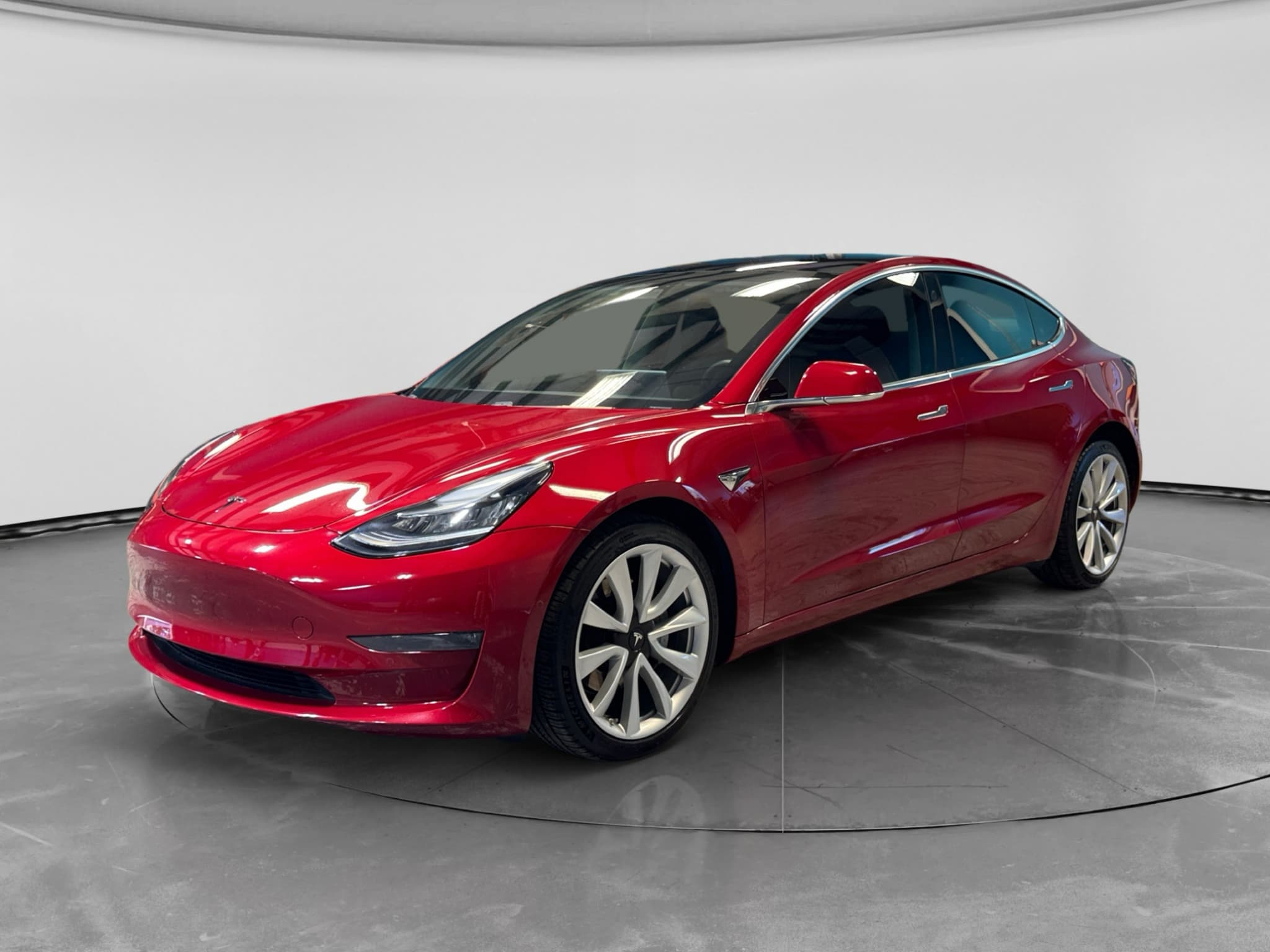
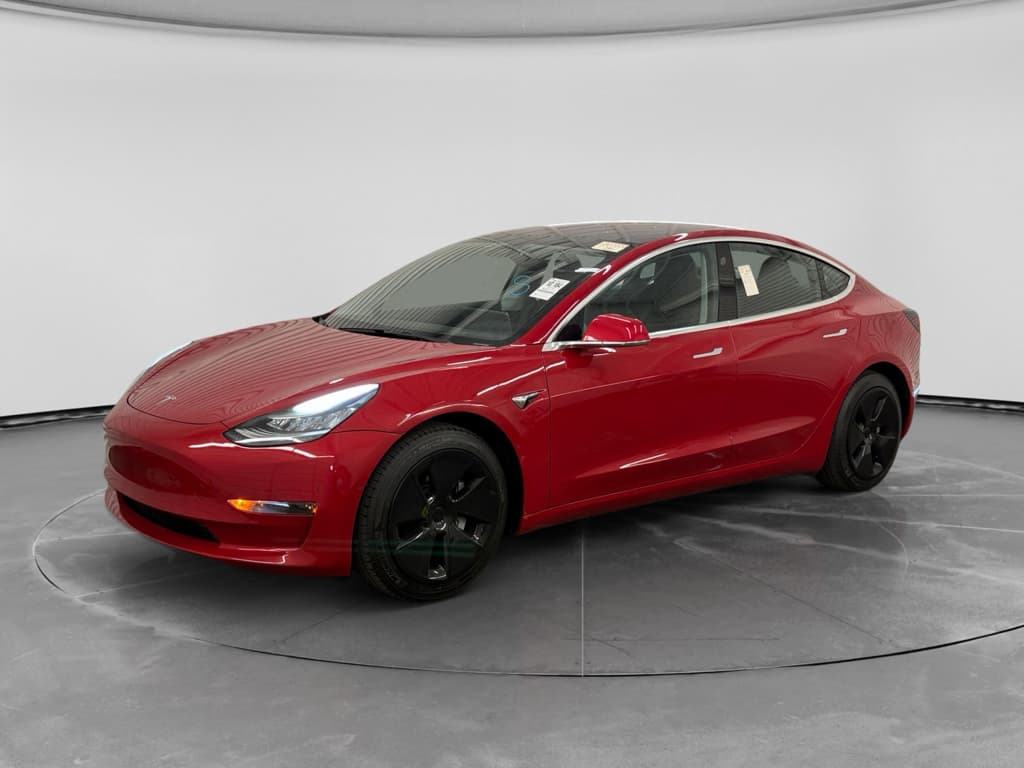
Recharged data shows why the vehicle itself deserves as much attention as the loan quote. Across 222 Model 3s sold by Recharged over the trailing 12 months, the average retail price buyers paid was $28,144 and the median was $24,998; individual retail sale prices ranged from $14,998 to $49,998. In a separate set of 303 Model 3 battery inspections, tested remaining capacity averaged 87.8% of original capacity, while tested real-world range averaged 280 miles. At the inventory snapshot, Recharged listed 26 Model 3s priced from $20,000 to $51,597.
The takeaway is that a Model 3 badge alone doesn’t define the amount you should borrow. Retail price and tested battery condition can vary substantially from car to car, so compare the loan against the specific vehicle rather than a generic Tesla payment target. A verified battery-health report may not appear in a lender’s underwriting decision, but it gives you important context about the asset you’ll own after the loan is signed.
Recharged data
Used Tesla Model 3 battery health
88%
avg remaining capacity
From Recharged battery inspections, not manufacturer estimates.
- Lowest
- 73%
- Median
- 88%
- Highest
- 100%
- Est. range
- 280 mi avg
- Cell balance pass
- 100%
- Quick charges
- 23 avg
- Slow charges
- 75 avg
Average cell imbalance: 5.5 mV
Based on vehicles Recharged tested
Recharged data
Recent Tesla Model 3 sold prices
$24,998
median sold price
What buyers actually paid through Recharged, not list price.
- Lowest
- $14,998
- Average
- $28,144
- Highest
- $49,998
Monthly median sold price
Based on Recharged sales in the last 12 months
Every EV is battery-tested with a Recharged Score. Nationwide delivery.
Compare total cost, not just the payment
The best offer is usually the one that fits your monthly budget without disguising a high total borrowing cost. APR, or annual percentage rate, is a standardized measure of yearly borrowing cost that incorporates the interest rate and certain lender fees. A longer term can lower the monthly payment while keeping you in debt longer and increasing the interest paid. Compare offers line by line rather than asking only which lender produces the smallest payment.
- Start with the Tesla’s complete out-the-door price, including required taxes and fees.
- Subtract your down payment and any finalized trade-in credit to find the amount financed.
- Place the APR, term, monthly payment, and total of payments from each offer side by side.
- Add ownership expenses such as an insurance quote, charging setup, and near-term maintenance to your budget.
- Choose the shortest practical term that leaves enough room for your normal expenses and emergency savings.
A bigger down payment reduces the amount financed, but it shouldn’t empty the cash reserve you need after delivery. Get an insurance quote for the specific vehicle before committing, because the car payment is only one part of your monthly cost. You can also use a used Tesla Model 3 buying guide to evaluate the vehicle before letting loan approval drive the decision.
The federal used-EV credit no longer applies
You should not include a federal used-EV tax credit in the financing plan for a current Tesla purchase. The federal new- and used-EV credits ended for vehicles acquired after September 30, 2025. That means your affordability calculation should stand on the negotiated price, down payment, trade-in, loan terms, and ownership budget without assuming a later federal tax benefit. If an advertisement shows an old credit-adjusted price, ask for the actual current purchase price in writing.
Don’t finance around an expired incentive
Instant offer, trade-in, or consignment. Pickup available.
Used Tesla financing FAQ
The bottom line
The right used Tesla financing option is the offer that works for both your budget and the specific car, not simply the one with the lowest advertised payment. Get a benchmark preapproval, compare it with Recharged-arranged financing, and hold the vehicle price, down payment, and term constant while reviewing offers. Then pair the loan analysis with verified battery health, condition, and pricing through the Recharged Score Report. For a broader preparation list, use this used-EV buying checklist before signing.