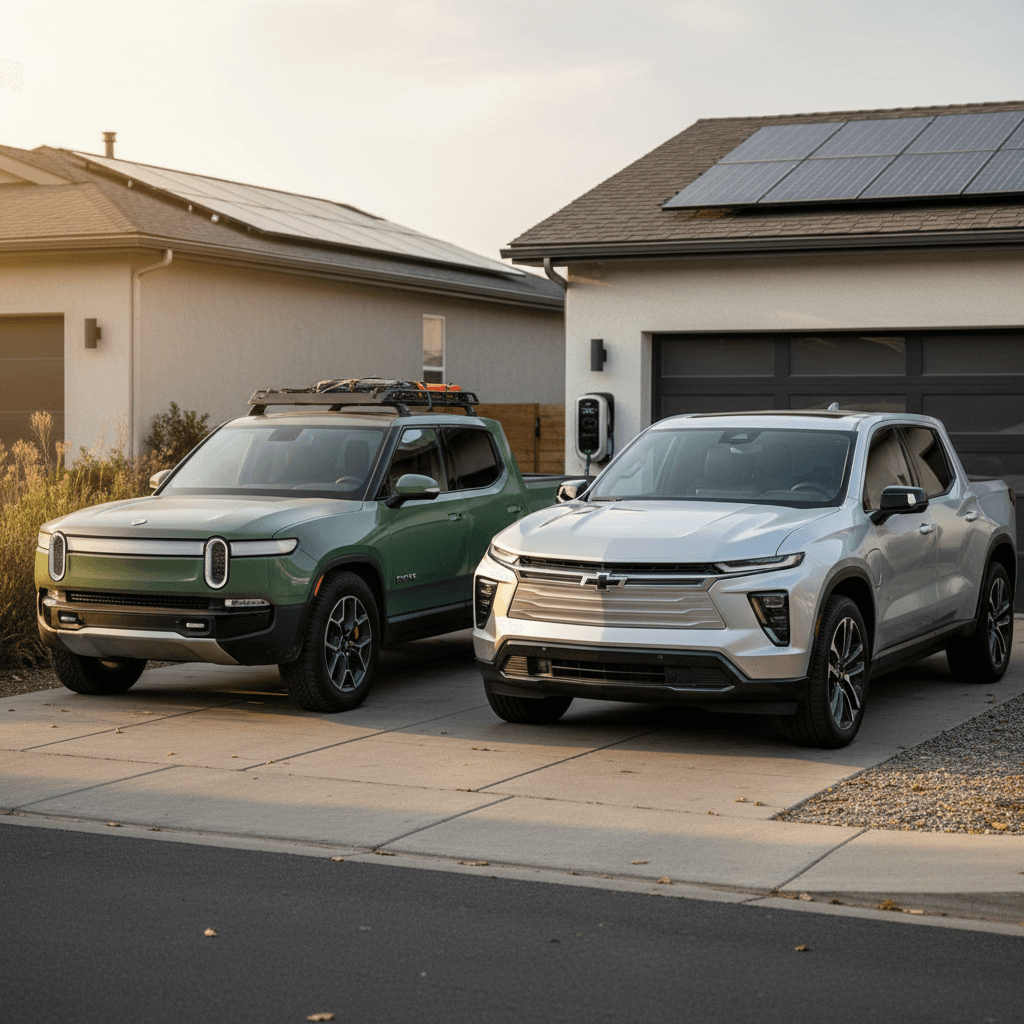
If you’re shopping the **used electric pickup** market in 2026, two names rise to the top: the *Rivian R1T* and the *Chevrolet Silverado EV*. This used Rivian R1T vs Chevrolet Silverado EV comparison for 2026 looks past the marketing and into real-world range, towing, payload, pricing, and ownership costs so you can decide which used truck actually fits how you drive.
The short version
Overview: Used R1T vs Silverado EV in 2026
Both of these trucks were born as halo products for their brands. The **Rivian R1T** launched in 2021 as a premium adventure pickup with impressive off-road hardware and up to about 11,000 pounds of towing capacity. The **Chevrolet Silverado EV** followed with the Ultium platform, a full-size footprint, and **headline specs like up to roughly 12,500 pounds of towing and nearly 500 miles of range** in certain Work Truck configurations.
- Rivian R1T: Multiple model years in circulation (2021–2025), with quad‑motor and dual‑motor trucks plus Standard, Large, and Max battery packs.
- Chevy Silverado EV: Fewer units in the wild. Early 2024–2025 Work Truck (WT) and RST trims are trickling into used inventory, with broader 2025–2026 LT and Trail Boss models appearing in limited numbers.
Headline Numbers: Used R1T vs Silverado EV
Specs vs. used reality
Key Specs at a Glance
Used Rivian R1T vs Chevrolet Silverado EV: Core Specs (New When Sold)
Typical headline specs you’ll see in listings. Actual numbers for a specific used truck can vary by trim, options, and year.
| Spec | Rivian R1T (typical 2023–2025) | Chevrolet Silverado EV (2024–2025 WT/LT/RST) |
|---|---|---|
| Overall size | Midsize/full-size tweener (shorter and narrower than Silverado) | Full-size crew cab, similar footprint to gas Silverado 1500 |
| Drivetrain | Dual- or quad-motor AWD | Dual-motor AWD on most trims |
| Peak power | ~600–835 hp depending on configuration | ~510 hp WT, ~660+ hp RST in Wide Open Watts |
| Battery tech | Rivian proprietary packs (Standard, Large, Max) | GM Ultium battery system, multiple pack sizes |
| Max EPA range (new) | Roughly high-200s to 400+ miles depending on pack and wheels | Roughly 280 miles (Standard Range) up to ~490 miles (Max Range WT) |
| Max towing | Up to about 11,000 lb | Up to about 12,500 lb |
| Max payload | Roughly 1,700–1,800 lb in many builds | Roughly 1,400–2,350 lb depending on trim/battery |
| Bed length | ~4.5 ft with unique gear tunnel | ~5.5+ ft traditional full-size bed; some configs with midgate functionality |
| DC fast-charge peak | Roughly 200+ kW in latest software | Up to ~350 kW capability on Ultium in ideal conditions |
Always verify the exact configuration on the window sticker or build sheet before assuming these specs.
How to read spec sheets
Real-World Range and Efficiency
Electric pickups look heroic on paper, but **range is their make-or-break stat**, especially once you hook up a trailer. On the used market, you’re not buying those pristine EPA numbers. You’re buying what’s left after a few years of commuting, road trips, fast charging, and winter use.
Rivian R1T: Adventure-first, efficiency-second
- Typical new EPA ratings run from the high-200s to roughly 350+ miles depending on pack and wheels.
- Quad-motor and aggressive all-terrain tires trade efficiency for traction and performance.
- Owner reports routinely show meaningful range loss when towing, sometimes cutting effective range in half on highway grades.
On the used side, an R1T that’s been fast-charged heavily or lifted with bigger tires can give you less usable range than you expect, especially in cold-weather states.
Chevy Silverado EV: Long legs, big battery
- Work Truck and LT trims with the Max Range pack can approach upper-400-mile EPA ratings in ideal configurations.
- Standard Range variants land closer to the high-200-mile mark.
- Real-world owners are already reporting that towing heavy loads can drag even the big-battery trucks down to roughly **150–200 miles per charge** on the highway.
Because most used Silverado EVs are still relatively new in 2026, you’re more likely to see minimal degradation if the truck has modest mileage and a clean charging history.
Highway vs. city range
- If you prioritize **maximum highway range without towing**, the Silverado EV Max Range trims usually have the edge.
- If you want **balanced range and off-road ability**, the R1T is more efficient than it looks when you’re not pushing big speeds or heavy trailers.
- For daily commuting within 40–60 miles of home, either truck is more than enough, charging habits and battery health matter more than nameplates.
Towing, Payload, and Work-Truck Duty
On paper, the **Silverado EV is the more traditional work truck**, while the Rivian R1T is an adventure rig that happens to tow a lot. On the used market, your decision should start with an honest look at how, and how often, you’ll actually tow or haul.
Towing & Payload: Used R1T vs Silverado EV
Approximate maximums based on common trims. Always confirm the exact numbers on the specific VIN you’re buying.
| Capability | Rivian R1T | Chevy Silverado EV |
|---|---|---|
| Max tow rating (new) | ~11,000 lb when properly equipped | ~12,500 lb in certain WT/LT trims |
| Typical tow rating on popular trims | 7,000–11,000 lb depending on pack and hitch | 8,500–12,500 lb depending on pack and trim |
| Max payload (new) | Around 1,700–1,800 lb on many builds | Roughly 1,400–2,350 lb depending on pack and options |
| Bed & cabin focus | Adventure gear, bikes, overlanding, smaller trailers | Full-size work duty, jobsite tools, heavier equipment |
| Towing feel | Shorter wheelbase; stable but can feel busier with long trailers | Full-size wheelbase; planted with long, heavy trailers |
Real-world safe towing is usually 60–70% of the advertised max if you want comfortable range margins.
Don’t size by tow rating alone
Towing Questions to Ask About Any Used Electric Truck
1. What’s the exact tow and payload rating?
Verify the numbers on the original window sticker or manufacturer build sheet. Don’t rely on generic online specs, different trims, wheels, and packs can change ratings.
2. Did the first owner tow often?
Ask for service records and look for hitch wear, tire replacement frequency, and notes on heavy commercial use that could impact battery and drivetrain wear.
3. How was it charged on tow-heavy trips?
Repeated DC fast charging while towing in hot conditions can accelerate battery wear. A Recharged Score battery report can help you see how healthy the pack is today.
4. What tires is it riding on now?
Aggressive all‑terrain or mud‑terrain rubber looks great but can cut range and towing stability. Consider your actual use case before you celebrate those chunky sidewalls.
On-Road Comfort and Driving Character
Rivian R1T: Sporty and nimble (for a truck)
- Shorter overall length and wheelbase make it easier to park and thread through city streets than full-size pickups.
- Quad‑motor versions deliver supercar‑grade thrust, but even dual‑motor trucks feel brisk.
- Available adaptive air suspension and multiple drive modes let you tailor comfort, ride height, and off‑road readiness.
If you’re downsizing from a heavy-duty diesel, the R1T will feel like a big crossover with an open bed, still substantial, but not overwhelming.
Silverado EV: Big-truck calm, SUV comfort
- Full-size footprint gives it a planted, relaxed highway feel, especially with a long trailer in tow.
- Ultium chassis tuning and independent rear suspension help it ride more like a large SUV than a leaf-sprung work truck.
- Higher seating position and big glass area feel instantly familiar if you’ve driven gas Silverados.
In tight urban parking structures, the Silverado EV’s size is the tax you pay for that calm highway demeanor and larger bed.
Daily-driver verdict
Bed Utility, Storage, and Off-Road Gear
These two trucks don’t just differ in size; they were packaged around different missions. That shows up in the bed, storage solutions, and off-road hardware you’ll interact with every day.
Utility & Off-Road: Where Each Truck Shines
Think about your weekends before you pick your weekday truck.
Rivian R1T: Adventure toolkit
- Gear tunnel between cab and bed for skis, recovery gear, or the optional camp kitchen (if equipped).
- Lockable front trunk (frunk) and under‑bed storage for charging cables and dirty gear.
- Available off‑road packages with skid plates, tow hooks, and serious approach/departure angles.
- Shorter bed but very usable for bikes, coolers, and camping setups.
On the used market, well‑optioned R1Ts with off‑road packages and accessories hold value, but deliver a lot of capability for adventure-focused buyers.
Chevy Silverado EV: Jobsite and family utility
- Traditional full‑size bed for sheet goods, equipment, and bulky loads.
- Certain trims offer a versatile midgate-style opening for carrying long items into the cab area.
- Plenty of 120V/240V outlets for powering tools or camping gear off the battery pack.
- Frunk and interior storage tailored more toward everyday and work use than niche adventure tricks.
If your weekends look like Home Depot runs and your weekdays look like job sites, the Silverado EV’s packaging works in your favor.
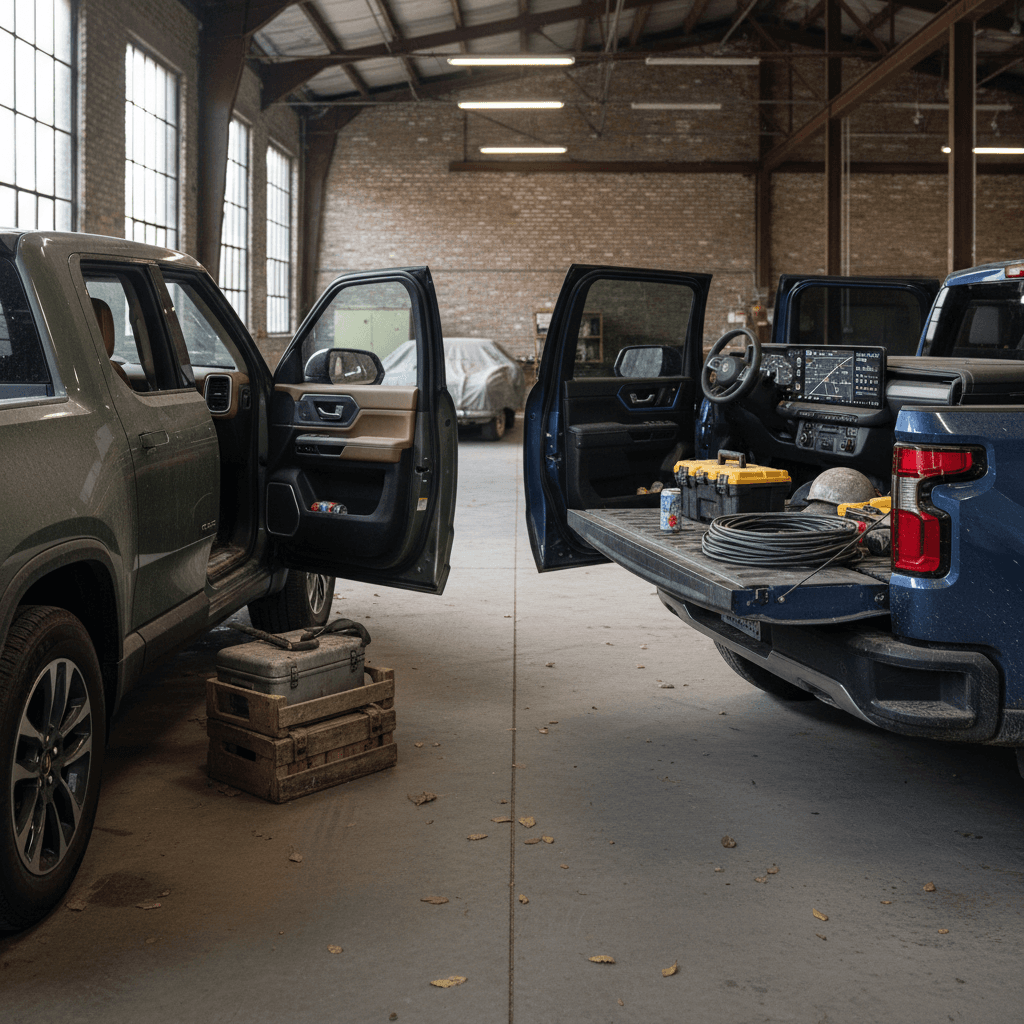
Used-Market Pricing and Availability in 2026
By 2026, both of these trucks have hit the used market, but in very different ways. As an early mover, **Rivian has several model years’ worth of R1Ts cycling out of leases and first ownership**, creating real choice for used shoppers. The Silverado EV is newer, with **fewer units built and sold**, so you’ll typically see a thinner spread of trims and mileages.
Price expectations (high level)
- Used R1T listings spanning a wide band, from relatively affordable early trucks up through late-model Max-pack adventure builds.
- Used Silverado EV listings skewing newer and higher-priced, often WT or fleet-spec units with work histories.
- If you want the **widest choice of trims and colors**, the R1T wins today.
- If you want the **newest possible truck with remaining factory warranty**, the Silverado EV has a slight edge simply because most used examples are only a year or two old.
- Fleet‑return Silverado EV WTs can be good value, but examine service records closely for heavy commercial use.
Ownership Costs, Reliability, and Battery Health
Early electric pickups are still writing their long-term reliability story. What we do know in 2026 is that **battery health, software support, and repair access** drive most of your real-world ownership costs, more than oil changes or spark plugs ever did.
Cost & Reliability Factors to Compare
Beyond the sticker price, this is where used EV trucks really separate.
Battery health & degradation
Trucks that towed heavy, charged at DC fast chargers often, or lived in extreme climates may show more battery wear. A detailed battery health report, like the Recharged Score, helps quantify remaining capacity instead of guessing.
Repair network & parts
Chevy dealers across the U.S. are gearing up for Ultium repairs, which helps Silverado EV owners. Rivian uses a mix of mobile service and growing service centers, but still lags big legacy networks in some regions.
Software, OTA updates & features
Both brands lean on over‑the‑air updates for efficiency tweaks, new drive modes, and bug fixes. When buying used, verify the truck is on recent software and that the seller hasn’t skipped important updates.
Insurance and repair surprises
From a total-cost-of-ownership standpoint, both trucks can save you fuel and maintenance dollars versus a gasoline 1500‑series pickup. But **purchase price, depreciation, and any out-of-warranty repairs** will dwarf the difference in electricity rates. That’s why a structured inspection and battery assessment is critical on any used EV truck.
Which Used EV Truck Fits You Best?
Match Your Use Case to the Right Truck
Weekend adventurer & daily commuter
You value trail access, ski trips, and camping more than maximum bed length.
Parking garages and tight city streets are a fact of life.
You’ll tow occasionally, boats, small campers, utility trailers, well under 8,000 lb.
You care about clever storage for gear and a modern, minimalist interior. → <strong>Leaning Rivian R1T.</strong>
Contractor or heavy hauler
Your truck lives at job sites, not just trailheads.
You regularly carry pallets, equipment, or heavy tongue-weight trailers.
Maximum payload and a long, wide bed matter more than gear tunnels.
You want easy access to Chevy’s dealer network for repairs. → <strong>Leaning Silverado EV.</strong>
Long-distance highway driver
You rack up highway miles between cities or job sites.
You’d like to minimize charging stops and keep speeds near the limit.
You tow sometimes, but range while unladen is the priority.
Max-range Ultium packs and big charge speeds are appealing. → <strong>Leaning Silverado EV, Max Range trims.</strong>
First-time EV truck owner
You’re moving out of a gas pickup and want an easier transition.
You don’t tow heavy; think small utility trailers or occasional moves.
You’re more focused on tech, comfort, and versatility than ultimate spec-sheet numbers.
You want strong used selection and room to shop features and colors. → <strong>Leaning Rivian R1T.</strong>
Bottom-line verdict
How Recharged Helps Used EV Truck Buyers
Electric pickups are still new territory for many buyers. That’s exactly where **Recharged** comes in. Whether you’re weighing a used Rivian R1T, a Chevrolet Silverado EV, or another electric truck entirely, Recharged is built to make EV ownership **simple and transparent** from day one.
Why Shop Used EV Trucks with Recharged
Clarity on battery health, fair pricing, and logistics, handled for you.
Recharged Score battery health report
Fair market pricing & financing
Trade-in, consignment & delivery
Ready to find your next EV?
Browse VehiclesA used electric pickup is a big purchase, but it doesn’t have to be a gamble. If you narrow your choice between a **used Rivian R1T and a used Chevrolet Silverado EV**, start with how you really drive, range needs, towing habits, parking realities, then let objective data on battery health and pricing guide the rest. With the right truck and the right partner, your first used EV pickup can be the best truck you’ve ever owned.