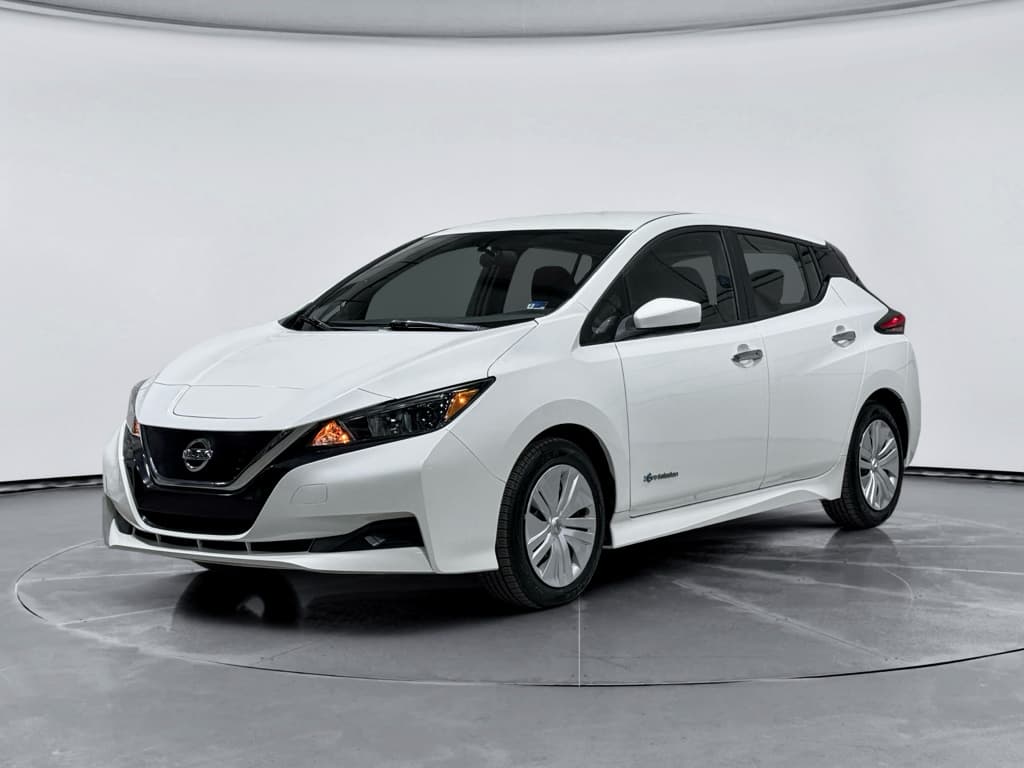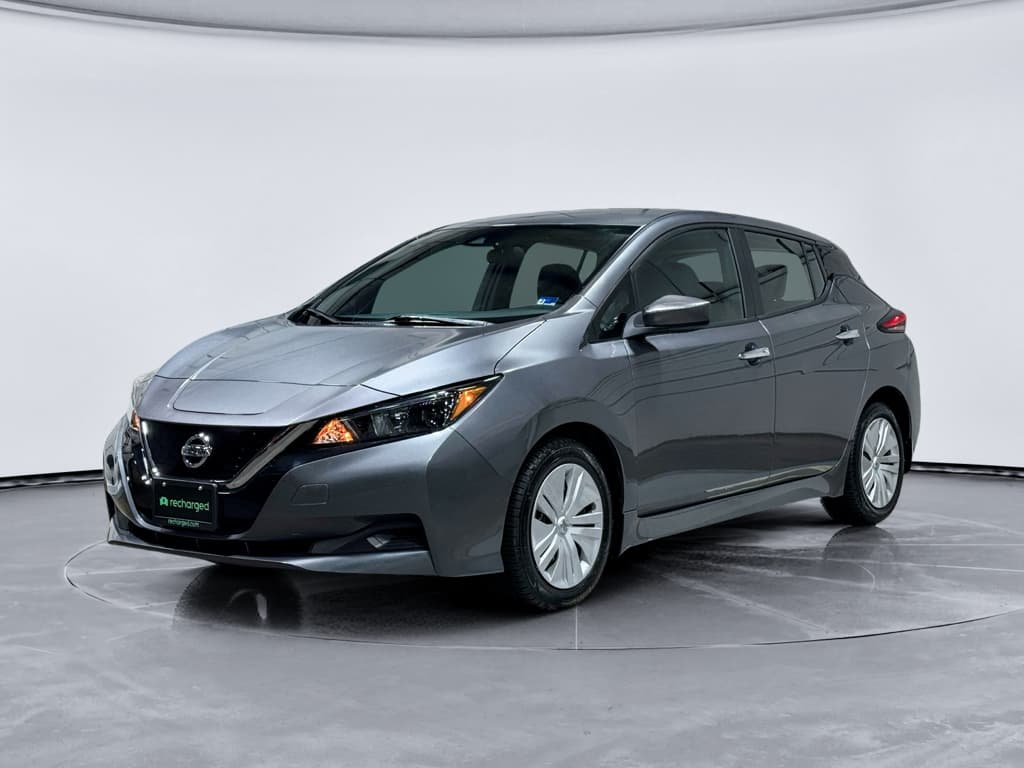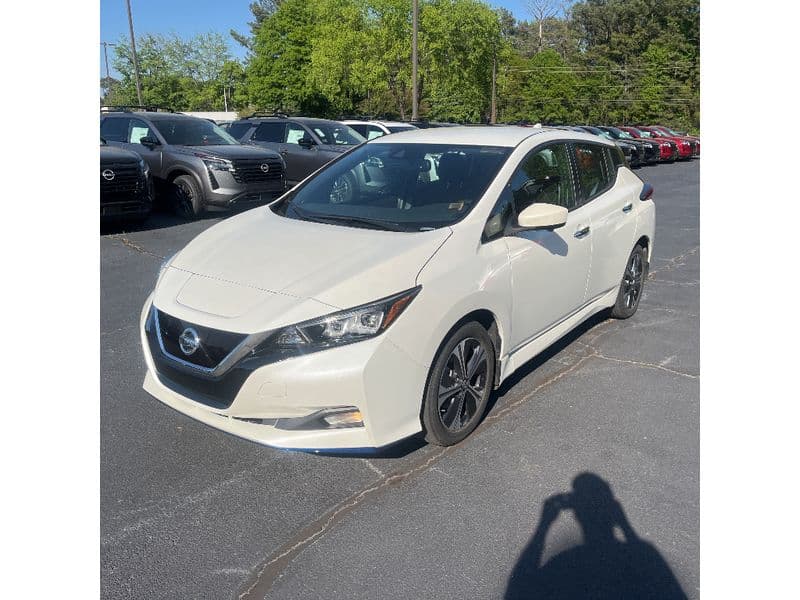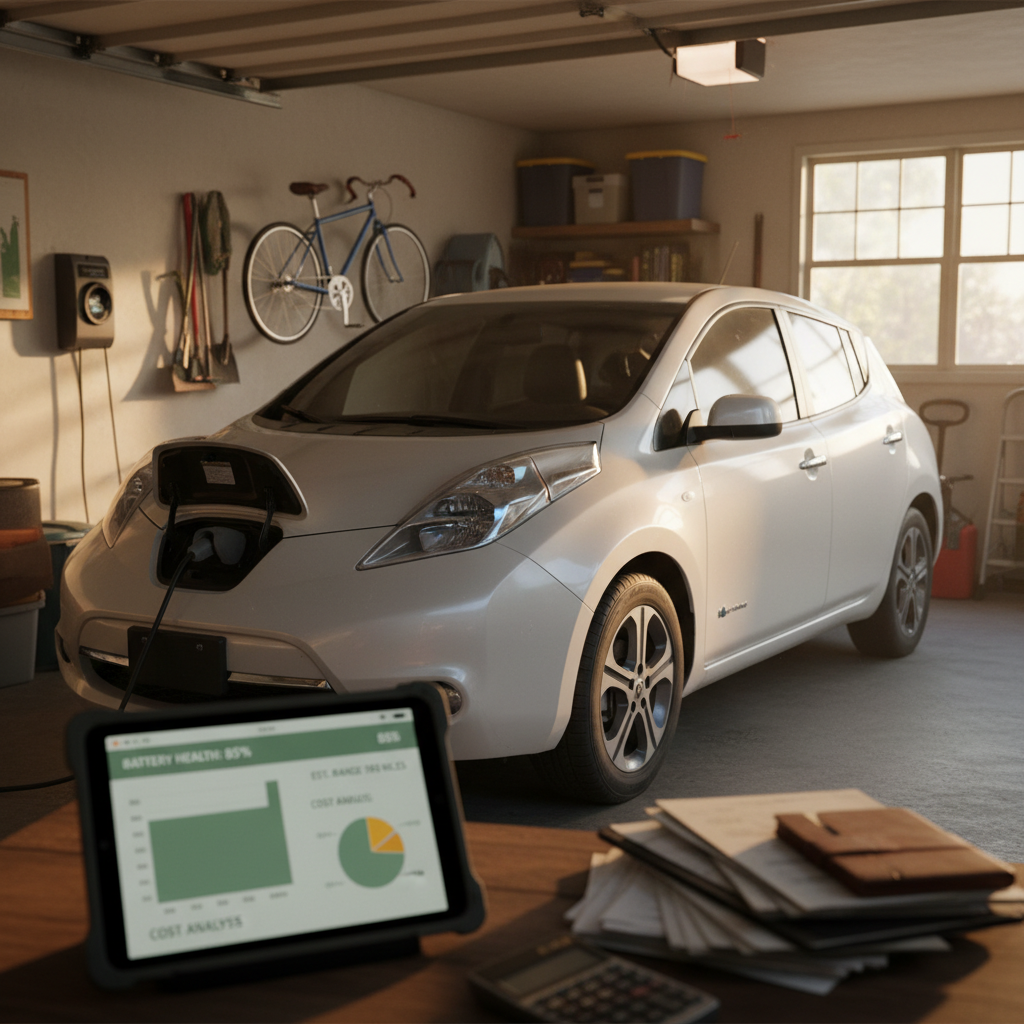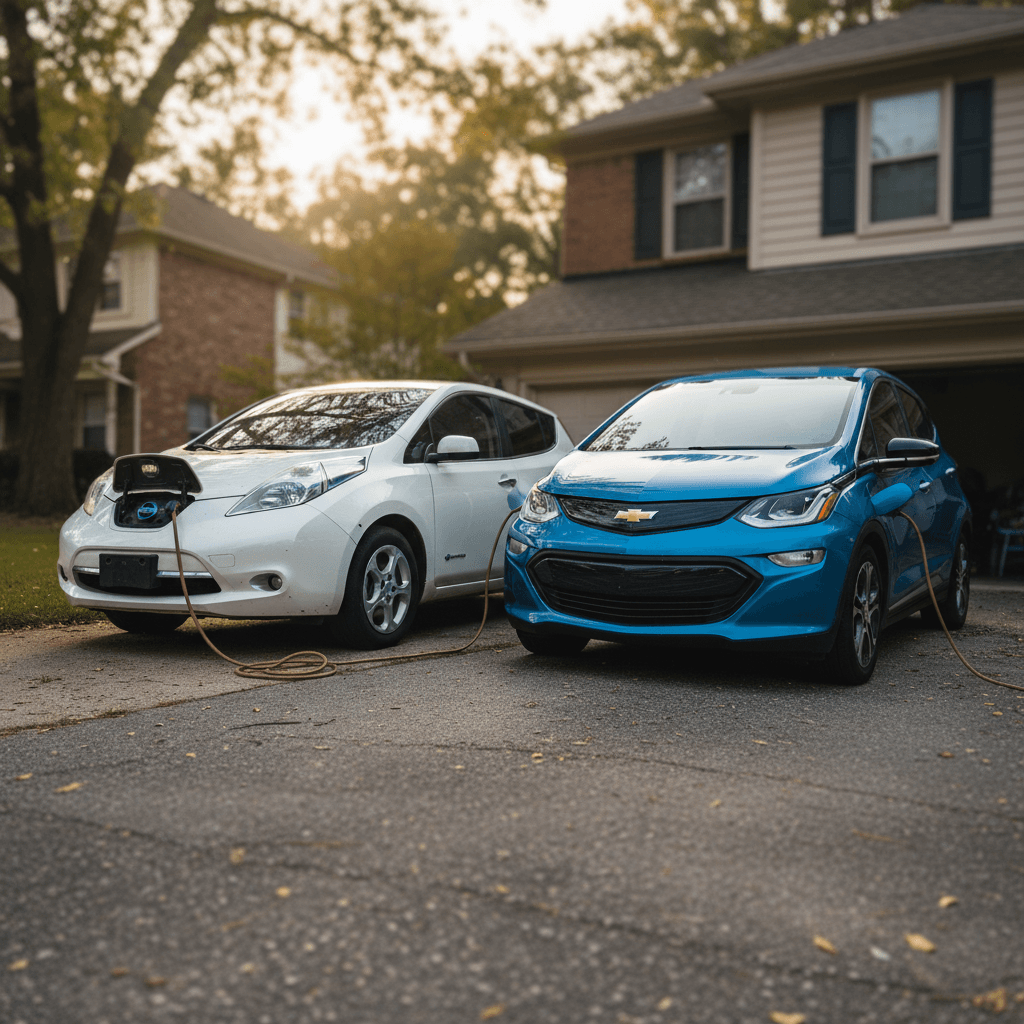
If you’re hunting for an affordable used EV, the **Nissan Leaf** and **Chevy Bolt EV** are probably at the top of your list. Both are compact hatchbacks, both promise low running costs, and both can be found well under the price of a new gas car. But when you look closer, battery health, charging, recalls, the decision between a used Nissan Leaf vs Chevy Bolt EV stops being a coin flip.
Bottom line up front
Leaf vs Bolt as used EVs: quick overview
How these two used EVs really differ
Same basic idea, very different ownership experience
Used Nissan Leaf
Role: Budget city EV, short‑range commuter.
- Earlier mass‑market EV, on sale since 2011.
- Smaller batteries, especially pre‑2018.
- No active liquid cooling on U.S. models, so battery degradation is a big variable.
- Uses older CHAdeMO fast‑charging standard.
Used Chevy Bolt EV
Role: Affordable all‑rounder, realistic road‑trip range.
- Launched for 2017 model year.
- 60–65 kWh battery with 238–259 miles EPA range when new.
- Liquid‑cooled pack, generally better long‑term range retention.
- Uses CCS DC fast charging; newer chargers love it.
Pro tip for used‑EV shoppers
Key specs: used Nissan Leaf vs Chevy Bolt EV
Core specs for popular used model years
These are headline numbers for common U.S. used‑market versions. Actual range on a given car will depend heavily on battery health.
| Model / years you’ll see used | Typical battery (usable kWh) | EPA range when new (mi) | Fast‑charge port | On‑board AC charging |
|---|---|---|---|---|
| Nissan Leaf (2013–2015, 24 kWh) | ~21–22 kWh usable | ~84 mi | CHAdeMO | 3.3–6.6 kW, model‑dependent |
| Nissan Leaf (2016–2017, 30 kWh) | ~27–28 kWh usable | ~107 mi | CHAdeMO | 6.6 kW |
| Nissan Leaf (2018–2022, 40 kWh) | ~37–38 kWh usable | 149 mi | CHAdeMO | 6.6 kW |
| Leaf Plus (2019–2022, 62 kWh) | ~56–59 kWh usable | 215–226 mi | CHAdeMO | 6.6 kW |
| Chevy Bolt EV (2017–2019) | ~60 kWh usable | 238 mi | CCS | 7.2 kW |
| Chevy Bolt EV (2020–2023) | ~65 kWh usable | 259 mi | CCS | 7.2–11.5 kW (higher on 2022+) |
Spec snapshot only; always confirm exact battery size and options on the specific car you’re buying.
Specs are the brochure; battery health is reality
Battery health & degradation: the make-or-break factor
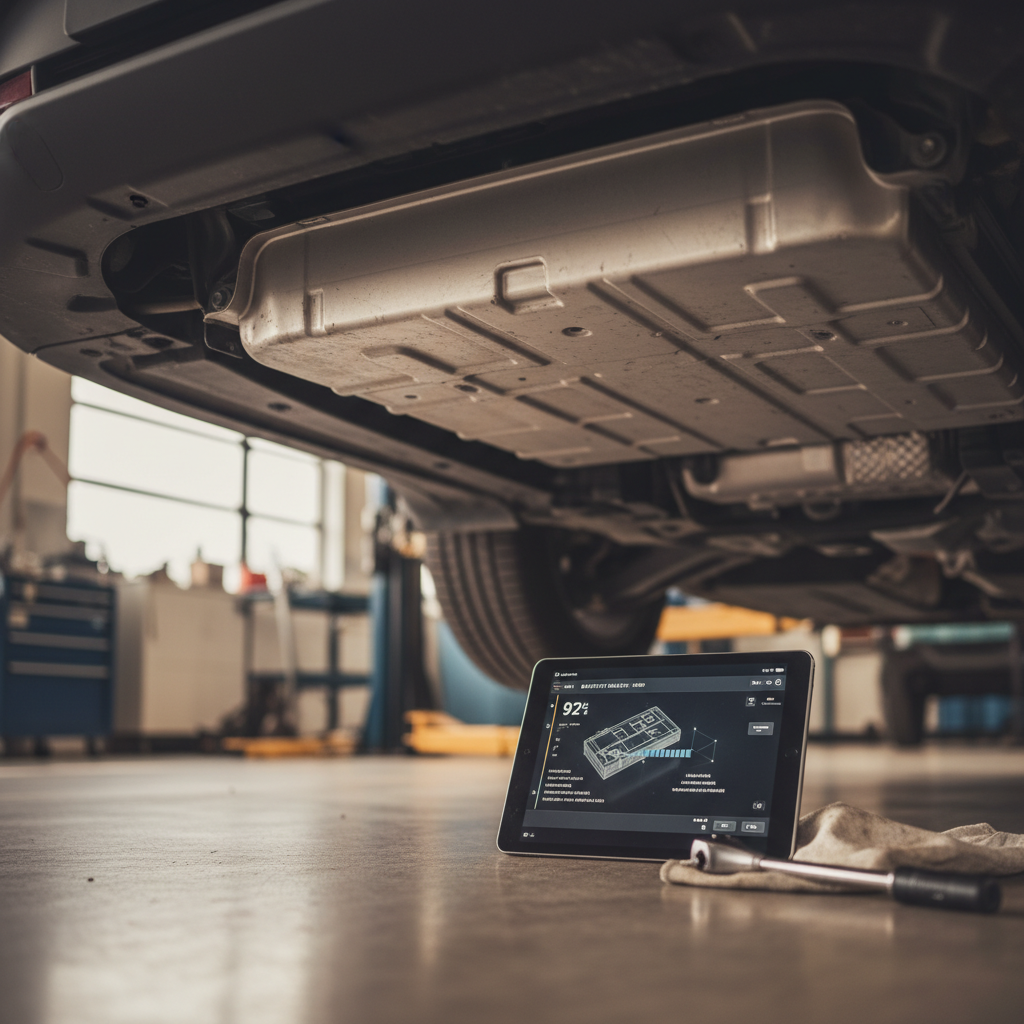
On a used EV, **battery condition is destiny**. Range, resale value, and whether your car feels modern or miserable in five years all hang on how that pack has aged.
Nissan Leaf: watch the bars like a hawk
Early and mid‑generation Leafs are infamous for **faster degradation**, especially in hot climates like Arizona, Texas, or inland California. The U.S. Leaf pack uses passive air cooling, so repeated fast‑charging or just baking on a hot driveway can take a toll.
- Battery health shows as 12 bars on the dash; each missing bar represents noticeable capacity loss.
- A 24 kWh Leaf at 9–10 bars may only deliver 50–60 real‑world miles.
- Later 40 kWh and 62 kWh packs are more robust, but climate and fast‑charge history still matter.
Chevy Bolt EV: better packs, complicated history
The Bolt’s liquid‑cooled LG Chem pack generally ages well, and many high‑mileage cars still show strong range. The twist is the **high‑profile battery recall** on 2017–2022 cars for fire risk.
- Many Bolts had their entire battery replaced with a new pack under warranty, this is a good thing for used buyers.
- Look for documentation of recall completion and any pack replacement.
- Post‑recall software may limit maximum charge to preserve pack health; in daily use this is largely a non‑issue.
Where Recharged changes the game
Ready to find your next EV?
Browse Vehicles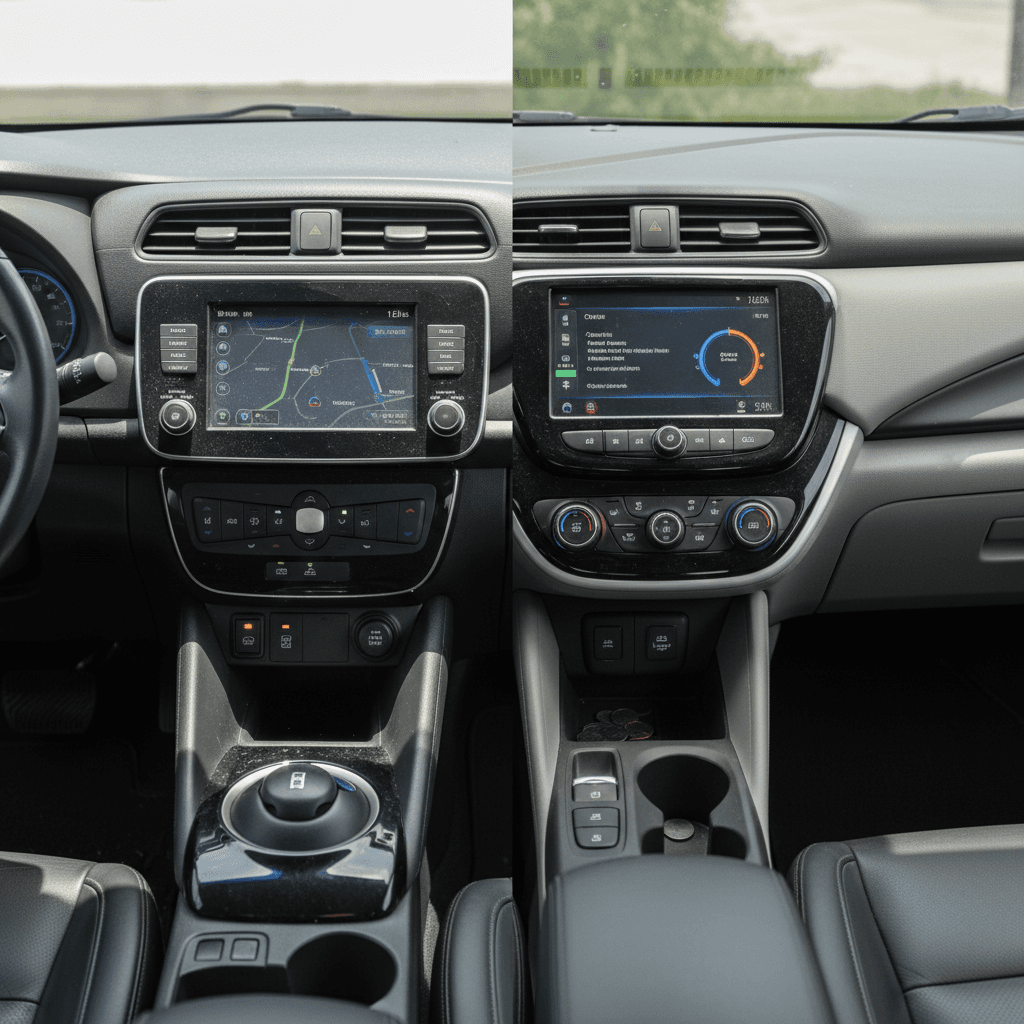
Real-world range: which used EV fits your life?
How their real‑world ranges typically feel used
The **right answer depends on your daily loop**. If you do 25 suburban miles a day and rarely leave town, a solid 40 kWh Leaf can feel totally adequate. If your life is 70‑mile winter commutes, airport runs, and surprise evening plans, you’ll be much happier in a Bolt.
- If your regular round‑trip is under ~35 miles and you can charge nightly, a healthy Leaf (40 kWh or Leaf Plus) works well.
- If you’re frequently pushing 80–120 miles between charges, the Bolt’s bigger pack and better highway efficiency are worth paying for.
- If you can’t charge at home and rely on public fast charging, the Bolt is strongly preferred, both for range and charging‑network support.
Cold weather reality check
Charging, ports & networks: CHAdeMO vs CCS
On paper, charging standards are an alphabet soup. In the real world, they decide whether you’re sipping electrons slowly behind a grocery store or blasting 50 kW on a busy interstate.
How each car plugs into today’s charging world
Think about the next 5–10 years, not just this weekend
Nissan Leaf charging
- AC charging: Standard J1772 port; max 6.6 kW on most U.S. cars. Fine for overnight at home.
- DC fast charging: CHAdeMO port (if equipped). Topped out around 40–50 kW when new, often slower today.
- Network trend: New CHAdeMO sites are rare; many networks are prioritizing CCS and NACS (Tesla standard).
- Implication: Totally fine as a home‑charging commuter. Increasingly awkward as a road‑trip car in North America.
Chevy Bolt EV charging
- AC charging: J1772; 7.2 kW on older Bolts, up to 11.5 kW on 2022+ models, very healthy home charging speeds.
- DC fast charging: CCS port, max ~55 kW. Not “ultra‑fast,” but practical for road trips.
- Network trend: CCS is the workhorse standard on non‑Tesla public fast chargers today.
- Implication: Much easier to live with if you depend on public infrastructure or take regular highway drives.
Future of ports: NACS is coming, but slowly
Reliability, recalls & safety
Neither the Leaf nor the Bolt is a fragile exotic. Under the skin, they’re simple cars with fewer moving parts than a gas equivalent. The devil, as always, is in the details.
Nissan Leaf reliability
- Drivetrain: The Leaf’s motor and single‑speed gearbox are generally robust. Most issues are age‑related (suspension, brakes, 12V battery) rather than EV‑specific.
- Battery risks: Degradation in hot climates is the number‑one concern. Also watch for cars affected by recent recalls related to fast charging and potential overheating.
- Safety tech: Later Leafs gained modern driver‑assist features (automatic emergency braking, ProPILOT Assist), but many older cars are light on active safety tech compared to modern EVs.
Chevy Bolt EV reliability
- Battery recall: The big headline. 2017–2022 Bolts were recalled for fire risk; many received full pack replacements and updated software. A recall‑completed Bolt is often a better buy than one that never qualified, because you’re effectively getting a newer battery.
- General durability: The rest of the car has proven solid for high‑mileage commuters and ride‑share use, aside from typical GM interior wear.
- Safety: Strong crash‑test scores and available active safety features (depending on trim and year) make it feel more modern than most early‑generation Leafs.
Non‑negotiable for a used Bolt EV
Ownership costs & long‑term value
The reason people obsess over used Leafs is simple: **sticker price**. You can often find older Leafs for less than the sales tax on a new luxury SUV. The question is whether that bargain lasts.
How the money usually shakes out
Sticker price vs total value over 5–8 years
Purchase price
Leaf: Older 24/30 kWh cars are some of the cheapest EVs on the market. Later 40 kWh and Leaf Plus trims cost more but still under comparable Bolts.
Bolt EV: Commands higher used prices, especially post‑recall with new packs. But you’re buying far more usable range.
Running costs
- Both are cheap to run versus gas: minimal scheduled maintenance, no oil changes.
- Insurance can be similar; sometimes the Bolt is slightly higher due to higher replacement value.
- Electricity costs will be comparable for the same miles driven; the Bolt’s higher efficiency at highway speeds can offset its larger pack.
Resale & future proofing
- Leaf: Depreciation already hit hard, but future resale may suffer as CHAdeMO support shrinks and pack degradation marches on.
- Bolt: Larger pack, CCS fast charging and road‑trip usability make it feel “modern” longer; that typically supports better residual value.
How Recharged can help on costs
Which should you buy: used Leaf or used Bolt EV?
Choose a used Nissan Leaf if…
- You need the **cheapest possible entry** into EV ownership and are okay with limited range.
- Your daily driving is short and predictable, think 20–30 miles a day, with easy home charging.
- You live in a **mild climate** and can avoid the worst battery‑killing heat.
- You find a later‑generation Leaf (40 kWh or Leaf Plus) with documented, healthy battery capacity.
Think of the Leaf as the EV equivalent of a trusty city scooter: brilliant inside its comfort zone, not designed for cross‑country duty.
Choose a used Chevy Bolt EV if…
- You want a **primary car**, not just a second commuter. The Bolt can credibly replace a gas hatchback for many households.
- You’re planning **longer commutes or frequent highway driving** and don’t want range anxiety as a co‑pilot.
- You expect to rely on public fast charging occasionally; CCS support makes your life much easier.
- You can find a recall‑completed car with a documented pack replacement or clean bill of health.
The Bolt is the budget EV that behaves like a “normal car”, it just doesn’t drink gasoline.
If prices are close, lean Bolt
Checklist: shopping for a used Leaf or Bolt
10 things to verify before you sign
1. Clarify your real daily range needs
Write down your typical weekday, plus your longest regular trips. Be honest. If your real‑world needs are close to an older Leaf’s best‑case range, you’re too close to the edge.
2. Get a real battery health report
For both Leaf and Bolt, ask for a **data‑driven battery‑health report**, not just a dash photo. With Recharged, the Recharged Score gives you that picture upfront.
3. For Leafs, count the bars and know the climate
On a test drive, confirm the Leaf shows **12 capacity bars**, then ask where the car spent its life. A 12‑bar Leaf from Seattle is not the same as an 8‑bar Leaf from Phoenix.
4. For Bolts, confirm recall completion
Check the VIN for recall status and ask for paperwork on any battery replacement. A replaced pack is a major plus, not a red flag.
5. Test charging where you’ll actually park
If possible, plug into the outlet or Level 2 charger you’ll use at home. Make sure breakers hold, cables reach, and charge rates look normal.
6. Inspect tires, brakes and suspension
EVs are heavy; they can be harder on rubber and suspension bushings. Uneven tire wear or knocking over bumps may signal deferred maintenance.
7. Check driver‑assist and infotainment features
Later Leafs and Bolts offer useful tech like adaptive cruise, lane‑keep aids and modern touchscreens. Decide what you care about and make sure it’s present and working.
8. Look for signs of fast‑charge abuse
On a Leaf, an owner who DC fast‑charged daily in hot weather may have accelerated degradation. On a Bolt, frequent fast‑charging is less worrisome but still worth asking about.
9. Review service and repair history
A stack of service records, recall work, and tire rotations tells you you’re buying from someone who cared. Thin history on an older EV is a reason to slow down and investigate.
10. Consider total cost with financing & warranty
A slightly pricier Bolt with better battery and charging may cost less over time. Explore financing, extended coverage and trade‑in options to see the real picture.
FAQ: used Nissan Leaf vs Chevy Bolt EV
Frequently asked questions
Choosing between a used Nissan Leaf and a used Chevy Bolt EV isn’t about which one the internet likes more. It’s about how far you really drive, how you’ll charge, and how much uncertainty you’re willing to tolerate. Treated as a short‑range, low‑cost urban runabout, the right Leaf can still be a clever buy. Treated as a primary car, the Bolt usually feels like the safer, more future‑proof choice. Either way, going in with clear eyes, and a proper battery‑health report, turns a risky used‑EV gamble into a rational, money‑saving decision. That’s exactly the kind of clarity Recharged was built to provide.