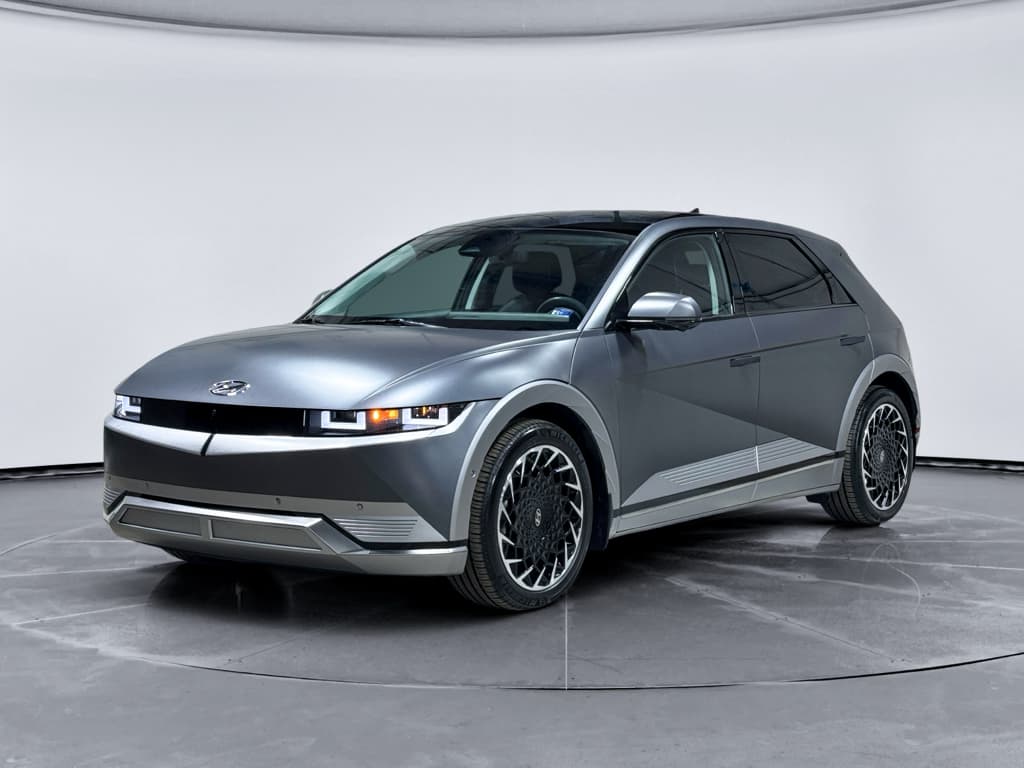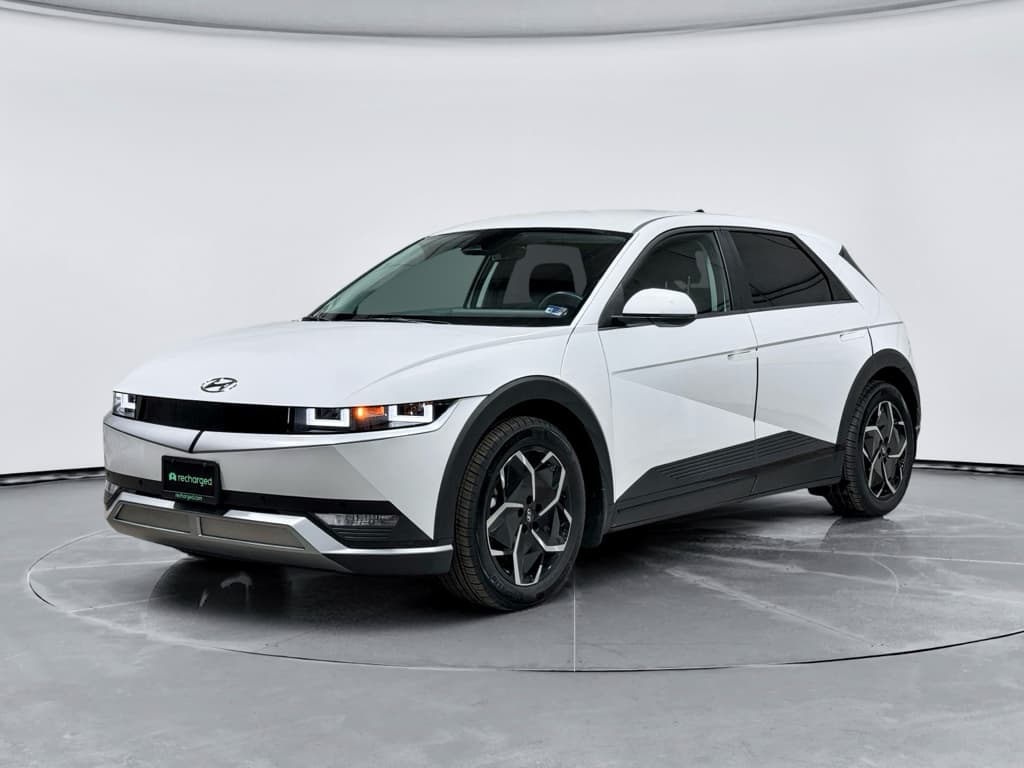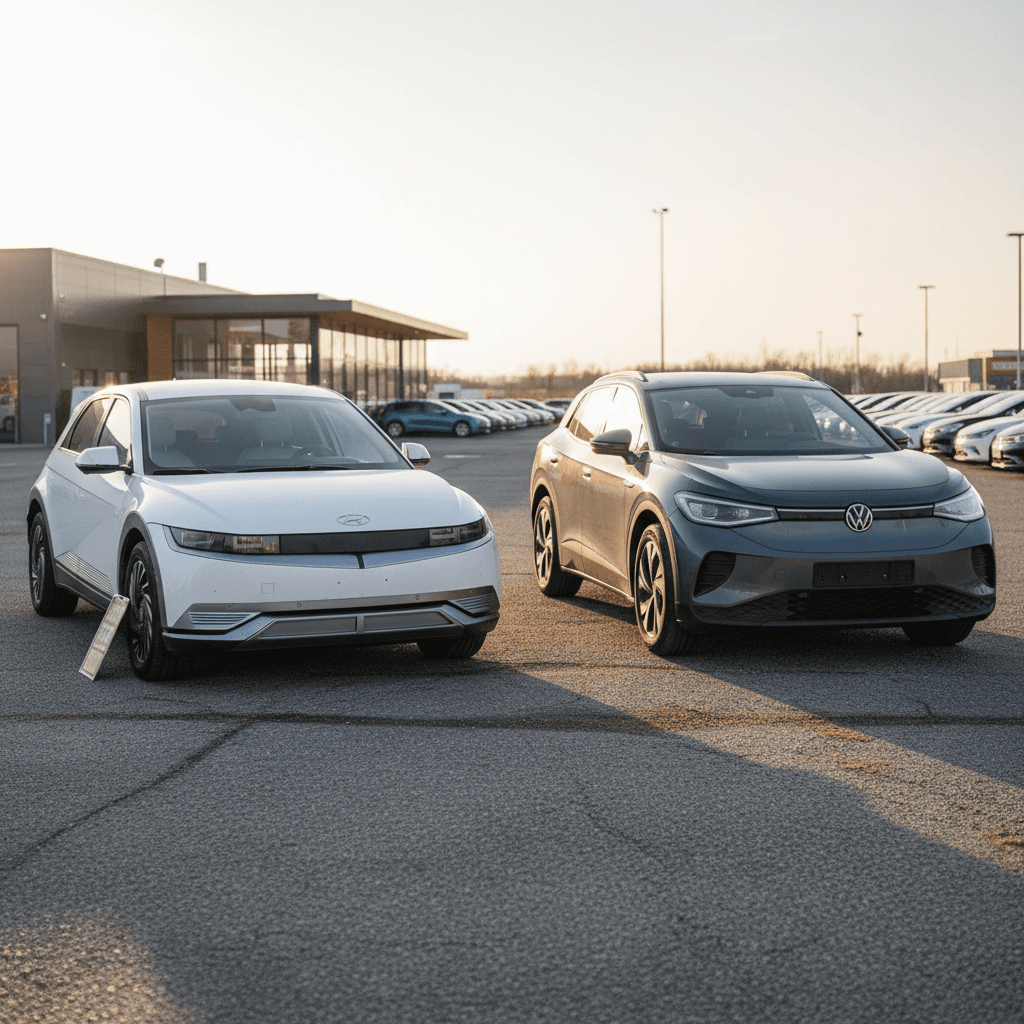
If you’re shopping the used EV market in 2026, a **used Hyundai Ioniq 5 vs Volkswagen ID.4 comparison** probably sits at the top of your list. Both are compact electric SUVs with family-friendly space, available all-wheel drive, and strong safety scores, but they deliver very different experiences once you live with them.
Why this comparison matters now
Overview: Used Ioniq 5 vs ID.4 in 2026
The **Hyundai Ioniq 5** hit U.S. roads for the 2022 model year and quickly stood out for its retro‑futuristic styling, ultra‑fast 800‑volt charging, and roomy interior that feels more midsize than compact. Most U.S. models use a roughly 77 kWh battery with EPA ranges around 260–303 miles depending on drive type and wheels, plus a smaller 58 kWh pack on some earlier trims with about 220 miles of range.
The **Volkswagen ID.4** arrived slightly earlier (2021 model year) and leans into conventional crossover styling with a softer ride and big cargo area. U.S. ID.4s primarily use a 62 kWh or 82 kWh (often quoted as 77 kWh usable) battery, with EPA ranges typically from the low 200s to around 275 miles depending on configuration. DC fast charging tops out lower than the Ioniq 5, but still covers road‑tripping if you plan your stops.
For used buyers, the story is this: **the Ioniq 5 is the faster, flashier, tech‑forward choice**, while **the ID.4 is the calmer, often cheaper workhorse** with excellent cargo room. Your priorities, charging speed, ride comfort, interior style, budget, will decide the winner.
Quick take: Who should buy which?
Ioniq 5 vs ID.4: The 30‑second answer
Match each EV to your real‑world priorities before you fall in love with the styling.
Choose a used Hyundai Ioniq 5 if…
- You road‑trip often and care about very fast DC charging and, on newer models, native NACS (Tesla) ports.
- You want a cabin that feels airy, high‑tech, and a bit futuristic, with reclining seats and a sliding center console on many trims.
- You value strong warranty coverage and a track record of quick charging that rivals much pricier EVs.
- You don’t mind a firmer ride and a slightly higher used price for the added performance and charging speed.
Choose a used Volkswagen ID.4 if…
- You want a comfortable, quiet commuter that drives like a traditional compact SUV.
- Cargo and rear‑seat space matter more to you than 0–60 times or ultra‑fast charging curves.
- You’re shopping on a tighter budget and want a lower entry price on the used market.
- You prefer a familiar, button‑forward interior over the Ioniq 5’s minimalist lounge vibe.
Used‑EV pro tip
Key specs at a glance
Core specs: Used Hyundai Ioniq 5 vs Volkswagen ID.4 (typical U.S. trims)
Approximate specs for common 2022–2024 U.S. models, always check the exact build of any used vehicle you’re considering.
| Spec | Used Hyundai Ioniq 5 (typical US) | Used Volkswagen ID.4 (typical US) |
|---|---|---|
| Battery capacity (usable) | ~58 kWh (Std) or ~77 kWh (Long Range) | ~62 kWh (Std) or ~77 kWh (Pro) |
| EPA range (approx.) | 220–303 miles | 209–275 miles |
| DC fast‑charge peak | Up to ~230 kW on 800V E‑GMP platform | Typically up to ~170 kW on newer 82 kWh models |
| 10–80% DC charge time (ideal conditions) | ~18–20 minutes on a 350 kW charger | ~30–36 minutes on 150–175 kW charger |
| On‑board AC charger | Up to 10.9 kW (later years) | Up to 11 kW |
| Drive options | RWD or AWD | RWD or AWD |
| 0–60 mph (approx.) | ~7–8 sec RWD, ~5 sec AWD | ~7.5–8.5 sec RWD, quicker on AWD |
| Cargo space (rear seats up) | Less than ID.4 but still generous | One of the roomiest in class |
| Towing (properly equipped) | Up to ~2,000 lbs | Up to ~2,700 lbs (selected trims) |
Specs vary by model year, trim, wheels, and region; confirm details for the specific used vehicle.
Range and efficiency in the real world
Paper range numbers for the Ioniq 5 and ID.4 overlap heavily, especially on the larger‑battery versions. In real life, though, the two EVs feel a bit different.
- **Ioniq 5 range:** Long‑range RWD models are rated around 300+ miles, while AWD versions generally land in the mid‑ to high‑200s. Smaller‑battery cars are closer to 220 miles. Owners routinely see strong highway efficiency when they keep speeds reasonable.
- **ID.4 range:** Most RWD ID.4 Pro models land roughly in the 250–275‑mile EPA window, depending on year and wheels. Smaller‑battery versions are in the low‑200s.
- **Efficiency:** The ID.4’s softer suspension and slightly heavier feel can cost a bit of efficiency at higher speeds, while the Ioniq 5’s slippery aero and efficient powertrain help it punch above its weight on the highway. In cold weather, both lose noticeable range; the Ioniq 5’s heat pump (on certain trims) helps it recover some of that loss.
Cold‑weather reality check
From a used‑buying standpoint, **range is a draw if you compare similar battery sizes**. If you find an Ioniq 5 Long Range RWD, you’ll edge out most comparable ID.4s. But if your candidates are both AWD on big wheels, treat their rated range as broadly similar and focus more on charging speed and how you actually drive.
Charging speed and road-trip ability
This is where the two diverge sharply, and where the **used Hyundai Ioniq 5 usually wins by a mile**.
Charging realities that shape your road trips
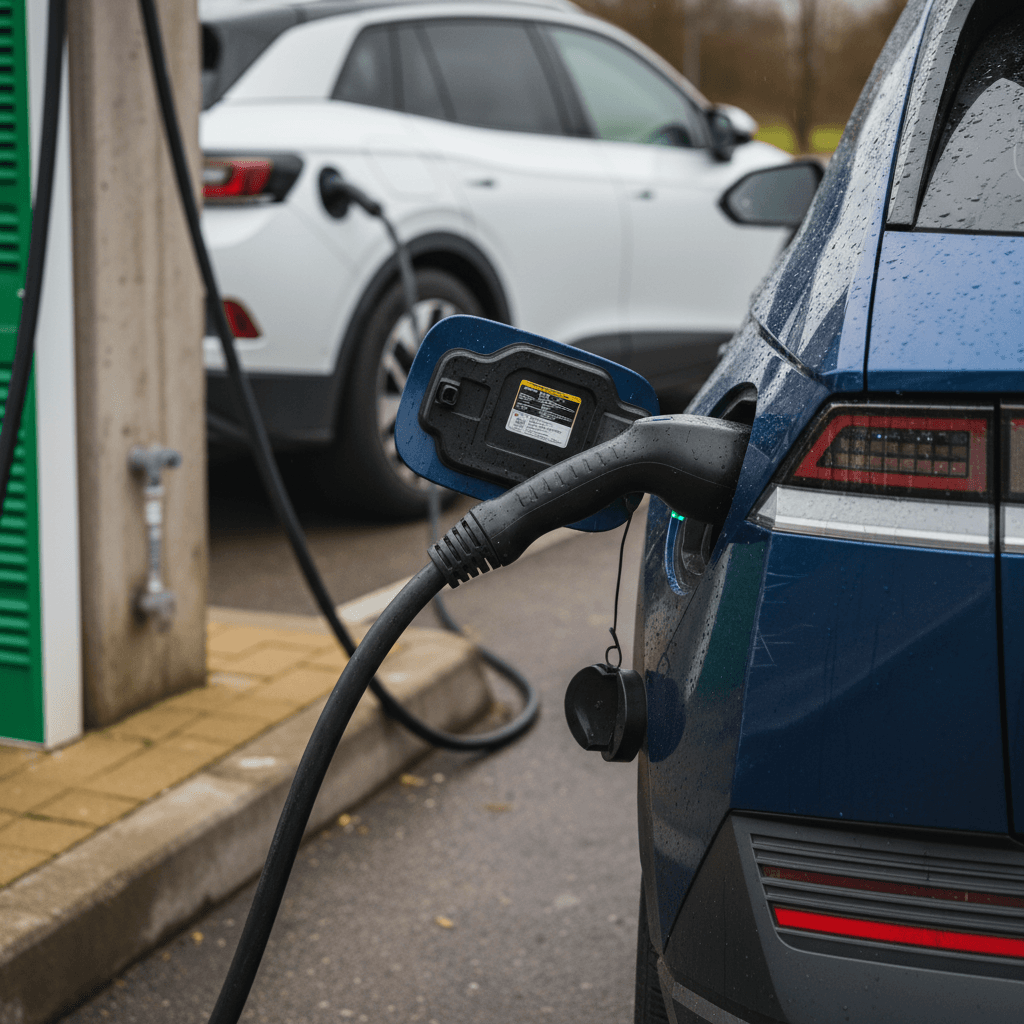
On road trips, what matters is not just peak kW, but how long the car holds that power. The Ioniq 5’s fast‑charging curve lets it stay near its peak deep into the battery’s state of charge, which means more miles per minute of charging. The ID.4’s curve is more traditional, higher at low state of charge, then tapering down.
Supercharger access for used buyers
If fast‑charging performance and Supercharger access are high on your list, **the Ioniq 5 is the clear favorite** in the used market. The ID.4 is perfectly capable of long‑distance duty, you’ll just spend more time at the plug and need to be a bit more intentional with planning.
Space, comfort, and practicality
Both of these EVs are family‑friendly crossovers on paper. In practice, they carve out slightly different missions: the Ioniq 5 is a lounge‑on‑wheels with clever packaging, while the ID.4 is more like a classic compact SUV with an EV powertrain dropped in.
Hyundai Ioniq 5: airy lounge
- Rear seat space: Outstanding legroom and a flat floor make the back seat feel almost midsize‑SUV roomy.
- Sliding rear bench: Lets you trade rear legroom for cargo length when needed.
- Front seats: Many trims offer reclining front seats with leg rests, great for charging stops.
- Cargo: Respectable but not class‑leading; the short nose and sloping rear limit the boxiness you get in some rivals.
Volkswagen ID.4: practical hauler
- Cargo room: One of the most generous trunks in the class, with a usefully tall opening and square sides.
- Rear seat: Plenty of room for adults, child seats, and tall passengers, though not as limo‑like as the Ioniq 5.
- Towing: Properly equipped ID.4s can tow significantly more than most Ioniq 5 trims, useful for small trailers or utility racks.
- Ride comfort: Softer suspension tuning makes the ID.4 a relaxed highway cruiser, especially on rough pavement.
Family‑use tip
Driving experience, tech, and safety
From behind the wheel, these two EVs feel more different than their spec sheets suggest.
- **Performance:** The Ioniq 5, especially in dual‑motor AWD form, feels genuinely quick, with strong mid‑range punch for highway merges. The ID.4 is tuned for smoothness over speed; even AWD versions feel more measured, though perfectly adequate for daily driving.
- **Ride and handling:** Ioniq 5 rides a bit firmer and feels more playful in corners; it’s the driver’s choice. The ID.4 soaks up bumps better and tends to feel more relaxed, especially on long commutes.
- **Interior tech:** The Ioniq 5 leans into a clean, modern interface with dual wide displays, clever ambient lighting, and neat touches like a sliding console. The ID.4 mixes touch and physical controls; early software frustrated some owners, but over‑the‑air updates have steadily improved responsiveness and menu logic.
- **Driver assistance:** Both offer adaptive cruise, lane keeping, and active safety suites. Hyundai’s Highway Driving Assist is one of the calmer, more confidence‑inspiring systems; Volkswagen’s Travel Assist is also capable once you learn its quirks.
Safety and ratings
Reliability, warranty, and battery health
Used‑EV shoppers worry, rightly, about long‑term reliability and battery life. By 2026, both the Ioniq 5 and ID.4 have built up multi‑year track records, and the news is generally positive, with some caveats.
Hyundai Ioniq 5: strong warranty, fast‑charge stress
- Warranty: Hyundai has historically offered a generous new‑vehicle warranty in the U.S., with a long battery and powertrain term that often covers the first owner and, in part, subsequent owners.
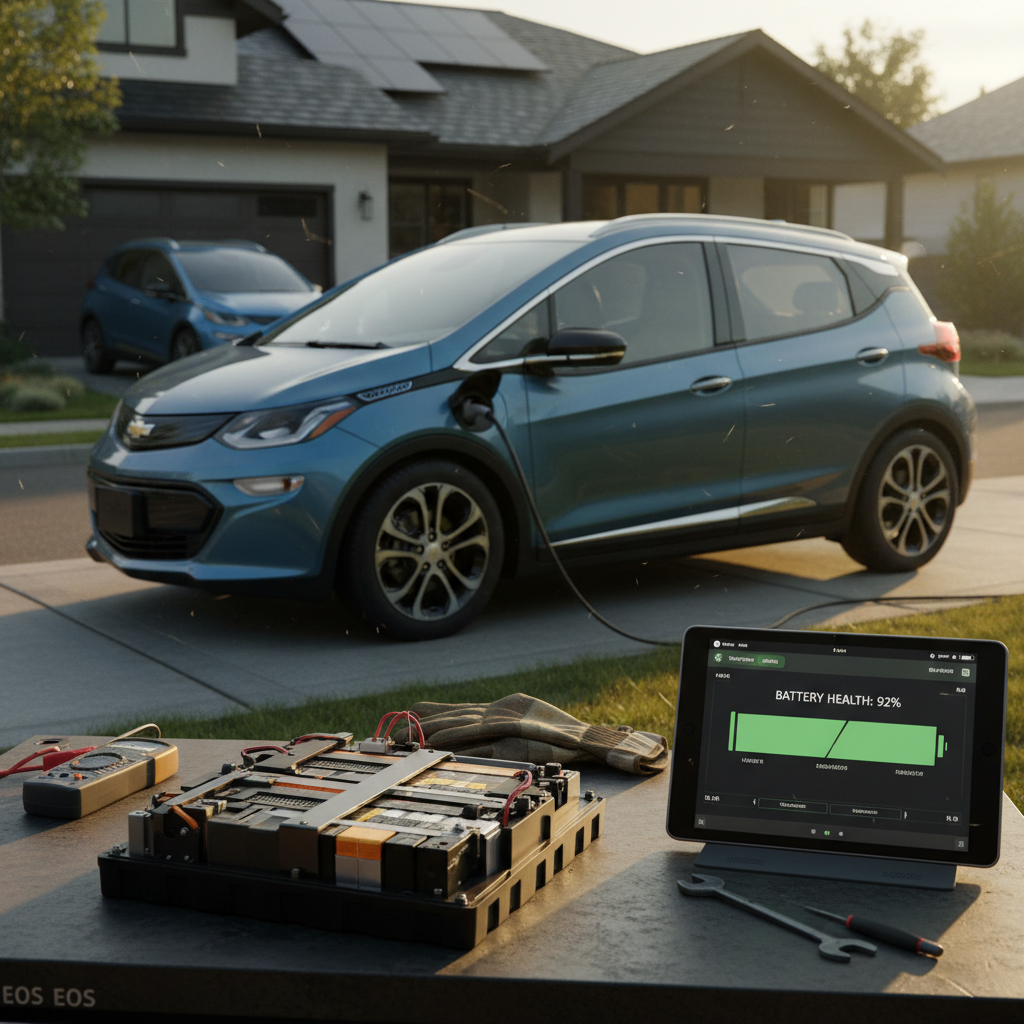
- Battery health: The E‑GMP platform is engineered for frequent fast charging; owner data so far shows healthy packs when charged sensibly.
- Issues to watch: Occasional reports of software bugs, 12‑volt battery gremlins, and early‑production build quirks. Most have been addressed via recalls or service campaigns.
Volkswagen ID.4: maturing software, solid hardware
- Warranty: VW’s basic warranty is typically shorter than Hyundai’s, but its high‑voltage battery coverage still spans many years and miles.
- Battery health: The ID.4’s more modest charging curve is actually gentle on the pack, which may pay dividends long‑term.
- Issues to watch: Early ID.4s struggled with infotainment glitches and occasional charging‑station handshakes; many have improved via over‑the‑air updates, but a test drive with your daily‑use apps is essential.
Don’t buy a used EV blind
Every used EV on Recharged comes with a **Recharged Score Report**, which includes verified battery‑health diagnostics, fair‑market pricing analysis, and a condition overview. Whether you buy through Recharged or not, insist on some form of objective battery assessment, this is the heart of the car you’re buying.
Used prices, incentives, and overall value
By 2026, depreciation has done its work on both models, and that’s good news for you. Exact values depend on mileage, trim, and local demand, but **the Volkswagen ID.4 generally undercuts the Ioniq 5 on price** for similar age and equipment, especially for earlier model years with older software.
- **Ioniq 5 used pricing:** Commands a premium for its fast charging, distinctive design, and strong reviews. Expect to pay more for dual‑motor AWD, Long Range batteries, and higher trims with luxury features.
- **ID.4 used pricing:** Often one of the most affordable ways into a relatively new, long‑range EV SUV. Earlier RWD models and fleet‑spec trims can be especially budget‑friendly.
- **Federal and state incentives:** As of 2026, used‑EV tax credits and state rebates are still in flux. Many programs cap purchase price and income, and some only apply at franchised dealers. Buying through a marketplace like Recharged doesn’t change eligibility rules, but you’ll get help understanding what you qualify for before you commit.
Where Recharged can help on value
How to choose: Ioniq 5 vs ID.4 checklist
6 steps to deciding between a used Ioniq 5 and ID.4
1. Be honest about your road‑trip habits
If you drive interstate corridors several times a year, put a big checkmark next to DC fast‑charging speed and network access. That leans you toward the Ioniq 5, especially on 2024+ cars with native NACS ports.
2. Map out your daily commute
Short, predictable drives with easy Level 2 home or workplace charging make either EV a winner. In that case, you can favor comfort, cargo space, and price, often tipping things toward a well‑priced ID.4.
3. Decide how much performance matters
If punchy acceleration and a more playful driving feel are on your wish list, focus on dual‑motor Ioniq 5 trims. If you just want smooth, quiet progress, most ID.4s will do that all day long.
4. Sit in the back seat and load the trunk
Bring your kids, car seats, pets, or luggage and actually load both vehicles. The Ioniq 5’s rear legroom is exceptional; the ID.4’s cargo hold is a small‑apartment‑move waiting to happen.
5. Get objective battery and charger data
Ask for a battery‑health report and DC charging history. On Recharged, the Recharged Score shows you pack health, fast‑charging behavior, and pricing fairness on every car we list.
6. Run the full cost numbers
Compare not just sticker prices but <strong>financing options, energy costs, insurance, and estimated depreciation</strong>. A slightly more expensive Ioniq 5 with better charging and warranty may pencil out better than a cheaper ID.4 over several years, or vice versa, depending on your driving. Recharged’s EV specialists can help you run those scenarios.
FAQ: Used Hyundai Ioniq 5 vs Volkswagen ID.4
Frequently asked questions
Bottom line: Which used EV SUV should you buy?
If you crave fast charging, distinctive design, and a cabin that feels like the future, a **used Hyundai Ioniq 5** is hard to beat in 2026. It’s the stronger road‑trip partner, the driver’s choice of the two, and backed by generous factory warranty coverage on key components.
If you’re more focused on value, cargo space, and a calm, comfortable ride that feels familiar from day one, a **used Volkswagen ID.4** may fit you better. It’s often cheaper to buy, still delivers solid range, and has matured nicely with software updates and owner feedback.
The right answer isn’t what wins a spec‑sheet battle, it’s the EV that fits your life. Take the time to drive both, load them with your actual gear, and get objective **battery‑health and pricing data** before you decide. At Recharged, every used EV comes with a Recharged Score Report, EV‑savvy financing options, trade‑in support, and even nationwide delivery, so you can choose your Ioniq 5 or ID.4 with eyes wide open and no drama.