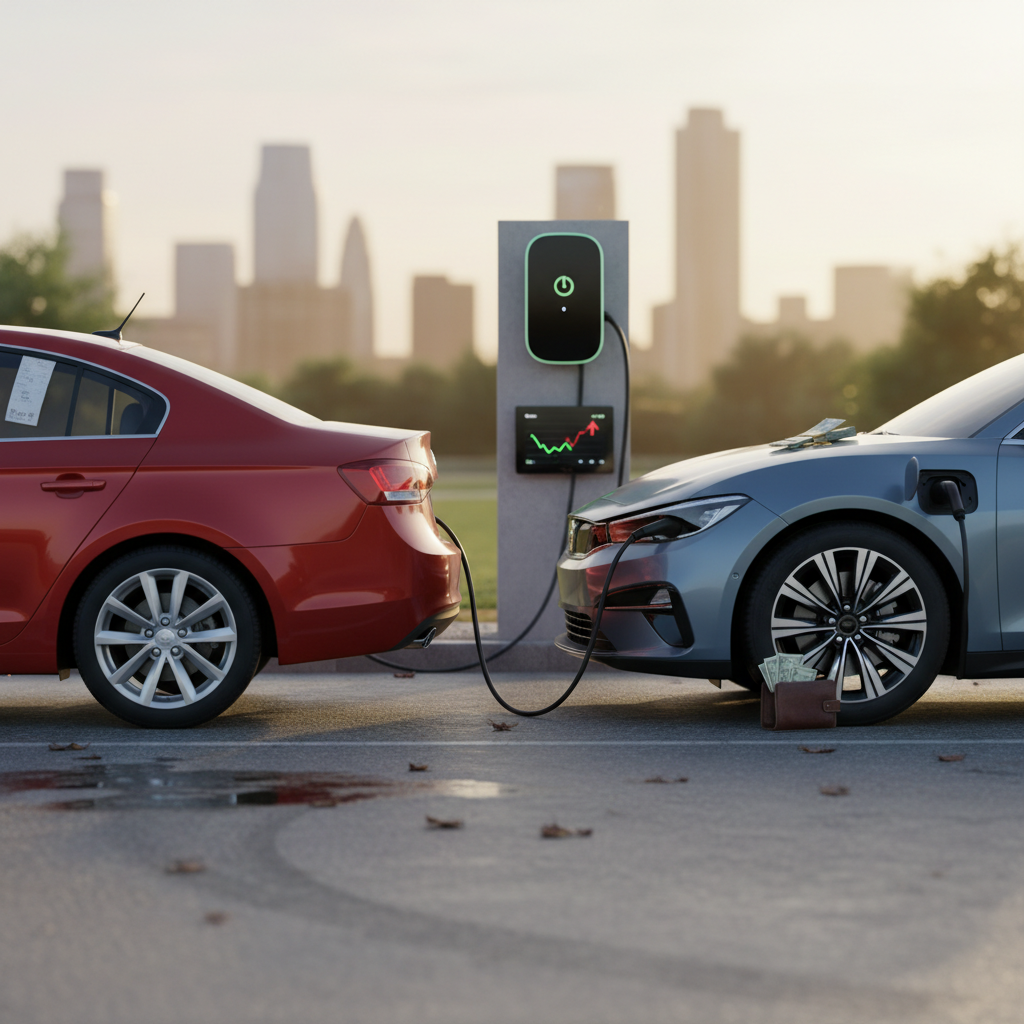
If you’re shopping for a pre-owned electric car, you’ll eventually find a good-looking deal with **90,000–99,000 miles** on the odometer and ask yourself: is a used EV under 100,000 miles worth it, or is that battery about to become an expensive problem? The short answer: in 2026, a well-cared-for EV with under 100,000 miles can be one of the smartest buys on the market, if you know how to judge battery health and value instead of just staring at the mileage number.
Mileage Isn’t the Whole Story
Why Mileage Looks Different on an EV
On a gasoline car, 100,000 miles often signals the beginning of more frequent repairs, timing belts, head gaskets, transmissions. An EV is built differently. There’s no engine oil, no exhaust system, no transmission with dozens of moving parts. The main long-term concern is the high-voltage battery pack and the systems that support it.
100,000 Miles: EV vs Gas Car
Same number on the odometer, very different realities
On an Electric Vehicle
- Battery degradation is typically gradual, not sudden failure.
- Most packs still retain 85–90%+ of original capacity around 100,000 miles in normal use.
- Far fewer wear items: no oil changes, spark plugs, or exhaust.
On a Gas Vehicle
- Engine and transmission wear can trigger large, sudden bills.
- Fuel system, emissions hardware, and cooling system often need major work.
- Maintenance history varies widely; abuse is harder to spot.
Use Mileage as a Filter, Not a Dealbreaker
What 100,000 Miles Really Means for EV Battery Health
Battery chemistry and thermal management have improved quickly. Real-world studies of modern EVs now paint a much calmer picture than the early doomsday predictions. Fleet data and independent tests typically show **capacity loss of around 2% per year**, with many EVs still holding **85–90% of their original capacity near 100,000 miles** in temperate climates. That usually means a car that started with 300 miles of EPA range may still deliver 255–270 miles in similar driving.
Battery Health Benchmarks Around 100,000 Miles
European and Australian fleet studies, plus owner data from brands like Tesla, Hyundai, Kia, and Volkswagen, consistently show **90%+ capacity after 75,000 miles**, and roughly high‑80s to 90‑ish percent at or just beyond 100,000 miles on most modern packs. Extreme fast‑charging abuse or constant operation in very hot climates can move those numbers, but for a typical commuter car, the fear of a totally “dead” battery at 100,000 miles just doesn’t line up with the evidence.
Climate and Charging Habits Still Matter

Warranty Limits and Why 100k Miles Is a Pivot Point
There’s a good reason you see so many EV ads touting **“8‑year / 100,000‑mile battery warranty.”** That combination became the de facto standard for plug‑in vehicles in the United States and remains common in 2026, though some brands go to 120,000–150,000 miles on certain models and California‑spec vehicles.
Typical EV Battery Warranty Terms (2026 Snapshot)
Exact coverage varies by brand, but most follow a similar pattern.
| Brand Example | Years | Mileage Limit | Capacity Guarantee |
|---|---|---|---|
| Most mainstream EVs | 8 years | 100,000 miles | ~70% usable capacity |
| Select Hyundai / Kia / Toyota trims | 10 years | 100,000–150,000 miles | ~70% capacity |
| Certain Rivian configurations | 8 years | 120,000–175,000 miles | ~70% capacity |
| Early Tesla large packs | 8 years | Unlimited miles (time only) | ~70% capacity |
Always confirm the specific warranty for the model year and trim you’re considering.
That 100,000‑mile mark matters because it often coincides with the end of time-and-mileage battery coverage for many EVs. A 6‑ or 7‑year‑old car with 95,000 miles may still have a couple of years of battery protection left. A similar car with 110,000 miles may be effectively on its own if the pack degrades faster than expected afterward.
Don’t Assume “Under 100k” Means “Under Warranty”
Cost of Ownership: Used EV Under 100k vs New EV or Gas Car
If the battery is healthy, a used EV under 100,000 miles can deliver **exceptionally low cost per mile** because you’re avoiding both the steepest depreciation and most of the heavy maintenance a gas car would face at the same mileage.
Used EV Under 100,000 Miles
- Already absorbed the sharp early depreciation hit; 3–5 year old EVs often retain ~35–50% of original MSRP after five years.
- Electricity plus maintenance commonly lands around $700–$1,200 per year for typical U.S. driving.
- Fewer surprise repairs: no timing belts, catalytic converters, or transmission rebuilds.
New EV or Comparable Gas Car
- New EV: higher payment, but full warranty and latest tech. Great if you’ll keep it long term.
- Gas car: cheaper upfront than a new EV, but fuel and maintenance can easily add $1,500–$2,500 per year depending on usage.
- At 80,000–100,000 miles, a gas car is entering the phase where big-ticket repairs become more common.
Where the Math Often Works in Your Favor
Models That Age Well, and Those to Approach Carefully
Not all EVs are created equal when it comes to high‑mileage durability. Some are proving to be excellent long‑distance companions; others have known weak spots you should factor into any “is it worth it?” calculation.
Used EVs That Generally Handle Miles Gracefully
Always judge individual condition, but these line up well with the data so far.
Tesla Model 3 / Model Y
Hyundai Ioniq 5 / Kona Electric
Kia EV6 / Niro EV
Be More Cautious With These
How to Evaluate a Used EV Under 100,000 Miles
To decide whether a specific used EV under 100,000 miles is worth it, you need to go beyond the listing and methodically check battery health, charging history, and overall condition. Here’s a smart way to work through that process.
7-Step Checklist for Judging a Used EV Under 100,000 Miles
1. Get a True Battery Health Report
Ask for an <strong>objective State of Health (SOH)</strong> reading from OEM diagnostics or a trusted third-party tool, not just a dashboard guess. At Recharged, every vehicle comes with a <strong>Recharged Score Report</strong> that includes verified battery health, so you can see exactly how much usable capacity remains.
2. Compare SOH to Original Range
Take the car’s original EPA range and multiply by the SOH percentage. A 300‑mile car at 88% SOH still offers about 264 miles. Decide if that real‑world range fits your daily and occasional road‑trip needs.
3. Check the In-Service Date and Warranty Status
Verify when the car was first put into service. An 8‑year/100,000‑mile warranty that started in June 2019 likely ends in June 2027, even if the car has only 70,000 miles. That context helps you price the car correctly.
4. Review Charging and Climate History
Ask where the car lived and how it was charged. Cooler climates and mostly home Level 2 charging are gentle on packs. Heavy DC fast‑charging in a hot region isn’t an automatic no, but it should show up in the battery report if it caused extra wear.
5. Inspect Thermal Management and Service Records
On liquid‑cooled EVs, make sure there are no warning lights, the cooling system shows no leaks, and scheduled software updates have been performed. A healthy thermal system is key to long battery life.
6. Look for Signs of Hard Use
Just like any used car, check for accident repairs, curbed wheels, uneven tire wear, or neglected brakes. A car that’s been beaten up cosmetically may also have been charged and driven carelessly.
7. Benchmark Price Against Battery Health
Two similar EVs with 90,000 miles can have very different battery health. A car at 92% SOH is simply worth more than one at 78%. Market‑fair pricing tools and reports, like the <strong>fair market pricing</strong> in a Recharged Score, help make sure you’re not overpaying.
How Recharged Simplifies This Process
When a High‑Mileage Used EV Is Absolutely Worth It
There are many scenarios where a used EV under 100,000 miles isn’t just “okay”, it’s the smartest play in the showroom. Here are a few patterns where the economics and practicality really line up.
- You drive 10,000–12,000 miles per year and mostly commute or run local errands.
- You have convenient access to overnight home charging, so reduced peak range isn’t a hardship.
- The battery report shows 80–90%+ SOH and consistent thermal management history.
- You’re buying a 3–6 year‑old car that’s already taken the steepest depreciation hit.
- You plan to keep the car another 4–6 years, not 15. Your goal is low cost per mile, not keeping it forever.
Ideal Use Case
A 4‑year‑old crossover EV with 85,000 miles, 88% SOH, clean history, and home charging can be an outstanding daily driver. You get modern safety tech, plenty of range, and dramatically lower running costs than a similar gas SUV.
Great for Budget‑Conscious Buyers
If your budget doesn’t stretch to a new EV, a high‑mileage used example lets you step into EV ownership sooner, often with a better feature set than a similarly priced new compact gas car.
When to Walk Away, Even if It’s Under 100,000 Miles
On the flip side, there are clean-looking used EVs under 100,000 miles that simply aren’t worth the risk or the price. Mileage alone won’t protect you from a poor purchase.
Red Flags on a Sub‑100k‑Mile EV
If you see several of these together, keep shopping.
No Battery Health Documentation
Out of Warranty + Low SOH
Hot Climate, Fast-Charge Heavy History
The True Dealbreaker: Bad Battery + High Replacement Cost
Frequently Asked Questions About Used EVs With 100k Miles
Used EV 100,000‑Mile FAQ
Bottom Line: Is a Used EV Under 100,000 Miles Worth It?
When you strip away the myths and look at the data, a used EV under 100,000 miles is often absolutely worth it. Modern batteries tend to degrade slowly, many cars still hold 85–90% of their original capacity near that mark, and the electric drivetrain eliminates most of the big-ticket mechanical failures that haunt high‑mileage gas cars.
The key is to stop treating mileage as a yes‑or‑no gate and start treating it as one input in a bigger equation: battery State of Health, warranty status, climate and charging history, overall condition, and price. Get those right, and a high‑mileage EV can deliver quiet, low‑maintenance miles at a bargain cost.
If you’d rather not become your own battery detective, consider shopping through Recharged. Every vehicle includes a Recharged Score Report with verified battery health and fair market pricing, plus optional financing, trade‑in, and nationwide delivery support. That way you can focus on the fun part, finding the right EV for your life, knowing the numbers behind it actually add up.