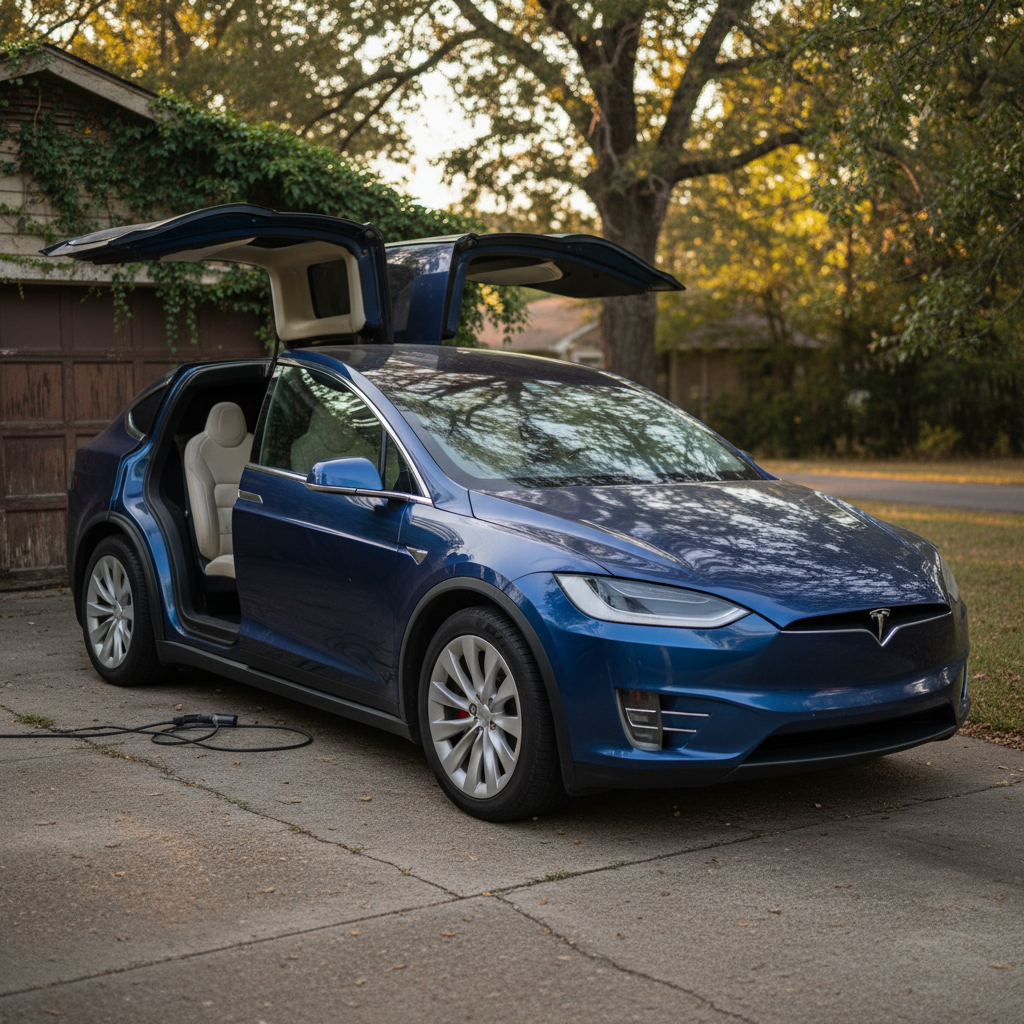
If you live in North Carolina and you’ve been eyeing used electric cars, 2026 is a very different landscape than just a couple of years ago. Federal tax credits have changed, registration fees are higher, and the used EV market has matured fast. The good news: for many Tar Heel drivers, used electric cars in North Carolina in 2026 can still be a smart financial move, if you know how to navigate fees, battery health, and charging.
North Carolina is firmly on the EV map
Why used electric cars are booming in North Carolina
North Carolina’s EV growth in context
Rapid new EV adoption in 2023–2025, helped by generous federal incentives and private‑sector investment, has created a healthier used EV market in North Carolina by 2026. Thousands of three‑ to six‑year‑old models are coming off lease or being traded as early adopters upgrade to longer‑range models or larger crossovers.
- More inventory: You’re no longer choosing between a handful of Nissan Leafs; there are used Teslas, Chevy Bolts, Hyundai Ioniqs, Kia EV6s, and more on NC roads.
- Price normalization: Used EV prices surged in 2021–2022, then cooled. In 2026, many popular used EVs are now priced much closer to comparable gas cars.
- Local investment: Toyota’s new battery plant near Greensboro and large clean‑transportation investments have reinforced that EVs aren’t a passing fad in this state.
Why 2026 is a sweet spot for value
What changed for EV incentives in 2025–2026
If you remember headlines about a $4,000 used EV tax credit, you’re not imagining things, but that world ended in 2025. A major federal budget and tax package wound down most federal EV purchase incentives, including the separate credit for used EVs, as of September 30, 2025. For purchases in 2026, you should assume there is no federal tax credit for used EVs unless Congress creates a new program.
What’s gone in 2026
- Federal used EV credit: The up-to-$4,000 credit for used EVs purchased from dealers is no longer available for vehicles bought after September 30, 2025.
- Point-of-sale credits: The ability to apply new- or used-EV federal credits directly to the purchase price has ended for 2026 buyers.
- Lease loophole: The generous tax-credit treatment that made many EV leases cheaper also sunset in late 2025.
What’s still around in NC
- No state purchase rebate: North Carolina still doesn’t offer a statewide EV purchase tax credit or rebate in 2026.
- Utility programs: Duke Energy and other utilities have focused on home-charging programs, like charger prep credits, discounted overnight rates, or charger rentals, rather than vehicle rebates.
- Occasional local offers: A few municipalities, co-ops, or employers may offer time-limited perks (parking discounts, workplace charging, etc.). These come and go, so always double-check what’s active when you buy.
Don’t shop based on expired credits
The true cost of owning a used EV in North Carolina
Without federal purchase credits, the economics of used electric cars in North Carolina hinge on three things: upfront price, state‑specific fees, and your ongoing fuel and maintenance savings. Let’s break those down with a North Carolina lens.
NC ownership cost factors: used EV vs. gas car
Key recurring costs you’ll face when registering and operating a used EV in North Carolina in 2026.
| Cost factor | Used EV in NC (2026) | Comparable gas car in NC (2026) | What it means for you |
|---|---|---|---|
| Annual registration | Standard registration fee + ~$200 EV fee | Standard registration fee only | NC charges an extra EV registration fee to replace lost gas-tax revenue, budget for it every year. |
| Fuel/energy | Home charging at night can be equivalent to paying ~$1–$1.50/gal | Subject to gas prices, often $3+/gal | Even with the EV fee, most moderate‑mileage drivers still save on fuel. |
| Maintenance | No oil changes, fewer moving parts, less brake wear | Oil changes, transmission service, exhaust, more brake work | EVs typically cost less to maintain, especially past 60,000 miles. |
| Emissions inspection | Safety inspection only, no emissions test for EVs | Safety + emissions in many counties | You’ll save the time and cost of emissions testing each year. |
| Depreciation | Steepest drop already happened before you bought | Can still lose value quickly if gas prices fall | Buying used protects you from much of the "new tech" price volatility. |
Assumes a typical compact SUV or sedan purchased used in 2026.
EV fee vs. fuel savings
Who benefits most from a used EV in North Carolina?
Three common NC driver profiles and how a used EV pencils out.
I‑40 / I‑85 commuter
If you drive 15,000–18,000 miles a year between suburbs and Raleigh, Durham, Greensboro, or Charlotte, fuel savings add up quickly, even with the EV fee. A 200–250 mile used EV can cover your week on home charging plus the occasional DC fast charge.
Short‑trip household
Families in places like Cary, Chapel Hill, or Asheville who mostly run local errands may never visit a gas station again. A used EV with 120–180 miles of real‑world range can easily handle daily life, and you’ll appreciate the lower maintenance as the car ages.
Road‑trip regulars
If you’re constantly driving from Charlotte to the Outer Banks or into the mountains, a used EV still works, but only if you choose a long‑range model on a strong fast‑charging network. You’ll want to be more selective about battery health and charging speed.
Best used electric cars for North Carolina drivers
The right used electric car in North Carolina depends on how you drive and where you live. But a few models show up again and again in NC registration data and on dealership lots, and tend to offer the best mix of range, reliability, and value.
Popular used EV picks for North Carolina in 2026
Models you’ll frequently see in NC’s used market and how they fit the state.
Tesla Model 3 / Model Y (2018–2023)
- Best for: Triangle and Charlotte commuters, frequent highway drivers.
- Why NC shoppers like it: Strong Supercharger access along I‑40, I‑85, and I‑95; over‑the‑air updates keep even older cars feeling modern.
- Watch for: Battery and motor warranty status, prior fast‑charging use, and cosmetic build issues on early years.
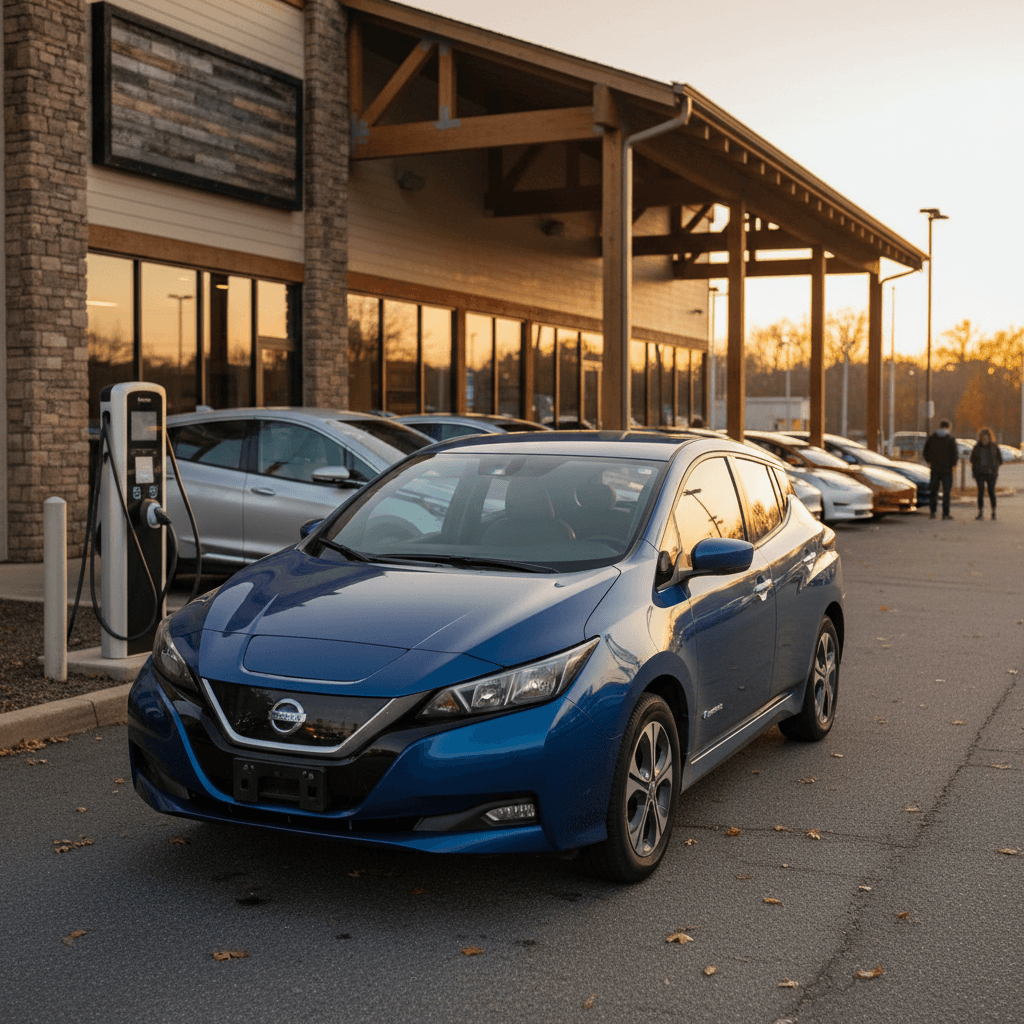
Nissan Leaf (2018–2024)
- Best for: Shorter‑range drivers in cities like Raleigh, Durham, Greensboro, and Wilmington.
- Why NC shoppers like it: Low prices and simple operation make it a great around‑town car.
- Watch for: Earlier air‑cooled batteries can degrade faster in hot climates; check real‑world range carefully.
Chevy Bolt EV / EUV (2019–2023)
- Best for: Value hunters who want 230+ miles of range without Tesla pricing.
- Why NC shoppers like it: Compact footprint for urban parking, solid DC fast‑charging for mountain and beach trips.
- Watch for: Battery recall history and proof that recall work was completed.
Hyundai & Kia EVs (Kona Electric, Ioniq 5, EV6, Niro EV)
- Best for: Families needing space plus quick DC fast‑charging on long NC–SC–GA road trips.
- Why NC shoppers like them: Strong warranties and comfortable cabins; great match for growing charging networks in the Southeast.
- Watch for: Software updates completed, DC fast‑charging behavior verified in a battery health report.
How Recharged helps you comparison‑shop
Ready to find your next EV?
Browse VehiclesCharging a used EV at home and on the road in NC
Before you buy a used EV in North Carolina, make sure you understand how you’ll charge it. Fortunately, the same forces driving EV sales, utility programs, federal infrastructure dollars, and private investment, are also building out the state’s charging options.
Home charging in North Carolina
- Level 1 (120V): Works from a standard outlet. Adds roughly 3–5 miles of range per hour. Fine for very low‑mileage drivers, but slow.
- Level 2 (240V): The sweet spot for most NC households. Adds roughly 20–40 miles of range per hour depending on the car.
- Utility help: Duke Energy and others have gradually rolled out programs like charger prep credits, three‑year charger rentals that include installation, and discounted overnight EV rates. These programs change over time, so check your specific utility’s EV page in 2026.
- Renters: Talk to your landlord about adding a 240V outlet or using existing dryer circuits with a safe, code‑compliant solution.
Public charging in North Carolina
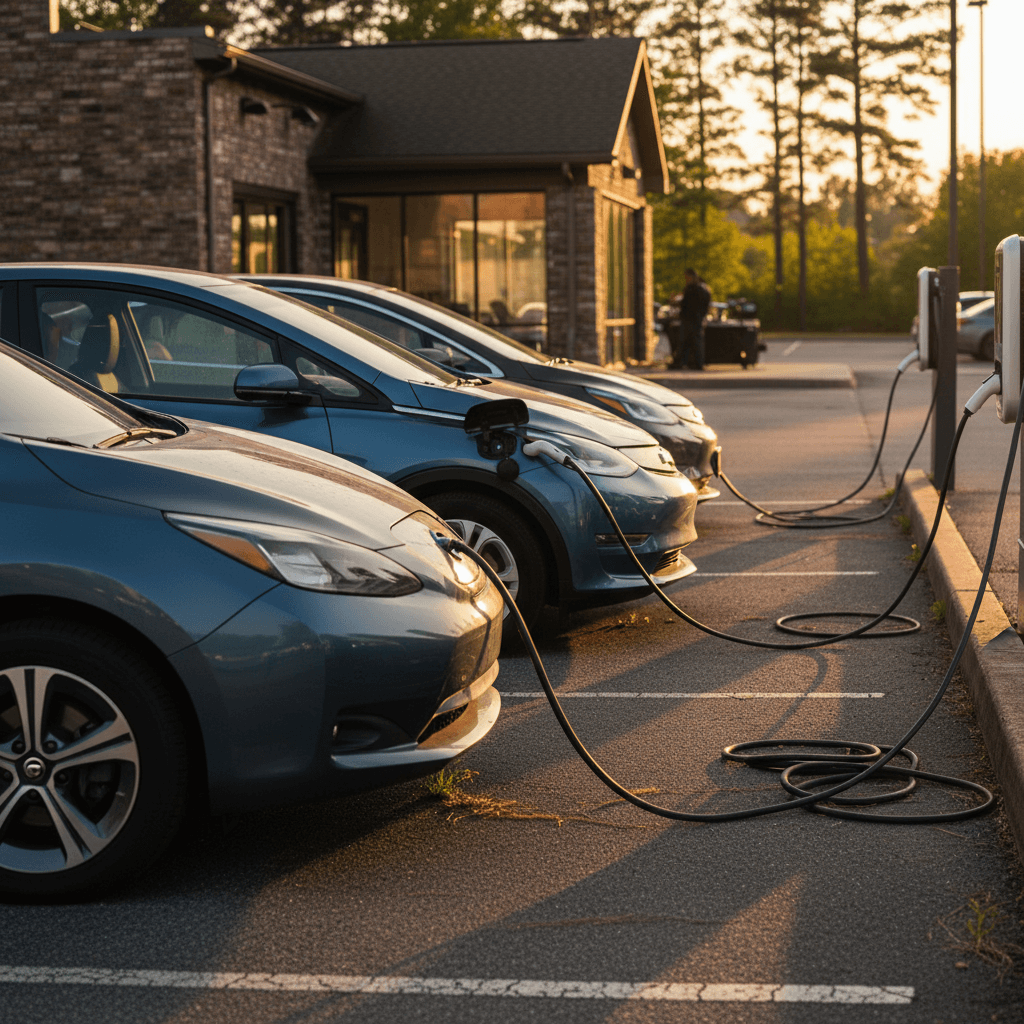
- DC fast charging: You’ll find fast chargers clustering along I‑40, I‑85, I‑95, I‑77, and around metro areas. These are key if you drive from Charlotte to Wilmington or Raleigh to Asheville.
- Destination charging: Many hotels, workplaces, universities, and downtown parking garages offer Level 2 charging, sometimes free or discounted.
- Networks: Expect to rely on a mix of Tesla Superchargers (increasingly accessible to non‑Teslas with the right connector), major third‑party networks, and utility‑backed stations.
- Apps: Plan to use charging apps or built‑in navigation to filter for plug type, charging speed, and real‑time availability.
Test your NC charging life before you buy
Why battery health matters more on a used EV
On a used gas car, you worry about engines and transmissions. On a used electric car, the battery pack is the single most valuable component, and the one that most directly determines how useful the car is on North Carolina’s highways and hot summers.
Battery questions to answer before you buy in NC
1. How much real‑world range is left?
Don’t rely only on the original EPA rating. Ask for recent range estimates at 100% charge and how that compares to when the car was new. In a state with long highway corridors, having 70–80% of original range is very different from 50–60%.
2. What does a data‑backed battery report say?
Look for <strong>third‑party diagnostics or OEM data</strong>, not just a dashboard guess. Recharged’s Score Report, for example, uses battery health diagnostics so you can see degradation, fast‑charging patterns, and any warning signs.
3. Has the car lived in extreme heat?
The Piedmont and coastal plain see plenty of hot days. Long‑term heat exposure, especially for cars without active battery cooling, can accelerate degradation. Ask where the car has lived and how it was charged.
4. How was it charged day‑to‑day?
Occasional DC fast‑charging is fine. A diet of constant 100% fast‑charges, especially in heat, is not. A good report will show how often the previous owner fast‑charged and how high they typically charged the battery.
5. Is the battery still under warranty?
Many EVs have 8‑year battery warranties with mileage caps. Knowing the in‑service date, mileage, and any prior warranty claims can protect you against worst‑case scenarios.
Don’t buy blind off a dashboard guess
Where to shop for used electric cars in North Carolina
By 2026, you have more choices than ever for used electric cars in North Carolina, but not all shopping experiences are created equal. The differences are mostly about transparency, EV expertise, and convenience.
Shopping options for used EVs in NC
Pros and cons of the main places North Carolinians buy used EVs today.
Traditional dealerships
Pros: Easy test drives, trade‑in handling, local presence in cities like Raleigh, Charlotte, and Wilmington.
Cons: EV knowledge varies widely; battery health is often summarized as "it looks fine" with no data; pricing can include add‑ons.
Generic online marketplaces
Pros: Huge inventory; filter by model, price, and mileage; some offer delivery.
Cons: Listings often lack deep EV‑specific info, no real battery diagnostics, vague about prior fast‑charging or software updates.
Recharged used‑EV marketplace
Pros: Every car includes a Recharged Score Report with verified battery health, pricing analysis, and inspection detail; EV‑specialist support on chat or phone; fully digital buying plus nationwide delivery to North Carolina; trade‑in and financing support.
Cons: Selection is focused on EVs only, if you’re still cross‑shopping gas SUVs, you’ll need to compare separately.
Buy from your couch, get it delivered to NC
Step-by-step: how to buy a used EV in North Carolina (2026)
To make this concrete, here’s a simple playbook for buying a used EV in North Carolina this year, whether you’re upgrading from gas or from an older EV.
Two buying paths for NC shoppers
Path A: First‑time EV buyer in NC
Clarify your use case: daily miles, road‑trip habits, driveway vs. street parking, and whether you can install home charging.
Check your electric utility’s EV programs, look for overnight EV rates, charger prep credits, or rental programs so you understand home‑charging costs.
Shortlist 2–3 models (for example, Leaf vs. Bolt vs. Model 3) that meet your range and space needs.
Shop on an EV‑focused marketplace like Recharged to compare options with <strong>battery health reports</strong> and fair‑market pricing already done for you.
Get pre‑qualified for financing so you know your budget; Recharged offers financing that fits within typical NC insurance and tax costs.
Schedule delivery or a visit; once the car arrives, set up charging, download key apps, and do a shakedown weekend of normal driving before any huge trips.
Path B: Current EV owner upgrading
Decide what’s missing from your current EV: more range, faster charging, more space, or better driver‑assistance tech.
Gather your current EV’s payoff, photos, and service history; request a trade‑in or instant offer from places like Recharged to benchmark value.
Focus on models that fix your pain points without overpaying, for example, moving from an early Leaf to a Kona Electric or Tesla Model 3.
Prioritize listings with <strong>third‑party battery diagnostics</strong> so you don’t trade one unknown pack for another.
Run a total‑cost‑of‑ownership comparison that includes NC’s EV fee, insurance, and likely electricity savings vs. your current vehicle.
Complete the deal digitally and schedule pickup or delivery, then transfer your home‑charging setup to the new car.
Handle taxes and fees the smart way
FAQs: used electric cars in North Carolina 2026
Common questions about used electric cars in NC
Bottom line: are used electric cars worth it in NC?
In 2026, the story of used electric cars in North Carolina isn’t about chasing tax credits anymore, it’s about picking the right car with a healthy battery, realistic range, and a charging plan that fits your life. For many NC drivers, especially commuters along I‑40 and I‑85 or families with predictable daily routines, a well‑chosen used EV will cost less to run, feel nicer to drive, and hold its usefulness longer than a comparable gas car.
If you want to skip the guesswork, Recharged was built around exactly these questions. Every used EV on the platform comes with a Recharged Score Report that lays out battery health, pricing fairness, and inspection findings in plain English, plus EV‑savvy support to walk you through financing, trade‑ins, and nationwide delivery to North Carolina. However you decide to buy, bring 2026‑specific realities, no federal used‑EV credit, NC’s EV fee, and your home‑charging situation, into the conversation, and you’ll be in a much better position to make an EV work for you long‑term.