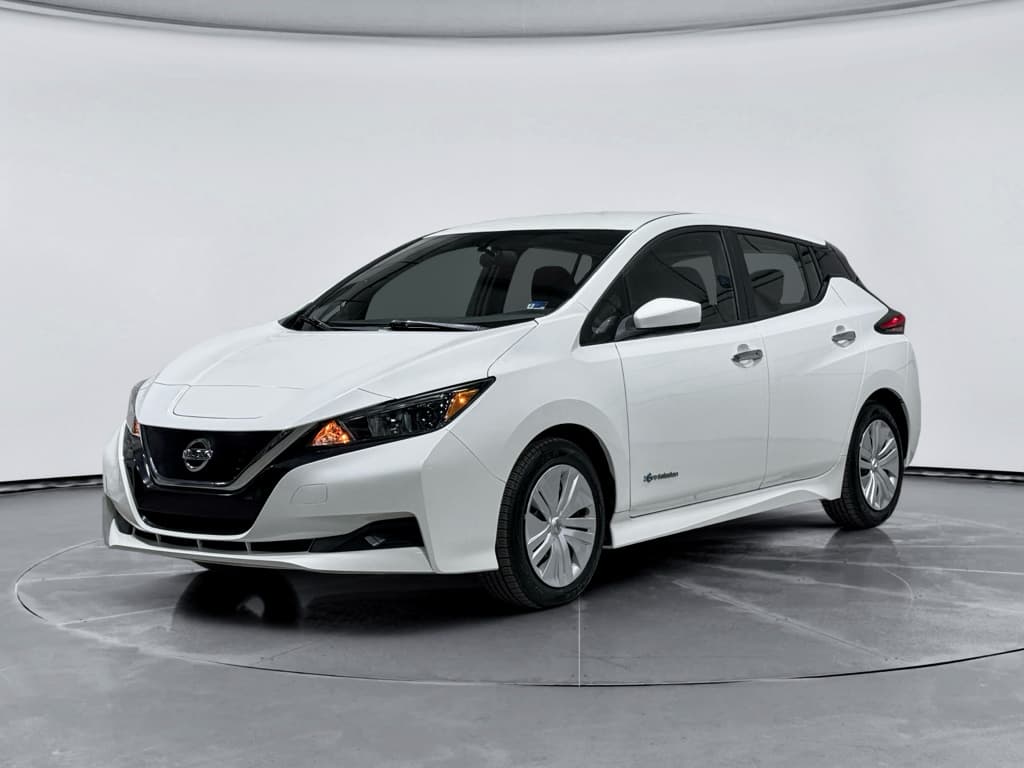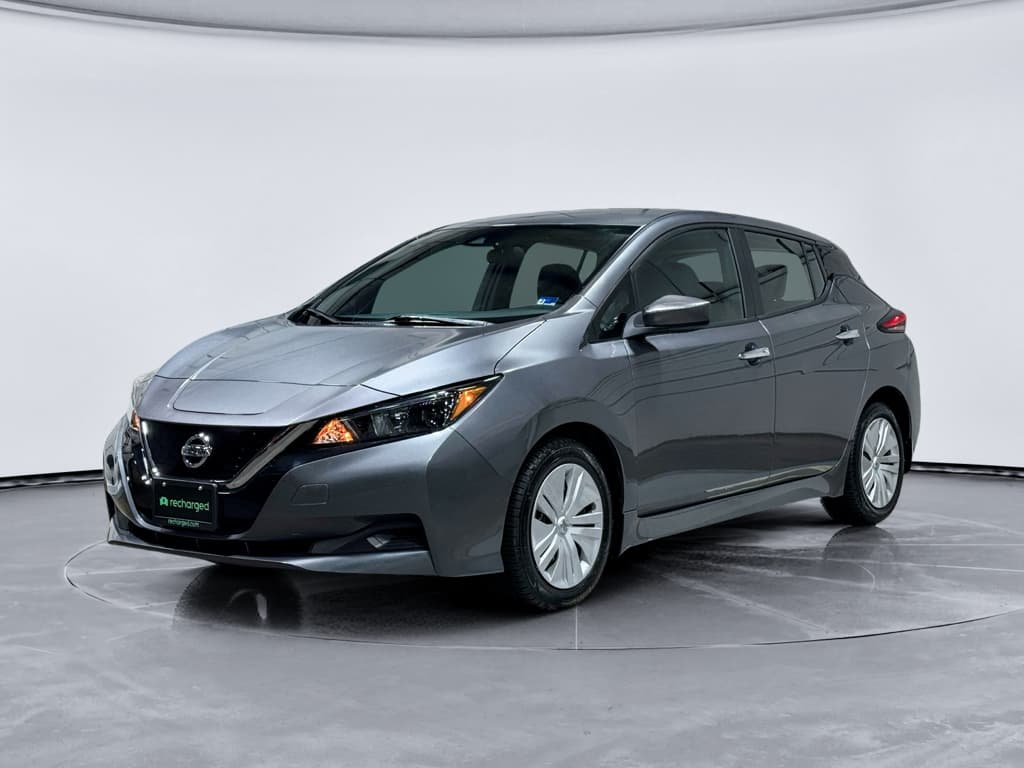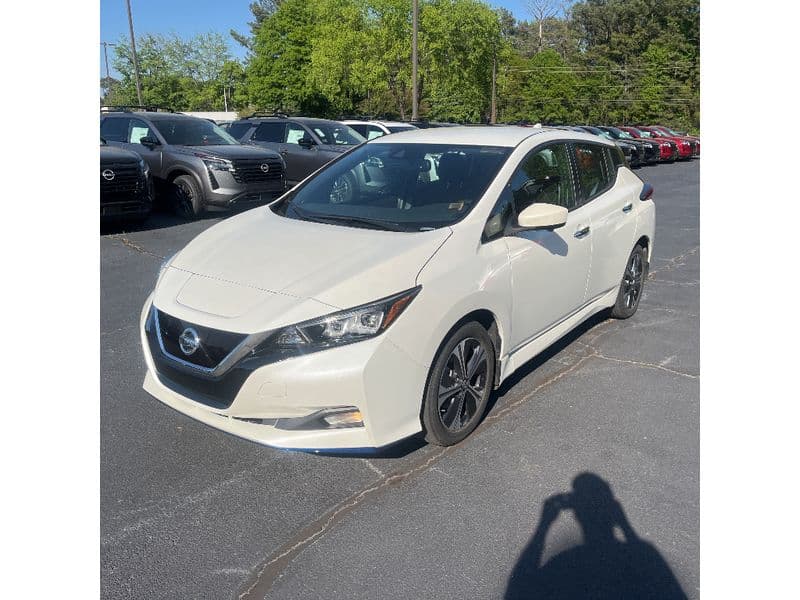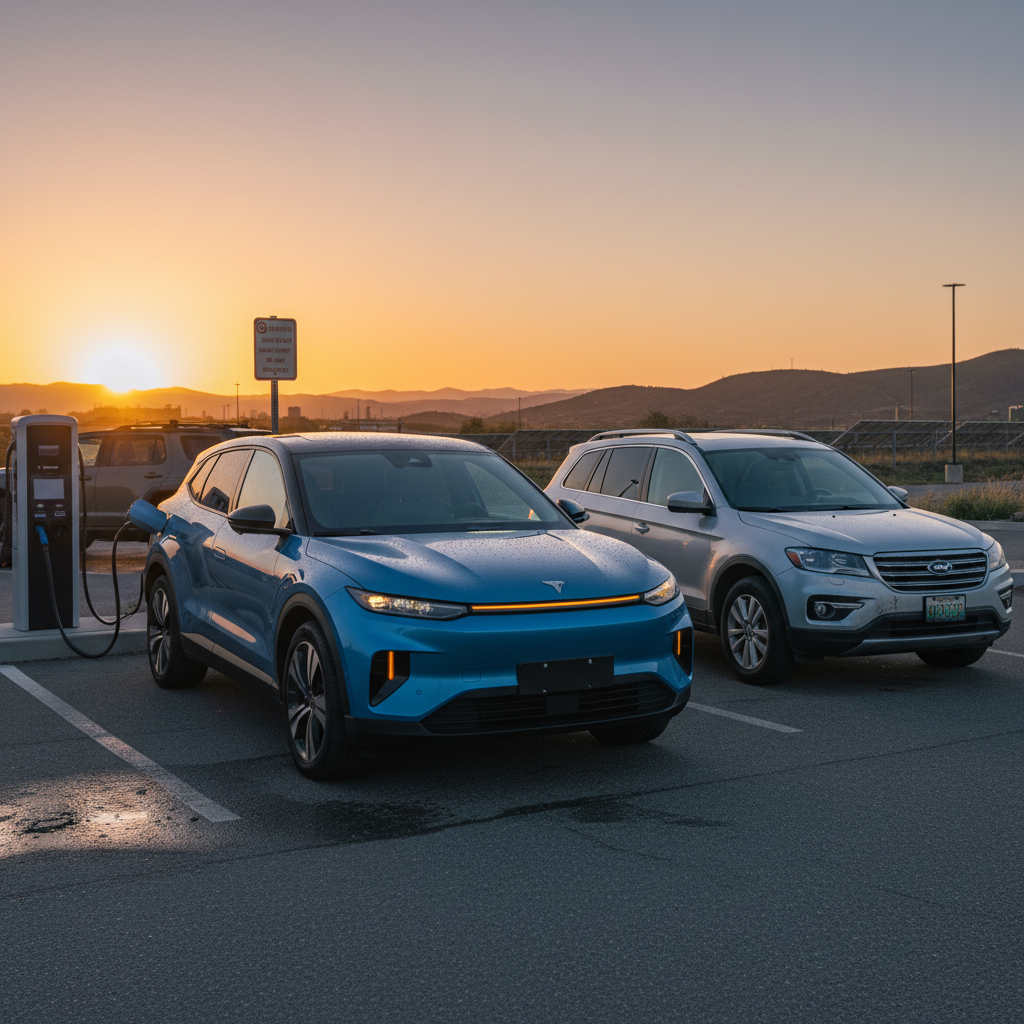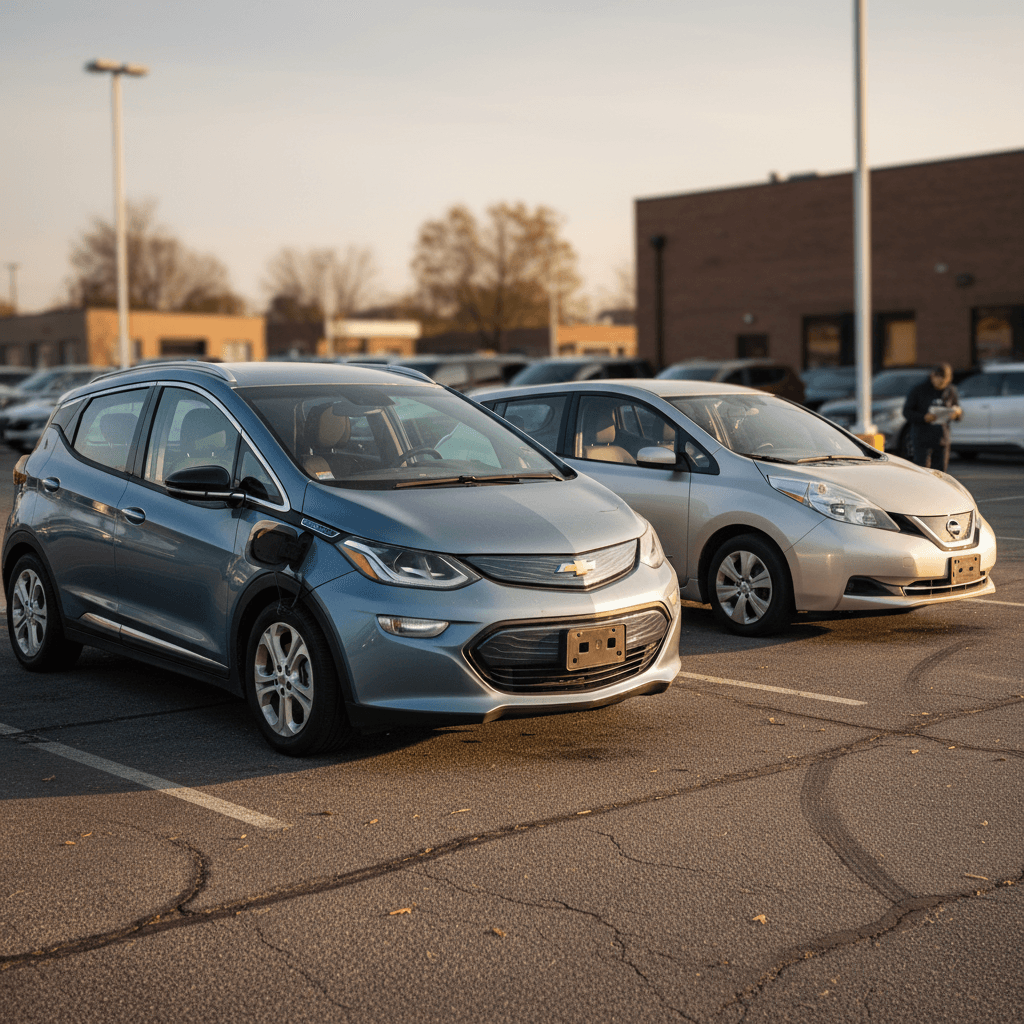
If you’re shopping for an affordable used electric car in 2026, the **Chevrolet Bolt EV** and **Nissan Leaf** will land on your shortlist almost every time. Both are plentiful, relatively inexpensive, and easy to live with, but they’re not interchangeable. The right choice depends on how far you drive, how you charge, and how much risk you’re willing to take on battery health.
Who this comparison is for
Overview: Used Bolt EV vs Nissan Leaf in 2026
Chevrolet Bolt EV: The range and highway champ
- EPA range: 238–259 miles depending on model year.
- Battery: ~60–65 kWh usable with active liquid cooling.
- DC fast charging: CCS, decent road‑trip usability.
- Upside: Big range in a small footprint, strong value post‑recall.
- Watch for: Battery recall history and replacement documentation.
Nissan Leaf: The simple, city‑friendly workhorse
- EPA range: ~149 miles (40 kWh) to ~215–226 miles (62 kWh Plus).
- Battery: 24–62 kWh over the years, air‑cooled.
- DC fast charging: CHAdeMO (fast‑charge network is shrinking).
- Upside: Comfortable ride, roomy hatchback, often cheaper than a Bolt.
- Watch for: Battery degradation, especially in hot climates and on earlier packs.
Big‑picture takeaway
Key Specs at a Glance
Used Chevrolet Bolt EV vs Nissan Leaf: Core Specs
High‑level specs for the most common used Bolt EV and Leaf configurations you’ll see on the market in 2026.
| Model / Pack | Typical Model Years on Used Market | Battery (usable kWh, approx.) | EPA Range (mi) | DC Fast Charging Plug | On‑Board AC Charger |
|---|---|---|---|---|---|
| Chevy Bolt EV (early pack) | 2017–2019 | ~60 kWh | 238 mi | CCS | 7.2–7.6 kW |
| Chevy Bolt EV (updated pack) | 2020–2023 | ~65 kWh | 259 mi | CCS | 7.2–7.6 kW |
| Nissan Leaf 40 kWh | 2018–2024 | ~37–38 kWh usable | 149–150 mi | CHAdeMO | 6.6 kW |
| Nissan Leaf Plus 62 kWh | 2019–2024 | ~56–59 kWh usable | 215–226 mi | CHAdeMO | 6.6 kW |
Later Leaf Plus models narrow the range gap but still trail the Bolt EV on highway usability.
Spec sheet vs. driveway reality
Real-World Range and Battery Sizes
On paper, the **Chevrolet Bolt EV** simply goes farther on a charge than a comparable Nissan Leaf. Most used Bolts you’ll see in 2026 are 2017–2023 cars with roughly **60–65 kWh** of usable capacity and EPA ratings from **238 miles (2017–2019)** up to **259 miles (2020–2023)**. The Leaf range story is more fragmented: the common **40 kWh Leaf** is rated around **149 miles**, while **Leaf Plus models with the 62 kWh pack** stretch into the **215–226‑mile** zone.
How far can you realistically drive?
Approximate **healthy‑battery** expectations in mixed driving, tempered for age by 2026.
Chevy Bolt EV (2017–2019)
Realistic daily range: ~180–210 miles for many cars, more if the pack was replaced under recall and is in good health.
Chevy Bolt EV (2020–2023)
Realistic daily range: ~200–230 miles. Later cars and recall‑replacement packs tend to hold range well when treated reasonably.
Nissan Leaf 40 kWh & 62 kWh
40 kWh: Often ~110–135 miles in mixed driving by 2026.
62 kWh: Commonly ~170–200 miles, depending on climate and use.
Climate matters more on the Leaf
Battery Health and Degradation
On a used EV, the battery is the ballgame. Both the Bolt EV and the Leaf can be excellent buys with a strong pack, and risky bets if degradation or defects are lurking. The two cars approach battery management very differently, and that shows up in used‑market behavior.
Chevy Bolt EV: Recall headache, long‑term upside
- Thermal management: Liquid‑cooled pack helps slow everyday degradation.
- Recall context: 2017–2022 Bolts were subject to a well‑publicized battery recall; many packs were replaced entirely.
- Upside of a recall car: A documented replacement pack often behaves like a much newer battery and may carry its own warranty clock, which can be a huge plus on a used car.
- Key check: Confirm, in writing, whether the recall was performed and whether the pack was repaired or replaced, and when.
Nissan Leaf: Simpler hardware, more sensitive pack
- Thermal management: No active liquid cooling on any US‑market Leaf.
- Degradation pattern: Post‑2018 40 kWh and 62 kWh packs are better than the very early Leafs, but you still see more capacity loss in hot climates or on cars that DC fast‑charge heavily.
- Dashboard clues: The Leaf’s capacity bars give a rough picture of health, but a true diagnostic scan is more reliable.
- Key check: Look for at least 11–12 capacity bars on newer Leafs and verify health with a professional test whenever possible.
Battery‑health checks before you choose
1. Get a third‑party health report
Ask for a recent, independent battery‑health assessment instead of relying on guesswork or a simple dash display. Every used EV on Recharged comes with a **Recharged Score Report** that quantifies actual battery health so you know what you’re buying.
2. Verify recall and warranty status
For the Bolt EV, confirm whether the official battery recall work was completed and whether the pack was replaced or just re‑programmed. For both cars, check remaining factory battery warranty based on in‑service date and mileage.
3. Consider climate history
A Leaf that has spent its life in Phoenix and fast‑charged daily is very different from one garaged in Seattle and only Level 2 charged. With Bolts, climate is still a factor, but active cooling reduces the gap between hot and mild climates.
4. Match remaining range to your real needs
If you need 40–50 miles a day with occasional longer trips, a well‑kept Leaf may be plenty. If you regularly drive 150+ miles or want stress‑free winter margins, a stronger‑range Bolt EV is usually the safer bet.
Charging Speed and Road-Trip Ability
Range gets the headlines, but **how you refill that range** is just as important, especially in a used EV where you might not control home charging hardware or workplace options. Here the Bolt EV and Leaf diverge sharply.
Charging: Bolt EV vs Nissan Leaf
Daily use and road‑trips feel very different in these two cars.
DC fast charging & networks
- Bolt EV: Uses the CCS standard, plugged into most non‑Tesla DC fast‑charge networks in North America. As more new EVs adopt NACS, CCS should remain well‑supported via adapters.
- Leaf: Uses CHAdeMO. In 2026, CHAdeMO support is shrinking; many new stations omit it, so planning ahead becomes critical for long trips.
At‑home and workplace charging
- Bolt EV: Roughly 7+ kW onboard AC charger. On a 240‑volt Level 2, many owners add 25–30+ miles of range per hour.
- Leaf: 6.6 kW onboard AC charger on most modern trims. On 240 V, expect similar 20–25 miles of range per hour, depending on battery size and conditions.
Road‑tripping a Leaf takes more planning
- If you mainly charge at home and rarely take long trips, either car can work well.
- If you’ll rely on public DC fast charging or do frequent 200‑mile days, the Bolt EV is usually the safer long‑term choice.
- In cold climates, both cars will see winter range drops, but the Bolt’s extra buffer makes those drops less stressful.
Interior Space, Comfort, and Features
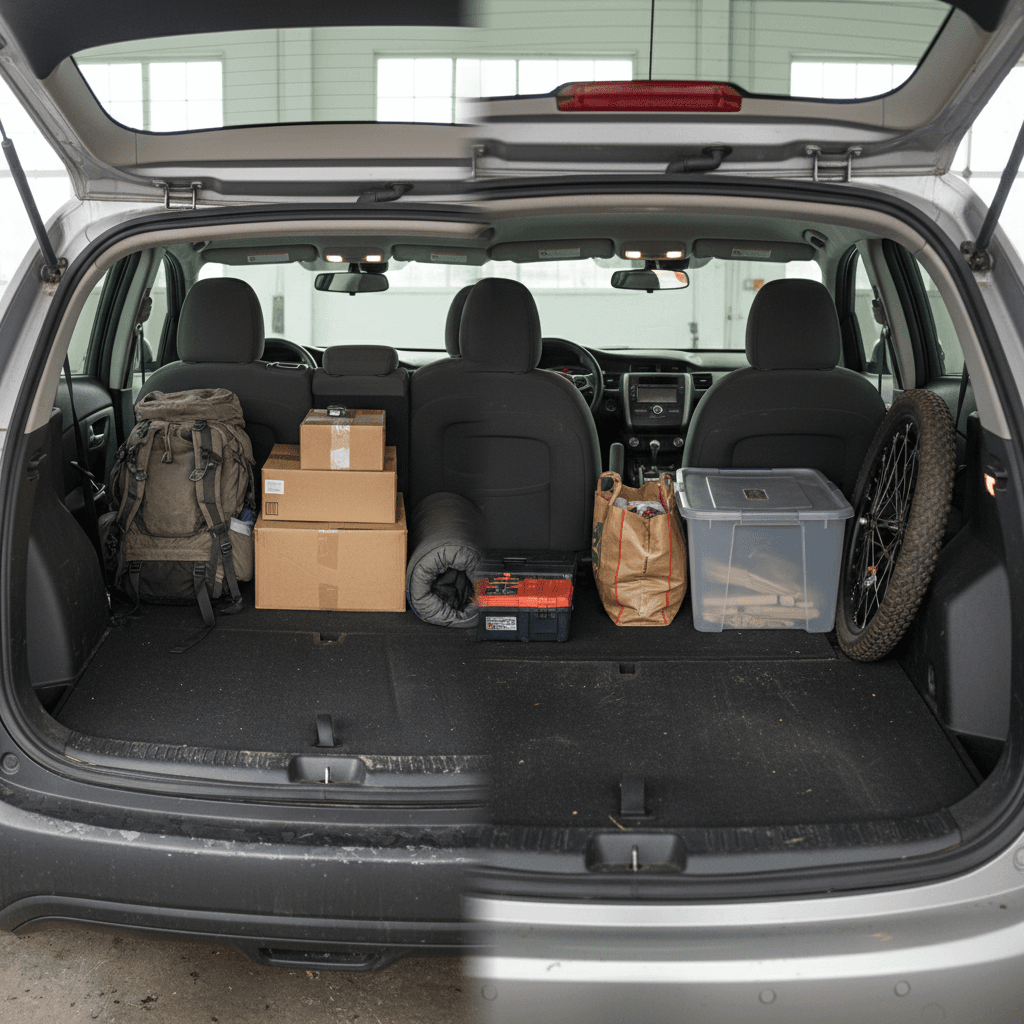
Behind the wheel, the Bolt EV and Leaf feel surprisingly different even though they’re both compact hatchbacks. The Bolt is **tall and narrow**, with a more upright, almost crossover‑like driving position. The Leaf feels more like a traditional compact car, with a softer ride and a bit more rear‑seat and cargo flexibility.
Living with a used Bolt EV vs a used Leaf
Space, comfort, and tech where you’ll notice it every day.
Seating & comfort
Bolt EV: Earlier seats (2017–2019) drew complaints for being narrow and firm; many 2020+ cars feel better. Front headroom is excellent, rear legroom is adequate but not generous.
Leaf: Generally softer seats and a more relaxed ride. Rear seat feels a bit roomier for adults.
Cargo and practicality
Bolt EV: Tall cargo area but not very long; great for grocery runs and city errands.
Leaf: Longer cargo floor and more usable space with the seats folded, especially on non‑Bose‑audio cars without the subwoofer intrusion.
Tech & driver aids
Both offer modern infotainment, Apple CarPlay/Android Auto on later years, and available driver‑assist suites. Compare specific trims: Premier/2LT Bolts and SV/SL Leafs tend to have more features (blind‑spot, adaptive cruise, etc.).
Try them back‑to‑back
Reliability, Recalls, and Warranties
Mechanically, both the Bolt EV and Leaf are simpler than a gasoline car, no oil changes, timing belts, or complex multispeed transmissions. Most of the reliability conversation centers on **battery packs**, electronics, and a few recurring quirks.
Chevy Bolt EV reliability snapshot
- Battery recall: 2017–2022 cars were subject to a safety recall involving the high‑voltage battery. Many cars received new or refurbished packs.
- What that means for you: A Bolt with a properly documented recall battery can actually be a strong long‑term bet, especially if the replacement pack carries its own 8‑year/100,000‑mile coverage clock from installation.
- Other issues: Occasional reports of infotainment glitches, charge‑port doors, and DC fast‑charge speed variation, but generally robust electric drivetrains.
Nissan Leaf reliability snapshot
- Battery degradation vs. outright failure: Most concern is about gradual range loss, not catastrophic pack failure, though there have been reports of module issues on some later 40 and 62 kWh packs.
- Cooling trade‑offs: Lack of liquid cooling simplifies the car but places more responsibility on the owner’s charging habits and climate.
- Other issues: Braking feel, older infotainment systems, and some charger‑door and 12‑volt battery quirks, but generally low running costs.
Don’t assume the battery warranty is the same on every car
Ownership Costs and Resale Value
By 2026, both cars have seen substantial used‑market price drops, which is why they’re so compelling. The nuance is in **how those prices relate to the remaining battery life and usability**.
Typical used‑market behaviors in 2026*
Where value often hides
Which Used EV Fits Your Driving Profile?
At this point, you’ve probably noticed there’s no universal winner, there’s a best choice for **your life**. Here’s how to match each car to common real‑world use cases.
Buyer profiles: Bolt EV vs Leaf
Daily commuter (up to ~60–70 miles/day)
Either car works, but a well‑priced 40 kWh Leaf can be the bargain play if you’re mostly on surface streets.
A Bolt EV gives you extra buffer for winter, side trips, and skipped charging days.
Suburban family with mixed driving
Bolt EV: Better for juggling errands, kids’ activities, and occasional longer drives without range anxiety.
Leaf Plus: Solid option if you can charge at home and long road‑trips are rare.
Frequent road‑tripper or rideshare driver
Bolt EV is usually the clear choice thanks to CCS fast charging, higher range, and better integration with major DC fast‑charge networks.
Leaf (any battery size) requires careful trip planning due to CHAdeMO availability and more pronounced range loss at highway speeds.
Budget buyer or second car
40 kWh Leaf: Often the lowest purchase price, ideal as a city car or second vehicle.
Older Bolt EV: If priced close to a Leaf and equipped with a fresh recall pack, it can be the better long‑term value despite a slightly higher sticker.
A simple decision rule of thumb
How Recharged Helps You Compare and Buy
Sorting out battery health, recall details, and value on your own can feel overwhelming, especially if this is your first EV. That’s exactly why **Recharged** exists. Every used EV we sell, including Chevrolet Bolt EVs and Nissan Leafs, comes with a **Recharged Score Report** that verifies battery health, checks for open recalls, and benchmarks pricing against the broader market so you can see whether a car is fairly priced at a glance.
- Verified battery health: Objective diagnostics, not just guesswork from capacity bars.
- Transparent pricing: Fair‑market evaluations that factor in battery condition, not just mileage and trim.
- Financing and trade‑in options: You can finance your used Bolt or Leaf, trade in a gas car, or even get an instant offer or consignment help if you’re selling.
- Nationwide delivery and digital buying: Browse, compare, and complete most of the process online, with EV‑specialist support if you have questions.
- In‑person experience: If you’re near Richmond, VA, you can visit the Recharged Experience Center to see vehicles up close and talk with EV experts.
FAQ: Used Bolt EV vs Nissan Leaf in 2026
Frequently asked questions
If you’ve read this far, you already understand more about the used Chevrolet Bolt EV vs Nissan Leaf landscape than most shoppers. The Bolt EV usually wins on range, charging flexibility, and long‑term desirability, especially if you find one with a documented recall pack. The Leaf counters with lower entry prices and a more traditional, comfortable feel, particularly as a city‑focused runabout or second car. Focus on **battery health, charging needs, and your daily mileage**, and you’re far more likely to end up with the right used EV for the way you actually drive.