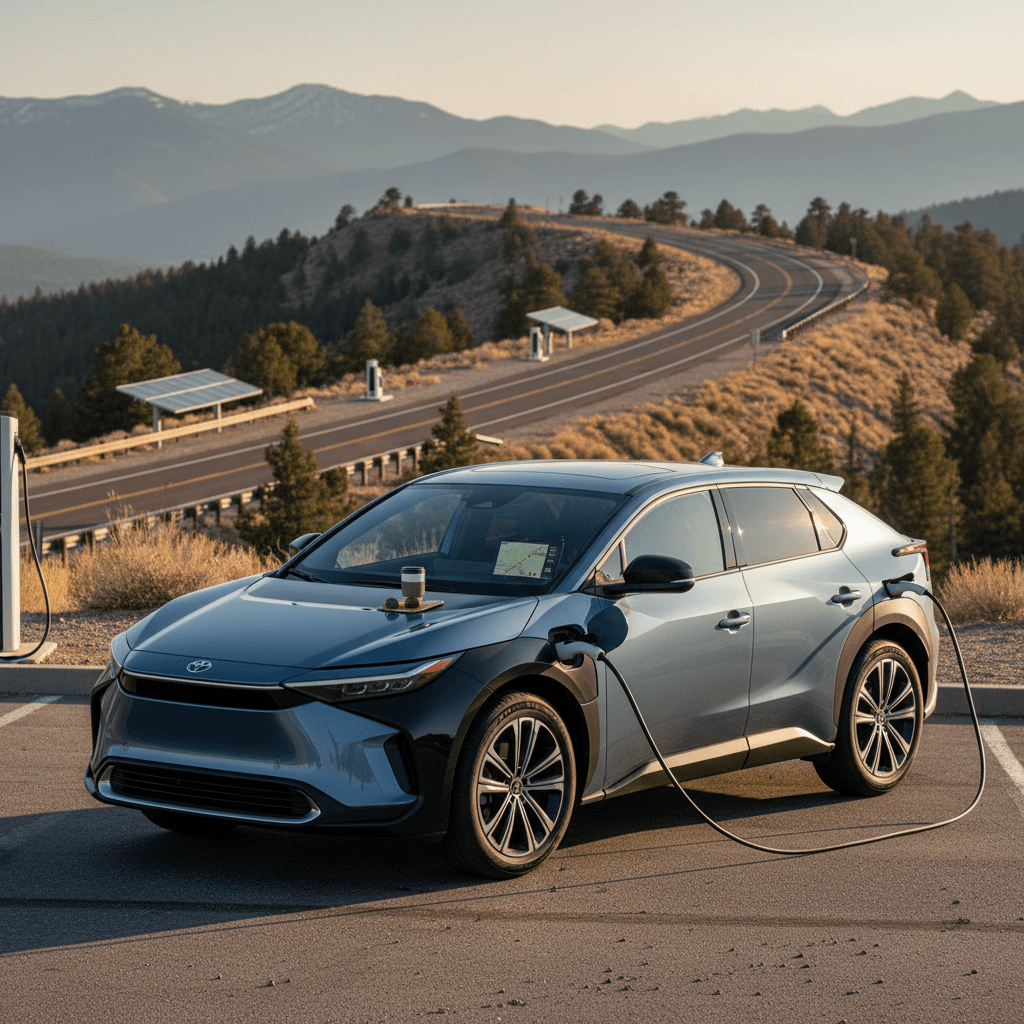
If you own a Toyota bZ4X and you’re thinking about a serious road trip, you’ve probably already discovered the fine print: this is a wonderfully calm, easygoing EV that demands you drive it the same way. The key to long-distance driving in a bZ4X isn’t magic; it’s knowing the car’s real highway range, its charging quirks and how to work with them instead of against them.
Big picture
Long-distance driving in the Toyota bZ4X: What to expect
On paper, most recent Toyota bZ4X models carry EPA range ratings between roughly 222 and 252 miles per full charge, with front‑wheel‑drive (FWD) trims at the top and all‑wheel‑drive (AWD) at the bottom. In the real world, especially at 70–75 mph on the interstate, you should treat those numbers as the ceiling, not the baseline. Independent highway tests and owner reports routinely land the bZ4X in the 160–210 mile window on fast, long runs.
Toyota bZ4X range and consumption at a glance
Temper your expectations
Know your Toyota bZ4X range before you go
1. Trim, drivetrain and wheels
Your exact bZ4X matters. Recent model years break roughly into two buckets:
- FWD XLE / Limited: Higher EPA range (mid‑240s to ~252 mi), best for long-distance efficiency.
- AWD XLE / Limited: Added motor and weight cut range into the low‑ to mid‑220s EPA, with highway results often nearer 180–200 miles.
Larger 20‑inch wheels on Limited trims hurt efficiency slightly versus 18‑inch wheels on XLE.
2. Your personal “mi/kWh” baseline
Ignore the guess‑o‑meter for a moment and watch your average mi/kWh over a week of normal driving:
- 3.3–3.7 mi/kWh: Gentle mixed driving in mild temps.
- 2.2–2.8 mi/kWh: Common at 70–75 mph or in cold weather.
Multiply your typical highway mi/kWh by the ~63–66 kWh usable battery and you’ll get a much more honest road‑trip range number than the EPA sticker.
Quick pre‑trip range reality check
1. Confirm your trim and drivetrain
Check your registration, window sticker or Toyota app to see if you’re in a FWD or AWD bZ4X, and note wheel size. This alone can swing highway range by 20–30 miles.
2. Reset trip meter and efficiency
Before a week of mixed driving, reset a trip meter and your efficiency readout. Note your average mi/kWh at the speeds you actually use on highways.
3. Do a local “range rehearsal”
On a free afternoon, drive a 50–70 mile highway loop at your typical road‑trip speed and note how much the state of charge (SoC) drops. Extrapolate from that, not the brochure.
4. Learn your low‑battery behavior
On a familiar route near home, run the battery down into the 10–15% range once so you know how the bZ4X behaves as power tapers. You don’t want the first time to be in the middle of Utah.
Pro tip: focus on distance, not percent
Planning a road trip that suits the bZ4X
The Toyota bZ4X will absolutely do a 500‑ or 800‑mile day. It just prefers that you drive it like a measured, adult human instead of a rental Mustang. That starts with building an itinerary around the charging infrastructure you actually have, not the infrastructure you wish existed.
Three tools to plan smarter routes
Use overlapping apps so your bZ4X is never more than one bad charger away from a Plan B.
EV‑specific route planner
A Better Routeplanner (ABRP), PlugShare, or similar tools let you plug in bZ4X‑specific efficiency and weather assumptions.
- Model the car and your speed.
- Force slightly conservative arrival SoC (15–20%).
Network apps
Install apps for the big DC fast‑charging networks along your route, Electrify America, EVgo, ChargePoint, regional co‑ops.
Check recent user check‑ins and photos so you don’t plan around a station that’s been half‑broken for months.
Toyota & navigation tools
Use the built‑in Toyota navigation or smartphone apps like Google Maps and Apple Maps with EV filters.
Pin backup chargers within 10–20 miles of every planned stop so a dead stall or an occupied site doesn’t become a crisis.
Safe leg lengths for bZ4X highway road trips
Suggested maximum distances between DC fast chargers in good conditions, assuming you leave with at least 80% charge and aim to arrive with ~15% buffer.
| Trim & conditions | Suggested max leg | Comfortable buffer style |
|---|---|---|
| FWD, mild temps, 65–70 mph | 150–170 miles | Leave 80–90%, arrive 15–20% |
| AWD, mild temps, 65–70 mph | 130–150 miles | Leave 80–90%, arrive 15–20% |
| FWD, cold or wet, 70–75 mph | 120–140 miles | Leave 90–100%, arrive 20–25% |
| AWD, cold or wet, 70–75 mph | 100–130 miles | Leave 90–100%, arrive 20–25% |
These are conservative planning numbers; shorten legs in winter, heavy rain or strong headwinds.
Watch station spacing in rural areas
Speed, climate control and driving modes
On long trips, your right foot and your HVAC settings matter more than any driving‑mode marketing. The bZ4X is aerodynamically blunt; above about 60 mph, every extra 5 mph is a tax bill you pay in kilowatt‑hours.
- At a steady 60–65 mph, many bZ4X drivers can see efficiency in the high‑2s to low‑3s mi/kWh, which supports highway ranges closer to the EPA figures.
- Push to 75–80 mph and you’re often down near 2.2–2.5 mi/kWh, which can drag a 220‑mile EPA AWD model into the 160‑mile reality zone.
- Strong headwinds, big elevation gains and cold rain can steal another 10–20% on top of the speed penalty.
Using ECO and climate wisely
- ECO mode softens throttle response and tames HVAC, making it easier to drive smoothly and waste less energy.
- Use heated seats and wheel aggressively instead of cranking the cabin heater; they sip power compared with pumping BTUs into the whole cabin.
- In summer, pre‑cool the cabin while plugged in, then set the A/C a degree or two warmer than you’d like at home.
You’re tuning for “comfortable enough, for hours,” not “arctic blast” or “Sauna on Wheels.”
Driving style: smooth beats slow
- Gentle, predictable inputs are more important than obsessively hugging the right lane at 57 mph.
- Use adaptive cruise control where traffic allows; it tends to be smoother and more efficient than a human foot.
- Avoid unnecessary passing and big bursts of acceleration that convert battery power into nothing but heat and regret.
Think “train conductor,” not “autocross hero.” The bZ4X responds better to the former.
Pick your battles with speed
Smart charging strategy for long-distance trips
The bZ4X’s DC fast‑charging is… fine. Not class‑leading, not catastrophic, but very sensitive to battery temperature, state of charge and, on some older AWD models, software limits. To make long days work, you want to live in the happy middle of the pack: roughly 10–60% state of charge on each stop when you can.
DC fast-charging basics for the bZ4X
A few simple rules make the most of a modest charging curve.
Charge when the pack is warm
After an hour or two at highway speed, your battery will be warmer and accept higher power. Starting a session after a long cruise is better than after an overnight cold soak.
Arrive low, leave at 60–70%
Try to reach fast chargers between 10–20% and unplug between 60–70%. Above that, the charging power usually tapers hard and you’re paying for slow miles.
Avoid chasing 100% on DC
Save 90–100% charges for Level 2 at your destination or overnight stops. On DC, that last 20–30% can take as long as the first 60% did.
A simple bZ4X charging rhythm for long days
1. Start the day full
If you can, leave your hotel or home at 90–100% from a Level 2 charger so your first leg of the day is the longest. That’s your only guilt‑free 100%.
2. Plan 90–130 mile hops
Aim to stop for DC fast charging every 90–130 miles depending on trim and weather. You’ll usually arrive in the 15–30% window, where charging is more efficient and less stressful.
3. Keep stops short and purposeful
Instead of one big, slow 60–90 minute charge, do two 25–35 minute sessions while you use restrooms, grab food or walk around. The bZ4X rewards more frequent, shorter hits.
4. Watch the charging curve in real time
If you see power sagging below ~40–50 kW and you’ve passed 60–70% SoC, it’s probably time to unplug and move on. Those are the slowest, least efficient miles you’ll add all day.
5. Respect daily DC fast‑charge limits
Toyota guidance has historically suggested limiting repeated DC fast charges. You don’t need to panic about a multi‑stop road‑trip day, but don’t live on DC fast charging week in, week out if you care about long‑term battery health.
Don’t rely on a single critical charger
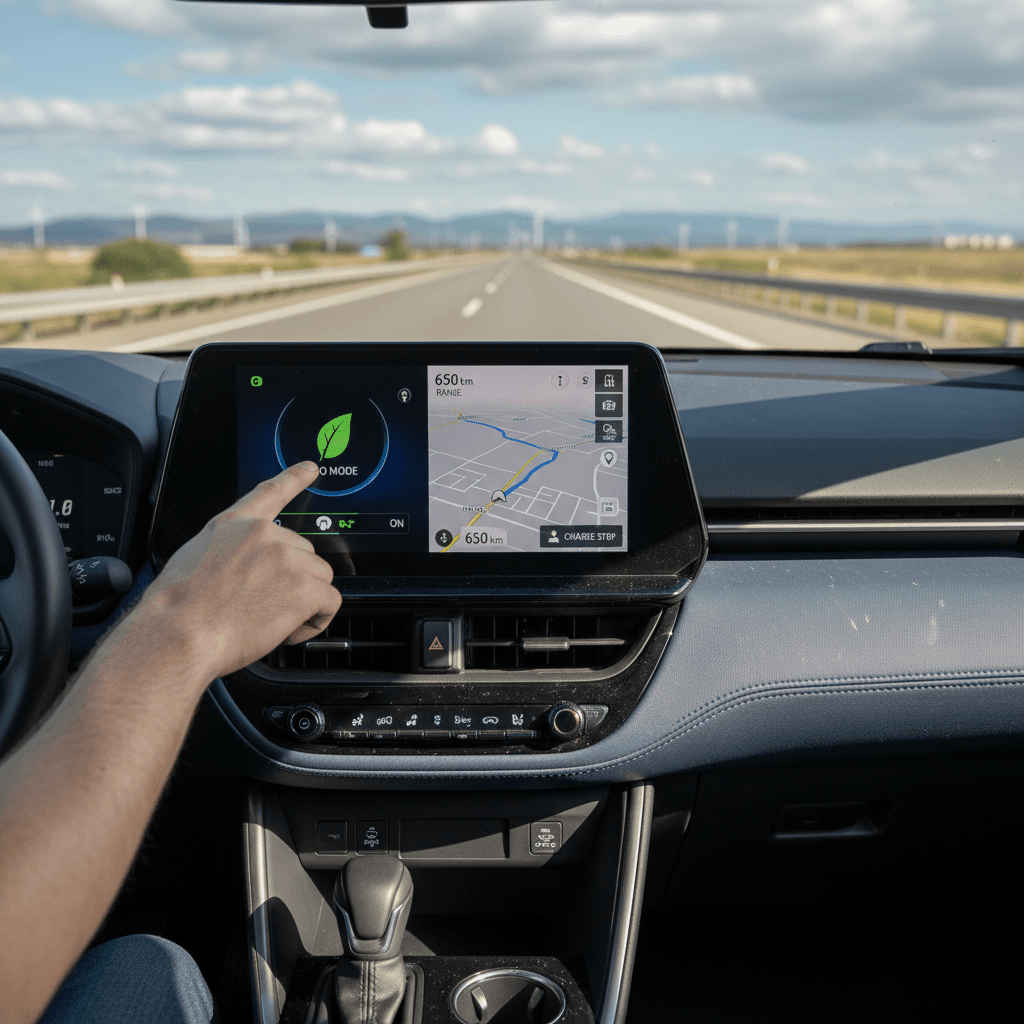
Using regen and cruise control to your advantage
The bZ4X doesn’t have the same dramatic one‑pedal driving feel as some EVs, and its regen settings can reset between drives. But used correctly, its regenerative braking and driver‑assist systems can quietly give you a few extra miles on every leg.
Set regen once, use it all day
- Before you leave, set your preferred regen level and, if available, any “hold” or enhanced regen settings in the drive‑mode menu.
- Use gentle regen on open highway, blasting max regen just converts your earlier acceleration back into heat.
- Save stronger regen for rolling hills, off‑ramps and traffic where you would be braking anyway.
Think of regen as energy recycling, not energy creation. The fewer times you need it, the better you already drove.
Let adaptive cruise earn its keep
- On clear stretches, adaptive cruise control can keep speed steadier than a human foot, which tends to help efficiency.
- Avoid riding inches off the bumper of big rigs just to draft them. If you tuck in, keep a sane following distance.
- In heavy traffic, be ready to override cruise rather than letting it yo‑yo between acceleration and regen endlessly.
Use the tech as a helper, not as a hypnotist. Long‑distance EV driving rewards attention, not autopilot daydreaming.
Small wins add up
Long-distance driving in winter and bad weather
Cold and wet conditions are where the bZ4X’s modest highway range can feel most constrained. You can’t hack physics, but you can blunt the damage.
Adjust your strategy when the weather turns
Plan for 20–40% more energy use in winter, then try to beat your own forecast.
Expect lower efficiency
Battery chemistry and cabin heating conspire against you. Assume your highway range will drop by 20–30% in freezing temps, more if you drive fast into headwinds.
Precondition whenever possible
If your bZ4X and charging setup allow it, warm the cabin and battery while plugged in before you leave, especially after an overnight stay in sub‑freezing temps.
Respect rain and standing water
Heavy rain and slush increase rolling resistance. Combine that with defogging, headlights and wipers and it’s easy to lose another 10% efficiency versus a dry day.
Shorten legs in severe conditions
Passengers, cargo and comfort on long drives
Load a bZ4X up with four people, a packed cargo area and a roof box, and you’ve essentially turned your sleek EV into a rolling efficiency penalty. That doesn’t mean you shouldn’t bring friends; it just means you should be honest about physics.
- Extra weight mostly hurts you on climbs and in stop‑and‑go traffic; aerodynamic drag (roof boxes, bikes) punishes you constantly at highway speed.
- If you’re adding a box or rack, consider dialing cruising speed down another 3–5 mph and shortening legs by 10–15 miles.
- Comfort still matters: a well‑rested, well‑fed driver is safer and often more efficient than one who is cold, hungry and trying to “make up time.”
Use breaks as part of the plan
Is the Toyota bZ4X right for your kind of road trip?
The bZ4X is an honest, easygoing commuter with decent comfort and a quietly competent chassis. As a long‑distance car, it’s less about brute‑force range and more about whether your style of travel matches its temperament.
Where the bZ4X shines
- Regional road trips of 150–300 miles each way, with plenty of DC chargers along major interstates.
- Mixed‑use weekends where you drive 120–200 miles on Friday, charge overnight, then repeat.
- Drivers who like structure and don’t mind planning charging stops around meals and legs instead of winging it.
Where it may frustrate you
- Very long, rural routes with sparse charging and big gaps between high‑power stations.
- Road‑trippers who want to hammer along at 80–85 mph and only stop when the bladder absolutely insists.
- Drivers who are allergic to planning and like the “gas‑station roulette” style of travel.
Thinking about a used bZ4X?
Long‑distance driving in a Toyota bZ4X isn’t about pretending you own a 400‑mile luxury flagship. It’s about understanding that you own a thoughtful, 200‑ish‑mile crossover and then building a trip around that reality. If you plan conservative legs, respect speed and weather, use DC fast charging strategically and listen to what your efficiency numbers are telling you, the bZ4X will quietly, competently get you wherever the road goes, just at its own, very Toyota pace.