If you’re considering a Toyota bZ4X, you’re probably trying to answer one big question: how much does it cost per mile to drive? With electricity prices up and gas still volatile, understanding your true cost per mile is key to deciding whether this electric Toyota pencil‑pushes better than a RAV4 or CR‑V. Let’s break down the numbers using current efficiency data and recent U.S. electricity prices, then layer in some real‑world ownership nuance.
Quick take
Toyota bZ4X cost per mile at a glance
Estimated bZ4X energy cost per mile (U.S. 2026)
Those headline numbers hide a lot of assumptions, so we’ll walk through how the Toyota bZ4X cost per mile is calculated, plus what happens if your electricity is unusually cheap, expensive, or you rely heavily on public DC fast charging.
How we calculate Toyota bZ4X cost per mile
To get a realistic Toyota bZ4X cost per mile, you need three ingredients: **efficiency, usable battery size, and electricity price.** The math is simple, cost per mile is just your cost per kilowatt‑hour (kWh) multiplied by how many kWh the car uses per mile, but the inputs matter.
- Efficiency baseline: Recent U.S. EPA data and independent testing put the bZ4X in the ballpark of **28–32 kWh/100 miles** depending on trim and conditions, which works out to roughly **0.28–0.32 kWh per mile** for most drivers.
- Battery size: Most North American bZ4X models use a pack around **71 kWh gross**, with usable energy typically in the mid‑60 kWh range. That supports EPA ranges in the low‑ to mid‑200‑mile bracket depending on front‑wheel drive (FWD) vs all‑wheel drive (AWD).
- Electricity price: U.S. residential customers paid an average of roughly **16–17¢/kWh in 2024–2025**, with state‑by‑state variation from under 12¢ to well over 25¢. Public DC fast charging often runs equivalent to **30–45+¢/kWh** once fees and idle charges are included.
Rule‑of‑thumb formula
Example: national‑average electricity
Assume:
- bZ4X uses 0.30 kWh/mile (mixed driving)
- Home electricity costs 16.5¢/kWh
Cost per mile = 0.30 × $0.165 ≈ 4.9¢ per mile.
Example: efficient driving in mild weather
If you regularly see closer to 0.25 kWh/mile thanks to city driving and gentle speeds at the same 16.5¢/kWh rate:
Cost per mile = 0.25 × $0.165 ≈ 4.1¢ per mile.
EPA vs reality
Electricity price scenarios: cheap, average, and expensive power
Because electricity costs vary so much by state and utility, your Toyota bZ4X cost per mile can change dramatically with your ZIP code. Here’s how it shakes out for a driver averaging **0.30 kWh/mile** over the year.
bZ4X cost per mile at different electricity prices
Estimated cost per mile for a Toyota bZ4X at 0.30 kWh/mile efficiency under three common residential rate scenarios.
| Scenario | Residential electricity rate | Cost per mile | Cost per 1,000 miles | Annual cost (12,000 miles) |
|---|---|---|---|---|
| Low‑cost power (Midwest/South) | 12¢/kWh | 3.6¢ | $36 | $432 |
| U.S. average | 16.5¢/kWh | 5.0¢ | $50 | $600 |
| High‑cost power (Northeast/California) | 25¢/kWh | 7.5¢ | $75 | $900 |
Use your own rate from your utility bill for a more precise estimate.
Check your actual rate
Home vs public charging cost per mile
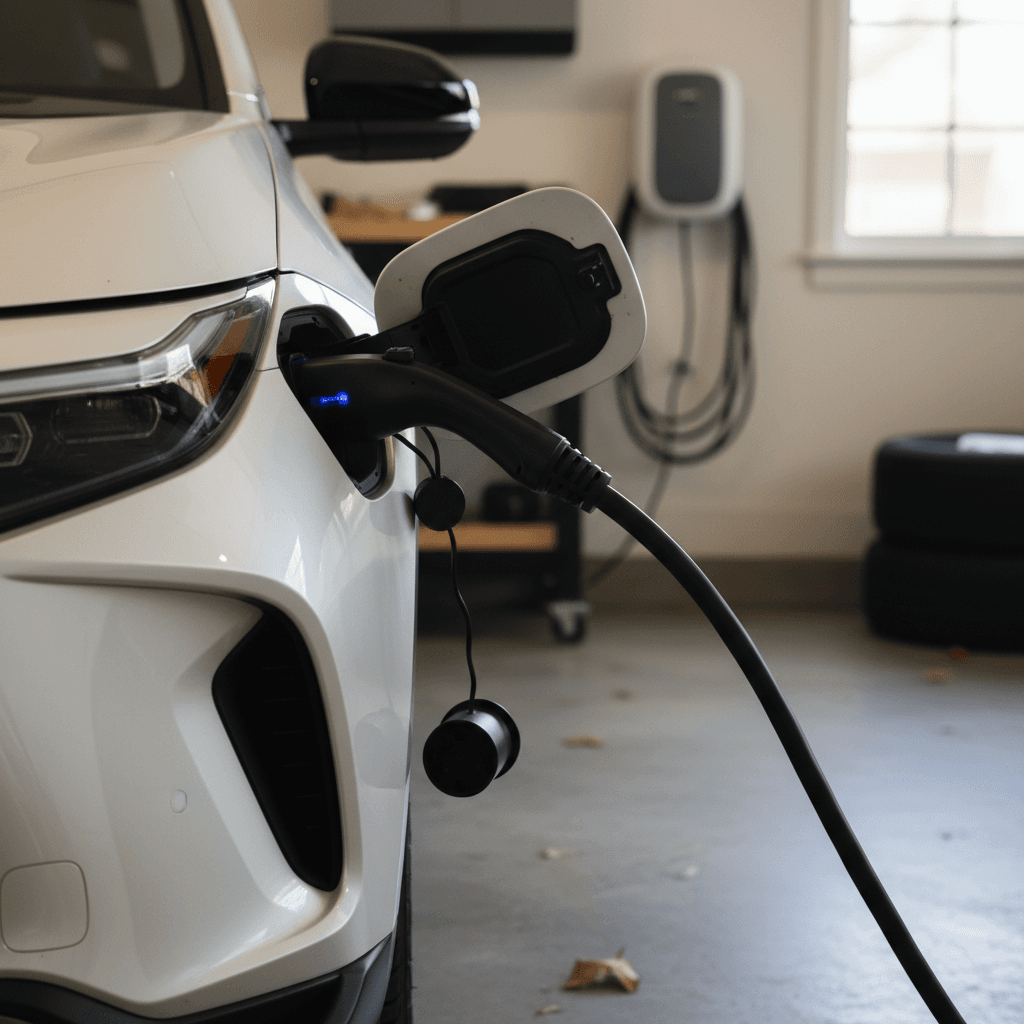
Where you charge has almost as much impact on cost per mile as what you pay per kWh. The Toyota bZ4X is most cost‑effective when you do the bulk of your charging at home, especially overnight on off‑peak rates.
Typical bZ4X cost per mile by charging type
Estimates assume ~0.30 kWh/mile efficiency; real numbers vary with speed, weather, and pricing plan.
Home Level 2 (standard rates)
Electricity: ~16.5¢/kWh
Estimate: ~5.0¢/mile
Most bZ4X owners will see something in the 4–6¢/mile range with regular home charging on standard residential plans.
Home Level 2 (off‑peak EV plan)
Electricity: 8–12¢/kWh off‑peak
Estimate: ~2.5–3.5¢/mile
If your utility offers time‑of‑use EV rates and you schedule charging overnight, your bZ4X cost per mile can drop into the low‑3‑cent range.
Public DC fast charging
Effective cost: 30–45+¢/kWh equivalent
Estimate: ~9–14¢/mile
Convenient for road trips, but often 2–3× more expensive than home charging once you factor in per‑session fees and higher kWh pricing.
Relying on DC fast charging
Toyota bZ4X vs gas SUV: what do you actually save?
Numbers on a spreadsheet are one thing; what you really care about is how the bZ4X stacks up against a familiar benchmark like a gas‑powered Toyota RAV4 or Honda CR‑V. Let’s use a simple comparison with recent U.S. gas prices around **$3.50–$4.00 per gallon**.
bZ4X vs gas SUV: estimated fuel cost per mile
Approximate per‑mile fuel costs based on typical efficiency and 2026‑era U.S. energy prices.
| Vehicle / scenario | Efficiency assumption | Energy price used | Fuel cost per mile |
|---|---|---|---|
| Toyota bZ4X (mostly home charging) | 0.30 kWh/mile | 16.5¢/kWh | ≈ 5.0¢/mile |
| Toyota bZ4X (off‑peak home charging) | 0.28 kWh/mile | 10¢/kWh | ≈ 2.8¢/mile |
| Toyota bZ4X (heavy DC fast charging) | 0.32 kWh/mile | 35¢/kWh | ≈ 11.2¢/mile |
| Toyota RAV4 (gas) | 30 mpg combined | $3.75/gal | ≈ 12.5¢/mile |
| Toyota RAV4 Hybrid | 39 mpg combined | $3.75/gal | ≈ 9.6¢/mile |
Your local numbers may differ, but the relative spread between EV and gas is similar in most markets.
In a typical home‑charging scenario, the bZ4X stays well under the **10–13¢/mile** band where most compact gas SUVs land. Even against a RAV4 Hybrid, which is genuinely efficient, home‑charged bZ4X miles usually come out cheaper on fuel alone, and that’s before you factor in lower maintenance (no oil changes, fewer moving parts).
Real-world factors that change your cost per mile
Like any EV, the Toyota bZ4X doesn’t deliver the same efficiency in every situation. If you want a realistic grip on your cost per mile, you need to understand which variables move the needle the most.
Key drivers of bZ4X cost per mile
Each factor nudges your kWh per mile up or down.
Temperature & climate
Cold weather can temporarily increase energy use by **20–40%** thanks to cabin heating and battery conditioning. Very hot climates have a smaller but noticeable impact through A/C use.
Speed & driving style
Steady city driving at 25–45 mph is where the bZ4X shines. Sustained 75+ mph highway runs can push consumption from ~0.27 up toward **0.35 kWh/mile**.
FWD vs AWD
All‑wheel‑drive bZ4X trims tend to use a bit more energy per mile than FWD versions. If every cent matters and you don’t need AWD traction, FWD is the thriftier choice.
Elevation & load
Mountain grades, cargo, and roof racks add drag and weight. That can easily add another **5–10%** to your energy use compared with flat suburban commuting.
Use your trip computer
How cost‑efficient is the bZ4X compared with other EVs?
From a pure efficiency standpoint, the Toyota bZ4X is **solid but not class‑leading**. Hyundai Ioniq 5/6 and some Tesla models typically post slightly better miles per kWh, which translates into lower cost per mile at the same electricity rate. That said, the bZ4X is still dramatically cheaper to fuel than a gas SUV in most ownership scenarios.
bZ4X
- Typical: 0.28–0.32 kWh/mile
- Strength: predictable, conservative battery management
- Weakness: not the most efficient EV on the highway
Tesla Model Y
- Typical: 0.25–0.29 kWh/mile
- Better aero and lighter weight often mean a lower cost per mile.
Hyundai Ioniq 5
- Typical: 0.26–0.30 kWh/mile
- Similar efficiency to bZ4X, sometimes a touch better in mixed driving.
Efficiency vs stability
10 tips to lower your bZ4X cost per mile
Practical ways to drive your cost per mile down
1. Charge at home whenever possible
Home Level 2 charging is almost always the cheapest option. If you’re still relying on a 120V outlet, upgrading to a 240V Level 2 charger can improve efficiency and convenience.
2. Ask your utility about EV or off‑peak plans
Many utilities now offer time‑of‑use rates with much cheaper overnight electricity. Scheduling your bZ4X to charge after midnight can shave several cents per mile off your costs.
3. Keep highway speeds in check
Aerodynamic drag climbs quickly above 70 mph. Cruising at 65 instead of 80 can cut your energy use by double‑digit percentages on longer trips, directly lowering your cost per mile.
4. Precondition while plugged in
Use the climate‑preconditioning features while the car is still connected to the charger. That way, cabin heating or cooling uses grid power, not battery energy you paid to store.
5. Use Eco mode in city traffic
Eco drive modes soften throttle response and can limit climate draw. In stop‑and‑go conditions, that’s often enough to keep your consumption closer to the low end of the bZ4X’s range.
6. Watch tire pressure and wheel choices
Under‑inflated tires and aggressive aftermarket wheels hurt efficiency. Stick close to factory‑recommended tire pressures and avoid heavy, wide wheel setups if efficiency matters to you.
7. Minimize roof racks and cargo weight
Roof boxes and bike racks add drag; heavy cargo adds mass. Remove them when you’re not using them and avoid hauling unnecessary gear day‑to‑day.
8. Plan DC fast‑charge sessions strategically
On road trips, charge when the battery is lower (10–20%) and unplug around 60–80% to avoid paying for slow, expensive charging at higher state of charge.
9. Track your real efficiency monthly
Use your bZ4X’s energy summary screens or apps to monitor kWh per 100 miles over time. If your numbers drift upward, it may be time to adjust driving habits or check tires.
10. If you’re shopping used, prioritize healthy batteries
A bZ4X with a strong, well‑cared‑for battery will keep efficiency closer to original levels. That’s one reason battery‑health transparency matters when you’re comparing used EVs.
Buying a used bZ4X: how Recharged helps control costs
When you’re shopping for a used Toyota bZ4X, cost per mile is only as good as the battery and charging habits of the previous owner. Two otherwise identical SUVs can have very different real‑world efficiency if one has mild battery degradation or has spent life on DC fast chargers.
- Every bZ4X on Recharged comes with a Recharged Score Report that includes verified battery health, so you can see how the pack has held up before you buy.
- Our pricing tools benchmark each vehicle against the broader EV market, helping you understand total cost of ownership, not just the sticker price.
- If you need financing, Recharged can help you pre‑qualify online with no impact to your credit, then roll taxes, fees, and delivery into a clear monthly payment.
- Already own a gas SUV? You can get an instant offer or consignment option through Recharged, then move into a bZ4X that’s cheaper to run per mile.
Why battery health matters for cost per mile
Ready to find your next EV?
Browse VehiclesFAQ: Toyota bZ4X cost per mile
Frequently asked questions about bZ4X cost per mile
Bottom line: is the Toyota bZ4X cheap to drive?
If you have access to home or workplace charging, the **Toyota bZ4X is genuinely inexpensive to drive on a cost‑per‑mile basis**. In most U.S. markets, you’re looking at a fuel bill that’s half, or less, of what you’d pay to run a comparable gas SUV. The story gets more complicated if you rely heavily on DC fast charging or live where electricity is unusually expensive, but even then, the bZ4X often holds its own once you add in lower maintenance costs.
If you’re weighing a move from gas to electric and want to know how a used bZ4X fits your budget, tools like the Recharged Score Report, transparent pricing, and EV‑specialist support at Recharged can help you connect the dots from window sticker to real‑world cost per mile. That way, you’re not just buying an EV, you’re buying into a monthly cost profile that actually works for your life.