The Toyota bZ4X is Toyota’s first dedicated modern electric SUV, sharing its platform with the Subaru Solterra. Like any first‑generation EV, it’s had its share of early issues, from a major wheel hub recall to charging quirks and winter range complaints. If you’re driving one today or considering a used bZ4X, understanding common problems and fixes is the smartest way to protect your budget and your peace of mind.
Who this guide is for
Toyota bZ4X at a glance
Before we dive into common bZ4X problems, it helps to know what you’re working with. The bZ4X is a compact electric SUV available in front‑wheel drive (FWD) and all‑wheel drive (AWD) versions. Depending on trim and drivetrain, EPA‑rated range typically falls in the mid‑200‑mile zone when new, with DC fast‑charging speeds that are competitive but not class‑leading.
Toyota bZ4X key specs and traits
The platform is solid, but details matter when it comes to reliability.
Position in the market
Compact electric SUV competing with Hyundai IONIQ 5, Kia EV6, Tesla Model Y, and Nissan Ariya.
Battery & drivetrain
FWD models use a single motor; AWD models use dual motors with slightly lower range. Battery pack size is in the mid‑60 kWh range usable.
Charging capability
Level 2 AC charging up to roughly 6.6 kW and DC fast charging that, while not segment‑leading, is adequate for most road trips with proper planning.
How Recharged can help
Major recalls and what’s already been fixed
The most widely publicized Toyota bZ4X problem was its early wheel hub/bolt issue. In 2022, Toyota recalled the bZ4X over a risk that the wheels could loosen and, in rare cases, detach. That’s obviously a serious safety concern, but it also means most affected vehicles have had a very thorough once‑over.
Key Toyota bZ4X recall campaigns (North America)
These are the big factory‑level problems Toyota has already addressed on most vehicles through recalls or service campaigns.
| Issue | Symptoms | Toyota’s Fix | What you should do |
|---|---|---|---|
| Wheel hub / lug bolt recall | Wheel loosening; warning messages; in early production, risk of wheel detachment | Revised hub bolts, torque procedures, inspection and replacement of associated components | Verify recall completion by VIN and ask for documentation of the repair. |
| Airbag / seatbelt or occupant classification notices (varies by build) | Airbag warning lights, seatbelt warning indicators behaving abnormally | Software or hardware updates to airbag and occupant detection systems | Confirm with a Toyota dealer that all safety recalls and service campaigns are closed. |
| Software/ECU updates | Check‑engine or EV system warning lights, charging quirks, or limp‑home behavior in some early builds | ECU reprogramming and software updates at the dealer | Ask for the most recent software update history on any used bZ4X you’re considering. |
Always check any specific vehicle’s VIN with Toyota or a Toyota dealer to confirm recall completion.
Recall reality check
Common Toyota bZ4X problems owners report
Once recall work is done, the bZ4X’s big‑ticket safety issues are largely addressed. What remain are everyday owner complaints you should be aware of. Many are manageable with simple fixes, but a few can affect your satisfaction if you’re not prepared.
- Underwhelming DC fast‑charging speeds compared with some rivals, especially on AWD trims.
- Noticeable range loss in cold weather, sometimes more than first‑time EV owners expect.
- Occasional infotainment freezes or slow responses from the central touchscreen.
- Charging session failures at specific public networks, usually due to communication glitches rather than hardware failure.
- More road noise and a somewhat firm ride on certain wheel/tire packages.
EV vs. gas expectations
Battery, range, and winter performance issues
Battery health is the main long‑term concern on any EV, and the bZ4X is no exception. So far, there’s no widespread evidence of catastrophic pack failures, but owners do report range loss in cold climates and, in some cases, modest degradation over the first few years. That’s typical for modern EVs, but it’s worth understanding how it plays out on this model.
Typical battery and range complaints
What owners notice, and what it usually means.
"I’m not getting the EPA range"
Real‑world range is often lower than the window‑sticker number, especially at highway speeds, in winter, or with roof racks and cargo. This isn’t unique to Toyota, almost every EV behaves this way.
Heavy winter range loss
In sub‑freezing weather, some drivers report losing 25–40% of their expected range. Cabin heating, battery heating, and higher rolling resistance in cold conditions all play a role.
What you can do
- Precondition the cabin and battery while plugged in so you leave home with a warm pack and warm interior.
- Use seat and steering‑wheel heaters instead of cranking the climate system on max.
- Plan conservative routes in winter with a 20–30% buffer above the distance you think you’ll need.
What to check when buying used
- Look for consistent charging history, frequent DC fast charging to 100% can be harder on the battery than moderate use.
- Ask for a battery health report. At Recharged, the Recharged Score includes an independent battery evaluation so you can see how the pack has aged.
Battery warranties work in your favor
Charging problems and easy fixes
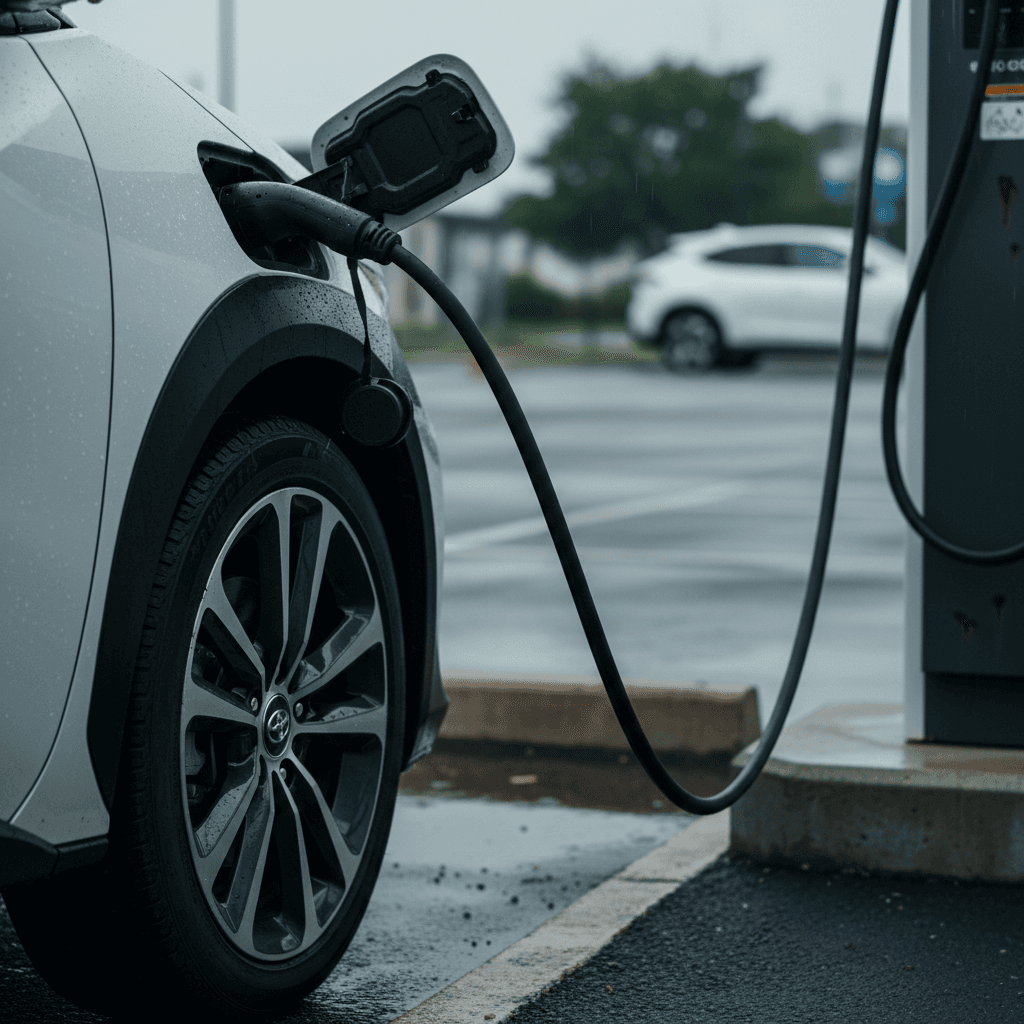
Most Toyota bZ4X charging problems fall into one of three categories: home Level 2 issues, public DC fast‑charging quirks, and cold‑weather behavior. The good news is that many complaints trace back to configuration, installation, or station‑side issues, not a bad onboard charger.
Common bZ4X charging issues and how to fix them
1. Home Level 2 charger won’t deliver full speed
If your bZ4X seems to cap charging speed at home, the issue might be your wall unit or wiring. Confirm the circuit’s amperage, make sure the EVSE is properly sized and configured, and verify that your electrician installed a dedicated 240V circuit.
2. DC fast‑charge is slower than expected
The bZ4X doesn’t have class‑leading peak speed, but if it’s dramatically underperforming, check battery temperature and state of charge. Arriving with a nearly full or very cold battery will reduce speeds, as will throttling at older or overloaded public chargers.
3. Charging sessions stop or fail at specific networks
In many cases, handshake problems between the station and the car cause session failures. Try another stall, ensure the connector is firmly seated, and, if possible, retry on a different charging network to see if the issue repeats.
4. Scheduled charging confusion
If the car or EVSE is set up with departure times or off‑peak schedules, they can conflict and prevent charging from starting when you plug in. Try disabling scheduling in either the car or the charger and test again.
Don’t guess with home wiring
Software and infotainment glitches
Owners of early bZ4X models occasionally report infotainment freezes, blank screens, or slow response from the central touchscreen. While annoying, these glitches are rarely safety‑critical and are usually resolved with software updates or a simple reboot procedure.
Typical bZ4X software complaints
And what usually clears them up.
Frozen or black center screen
Try turning the vehicle off, locking it, and letting it sit for several minutes. If the issue persists, the dealer can apply the latest software updates or perform a module reset.
Connectivity and app issues
Intermittent connection between the Toyota app and the vehicle can affect remote climate or charge‑status updates. Logging out and back in, reinstalling the app, or updating the car’s telematics software usually improves stability.
Persistent warning messages
If warning lights or messages linger after a successful repair, the culprit may be outdated ECU software. Dealers can reflash modules as part of normal warranty service.
Good news on software
Suspension, tires, and ride quality concerns
A recurring theme in some owner forums is that the bZ4X can feel noisier or firmer than expected, especially on larger wheel options. That’s not a defect so much as tuning and tire choice, but it does affect day‑to‑day satisfaction, something you want to evaluate carefully on a test drive.
- Road noise over coarse pavement, sometimes amplified by the quiet EV drivetrain.
- A firm initial ride that can feel busy over small bumps.
- Tire wear that’s faster than a typical gas compact SUV, especially on AWD models driven aggressively.
Easy comfort improvements
- Switching from aggressive OEM tires to touring‑oriented all‑season tires often reduces noise and harshness.
- Confirm tire pressures match the door‑jamb placard; over‑inflation can make the ride feel much harsher.
What to inspect on a used bZ4X
- Check tire tread depth and wear pattern. Uneven wear may point to alignment issues or hard use.
- Listen for clunks or rattles over bumps that could indicate worn suspension bushings or loose trim.
Preventive maintenance to avoid bigger issues
Compared with a gasoline SUV, the bZ4X has fewer moving parts and no oil changes, spark plugs, or exhaust system. But it still needs regular attention to stay reliable and comfortable. A little preventive maintenance can head off the most common complaints.
Simple habits that keep your bZ4X happy
Follow Toyota’s EV service schedule
That includes brake fluid checks, cabin filters, tire rotations, and periodic inspections. Skipping these can amplify small issues like noise, uneven tire wear, or weak HVAC performance.
Protect the high‑voltage battery
Avoid leaving the car parked at 0% or 100% for long periods, especially in extreme heat. Day‑to‑day, charging to around 80–90% and rarely dropping below 10% is a good balance between range and longevity.
Keep software current
Ask your dealer to verify that all ECUs are on the latest version during routine service. Many subtle drivability and charging improvements arrive via software.
Clean and protect seals and charge port
Occasional cleaning of weatherstripping and the charge‑port door reduces squeaks, wind noise, and water intrusion.
Document everything
Buying a used Toyota bZ4X: checklist and red flags
If you’re in the market for a used Toyota bZ4X, your goal is simple: find a car whose early issues have already been sorted, whose battery is healthy, and whose previous owner treated it well. Because this is a relatively new nameplate, there’s a wide range of owner behavior hiding behind similar‑looking listings.
Used Toyota bZ4X inspection checklist
Use this table as a starting point when you evaluate any specific bZ4X, online or in person.
| Area | What to check | Good sign | Red flag |
|---|---|---|---|
| Recall and software history | Ask for service records; run the VIN with Toyota or a dealer. | All recalls closed; recent software updates noted on invoices. | Open recalls, no documentation, or seller "doesn’t know." |
| Battery and range | Test‑drive and note predicted range at a known state of charge; ask about typical charging habits. | Range seems reasonable for the displayed state of charge; owner avoided frequent 0–100% DC fast charges. | Range estimate is unusually low; car has been repeatedly fast‑charged to 100% on long highway runs. |
| Charging behavior | Test Level 2 and, if possible, DC fast charging. | Car charges consistently without errors at more than one station. | Repeated failures to start a charge; unexplained warnings. |
| Tires and suspension | Inspect tread, listen for noises, and feel for vibrations. | Even wear, quiet ride, no clunks. | Cupped or uneven tread, pulling to one side, loud thumps over bumps. |
| Interior and electronics | Check every major function: infotainment, HVAC, cameras, safety systems. | All systems work smoothly; no warning lights. | Persistent warning lights, repeat failures of the main screen, or inoperative safety features. |
A professional EV inspection and battery‑health report offer far more detail, but these checks can quickly separate good candidates from risky ones.
Why shop bZ4X with Recharged
Ready to find your next EV?
Browse VehiclesToyota bZ4X problems: FAQs
Frequently asked questions about Toyota bZ4X problems and fixes
Bottom line: Is the Toyota bZ4X a reliable EV?
The Toyota bZ4X had a bumpy start, but most headline‑grabbing problems, especially the wheel‑hub recall, have been addressed on cars that stayed in the fleet. What remains are the predictable growing pains of a first‑generation EV: winter‑sensitive range, charging nuances, and some software polishing. None of these are automatic deal‑breakers, but they do reward shoppers who ask smart questions and insist on documentation.
If you’re comfortable with those realities, the bZ4X can be a practical, efficient electric SUV with the kind of everyday usability Toyota buyers expect. And if you’d like backup from people who live and breathe used EVs, browsing bZ4X listings on Recharged gives you access to battery‑health diagnostics, transparent pricing, financing options, and EV‑savvy support from your first question to your first driveway charge.