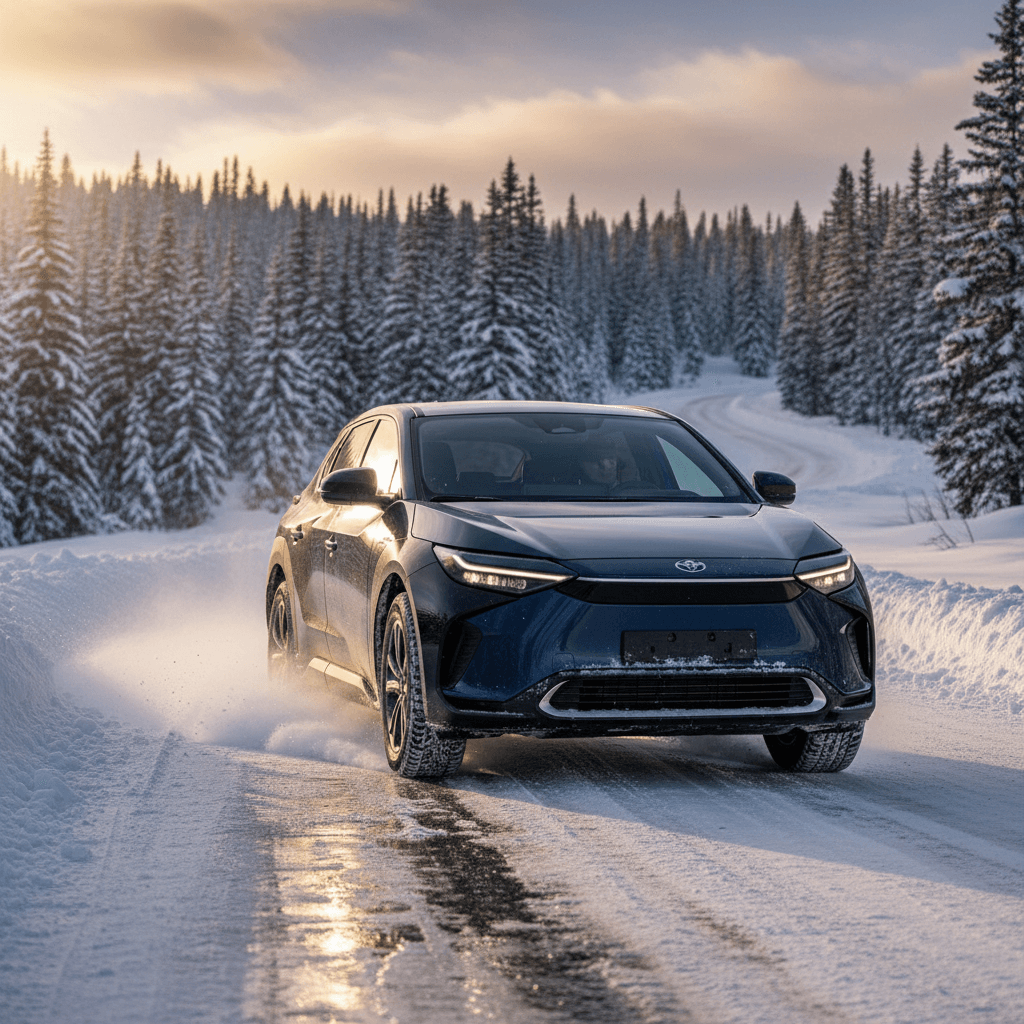
If you live where roads turn white for months at a time, the question isn’t just “Is the Toyota bZ4X good?” It’s **“Is the Toyota bZ4X best for snow and ice, or will it leave me stuck at the bottom of the driveway?”** This guide breaks down how the bZ4X really behaves in winter, what its AWD and X‑MODE systems can (and can’t) do, and what you need to change, especially tires, to make it a confident cold‑weather EV.
Quick verdict
Overview: Is the Toyota bZ4X good in snow and ice?
Where the bZ4X shines in winter
- AWD with X‑MODE adds snow‑specific drive modes (Snow/Dirt and Deep Snow/Mud) that actively manage wheelspin and torque split.
- Fine pedal tuning makes it easy to meter power on slick surfaces instead of spinning away traction.
- Standard heat pump on most trims delivers efficient cabin heat and quick defrost compared with some rivals.
- Conservative traction control favors stability and control over tail‑happy antics, ideal for most drivers.
Where it falls short
- Cold‑weather charging has historically been a weak spot, especially fast charging near or below freezing.
- Winter range drops sharply versus EPA numbers, like most EVs, but the smallish pack gives you less buffer.
- Ground clearance is SUV‑ish, not off‑roader, good for plowed roads, less ideal for truly deep snowbanks.
- Stock all‑season tires are mediocre in snow and downright nervous on ice; they’re the first thing you should upgrade.
The one‑sentence answer
Key winter‑driving traits of the Toyota bZ4X
How the bZ4X AWD and X‑MODE systems work in winter
The **AWD Toyota bZ4X** uses a dual‑motor setup, one motor at each axle, tied together by software that Toyota calls **X‑MODE** on many trims. Think of X‑MODE as the car’s winter brain: it decides how much torque to send front and rear, how quickly to allow a wheel to spin, and how assertively to clamp the brakes when a tire loses grip.
bZ4X winter drive modes explained
What Snow, Snow/Dirt and Deep Snow/Mud actually do for you
Normal + Snow button
Available on FWD and some AWD trims. Snow mode softens throttle response and starts in a gentler map so you’re less likely to spin the front tires pulling away from a stop on packed snow or ice.
Snow/Dirt (X‑MODE)
AWD only. Tunes traction and stability control for loose surfaces. It allows controlled wheelspin so the tires can dig in but still reins you in before you slide sideways. Great for plowed but still snowy roads, unpaved lanes, and light off‑piste excursions.
Deep Snow/Mud (X‑MODE)
AWD only, low speeds. Lets more wheelspin and aggressively uses brake‑based torque vectoring to keep you moving in heavy, wet snow or slushy ruts. Best when you’re trying not to get stuck rather than clipping along at highway speeds.
X‑MODE isn’t magic
On snow and ice, what stands out about the bZ4X is how **calm and progressive** its controls feel. Steering is light but not vague, and power delivery under X‑MODE is easy to meter with your right foot. In owner reports from real winter storms, drivers consistently describe the AWD bZ4X as **“fantastic in snow and ice”** once X‑MODE is engaged and the tires are up to the job.
FWD vs AWD bZ4X: Which is better for snow and ice?
Toyota bZ4X in winter: FWD vs AWD
How the two drivetrains stack up when roads get slick.
| Feature | FWD bZ4X | AWD bZ4X with X‑MODE |
|---|---|---|
| Drive wheels | Front only | Front + rear dual motors |
| Snow‑specific modes | Snow button only | Snow/Dirt + Deep Snow/Mud X‑MODE |
| Launch on icy hill | Can struggle, relies on traction control | Much more confident, rear motor helps push you uphill |
| Fun vs safety balance | More understeer, mostly safe but can feel busy | Very planted; software quietly keeps you straight |
| Best use case | Mild winters, mostly plowed city driving | Regular snowfalls, hilly terrain, unplowed side roads |
| Tire sensitivity | Extremely sensitive, needs good winters to feel secure | Still benefits from good tires, but has more margin of error |
If you see significant snow and ice each winter, the AWD bZ4X is the clear choice.
Who should absolutely choose AWD
- Best: AWD + X‑MODE + quality winter or true all‑weather tires
- Good: AWD + X‑MODE on stock all‑seasons (adequate but not great on ice)
- Okay: FWD + winter tires (traction is fine, but you can’t cheat physics on hills)
- Least desirable: FWD + stock all‑seasons in serious snow country
The tires that make or break bZ4X winter performance
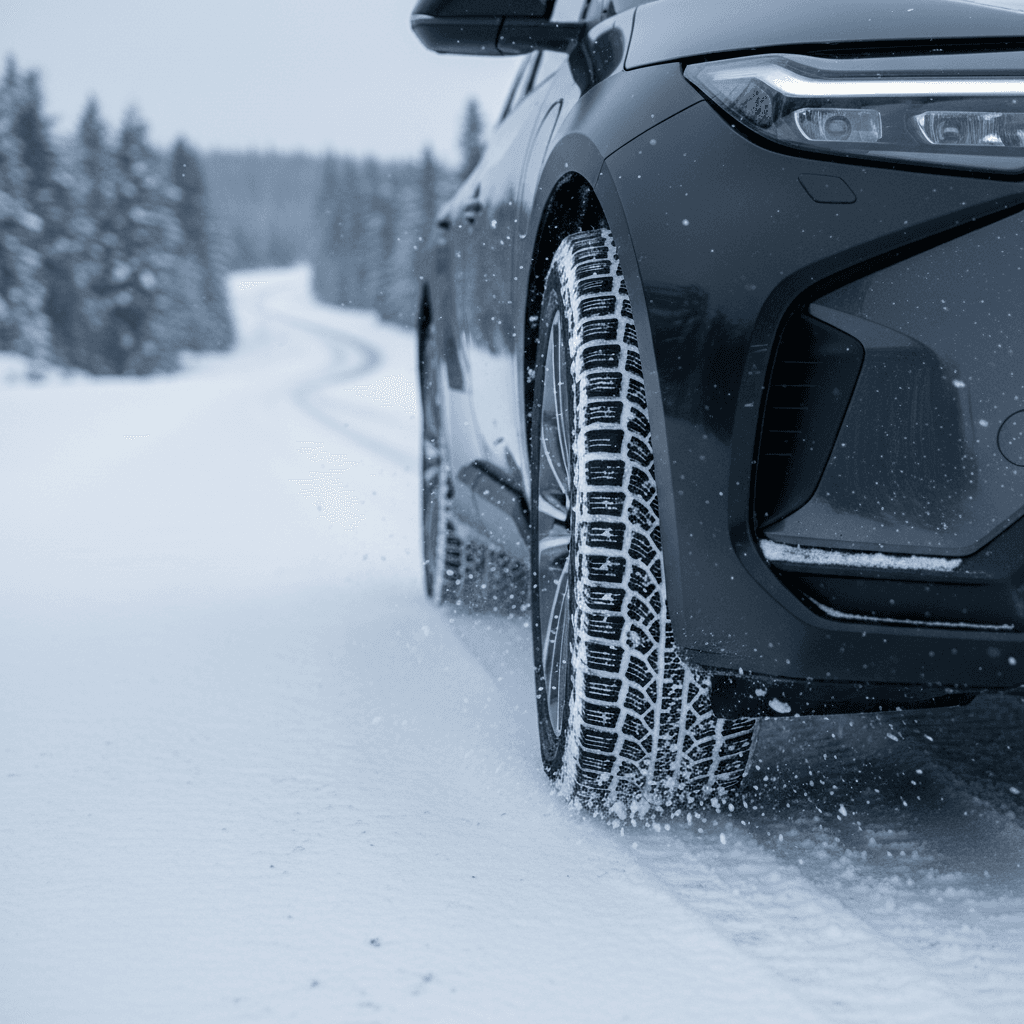
From the factory, the bZ4X ships with **18‑inch or 20‑inch wheels wearing all‑season tires**. They’re quiet and efficient, but in real snow they’re the weak link. Owners who switched to winter setups, Michelin X‑Ice Snow, Nordic‑market studless tires, or aggressive all‑weathers like Michelin CrossClimate 2, report **huge improvements in braking distance, steering feel and general peace of mind** on snow‑packed roads and black ice.
Best tire strategies for a winter‑ready bZ4X
Choose the pattern that fits your climate and budget
Full winter setup
Best for: Long, harsh winters; mountain regions; frequent snow‑covered roads.
- Dedicated winter tires (e.g., Michelin X‑Ice Snow) on 18" wheels.
- Keep stock wheels for spring–fall.
- Maximum grip and braking on snow and ice, at the cost of some range and noise.
Premium all‑weather tires
Best for: Mixed climates with occasional big storms.
- 3PMSF‑rated all‑weathers (e.g., CrossClimate 2) replace the stock all‑seasons.
- Good snow/ice traction without twice‑a‑year swaps.
- Great compromise if you see real winter but not Arctic conditions.
Stick with all‑seasons
Best for: Mild winters and mostly wet, not frozen, roads.
- Keep stock tires but accept limited performance on ice.
- Use X‑MODE and Snow mode aggressively.
- Drive conservatively and leave extra stopping distance.
Don’t cheap out here
Ground clearance, weight and traction limits in deep snow
On paper, the bZ4X’s **ground clearance is roughly eight inches**, putting it squarely in modern crossover territory. That’s plenty for plowed streets, rutted side roads, and a few inches of fresh powder. The heavy battery pack keeps the center of gravity low, so the car feels planted rather than top‑heavy when the surface gets sketchy.
- On **plowed, hard‑packed snow**, the bZ4X tracks straight and stable, especially in AWD form.
- In **4–6 inches of fresh snow**, ground clearance and X‑MODE give you enough margin to get out of most driveways and neighborhood ruts.
- In **truly deep, wet snow**, bumper‑dragging stuff, the flat battery underbody can start to plow, costing you momentum and risking a high‑centered situation. At that point, no crossover on street tires is happy.
How to drive it in deeper snow
Cabin heat, defrost and cold‑weather comfort
Toyota takes a conservative, almost belt‑and‑suspenders approach to climate control in the bZ4X. Most trims use a **heat pump system backed up by resistive elements**, designed to keep the cabin warm even when the thermometer dives. Many owners report that the car **warms faster than their old gasoline SUVs**, especially when pre‑heated via the app while still plugged in.
Cold‑weather features that matter day to day
Why the bZ4X can feel friendlier than some EVs in winter
Heat pump HVAC
More efficient than pure resistive heat in moderate cold, so you keep more range while still enjoying a warm cabin.
Available radiant heater
On some trims, a **radiant panel** warms your knees and feet like a space heater, taking the sting out of sub‑freezing commutes without cranking the fan.
Fast defrost
With proper software updates applied, owners report strong windshield defrost performance, a big deal on freezing‑rain mornings.
Check for climate‑control software updates
Winter range, battery heating and charging behavior
Here’s where the bZ4X is less “snow beast” and more “snow bird.” Like every EV, it loses range in the cold; unlike the best of its peers, it’s been criticized for **slow DC fast‑charging at low temperatures** and a smaller usable battery than you might expect from its size.
What to expect from winter range
- In light winter (around freezing), many owners report **20–30% range loss** versus EPA numbers.
- In deep cold (single digits°F and below), expect **30–40% loss or more**, especially on short trips where the cabin constantly reheats.
- Heavier winter tires add rolling resistance, shaving a bit more range, but that’s a trade‑off firmly in favor of safety.
Charging in the cold
- Earlier bZ4X AWD models were known for **very slow DC fast‑charging below freezing**, sometimes refusing to charge quickly until the pack warmed.
- Newer software and, in some markets, **battery pre‑conditioning** have improved consistency, but this still isn’t a winter road‑trip champ.
- For most owners, the answer is simple: **treat it like a home‑base EV in winter**, charging mostly overnight, and plan conservative buffers on long drives.
Home charging is your winter superpower
How to set up a used bZ4X for winter with Recharged
If you’re considering a **used Toyota bZ4X** as your snow car, the difference between a great experience and a frustrating one is all in the setup. This is exactly the gap Recharged was built to close: we combine **battery‑health diagnostics, fair‑market pricing, and EV‑specialist guidance** so you know what you’re getting into before the first snowfall.
1. Verify the battery and winter history
Every bZ4X on Recharged comes with a Recharged Score Report that includes verified battery health. If the car lived its early life in a very cold climate, our specialists can help you interpret how that might affect range and charging in your area.
2. Confirm software and recall status
bZ4X owners have seen updates to HVAC behavior, charging logic and safety systems. Our team checks recall completion and software campaigns so you’re not inheriting someone else’s unfinished service work.
3. Plan your tire and wheel strategy
During the purchase process, Recharged specialists can walk you through **winter tire and wheel packages** that fit the bZ4X’s factory sizes, plus help you budget for a second set if you’re moving into serious snow country.
Buying remote? Winter still matters
Ready to find your next EV?
Browse VehiclesChecklist: Making your bZ4X truly winter‑ready
Essential steps before the first big storm
1. Choose the right drivetrain
If you regularly see snow and ice, prioritize an **AWD bZ4X with X‑MODE** over FWD. The extra control in Snow/Dirt and Deep Snow/Mud modes is worth it in hilly or rural areas.
2. Upgrade from stock tires
Plan on **dedicated winter tires or top‑tier all‑weathers** for genuine snow and ice performance. If you’re buying used, treat fresh winter rubber as part of the purchase price, not an optional extra.
3. Confirm software updates and recalls
Ask for service records or work with a seller like <strong>Recharged</strong> to ensure HVAC, charging and safety recalls or campaigns are complete so you’re not chasing down appointments mid‑winter.
4. Set up home charging and pre‑conditioning
Install a **Level 2 home charger** where possible. Use scheduled charging and cabin pre‑heat so you start each winter drive with a warm battery, clear glass and a full pack.
5. Adjust your range expectations
Assume **20–40% less range** in true winter. Plan errands and road trips accordingly, and leave a bigger buffer than you would in mild weather, especially if you’re running winter tires.
6. Practice with X‑MODE in a safe area
Find an empty, snowy parking lot and experiment with **Snow/Dirt and Deep Snow/Mud**. Learn how the car reacts under braking and acceleration so you’re not surprised in real traffic.
Respect black ice
FAQ: Toyota bZ4X in snow and ice
Frequently asked questions about the bZ4X in winter
Bottom line: Who should choose the bZ4X for winter?
If your mental picture of the ideal winter car is a tank on treads, the Toyota bZ4X will surprise you by being something subtler and more modern: a **quiet, composed, very competent snow car** whose talents depend heavily on the boxes you tick and the tires you choose. In AWD guise with X‑MODE and real winter rubber, it’s absolutely up to the job of handling frozen commutes, ski‑town parking lots and surprise storms.
Where it lags is in **cold‑weather charging speed and total winter range**, areas where the latest long‑range EVs set a higher bar. If you can live within those limits, and especially if you have home charging, the bZ4X stops being a winter compromise and starts looking like a smart, comfortable, all‑electric alternative to the traditional all‑wheel‑drive crossover. And if you’re stepping into a used example, working with a specialist marketplace like Recharged helps you make sure the car you buy is every bit as winter‑ready as the brochure promises.