If you’re driving, or considering, a Toyota bZ4X, you’ve probably heard two things about its battery: that Toyota targets at least 70% capacity after 10 years, and that early bZ4X fast‑charging performance has been… conservative. Put together, that raises a very specific question: what does Toyota bZ4X battery degradation per year actually look like in the real world, especially if you’re planning to own or buy one used?
Why this matters
Toyota bZ4X battery basics: chemistry, size, and buffers
Before you can make sense of Toyota bZ4X battery degradation per year, it helps to know what’s actually under the floor. Most North American bZ4X models use a li‑ion pack around 71–73 kWh gross, with roughly 64–69 kWh usable depending on drive layout and model year. Toyota uses a fairly conservative battery management strategy, holding back capacity at the top and bottom of the state‑of‑charge (SoC) window to protect the cells.
Toyota bZ4X battery at a glance
In practice, this means a bZ4X that shows 0% on the gauge still has a little buffer left, and 100% on the dash is shy of truly full cells. That hidden margin is one reason early owner reports suggest modest degradation so far, especially for drivers who don’t abuse DC fast charging or operate in extreme conditions day in, day out.
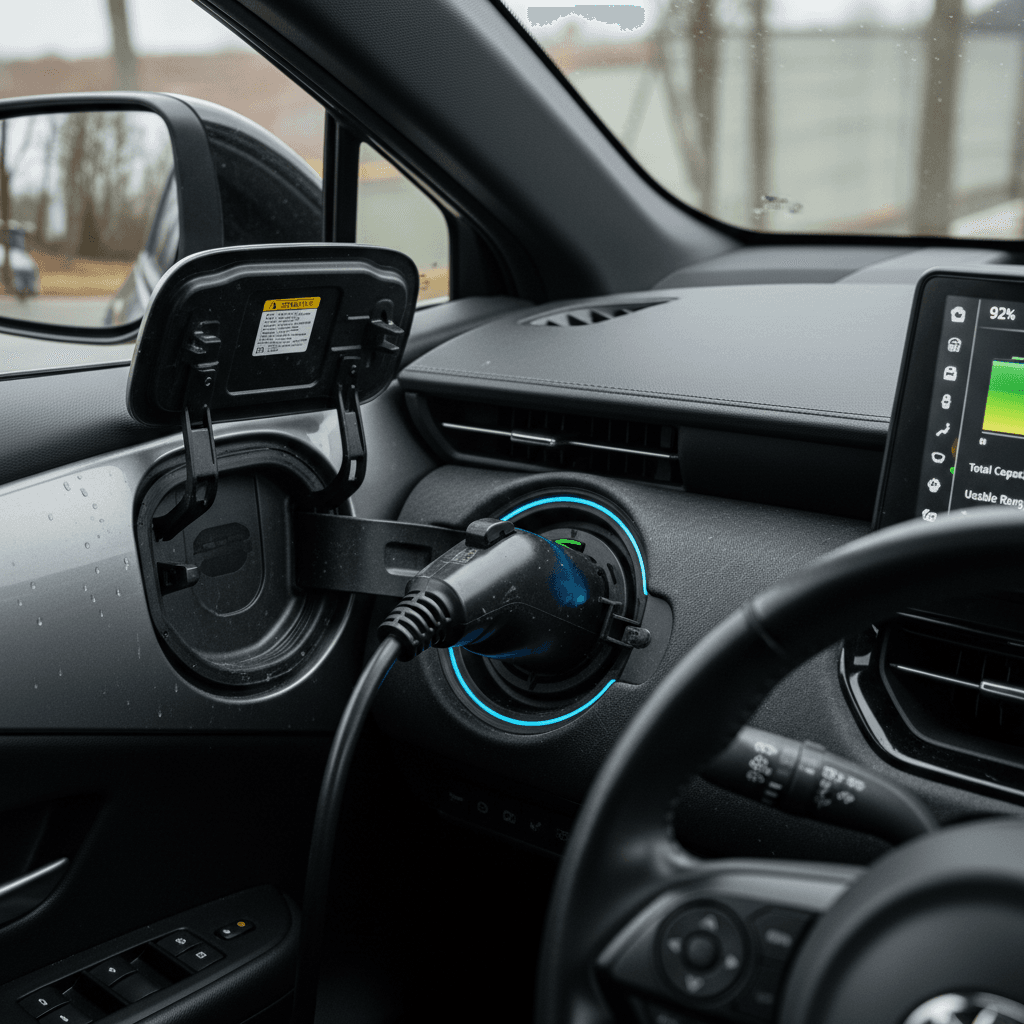
What Toyota promises vs. real‑world bZ4X degradation
Toyota doesn’t publish an official “bZ4X battery degradation per year” number. Instead, like other automakers, it builds durability targets into the pack design and backs them with a warranty. For U.S. bZ4X models, the traction battery warranty is typically 8 years or 100,000 miles, with a guarantee that usable capacity won’t fall below about 70% of original during that period (or it’s considered a defect, not just wear and tear).
Toyota bZ4X battery warranty and targets
How Toyota’s warranty and design targets translate into implied degradation over time.
| Item | U.S. baseline | Implication for degradation |
|---|---|---|
| Battery warranty | 8 years / 100,000 miles | If capacity drops below ~70% within this window, repair or replacement is typically covered. |
| Capacity threshold | ~70% of original usable capacity | Toyota is effectively allowing up to ~30% loss before warranty action. |
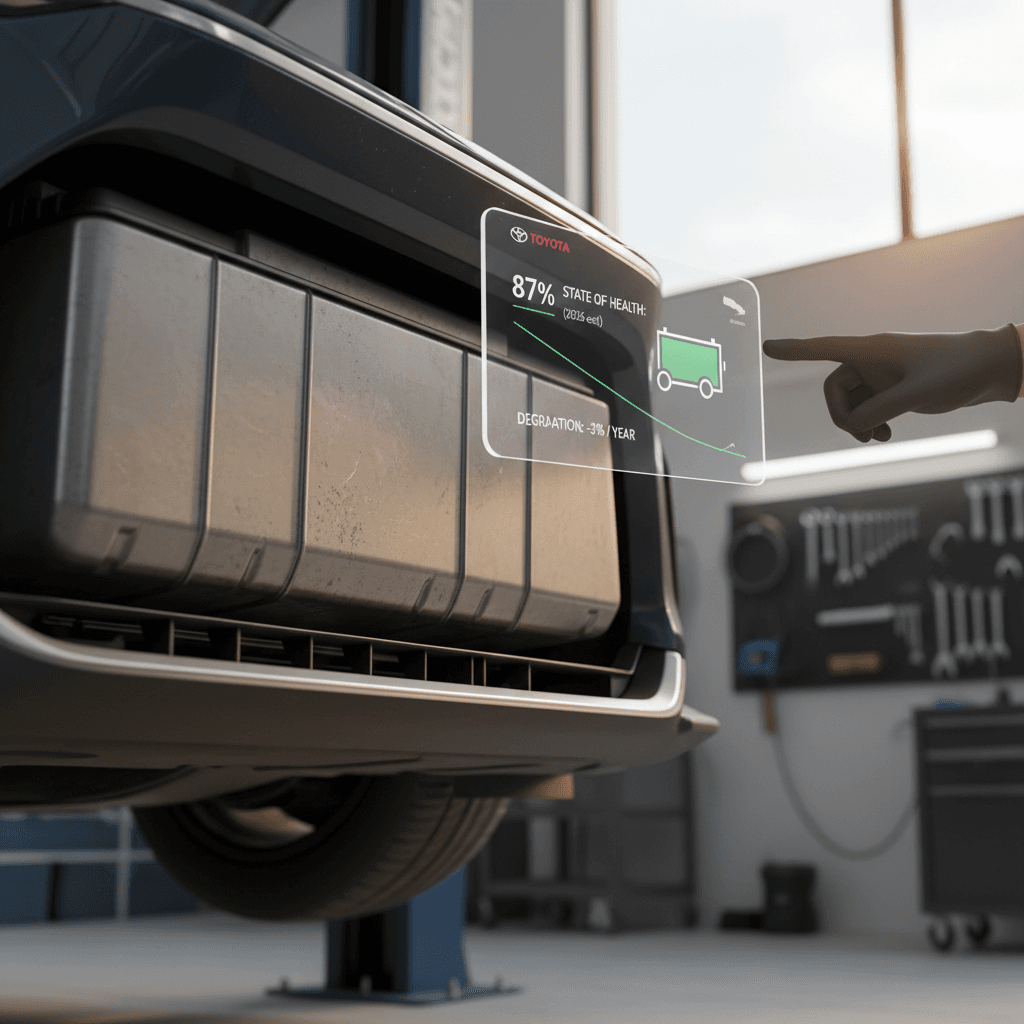
| Engineering target | ≥70% after ~10 years in normal use | Implied average of around 3% loss per year, though real‑world patterns are front‑loaded and vary by driver. |
| Extended care (some markets) | Up to 10 years with annual health checks | Regular inspections can extend coverage, but not usually beyond the 70% threshold. |
Exact terms vary by market; always confirm your specific vehicle’s warranty booklet, especially for Canada, Europe, or state‑specific rules.
Early owner data from 2022–2024 builds suggests the bZ4X is within the normal band for first‑generation EVs: not class‑leading like some long‑range Teslas, but far from catastrophic. Many drivers report little obvious range loss in the first 1–2 years. Heavy‑use fleets and taxis, especially in Europe with frequent DC fast charging, do report noticeable range drops, unsurprising given their harsher duty cycle.
Warranty vs. reality
So how much does a bZ4X battery degrade per year?
Because the oldest bZ4X examples on the road are only about four years old, we don’t yet have 10‑ or 15‑year datasets. What we can do is combine Toyota’s design targets with the broader EV fleet data and owner reports to build a reasonable expectation for Toyota bZ4X battery degradation per year.
Estimated Toyota bZ4X degradation by use case
These are realistic bands, not guarantees, your exact numbers will vary.
Typical private owner
Driving: 8,000–12,000 miles/year
Charging: Mostly Level 2 at home, occasional DC fast charging on trips
Estimated degradation: ~2–3% in year 1, then ~1–2% per year for several years. After 5–6 years, many owners will still be above ~85% capacity.
High‑mileage commuter
Driving: 15,000–25,000 miles/year
Charging: Regular Level 2, more frequent DC fast charging
Estimated degradation: ~3–4% in year 1, then ~2–3% per year. Hitting ~75–80% capacity by years 6–8 is plausible if miles and fast‑charging are high.
Fleet / rideshare duty
Driving: 30,000+ miles/year
Charging: Heavy DC fast charging, minimal rest between sessions
Estimated degradation: Degradation can accelerate into the 4–6%/year range, especially in hot climates. These are the use cases most likely to approach the 70% threshold within the warranty window.
Across those scenarios, a reasonable planning assumption for a typical private bZ4X owner is roughly 10–15% total capacity loss over the first 5 years, and 20–30% over a full decade, provided you’re not abusing fast charging or living at the extremes of temperature. That lines up with Toyota’s 70%‑at‑10‑years engineering target and the broader EV experience so far.
Front‑loaded degradation
5 key factors that speed up or slow down bZ4X degradation
Within those broad averages, your actual Toyota bZ4X battery degradation per year is heavily shaped by how and where you drive and charge. Here are the big levers you can control, or at least account for when you’re shopping used.
Degradation drivers you should pay attention to
1. Annual mileage and duty cycle
The more energy you cycle through the pack, the more wear you accumulate. A 30,000‑mile‑per‑year bZ4X used for rideshare will age much faster than a 9,000‑mile family car, even if both are charged gently.
2. DC fast‑charging frequency
Occasional road‑trip fast charging is fine; daily high‑power DC sessions are where you start to see accelerated wear. The bZ4X’s relatively modest DC speeds actually help here by limiting peak battery stress, but repeated 10–80% fast charges still add up.
3. Climate and temperature management
Extreme heat is the enemy of lithium‑ion longevity. bZ4X owners in hot Southwest climates, parking outside with a full battery all summer, can expect faster degradation than owners in milder regions who garage their cars.
4. Typical state of charge (SoC) window
Living between roughly 20–80% SoC is easiest on the pack. Repeatedly charging to 100% and letting the car sit for hours, or frequently running it down into the single‑digits, puts more stress on the chemistry over time.
5. Storage and usage patterns
Letting the car sit for weeks at 90–100% SoC in the sun is worse than driving and charging it regularly in a moderate window. Likewise, combining high SoC, high power, and high temperature, fast charging a full, hot pack, is about the worst‑case scenario.
If you remember nothing else…
From degradation to range loss: what you’ll actually feel day to day
Capacity loss is abstract; range loss is what you live with. A front‑wheel‑drive bZ4X rated for around 250 miles when new that loses 15% capacity over five years now effectively has about 210–215 usable miles in mild weather. Factor in winter, headwinds, and higher speeds, and the real‑world difference can feel bigger than the raw percentage suggests.
Example: 5‑year suburban commuter
Imagine you buy a new bZ4X today, drive 10,000 miles per year, charge mostly at home on Level 2, and fast‑charge only on a few road trips. After five years, a realistic scenario is:
- ~10–15% capacity loss
- Summer range on a full charge dropping from ≈250 miles to ≈215–225
- Winter highway range in the 160–180 mile ballpark, depending on climate and speed
For many owners, that’s still more than enough for daily life, it just leaves a bit less cushion for spontaneous long drives.
Example: 7‑year high‑mileage bZ4X
Now picture a 7‑year‑old bZ4X that’s done 20,000 miles per year with frequent DC fast charging. A 25–30% capacity hit is plausible here, which might look like:
- Effective summer range dropping from ≈250 miles to ≈170–190
- More frequent charging stops on road trips
- Less buffer in severe winter or at high speeds
Still usable, but you’ll notice the compromises, and it should be priced accordingly if you’re shopping used.
The upside of Toyota’s conservatism
Shopping used? bZ4X battery‑health checklist
If you’re evaluating a used bZ4X, you don’t care about an abstract fleet average, you care about this car. Here’s how to sanity‑check the individual vehicle’s likely battery degradation per year and whether the asking price makes sense.
Key steps to assess a used bZ4X battery
1. Start with age and mileage
A 2‑year‑old bZ4X with 12,000 miles is living a very different life than a 2‑year‑old car with 60,000 miles. Use the annual mileage to infer how heavily the pack has been cycled.
2. Ask about charging habits
Was the car mostly charged at home on Level 2, or fast‑charged multiple times per day on a commercial network? The latter is a red flag for accelerated degradation, especially in hot regions.
3. Look for climate clues
Check where the car spent its life. A bZ4X coming out of Phoenix that lived outside will have a tougher story than one garaged in Seattle or Boston, all else equal.
4. Compare real‑world range to EPA figures
On a mild‑weather test drive at 60–65 mph, reset the trip meter. If the car is only projecting, say, 160 miles from a 90% charge on a model rated at 228–252 miles when new, something’s off, whether it’s degradation, driving style, or both.
5. Get objective battery‑health data
The gold standard is an independent battery‑health test, not just what the in‑car dash or app claims. That’s exactly what a Recharged Score Report includes for every used EV on our marketplace.
Don’t rely on guesswork alone
How to care for your bZ4X battery to minimize degradation
Owning a bZ4X doesn’t have to turn you into a battery scientist. A handful of simple habits can keep your Toyota bZ4X battery degradation per year on the low end of the range and protect both your usable range and resale value.
- For daily use, charge to 70–80% rather than 100% whenever you can.
- Try not to let the car sit for days at 0–5% or 95–100%, drive it or adjust your charge target.
- Use DC fast charging as a tool, not a lifestyle: great for road trips, unnecessary for routine commuting if you have home or workplace Level 2.
- In hot weather, park in the shade or a garage when possible; in cold weather, pre‑condition the cabin while plugged in so the pack stays warmer without using its own energy.
- Keep your tires properly inflated and drive smoothly. Efficiency gains don’t change degradation directly, but they preserve usable range and make any future capacity loss less painful.
Good news for “normal” owners
How Recharged checks bZ4X battery health on used EVs
If you’re comparing two or three used bZ4X listings that look similar on paper, battery health is often the tiebreaker, especially knowing a full pack replacement can cost tens of thousands of dollars. That’s why every vehicle on Recharged comes with a Recharged Score Report that includes independent battery diagnostics rather than just trusting the car’s own guesses.
What Recharged’s battery‑health check adds for bZ4X buyers
Beyond odometer and Carfax, you deserve to know how the pack is aging.
Objective battery data
We combine pack‑level measurements with model‑specific expectations to estimate remaining usable capacity, not just what the dash happens to say this week.
Fair market pricing
If a particular bZ4X shows more degradation than average for its age and miles, that’s reflected in how we evaluate price. You’re not paying top dollar for a tired pack.
EV‑specialist guidance
Our EV specialists can help you interpret the numbers: what a given battery‑health percentage means for your range, your climate, and how long you plan to keep the car.
Ready to find your next EV?
Browse VehiclesPair that with Recharged’s financing options, trade‑in support, and nationwide delivery, and you can shop for a used bZ4X (or any EV) with a much clearer picture of long‑term battery costs than the traditional dealer model usually provides.
Toyota bZ4X battery degradation FAQ
Frequently asked questions about bZ4X battery degradation
Toyota built the bZ4X’s battery with a conservative philosophy: not the fastest, not the longest‑range, but engineered to quietly deliver a decade of everyday use for typical drivers. In the real world, that translates to single‑digit percentage losses over the first few years, rising toward 20–30% over a decade in tougher duty cycles. If you understand those dynamics, and insist on objective battery‑health data when you buy used, you can enjoy bZ4X ownership without constantly staring at the percentage gauge. And if you’d rather have that homework done for you, a used bZ4X listed on Recharged will come with the kind of battery insight traditional dealers rarely provide.