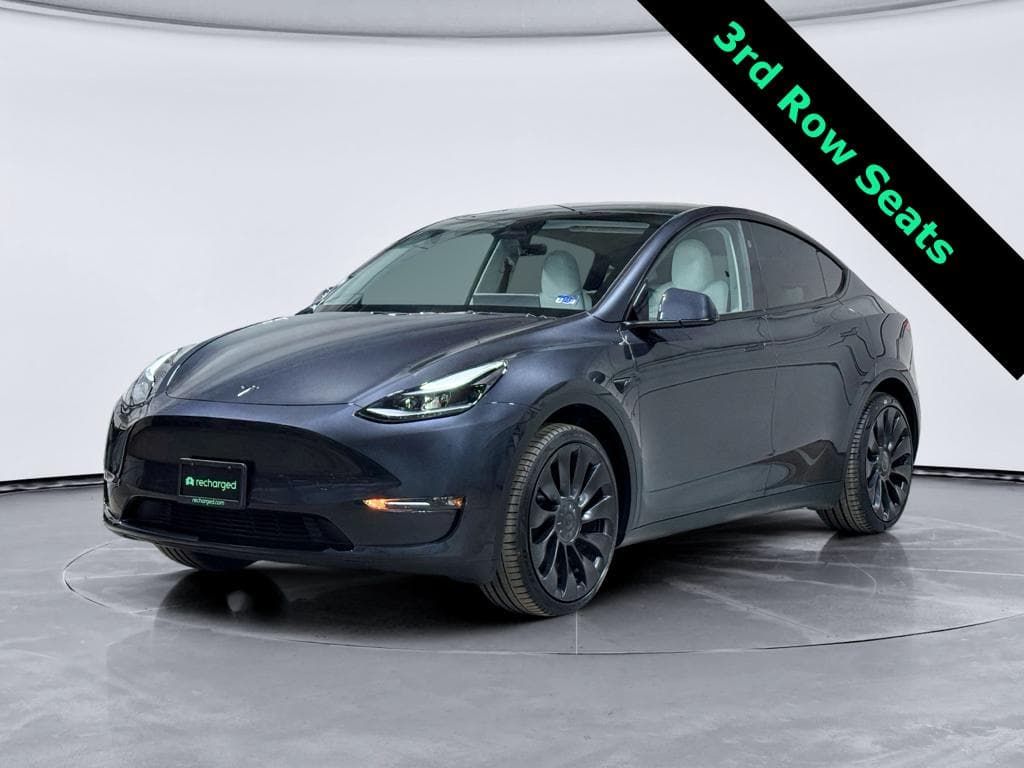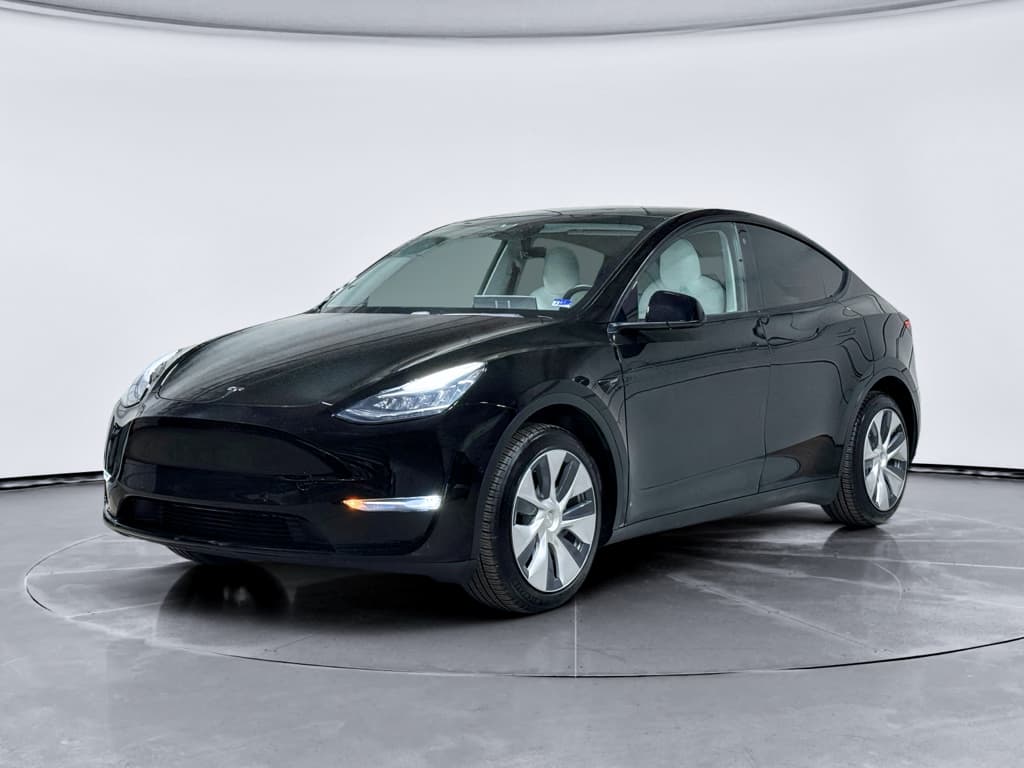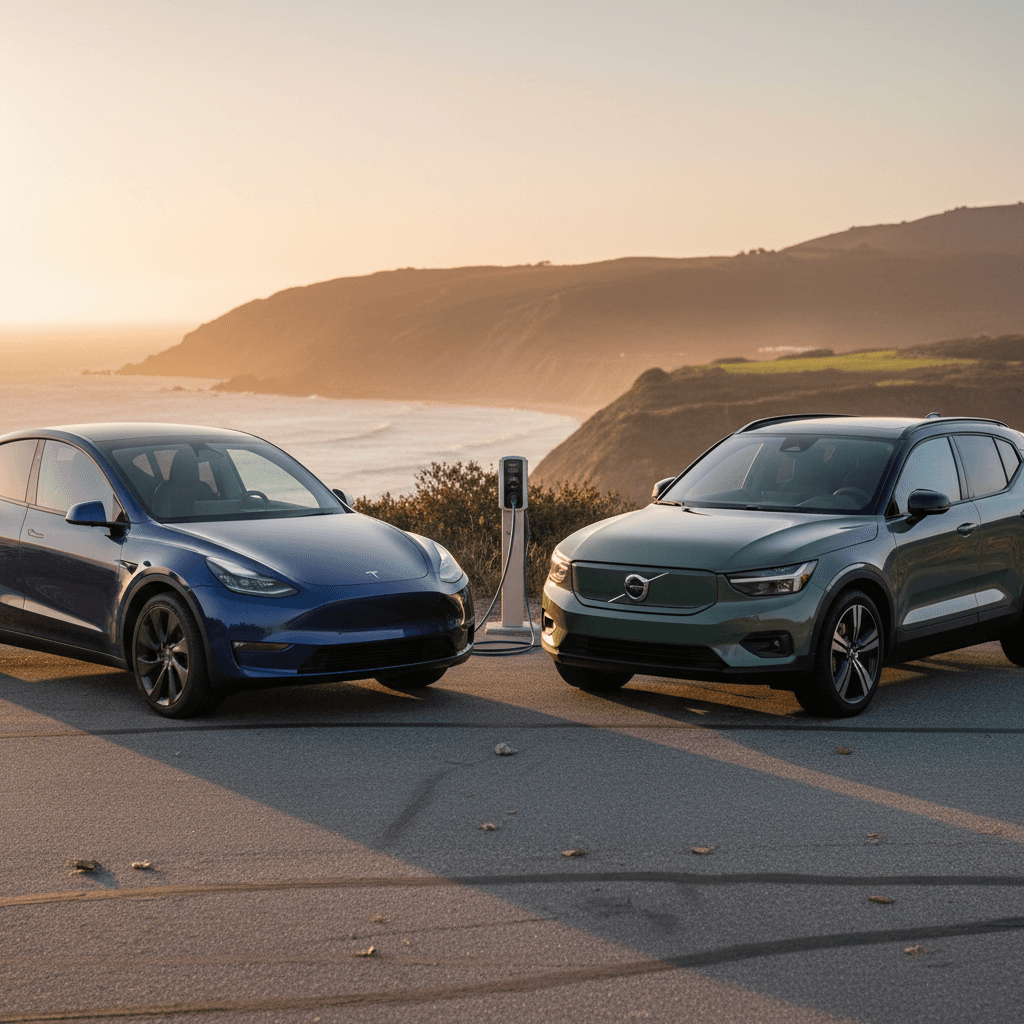
If you’re cross‑shopping the Tesla Model Y vs Volvo EX30 and wondering which is better, you’re really deciding between two very different takes on the electric SUV. The Model Y is a spacious, efficiency‑focused family crossover; the EX30 is a compact, design‑driven urban EV with surprisingly serious performance. Choosing well comes down to how you drive, how much space you need, and how you feel about Tesla’s software‑first approach vs Volvo’s safety‑and-comfort play.
Two very different interpretations of “electric SUV”
Tesla Model Y vs Volvo EX30: Quick Overview
Key Specs Snapshot (Typical 2025–2026 US Configs)
Tesla Model Y vs Volvo EX30: Core Numbers
Approximate US‑market specs; exact figures vary by model year and trim.
| Tesla Model Y (typical Long Range) | Volvo EX30 (Single Motor Extended / Twin Motor) | |
|---|---|---|
| Size class | Compact/midsize SUV | Subcompact SUV |
| Length | ~187 in | ~166 in |
| Seats | 5 (with optional 7 in some older trims) | 5 |
| EPA range | ~310–330 mi (Long Range) | ~265–275 mi (single‑motor extended); ~250+ mi (dual‑motor) |
| 0–60 mph | ~4.8 s (Long Range), ~3.5 s (Performance) | ~5.1–5.4 s (single‑motor), ~3.4 s (Twin Motor Performance) |
| Drivetrain | RWD or dual‑motor AWD | RWD or dual‑motor AWD (varies by model year/market) |
| Charge port (US) | NACS (Tesla) | CCS today, NACS coming on future Volvos |
| Typical new MSRP window* | Low‑to‑mid $40Ks and up | High‑$30Ks to mid‑$40Ks before options |
Use this as a directional guide, not a build‑sheet, always verify final specs on the window sticker.
About pricing and specs
Who the Tesla Model Y and Volvo EX30 Are Really For
Tesla Model Y: Best if you need a do‑everything family EV
- Roomy cabin and cargo for kids, strollers, dogs, and Costco runs.
- Excellent efficiency and range make it a natural road‑trip car.
- Tight integration with Supercharger network plus strong third‑party DC support as NACS rolls out.
- Over‑the‑air updates, robust app, and a huge owner community.
- Plenty of used inventory in the US, with wide price and mileage bands.
Volvo EX30: Best if you want small, stylish, and city‑friendly
- Much smaller footprint that’s easier to park and maneuver in cities.
- Interior feels like a Scandinavian design object: warm materials, clever storage, big center screen.
- High safety emphasis and a calmer ride/seat design than the Tesla.
- Performance trims are genuinely quick yet still efficient.
- Appealing if you rarely carry more than two adults and a small family or pets.
Start with your constraints, not the badge
Pricing, Trims, and Value for Money
As of early 2026, new pricing moves around with incentives, tariffs, and inventory, but the pattern is consistent: the Volvo EX30 generally undercuts a comparable Tesla Model Y at the MSRP level, especially on well‑equipped trims. The flip side is that the Model Y is more mature in the used market, so discounts off original MSRP can be much steeper.
How Model Y and EX30 Typically Pencil Out
Think in terms of total value, not just sticker price.
New purchase
Model Y usually starts in the low‑to‑mid $40Ks before options, with Performance and long‑range AWD trims well into the $50Ks.
EX30 often lands a bit lower for similarly equipped trims, especially single‑motor extended‑range variants. Performance dual‑motor versions narrow the gap.
Used market
The Model Y has a deep used market going back to 2020, with plenty of choices below $40K and even into the $20Ks for higher‑mileage or earlier build years.
The EX30 is newer and rarer used. You’ll mostly see nearly‑new examples with relatively high asking prices but still below new‑car stickers.
Value sweet spots
For many shoppers, a 2–3‑year‑old Model Y Long Range with healthy battery and full driver‑assist suite is the best value play.
For the EX30, a single‑motor extended‑range Plus/Ultra trim balances cost, range, and comfort for urban and suburban use.
Where Recharged fits in
Range, Performance, and Efficiency
Both EVs are quick by traditional SUV standards, but they solve different problems. The Model Y prioritizes maximizing miles per kWh in a larger body; the EX30 squeezes serious performance out of a small, city‑friendly package. Your decision here is mostly about how far you need to go between charges and how much you care about neck‑snapping acceleration.
Typical Range and Performance (US‑Market Configs)
Representative numbers; exact figures vary by model year, wheel size, and software calibration.
| Tesla Model Y | Volvo EX30 | |
|---|---|---|
| Everyday range role | Road‑trip capable family crossover | Short‑to‑medium‑range city/suburban EV |
| EPA‑rated range (commonly seen trims) | ~280–330 mi for Long Range / dual‑motor versions | ~250–275 mi depending on battery and drivetrain |
| 0–60 mph (quickest trims) | Mid‑3‑second range (Performance) | Mid‑3‑second range (Twin Motor Performance) |
| Typical real‑world efficiency | High, especially on aero wheels and moderate speeds | Good, but slightly lower on performance trims and big wheels |
When comparing used cars, always use the specific VIN & trim to confirm original EPA ratings.
Range rule of thumb
Space, Seating, and Everyday Practicality
This is the most decisive difference: the Model Y is a family crossover; the EX30 is a subcompact SUV. If you’re trying to replace a traditional two‑row crossover like a RAV4, CR‑V, or Tucson, the EX30 will feel tight in back. If you’re coming from a Golf, Civic, or Mini, the EX30 actually feels like a step up in utility.
Space Trade‑offs: Model Y vs EX30
Think in use‑cases, not just cubic‑feet numbers.
Cargo and cabin room
- Model Y: Big hatch opening, deep cargo well, plus front trunk. Rear seats fold nearly flat for bikes or furniture. Great for road trips and kid gear.
- EX30: Trunk is fine for groceries and weekend bags, but not a giant family hauler. Rear seats and roof rails help, yet you’ll pack more strategically.
Passenger comfort
- Model Y: Adults fit comfortably in both rows; kids in car seats leave room for adults next to them. Higher ride height makes loading kids easier.
- EX30: Front seats are classic Volvo comfortable. Rear seat space is acceptable for kids and shorter adults on shorter trips, but taller passengers will notice the smaller cabin.
Test‑fit your life
Infotainment, Software, and Driver Assistance
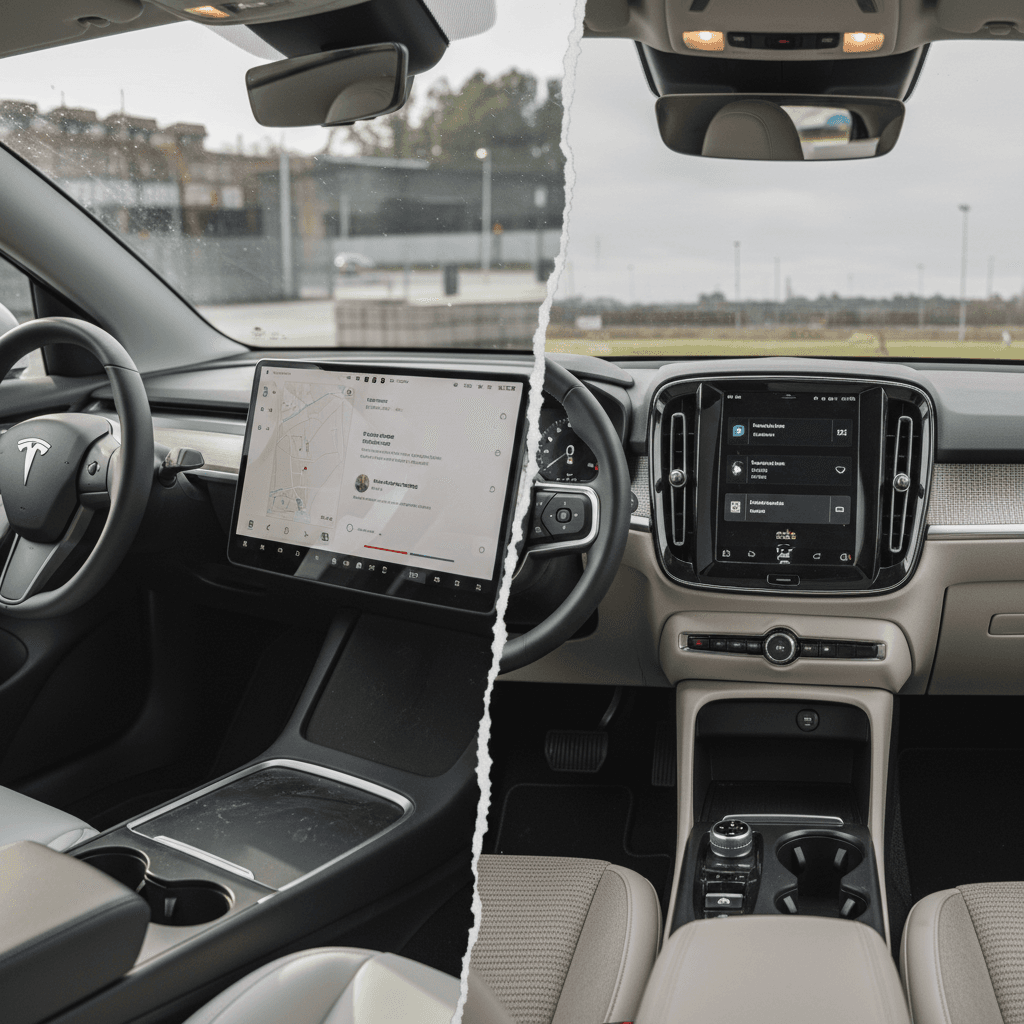
The Tesla–Volvo contrast shows up most dramatically in the cabin tech. Tesla treats the Model Y like a rolling computer: a large central touchscreen runs almost everything, including basic controls. Volvo uses Google‑based software but wraps it in a more conventional, comfort‑oriented interior with physical controls where they matter.
Tesla Model Y tech highlights
- Large central touchscreen with minimal physical buttons.
- Consistently strong over‑the‑air software updates that add features and refine driving feel.
- Excellent trip planning and native Supercharger routing.
- Ecosystem perks: app‑based climate preconditioning, remote control, and a huge third‑party accessory ecosystem.
- Autopilot and optional more advanced driver‑assist packages, constantly evolving.
Volvo EX30 tech highlights
- Portrait‑oriented center screen with Google built‑in (Maps, Assistant, Play Store apps).
- Cleaner separation between driving and infotainment functions than in Tesla.
- More traditional Volvo emphasis on ergonomics and intuitive controls, though some owners still find menus deep.
- Driver‑assist features tuned to feel more conservative and comfort‑oriented than Tesla’s.
- Interior ambience that feels more like a living room than a gadget.
Try living with the UI for 10 minutes
Charging, Road Trips, and Network Access
Both EVs can fast‑charge, but in North America the Tesla Model Y has historically had a big advantage thanks to exclusive access to the Supercharger network and the compact NACS connector. That advantage is shrinking as other automakers, including Volvo, transition to NACS ports and adapters, but for the next few years, the Model Y will remain the simpler, more predictable road‑trip choice.
- Model Y owners plug directly into Superchargers using the native NACS connector, with route planning handled in the car and in Tesla’s app.
- EX30 drivers currently rely more on CCS networks (Electrify America, EVgo, etc.) plus whatever access Volvo gradually gains to NACS sites via adapters and future port changes.
- For daily driving with home charging, both work fine; the difference only really matters if you do frequent, long highway trips.
Home charging is the great equalizer
Safety, Reliability, and Build Quality
Both vehicles score well on formal crash tests, but they deliver safety and quality in slightly different ways. The EX30 leans into Volvo’s traditional identity, protective, conservative, calming, while the Model Y pairs strong crash performance with more experimental software and a sometimes‑spotty record on fit and finish.
Crash Safety, Driver Assist, and Build
Crashworthiness & driver safety
- Model Y has earned top marks in major crash‑test programs and is structurally very strong.
- EX30 has scored top ratings in Euro NCAP testing, continuing Volvo’s safety legacy.
- Either way, you’re looking at state‑of‑the‑art crash protection compared with legacy compact SUVs.
Reliability & build quality
- Tesla: Drivetrains are generally robust, but owners report variability in panel alignment, interior rattles, and occasional software glitches.
- Volvo: Early EX30s had some teething issues, but perceived cabin quality and materials are generally higher than in a comparable Model Y.
- Either way, a pre‑purchase inspection and battery health check are smart moves when buying used.
Don’t skip safety basics on a test drive
Ownership Costs and Used Market Considerations
Total cost of ownership isn’t just about what you pay on day one. Electricity rates, insurance, depreciation, maintenance, and battery health make a big difference over the 5–8 years many buyers will own these EVs.
Key Cost Factors to Compare
1. Depreciation curves
The Model Y has already gone through several boom‑and‑bust pricing cycles, which means <strong>there’s a lot of value in older builds</strong> but also more volatility. The EX30 is still new enough that we don’t have a long‑term track record, but it will likely follow the pattern of other premium small EVs, steeper early depreciation, then leveling off.
2. Insurance and repairs
Tesla’s aluminum bodywork and glass can be expensive to repair, and finding Tesla‑approved shops can still be hit‑or‑miss by region. Volvo’s network is more traditional, but parts availability on a relatively new EV can create delays. Get <strong>insurance quotes for both VINs</strong> before you decide.
3. Battery and charging behavior
Both cars use modern packs that should age reasonably if not abused. What matters most is prior owner behavior: <strong>fast‑charging habits, storage in extreme climates, and high‑mileage ride‑hail use</strong> all affect degradation.
4. Service model and convenience
Tesla leans heavily on mobile service and app‑based scheduling, which some owners love and others find opaque. Volvo uses a more traditional dealer service model. Decide whether you’d rather work with an app or a service advisor in person.
How Recharged de‑risks a used EV purchase
Ready to find your next EV?
Browse VehiclesHow to Choose: Tesla Model Y vs Volvo EX30
With so many variables, it helps to reduce the decision to a simple framework. Think about your choice along four axes: space, range, comfort/ambience, and ecosystem (charging + software).
Decision Tracks for Common Buyers
Family hauler / primary household car
You regularly carry two adults plus kids, friends, or grandparents.
You road‑trip several times a year and don’t want to micromanage charging stops.
You need to haul strollers, sports gear, or camping equipment.
→ <strong>Model Y is almost always the better fit.</strong>
Urban professional / small household
You live in a city or dense suburb with tight parking.
You usually have 1–2 people in the car and occasional rear passengers.
You value design, cabin ambience, and easy maneuverability more than max cargo.
→ <strong>EX30 is often the more satisfying choice.</strong>
Enthusiast who loves quick cars
You care as much about 0–60 mph as about practicality.
You want sharp, confident handling and instant torque.
Both Performance Model Y and Twin Motor EX30 deliver serious pace, but the Tesla pairs it with more range.
→ <strong>Pick based on space needs: Y if you need room, EX30 if you don’t.</strong>
Budget‑conscious used shopper
You want the most EV for the money, not the newest badge.
You’re willing to consider earlier build years if battery health checks out.
The EX30 won’t have much older inventory for a while; the Model Y already does.
→ <strong>A well‑vetted used Model Y is usually the smarter financial move today.</strong>
FAQ: Tesla Model Y vs Volvo EX30
Frequently Asked Questions
Bottom Line: Which Is Better for You?
If your EV needs to be a primary family car and road‑trip machine, it’s hard to argue against the Tesla Model Y. Its mix of space, range, efficiency, and charging‑network integration simply matches the way a lot of American households actually drive. If, on the other hand, you live a more urban life, value design and calm over maximum utility, and you’re realistic about mostly short‑to‑medium trips, the Volvo EX30 can be the more emotionally satisfying choice, even if it’s objectively smaller and shorter‑range.
For many shoppers, the smartest play in 2026 is a well‑vetted used Model Y with documented battery health, or, as EX30 inventory grows, a nearly‑new EX30 whose first owner has already eaten the steepest depreciation. That’s exactly the gap Recharged is built to fill: helping you compare real cars with transparent battery diagnostics, fair pricing, and EV‑savvy support, so you’re not just choosing between Model Y and EX30 in the abstract, but deciding between specific, well‑understood vehicles that fit your life and budget.