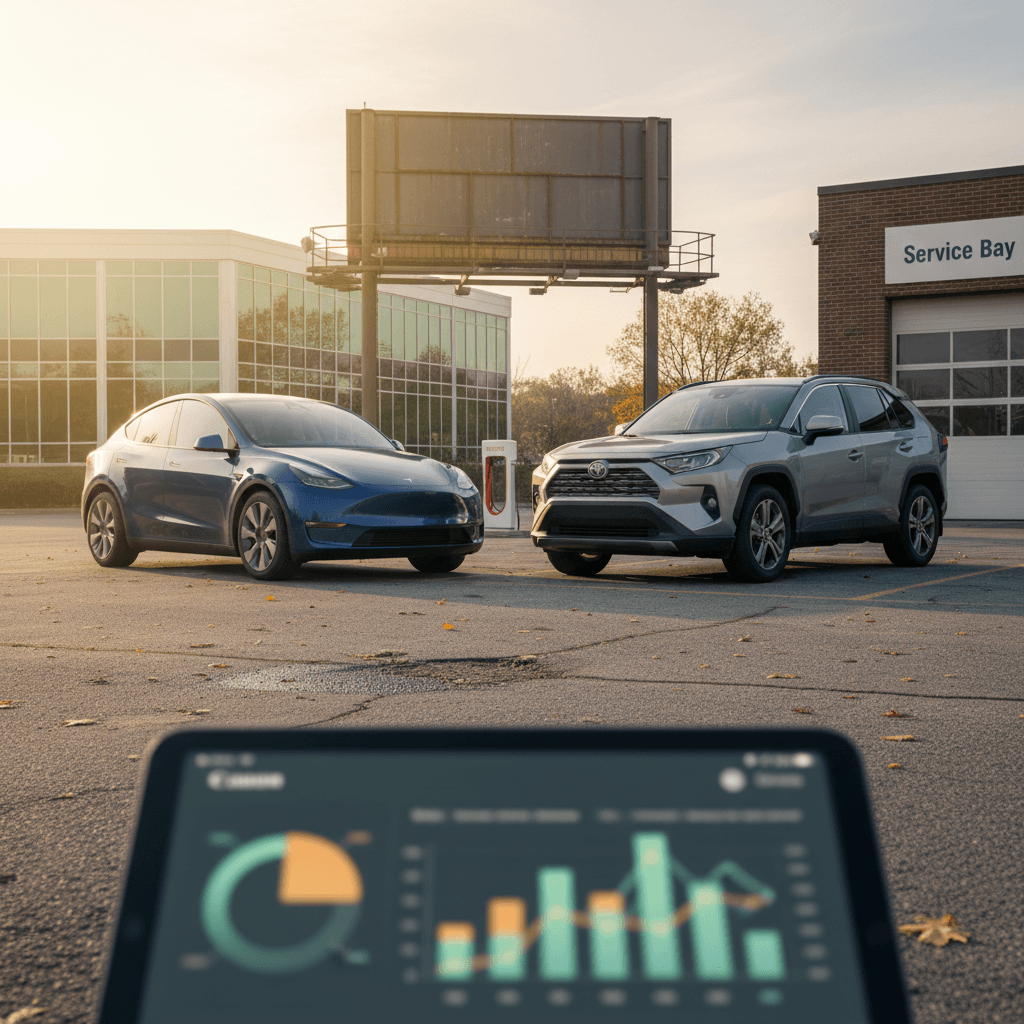
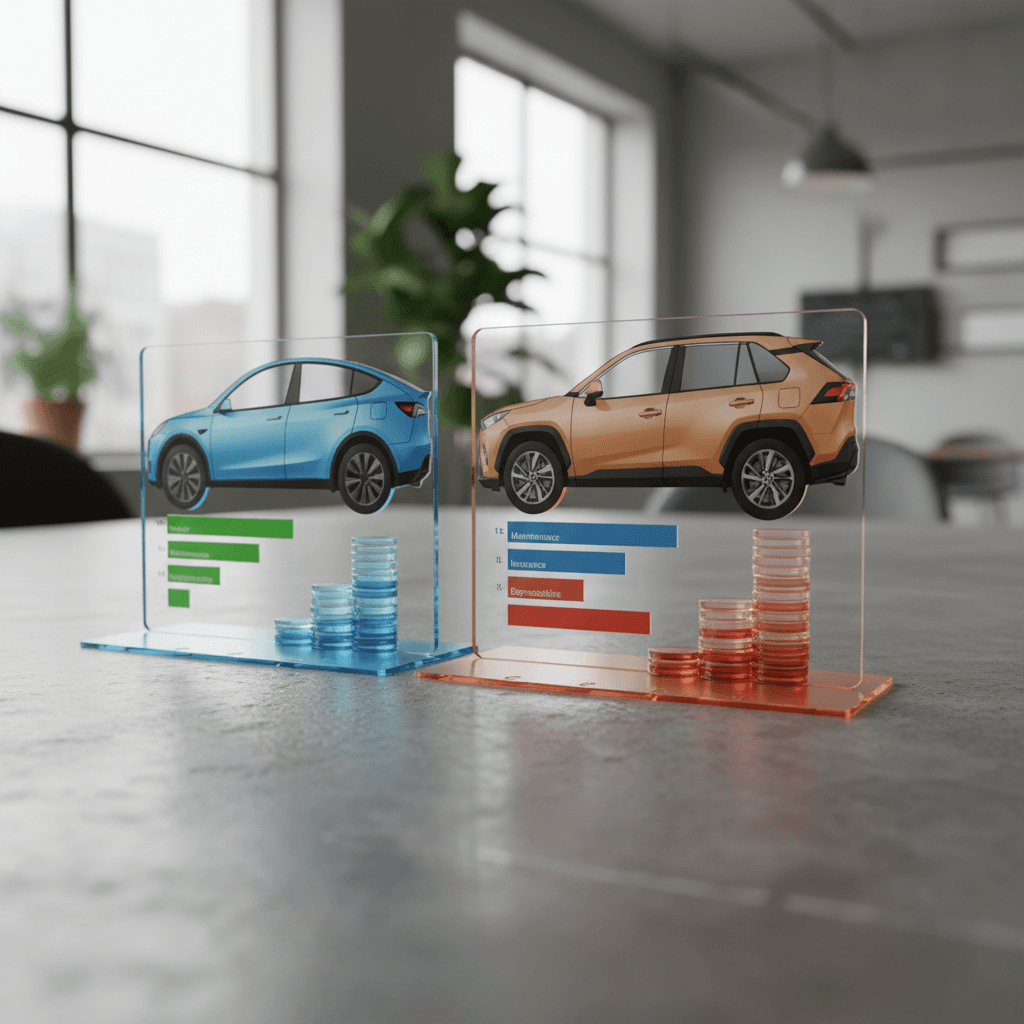
If you’re cross‑shopping a Tesla Model Y and a Toyota RAV4 in 2026, you’re really asking one big question: will an electric compact SUV actually cost less to own than one of America’s benchmark gas crossovers? This 2026‑specific Tesla Model Y vs Toyota RAV4 cost comparison walks through purchase price, fuel or electricity, maintenance, insurance and depreciation so you can decide what makes sense for your driveway and your budget.
Quick takeaway
Why compare Tesla Model Y vs Toyota RAV4 in 2026?
The Toyota RAV4 has been the default choice for practical American families for years: compact footprint, roomy interior, good reliability and strong resale. The Tesla Model Y targets the same needs, but swaps a gas engine for an efficient electric drivetrain, over‑the‑air software updates, and access to Tesla’s Supercharger network.
- Electricity prices are up versus a few years ago, but so are gasoline prices in many regions.
- Model Y has matured, with large numbers of 2021–2024 used vehicles hitting the market, softening prices.
- RAV4 remains inexpensive to maintain, but fuel costs dominate the ownership picture if you drive a lot.
At-a-glance 5-year cost snapshot (2026 assumptions)
Key assumptions: mileage, energy prices and trims
Before we compare dollars, we need a consistent baseline. Real‑world costs will vary by state, driving style and insurance profile, but anchoring to a clear scenario lets you adjust up or down.
Baseline assumptions for this 2026 cost comparison
These assumptions keep the Tesla Model Y vs Toyota RAV4 comparison apples‑to‑apples for a typical U.S. driver.
| Category | Assumption (2026) | Notes |
|---|---|---|
| Annual mileage | 15,000 miles | Close to the typical U.S. commuter and family‑use profile. |
| Ownership period | 5 years | Common loan/lease horizon and what most cost‑of‑ownership tools use. |
| Gasoline price | $3.75 per gallon | Represents a mid‑range 2025–2026 U.S. average; some states are higher. |
| Electricity price | $0.18 per kWh | Near recent U.S. residential averages in late 2025; public fast charging is higher. |
| Tesla Model Y trim | Long Range AWD | Balanced choice for range and price; Performance trim will be slightly more expensive to run. |
| Toyota RAV4 trim | Gas AWD (non‑hybrid) | The volume model; RAV4 Hybrid changes the fuel math and narrows the gap. |
You can plug in your own numbers later, but this baseline reflects common 2026 conditions.
- Model Y Long Range: roughly 28 kWh/100 miles in mixed driving (about 3.5 mi/kWh), based on EPA ratings adjusted by real‑world owner reports.
- Toyota RAV4 (gas, AWD): about 28 mpg combined as a representative real‑world figure between city and highway.
Hybrid RAV4 narrows the gap
Purchase price, depreciation and the used market
By 2026, the pricing story looks roughly like this for U.S. shoppers:
New vs used pricing: Model Y and RAV4
Approximate transaction prices in early 2026; your local dealer or marketplace listings may differ.
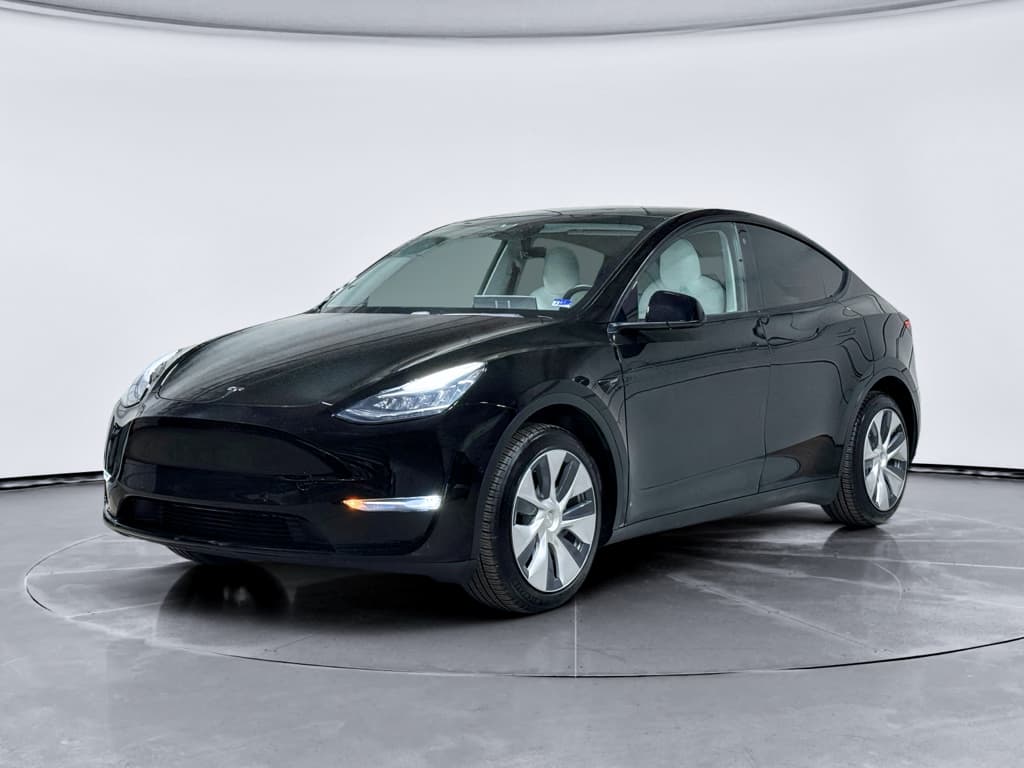
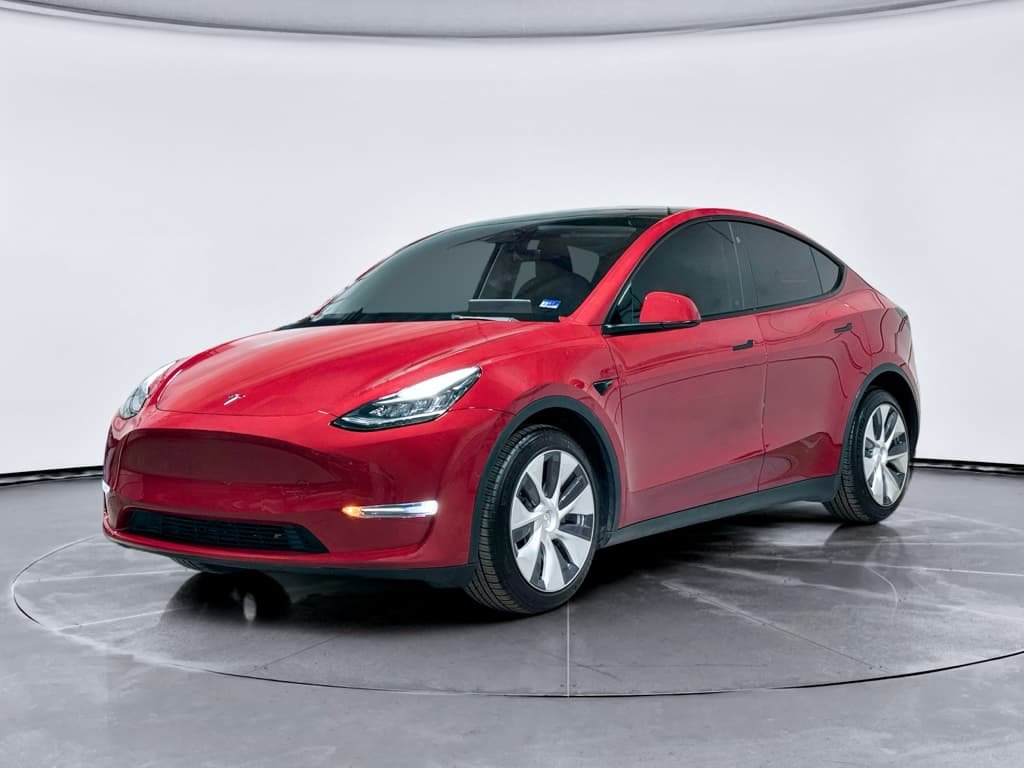
Tesla Model Y (Long Range AWD)
- New MSRP: commonly in the mid‑$40,000s to low‑$50,000s before taxes and fees, depending on options and any ongoing price adjustments.
- Used (2–3 years old): many 2022–2024 Model Y Long Range examples now list in the low‑ to mid‑$30,000s, depending on mileage and condition.
- Depreciation: the rapid run‑up in EV supply pushed used prices down from 2022 highs. Expect roughly 45–50% of MSRP lost over five years on a new Y, less if you buy used.
Toyota RAV4 (Gas AWD)
- New MSRP: a well‑equipped RAV4 AWD typically transacts in the low‑ to mid‑$30,000s in 2026, sometimes higher with dealer markups or packages.
- Used (2–3 years old): 2022–2024 RAV4s often sit in the upper‑$20,000s to low‑$30,000s.
- Depreciation: Toyota’s reputation helps; a gas RAV4 might lose roughly 40–45% of value over five years at this purchase price.
How depreciation hits your wallet
Depreciation is usually the single biggest cost of owning either SUV. Even though the Model Y has higher MSRP, the rapid drop in new EV prices since 2022 means much of that early depreciation has already happened for used cars. If you buy a 2023 Model Y in 2026, you’re buying after the steepest part of the curve.
Where Recharged fits in
On Recharged, every used Model Y listing includes a Recharged Score Report with verified battery health and fair‑market pricing, so you can see whether you’re paying a reasonable premium vs a comparable RAV4. That transparency helps you understand how much depreciation has already been "paid for" by the previous owner.
Smart move: new RAV4, used Model Y
Fuel vs electricity: what you’ll spend to drive
Energy is where the EV story usually turns in Tesla’s favor, even with higher electricity prices. Let’s run the same 15,000‑mile scenario for each SUV using our 2026 baseline assumptions.
Annual energy cost: Tesla Model Y vs Toyota RAV4 (gas)
Based on 15,000 miles/year, $3.75/gal gasoline, $0.18/kWh electricity and realistic efficiency numbers.
| Vehicle | Efficiency assumption | Energy needed per 15,000 miles | Unit price (2026) | Estimated annual energy cost |
|---|---|---|---|---|
| Tesla Model Y Long Range | 28 kWh/100 mi (~3.5 mi/kWh) | 4,200 kWh | $0.18/kWh | ≈ $760/year |
| Toyota RAV4 gas AWD | 28 mpg combined | ~535 gallons | $3.75/gal | ≈ $2,000/year |
If you drive more than 15,000 miles per year, the Model Y’s advantage on energy costs grows.
That’s roughly $1,200–$1,300 per year in energy savings for the Model Y at our baseline assumptions. Over five years, you’re looking at around $6,000–$6,500 less spent on energy, before factoring in any home solar, off‑peak charging rates, or higher regional gas prices.
Reality check on charging
How to keep Model Y energy costs low
1. Charge off‑peak at home
If your utility offers time‑of‑use rates, tell the Model Y to charge overnight when electricity is cheaper. This can cut your per‑kWh cost by 20–40% in some markets.
2. Use scheduled departure instead of always charging to 100%
Charging to a moderate daily level (60–80%) and finishing near departure time reduces energy waste and is better for long‑term battery health.
3. Watch your speed on the highway
Driving 80+ mph in any SUV, gas or electric, burns significantly more energy. Staying closer to the flow of traffic can add meaningful range and lower your electricity bill.
4. Combine errands to warm the battery once
EVs are most efficient when the battery is already warm. String errands together instead of doing multiple short cold starts to reduce kWh use per mile.
Maintenance, repairs and tires
Gas crossovers like the RAV4 are maintenance champs by internal‑combustion standards. But a well‑sorted EV like the Model Y still has a structural advantage: no oil changes, fewer moving parts in the drivetrain, and no exhaust or multispeed transmission to service.
Typical 5-year maintenance and repair costs
Representative ranges for 15,000 miles/year driving on 2025–2026 data and owner reports; excludes warranty repairs.
| Cost category (5 years) | Tesla Model Y | Toyota RAV4 gas |
|---|---|---|
| Scheduled maintenance | ≈ $1,200–$1,800 | ≈ $2,500–$3,500 |
| Repairs out of warranty | ≈ $1,000–$2,000 | ≈ $1,000–$2,000 |
| Tires | ≈ $1,200–$1,600 | ≈ $1,000–$1,400 |
| Total 5‑yr maintenance + repairs | ≈ $3,400–$5,400 | ≈ $4,500–$6,900 |
Actual costs depend heavily on your driving style and local labor rates, but the relative pattern is consistent.
The gap isn’t enormous, but the Model Y usually wins on maintenance, saving perhaps $1,000–$1,500 over five years at our assumed mileage. The main caveat is tires: the Y is heavier and more powerful than a RAV4, so aggressive driving can chew through rubber quickly.
Battery and high-voltage repairs
Insurance, taxes and fees
Insurance is where many first‑time EV buyers get caught off guard. Tesla’s repair ecosystem, parts pricing and sometimes aggressive driving profiles have historically driven premiums up compared with vanilla crossovers like the RAV4.
Typical annual insurance costs in 2026
Exact numbers depend heavily on your driving record, ZIP code and coverage limits; think in relative, not absolute, terms.
Tesla Model Y
- Recent insurance analyses for 2026 show Model Y premiums often landing in the $2,200–$3,000 per year range for full coverage on a new vehicle for a typical driver profile.
- Used Model Ys can sometimes be cheaper to insure if the value is lower, but repair costs remain high.
Toyota RAV4
- A comparable RAV4 gas model often sees annual premiums in the $1,500–$2,000 range for similar coverage.
- Parts and body work are familiar to every mainstream shop, which helps keep claim costs, and thus premiums, down.
Over a five‑year span, it’s reasonable in 2026 to assume the Model Y will cost $2,000–$3,000 more to insure than a RAV4 for many households, partially offsetting its savings on energy and maintenance.
Don’t skip insurance quotes before you choose
Five-year total cost summary: Model Y vs RAV4
Pulling these pieces together, here’s how a five‑year cost of ownership might look for a typical U.S. driver in 2026 comparing new vehicles. These are rounded estimates using the midpoints of the ranges we’ve discussed, not precise quotes.
Approximate five-year total cost of ownership (new, 2026)
15,000 miles/year, average U.S. prices and driver profile. Rounded numbers for comparison; does not include financing charges.
| Cost component (5 years) | Tesla Model Y Long Range (new) | Toyota RAV4 gas AWD (new) |
|---|---|---|
| Depreciation | ≈ $23,000 | ≈ $14,000 |
| Energy (fuel/electricity) | ≈ $3,800 | ≈ $10,000 |
| Maintenance & repairs | ≈ $4,500 | ≈ $5,800 |
| Insurance | ≈ $13,000 | ≈ $9,000 |
| Registration, taxes, misc. | ≈ $3,000 | ≈ $2,500 |
| Estimated 5‑yr total | ≈ $47,000–$52,000 | ≈ $41,000–$46,000 |
Buying used instead of new, especially for the Model Y, improves the EV’s relative position further.
On these assumptions, a new RAV4 gas model still comes out modestly cheaper to own over five years than a new Model Y, primarily because the Tesla’s higher purchase price and insurance costs outweigh its fuel and maintenance savings.
Where the Model Y pulls ahead
- You buy a used Model Y that has already shed much of its depreciation.
- You drive more than 15,000 miles per year, amplifying the EV’s per‑mile energy savings.
Beyond the math: experience, performance and intangibles
What the Model Y brings
- Smoother, quieter commute: instant torque, no gear shifts, and near‑silent operation.
- Tech‑heavy cockpit: big central display, over‑the‑air updates, strong integration with phone and apps.
- Home refueling: starting each morning with a “full tank” if you have home charging.
- Emissions profile: depending on your grid mix, lower lifecycle emissions than a gas RAV4.
What the RAV4 offers
- Simplicity and familiarity: gas stations everywhere, any mechanic can work on it.
- Lower perceived risk: no concerns about charging access on road trips or battery degradation.
- Proven Toyota reliability: a long track record many households trust.
- Towing and off‑road variants: Adventure and TRD Off‑Road trims focus on light off‑roading.
When a used Tesla Model Y makes more sense
From a cost‑of‑ownership perspective, the sweet spot for many shoppers in 2026 isn’t “new EV vs new gas SUV,” it’s “lightly used EV vs new gas SUV.” That’s where the Model Y’s depreciation, energy savings and modern feature set start to look compelling next to a new RAV4 payment.
Scenarios where a used Model Y often beats a new RAV4
You can’t install home charging, but drive mostly in areas dense with Superchargers
Frequent access to reasonably priced fast charging can keep your per‑mile costs competitive, though home charging is still ideal.
You drive 15,000–20,000 miles per year or more
The more you drive, the more the Model Y’s lower per‑mile energy and maintenance costs add up vs the RAV4’s fuel bill.
You find a 2–3‑year‑old Model Y with strong battery health
Buying after the steepest depreciation, with a verified battery via a <strong>Recharged Score Report</strong>, compresses your five‑year total cost significantly.
You value software and tech as much as mechanical hardware
Over‑the‑air updates, driver‑assist improvements, and a software‑centric cabin experience are difficult to quantify but meaningful for many owners.
How Recharged derisks the used EV bet
How Recharged helps you run the numbers
Sorting through EV vs gas cost scenarios on your own can be overwhelming. Spreadsheet models are helpful, but they rarely account for real‑world battery health or the specific pricing dynamics in the used EV market.
Why shoppers use Recharged for Model Y vs RAV4 decisions
Tools and services built for EV economics, not just gas‑car assumptions.
Recharged Score battery health
Fair market pricing and financing
Trade‑in and nationwide delivery
Ready to find your next EV?
Browse VehiclesFAQ: Tesla Model Y vs Toyota RAV4 cost questions
Frequently asked questions
The Tesla Model Y vs Toyota RAV4 cost comparison in 2026 isn’t a simple “EVs are always cheaper” story. A new RAV4 gas model still has a compelling total‑cost case, especially for lower‑mileage drivers and households worried about charging access. But once you look at used Model Y pricing, realistic fuel and electricity costs, and maintenance patterns, it’s easy to find scenarios where the Tesla not only delivers a more modern driving experience but also wins on five‑year cost.
If you’re ready to see how the math looks on actual vehicles, not just averages, explore used Tesla Model Y listings on Recharged. With Recharged Score battery health reports, transparent pricing, financing, trade‑in options and nationwide delivery, you can compare your options with more confidence than you’ll get from a traditional classified listing, and decide for yourself whether your next compact SUV should sip gas or electrons.