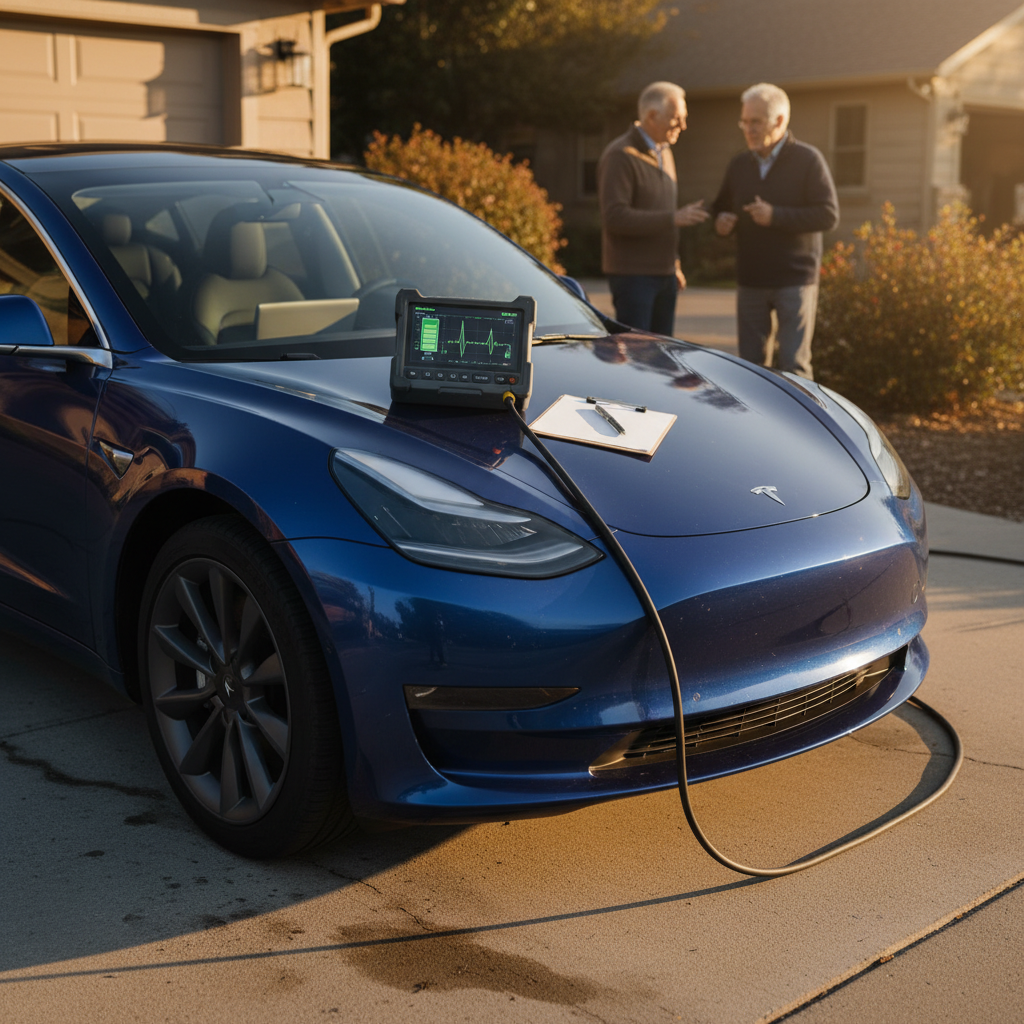
If you’re comparing a Tesla Model Y vs a gas car on cost, sticker price only tells a small part of the story. What actually matters is total cost of ownership: what it really costs you to drive, fuel, maintain, and eventually sell the vehicle over 5–10 years.
Quick takeaway

Model Y vs gas: what’s the real question?
Most shoppers don’t actually care whether electrons are cheaper than gasoline in the abstract. You care about: “Will a Tesla Model Y be cheaper to own than the gas SUV I’d otherwise buy?” That means we need an apples‑to‑apples comparison between a Model Y and a mainstream, similarly sized gasoline crossover.
What we’ll compare: Model Y vs typical gas SUV
Think of a Model Y vs something like a Toyota RAV4, Honda CR‑V, or Hyundai Tucson
Tesla Model Y (Long Range or AWD)
Compact/midsize electric SUV with all‑wheel drive, strong performance, and EPA efficiency around 28–32 kWh/100 miles depending on trim and year.
Comparable gas SUV
Think Toyota RAV4, Honda CR‑V, Hyundai Tucson, or similar compact SUVs rated around 28–30 mpg combined.
Use case: daily driver
We’ll assume 12,000 miles per year, close to the U.S. average, with mostly commuting, errands, and some highway trips.
From there we’ll walk through purchase price and financing, fuel vs electricity, maintenance and repairs, insurance, taxes and fees, and finally resale value. Then we’ll add it all up so you can see where the Model Y actually pulls ahead, or doesn’t.
Assumptions: how we compare costs fairly
Key assumptions
Baseline assumptions for cost comparison
Rough, realistic assumptions to keep the comparison grounded for a typical U.S. driver.
| Category | Tesla Model Y | Gas SUV (RAV4/CR‑V class) |
|---|---|---|
| Annual miles driven | 12,000 miles | 12,000 miles |
| Ownership period | 5 years | 5 years |
| Energy efficiency | ~30 kWh/100 mi (0.30 kWh/mi) | 30 mpg combined |
| Average energy price | $0.17 per kWh (residential U.S. avg in 2025) | $3.10 per gallon gasoline (2025 forecast, trending toward $2.90 in 2026) |
| Financing | 6‑year loan, ~6–7% APR (used or new) | Same |
| Maintenance pattern | Annual service + tires + wear items | Oil changes, transmission service, exhaust, engine‑related repairs |
These are not quotes, just a framework you can tweak with your own numbers.
Important caveat
Purchase price and financing
The most common objection to a Tesla is simple: “They’re too expensive up front.” That used to be a lot more true than it is today, especially once you include the maturing used EV market.
Typical price ranges: new and used
Actual listings will vary, this is a directional snapshot for 2026 shoppers
Tesla Model Y pricing
- New Model Y: commonly in the low‑to‑mid $40,000s before incentives, depending on trim and options.
- 3–4‑year‑old used Model Y: often in the mid‑$20,000s to low‑$30,000s range, mileage and battery health dependent.
- Potential federal and state EV incentives can lower effective price further for some buyers.
Gas SUV pricing
- New mainstream compact SUV (RAV4, CR‑V, etc.): frequently in the low‑to‑mid $30,000s out the door when comparably equipped.
- 3–4‑year‑old used gas SUV: often in the low‑to‑mid $20,000s.
- Fewer incentives, but sometimes modest discounts or rebates.
If you’re looking strictly at new vehicles, the Model Y will often be a bit more expensive than a similar gas SUV on day one, even after many incentives. In the used market, the gap can shrink or flip, especially if you find a well‑priced used Model Y with strong, independently verified battery health.
Where Recharged fits in
Fuel vs electricity costs
This is where the Model Y usually makes its case. The math isn’t complicated, but you need to plug in realistic, current assumptions.
Energy use: Tesla Model Y vs gas SUV
Let’s turn those into real annual numbers for our 12,000‑mile‑per‑year driver:
Annual fuel vs electricity cost at U.S.‑average prices
Assumes 12,000 miles per year, 30 mpg gas SUV, 0.30 kWh/mile Model Y, $3.10/gal gas and $0.17/kWh electricity.
| Model Y (home charging) | Gas SUV | |
|---|---|---|
| Per‑mile energy cost | ≈ $0.051/mi | ≈ $0.103/mi |
| Annual miles | 12,000 | 12,000 |
| Annual energy cost | ≈ $620 | ≈ $1,240 |
| 5‑year energy cost | ≈ $3,100 | ≈ $6,200 |
Think of this as a national‑average baseline you can adjust for your local prices.
Fuel savings in plain English
When the savings shrink
Maintenance, repairs, and battery health
EVs simplify the drivetrain dramatically: no engine oil, spark plugs, timing belts, multi‑gear automatics, or exhaust system. That doesn’t make them maintenance‑free, but over 5–10 years it usually makes them maintenance‑cheaper than equivalent gas vehicles.
Typical maintenance patterns
Not an exhaustive list, just the big recurring items most owners see
Gas SUV
- Oil & filter changes 2–3x per year
- Transmission fluid services
- Coolant, spark plugs, belts
- Exhaust, emissions components, fuel system issues over time
- More moving parts → more things to wear out
Tesla Model Y
- No oil changes, no traditional transmission
- Brake wear often lower thanks to strong regenerative braking
- Still needs tires, cabin filters, fluids, occasional alignment
- Software updates delivered over‑the‑air rather than dealer visits
Rough maintenance cost ranges
- Gas SUV: roughly $3,000–$4,000 in routine maintenance and minor repairs.
- Tesla Model Y: often closer to $1,500–$2,000, mostly tires and routine checks.
What about battery degradation?
Insurance, taxes, and fees
Insurance is where EVs, and Teslas in particular, have historically paid a penalty. New Teslas are often more expensive to insure than mainstream gas SUVs because of higher repair costs and more expensive parts. That gap is slowly narrowing as more shops learn to work on EVs, but for now you should assume:
- A new Model Y may cost moderately more to insure than a new mainstream gas SUV with the same driver profile.
- If you buy used and the vehicles are similarly priced, the insurance gap tends to shrink.
- Location, driving record, trim level, and coverage choices can swing insurance premiums more than the EV vs gas distinction itself.
Don’t skip the quote step
On taxes and fees, EVs can be slightly better or slightly worse depending on state policy:
- Some states still offer purchase or registration incentives for EVs.
- Some charge EV‑specific registration fees meant to replace gas taxes.
- Many areas offer carpool lane access or lower tolls for EVs, which are non‑cash but real quality‑of‑life benefits.
Resale value and depreciation
Depreciation used to be EVs’ Achilles’ heel. Rapid technology changes and limited early‑used‑EV demand hit residual values hard. By 2026, the picture is more nuanced: the used EV market has matured, Tesla brand demand is robust, and gas vehicles face long‑term headwinds from emissions regulation and shifting consumer demand.
Tesla Model Y depreciation dynamics
- High brand recognition and strong demand for used Teslas.
- Software updates help vehicles feel "newer" longer.
- Battery health is the big variable: a Model Y with strong, documented battery health can command a premium.
- Future tech improvements (range, charging) can pressure older models, but that’s increasingly true for gas cars as well.
Gas SUV depreciation dynamics
- More predictable, historically stable used values.
- Massive market and buyer pool, especially for reliable nameplates like RAV4/CR‑V.
- Long‑term structural risk as regulations and buyer preferences shift away from internal combustion.
- High‑mileage gas SUVs can be harder to sell due to engine/transmission wear concerns.
Why documentation matters
5‑year cost summary: Tesla Model Y vs gas SUV
Let’s roll all of this into a simplified 5‑year cost of ownership snapshot for an average U.S. driver buying vehicles in the same ballpark price range. To keep things clean, we’ll ignore opportunity cost of money and assume both vehicles are financed similarly.
Illustrative 5‑year cost of ownership (same starting price)
Assumes both vehicles are purchased around $35,000–$40,000, financed similarly, driven 12,000 miles per year for 5 years, and sold at year 5. Numbers are rounded estimates, not quotes.
| Cost component (5 years) | Tesla Model Y | Gas SUV |
|---|---|---|
| Energy (fuel vs electricity) | ≈ $3,100 | ≈ $6,200 |
| Maintenance & minor repairs | ≈ $1,750 | ≈ $3,250 |
| Insurance (variable) | Slightly higher in many cases | Baseline |
| Depreciation (net of resale) | Comparable in mid‑2020s market, often a bit steeper early for EVs, but offset by demand for used Teslas | |
| Total "running" costs (energy + maintenance) | ≈ $4,850 | ≈ $9,450 |
| Energy + maintenance savings vs gas SUV | , | Model Y saves ≈ $4,500 over 5 years |
Think in terms of direction rather than exact dollars, your local conditions and actual purchase price will move these numbers.
What this means in practice
Used Model Y vs used gas SUV
Cost of ownership is where the used EV market gets interesting. New‑car incentives, tech shifts, and earlier depreciation mean you can often buy a used Model Y for less than you’d expect relative to a new one, while still getting most of the benefits.
Why a used Model Y can be a sweet spot
If, and this is crucial, you know the battery health story
Lower upfront price
Buying gently used means you let the first owner absorb the steepest depreciation, bringing the purchase price much closer to a similar‑age gas SUV.
Battery health transparency
The biggest used‑EV risk is unknown battery condition. With tools like the Recharged Score, you can see verified battery health data before you buy, making used Model Y economics more predictable.
Better TCO spread
Once upfront prices converge, the Model Y’s ongoing energy and maintenance savings really start to dominate the total cost story over 5–10 years.
This is exactly the niche Recharged operates in: verifying battery health, pricing vehicles against the broader market, and guiding buyers through the EV‑specific parts of ownership that traditional dealers still struggle with.
Who actually saves money with a Model Y?
The Tesla Model Y doesn’t magically save everyone money all the time. But certain driver profiles and conditions make the savings much more compelling.
Scenarios where Model Y wins clearly
- High‑mileage drivers (15,000–20,000+ miles/year): fuel savings stack up quickly.
- Homeowners with Level 2 charging and decent electricity rates (under ~20¢/kWh).
- Drivers in high‑gas‑price states (West Coast, Northeast urban areas).
- Buyers choosing a used Model Y with verified battery health at a price close to a used gas SUV.
Scenarios where savings are marginal
- Drivers who rarely drive (under 7,000 miles/year); fixed costs dominate.
- People who can’t charge at home and must rely on public fast charging.
- Areas with unusually cheap gas and high electricity prices.
- Situations where a new Model Y is much more expensive up front than the gas SUV you’d otherwise buy.
Checklist: is a Tesla Model Y cheaper for you?
Work through these questions before you decide
1. How many miles do you actually drive annually?
If you’re over about 12,000 miles per year, the Model Y’s fuel savings become meaningful. The more you drive, the stronger the EV economics get.
2. Can you reliably charge at home?
Home charging at residential rates is the foundation of Tesla’s cost advantage. If you’ll mostly rely on DC fast charging, run the numbers carefully.
3. What are your local gas and electricity prices?
Check your last utility bill and local pump prices, then plug them into the per‑mile math. Don’t rely on national averages if your region is an outlier.
4. Are you shopping new or used?
If you’re open to used, a fairly priced Model Y with verified battery health can be much cheaper to own than a similar‑age gas SUV. This is where platforms like <strong>Recharged</strong> are most powerful.
5. Have you compared real insurance quotes?
Call or use online tools to quote both vehicles with the same coverage. Don’t assume EV insurance will be sky‑high, or that it will be identical.
6. How long do you plan to keep the car?
Over 3 years, savings are modest. Over 7–10 years, the Model Y’s lower running costs and fewer major mechanical risks become much more compelling.
FAQ: Tesla Model Y vs gas car cost
Frequently asked questions
Bottom line: when does a Model Y beat a gas car?
Put it all together and the pattern is clear: if you drive at least average mileage, can charge at home, and buy your Model Y at a sensible price, it’s very likely to be cheaper to own than a comparable gas SUV over 5–10 years. The more miles you drive and the higher local gas prices are, the more the math tilts toward the Tesla.
Where people get burned isn’t the drivetrain, it’s overpaying up front or walking into a used EV without understanding the battery. That’s exactly why Recharged exists: to de‑risk used EV ownership with verified battery health, transparent pricing, and EV‑specialist guidance so you can compare a Tesla Model Y vs a gas car on cost with real numbers, not guesswork.