If you’re eyeing a Tesla Model Y to pull a small camper, utility trailer, or bikes, you’ve probably noticed the numbers can be confusing. Official specs quote one figure, real-world owners talk about another, and range while towing is a whole different story. This guide breaks down Tesla Model Y towing capacity in plain English, so you know exactly what it can tow, and whether it fits your life.
Quick answer
Tesla Model Y towing capacity overview
Headline Tesla Model Y towing and weight stats
Regardless of trim, the Model Y is designed as a compact electric crossover first, a tow vehicle second. That means it tows differently than a traditional gasoline SUV. The motors have instant torque, which makes pulling away feel effortless, but the battery is a finite energy tank, tow a big, bluff trailer into a headwind and your range can drop sharply. The key is understanding the official tow rating, how your specific Model Y is equipped, and what that means for your trips.
Don’t assume every Model Y can tow
Model Y tow ratings by version and package
Over the past few years Tesla has simplified the Model Y lineup, but you’ll still see different names on the used market: Standard Range (rare), Long Range AWD, Performance, and various wheel and seating configurations. The big dividing line for towing is whether the car has the factory tow package.
Tesla Model Y towing ratings by configuration (North America)
Approximate factory ratings for common configurations. Always confirm in the owner’s manual and door jamb label for the specific vehicle you own or are considering.
| Model Y version | Tow package | Max tow (braked) | Max tow (unbraked) | Max tongue weight | Notes |
|---|---|---|---|---|---|
| Long Range AWD | Factory Tesla package | 3,500 lb | 1,650–1,980 lb | ~350 lb | Most common configuration for towing |
| Performance | Factory Tesla package | 3,500 lb | 1,650–1,980 lb | ~350 lb | Same rating as Long Range when equipped |
| Long Range AWD | No factory package | 0 lb official | 0 lb official | N/A | Not rated to tow despite aftermarket hitch options |
| Early / regional variants | Varies | Often lower or no rating | Varies | Varies | Some markets list lower official tow limits |
Use this table as a guide, then verify the exact numbers for the VIN you’re looking at.
Where to confirm your exact rating
Payload, hitch weight, and what they actually mean
Tow rating is only half the story. The other half is payload, how much weight the Model Y can carry inside plus the weight pressing down on the hitch ball. That downward force from the trailer is called tongue weight, and for stable towing it’s typically 10–15% of the trailer’s total weight.
- If your trailer weighs 3,000 lb fully loaded, a safe tongue weight is usually 300–450 lb.
- That tongue weight counts against the Model Y’s payload, along with passengers, cargo, and accessories.
- Exceeding payload can overload the suspension, lengthen stopping distances, and may be unsafe or illegal.
Easy driveway math
How towing affects Tesla Model Y range
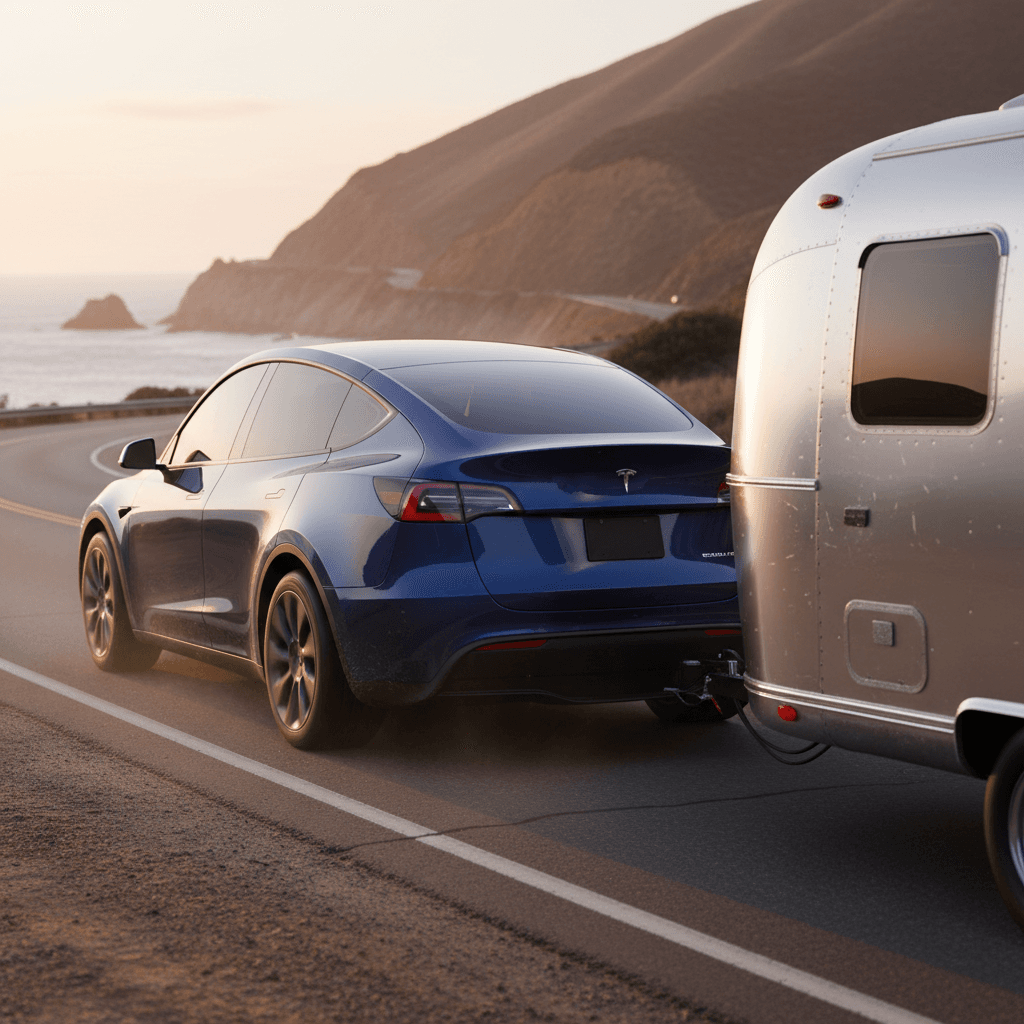
This is where EV towing feels different from the gas SUVs you might be used to. The Model Y can pull a 3,000-pound camper without breaking a sweat, but it will use a lot more energy doing it. The general rule of thumb owners see is 50–60% less real-world range when towing a heavier, boxy trailer at highway speeds.
Without a trailer
- Highway road trip in mild weather.
- Long Range Model Y might realistically see 260–280 miles between charges when driven sensibly.
- You can often skip every other fast charger on major corridors.
With a travel trailer
- Same route, 3,000 lb travel trailer, 65–70 mph, some hills.
- Real-world owners often see 120–160 miles between comfortable stops.
- You’ll plan to hit more charging stops and keep them shorter, using fast chargers near the highway.
Plan your charging stops tighter
Hitch packages, wiring, and aftermarket options
Tesla’s factory tow package is the cleanest way to tow with a Model Y. It includes the receiver hitch, high-strength support structure, and the 7‑pin wiring connection you need for trailer lights and electric brakes. On a used Model Y, you’ll usually see a removable receiver under a small panel in the rear bumper when the factory package is installed.
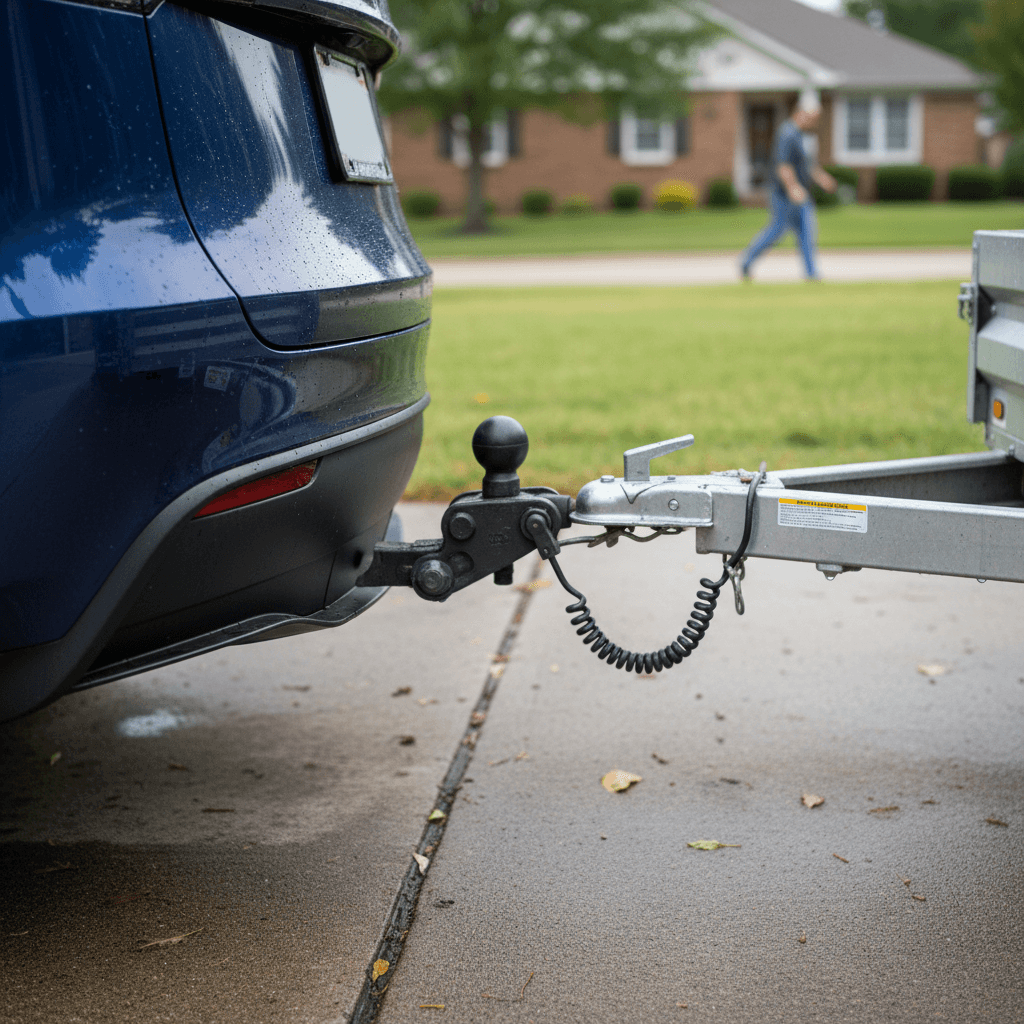
Factory vs aftermarket Model Y hitch options
What to know before you bolt anything to the back of your Tesla
Tesla factory tow package
Pros: Fully engineered, integrated cooling and stability logic, proper wiring harness, documented tow rating.
Best for: Anyone planning to tow regularly or haul heavier loads.
Aftermarket receiver hitch
Pros: Can be added to cars without the tow package; fine for bike racks or light-duty accessories.
Watch out: The car may still be officially non‑towing even if a hitch is installed.
Wiring & brake controllers
For trailers with electric brakes, you’ll need compatible wiring and a brake controller. Many owners use compact wireless or plug‑and‑play units that tie into the 7‑pin connector safely.
Don’t skimp on wiring or brakes
What you can realistically tow with a Model Y
So what does all this add up to in real life? Even within its limits, the Tesla Model Y is a surprisingly capable little workhorse. The trick is matching the trailer to your expectations: short‑hop gear hauling is easy, long‑distance RV vacations just need more planning and modest trailer size.
- Small cargo or utility trailer: Think home‑improvement runs, landscaping, or moving day. A 1,000–1,500 lb trailer with furniture or yard waste is right in the Model Y’s comfort zone.
- Single-axle camper or teardrop: Many compact campers fall in the 2,000–3,000 lb loaded range. Here, the Y can tow confidently but your highway range will be cut down significantly.
- Two motorcycles or ATVs: A lightweight open trailer plus a pair of bikes or small ATVs usually keeps you well within the 3,500 lb rating and tongue-weight limits.
- Boat trailer: Smaller fishing boats and personal watercraft are fine; heavy cabin cruisers are better matched to a full‑size SUV or truck.
Rule of thumb for happy EV towing
Practical towing tips for new EV owners
Model Y towing best practices
1. Start with a shakedown trip
Before a big road trip, do a short local loop, ideally with a fast charger nearby. You’ll learn how your specific trailer affects consumption and how the car feels under braking and in crosswinds.
2. Use Tesla navigation while towing
Enter your destination with the trailer attached so the car can start adapting its energy estimate. Watch the projected state of charge at arrival and add extra margin until you trust the numbers.
3. Slow down a little
Aerodynamic drag is the enemy of EV range. Backing off from 75 mph to 65 mph can make a huge difference in how many miles you get per kilowatt-hour when towing a tall trailer.
4. Mind your tongue weight
Use a tongue scale or a CAT scale, and keep tongue weight in the 10–15% window of total trailer weight without exceeding the hitch limit. Too light can cause sway; too heavy can overload the rear axle.
5. Precondition the battery before fast charging
When you set a Supercharger as the destination, the Model Y will warm the battery on the way in for faster charging, which matters more when you’re stopping more often with a trailer.
6. Check tires and pressures religiously
The extra weight and heat from towing punish tires. Make sure your Model Y and trailer tires are at the correct pressures and in good condition before every trip.
Shopping for a used Model Y with towing in mind
If you’re shopping the used market, the difference between the right and wrong Model Y for towing comes down to equipment, condition, and how it’s been used. A clean Long Range AWD with the factory tow package and a healthy battery can be a terrific tow partner. A car that’s been repeatedly overloaded or modified carelessly is one to walk away from.
Must‑check items on a used Model Y
- Factory tow package: Confirm in the build sheet, not just by eyeballing a hitch.
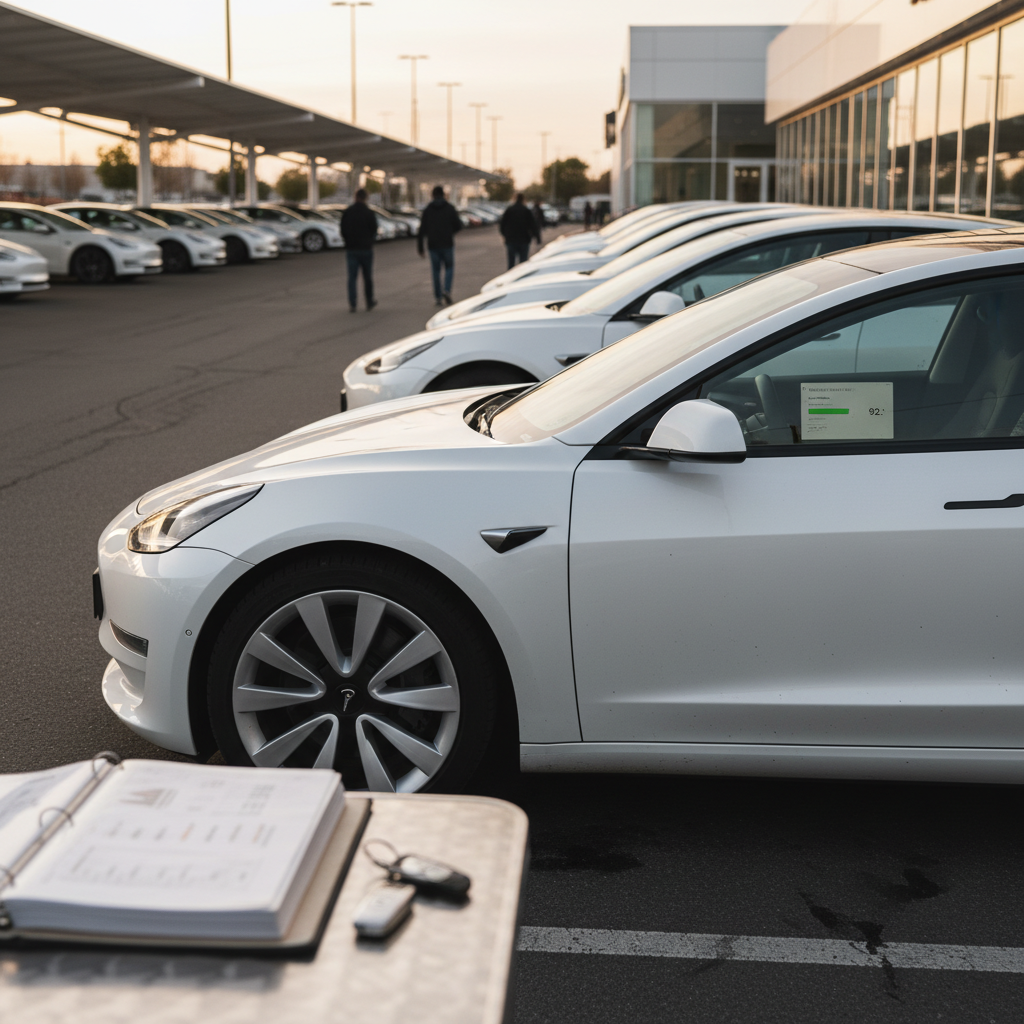
- Battery health: A strong pack gives you more usable range when towing. Tools like the Recharged Score battery report take the guesswork out.
- Service history: Look for evidence of suspension or tire work that might hint at heavy towing loads.
Nice‑to‑have extras
- All‑wheel drive (AWD): Standard on most Model Y tow‑rated configurations and a big help for traction on wet ramps or gravel.
- Smaller wheels and taller tires: The 19‑inch wheels ride better and are more forgiving over rough campground roads than low‑profile 21s.
- Included hitch hardware: Extra ball mounts, a weight‑distribution setup (if appropriate), and wiring adapters can save you time and money.
How Recharged can help
Tesla Model Y towing FAQ
Frequently asked questions about Tesla Model Y towing
Bottom line: Is the Tesla Model Y good for towing?
Treat the Tesla Model Y as a compact crossover with an electric heart and a very respectable tow rating, and it shines. Within its 3,500‑pound limit, it’s a smooth, quiet, confident tow vehicle with instant torque that makes hills and highway merges feel easy. The tradeoff is range: you’ll simply stop more often and plan more carefully than you would in a gasoline SUV.
If your life calls for hauling a pair of motorcycles, a small boat, or a modest camper, and you like the idea of one vehicle that tows on the weekend and sips electrons on your commute, the Model Y deserves a serious look. And if you’re shopping used, a Recharged Model Y with a strong battery and verified tow package can take a lot of the guesswork out of that first trip with a trailer on the hitch.