If you’re thinking about buying or selling a Tesla Model Y, the **5‑year depreciation curve** is where the real money story lives. The Model Y has gone from breakout hit to everyday family hauler in just a few years, and in that time, prices have swung, tax credits have come and gone, and used values have taken a roller‑coaster ride. Let’s put hard numbers and clear expectations around how a Model Y’s value usually changes over five years.
Quick snapshot
How the Tesla Model Y depreciates over 5 years
Before we draw a pretty curve, it helps to translate the headline into real money. Different analysts cut the data slightly differently, but most recent studies of five‑year‑old electric SUVs and Tesla’s own resale trends land in the same neighborhood: **a five‑year‑old Model Y is often worth about 40–45% of its original window sticker**, sometimes a little more for pristine examples, often less if miles are high or the market is soft.
Tesla Model Y 5‑year value at a glance (2026 market)
About these numbers
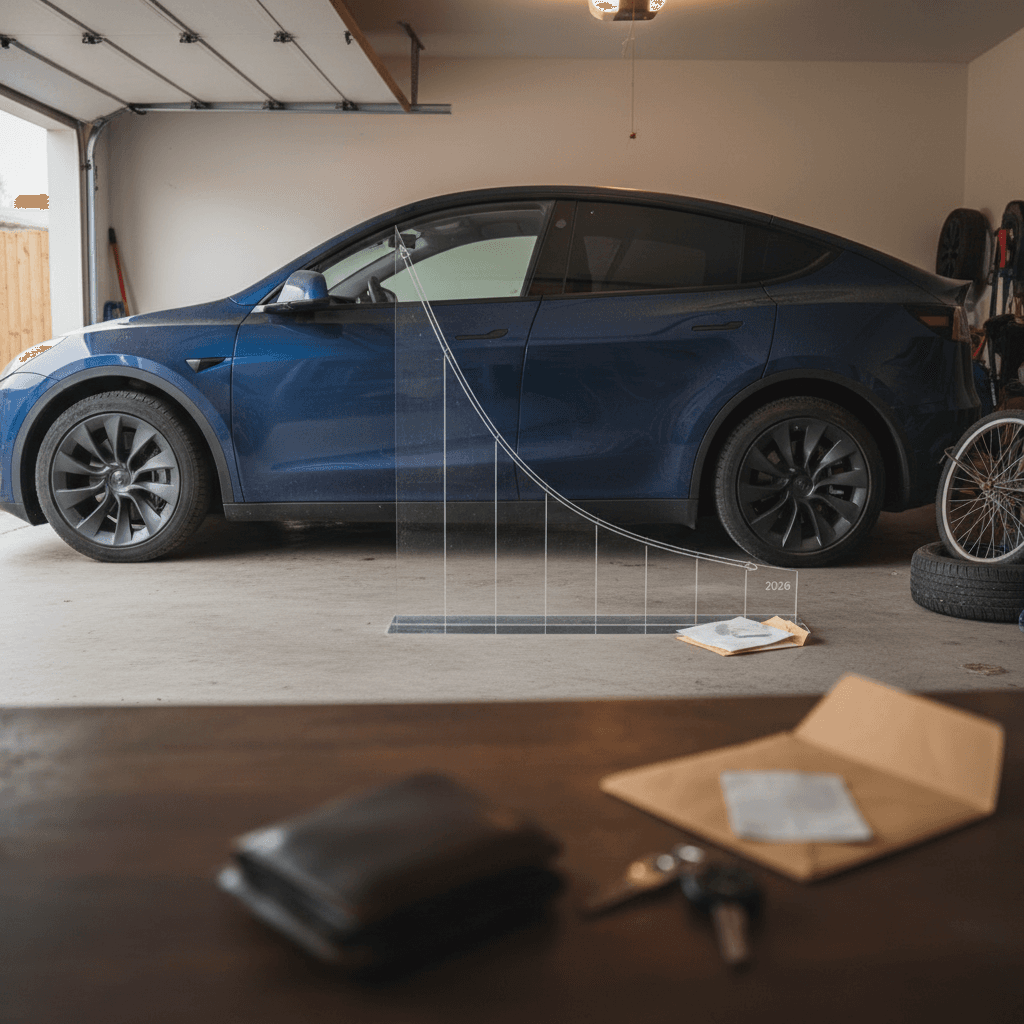
Sample 5‑year depreciation curve for a Model Y
To make this concrete, let’s start with a **$50,000 Tesla Model Y**, roughly what many buyers end up paying after options, taxes, and fees for a Long Range AWD in recent years. We’ll walk that same vehicle out to year five using a realistic, slightly conservative depreciation curve based on current data.
Example Tesla Model Y 5‑year depreciation curve
Illustrative values for a $50,000 Model Y over five years in an average market, assuming normal mileage (around 12,000–15,000 miles per year) and good condition.
| Year of ownership | Approx. age | Estimated value | Total depreciation vs. new | Comment |
|---|---|---|---|---|
| Purchase | New (0 years) | $50,000 | 0% | MSRP or transaction price when new |
| End of Year 1 | ~12 months | $37,500–$40,000 | 20–25% | Initial hit from new to used plus any Tesla price cuts |
| End of Year 2 | ~24 months | $30,000–$34,000 | 32–40% | Depreciation slows, but still steep for tech‑heavy EVs |
| End of Year 3 | ~36 months | $24,000–$30,000 | 40–50% | The "cliff" for many EVs; sweet spot for used buyers |
| End of Year 4 | ~48 months | $21,000–$26,000 | 48–58% | Curve flattens if miles are moderate and battery health is strong |
| End of Year 5 | ~60 months | $20,000–$23,000 | 54–60% | Typical endpoint; exceptional examples may do slightly better |
Your actual numbers will flex with mileage, condition, local demand, incentives, and Tesla’s new‑car pricing at the time.
That last line is the one most owners care about: **on a $50,000 purchase, it’s reasonable to expect your Model Y to be worth around $20,000–$23,000 after five years** in today’s market, assuming no accidents, normal miles, and no big mechanical or cosmetic surprises.
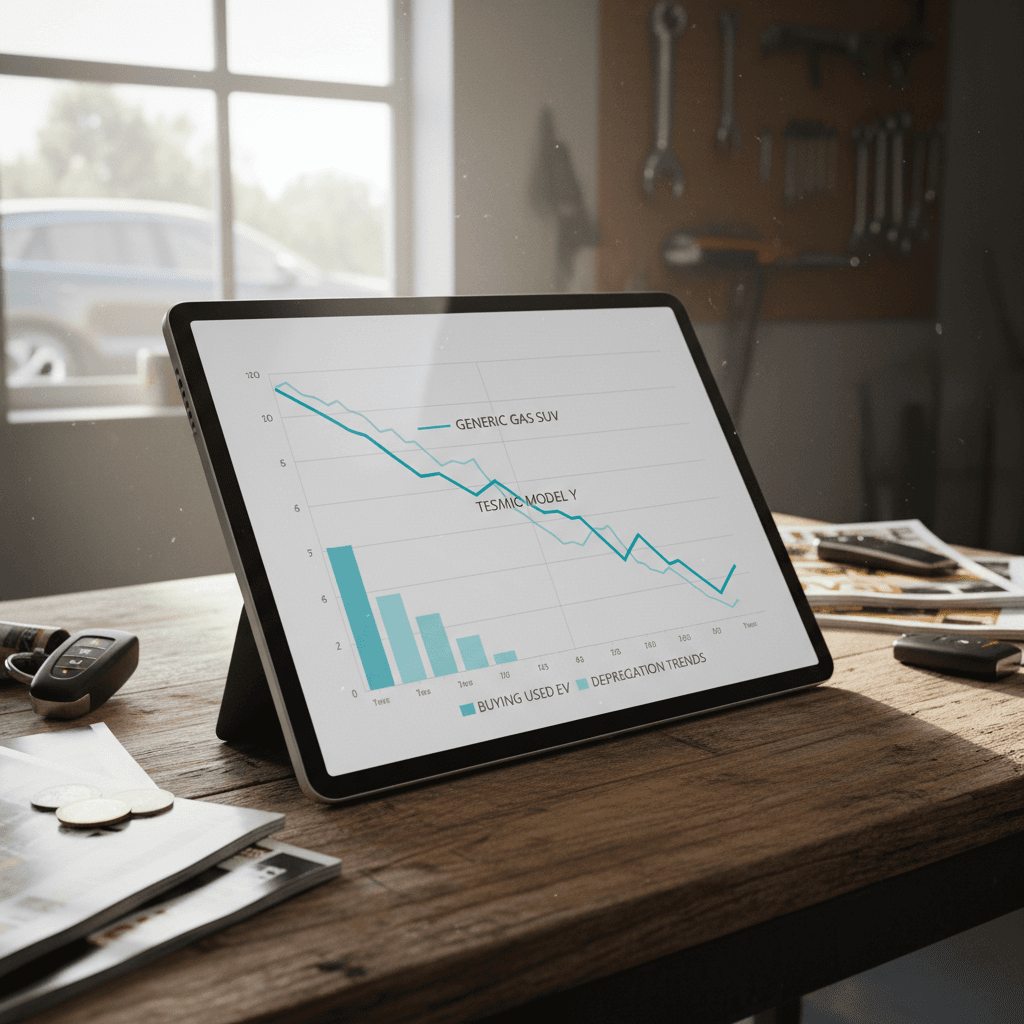
Year‑by‑year value drop: what actually happens
Years 0–1: The "new car" penalty
Like nearly every new car, a Model Y takes its first big hit just by becoming a used car. On top of that, Tesla is notorious for mid‑cycle price cuts and incentive shifts. If Tesla drops new‑car pricing right after you buy, your resale value often falls in sympathy.
- Expect roughly 20–25% loss from MSRP by the end of year one.
- Tax credits you claimed when new do not show up in used pricing, the market looks at sticker and demand.
Years 1–3: The technology cliff
This is where EV depreciation really separates from gas. Software updates keep the car feeling fresh, but there’s always a newer battery pack, a faster charger, or a sleeker interior around the corner.
- Total depreciation often reaches 40–50% by year three.
- This is the phase where many first owners trade out, and where smart second owners buy in.
Years 3–5: The curve flattens
Once you’re past that three‑year mark, a Model Y starts behaving more like a well‑known compact SUV. The worst of the tech FOMO is behind it, there’s plenty of real‑world reliability data, and buyers know what they’re getting.
- From years three to five, you might see another 10–15 percentage points of value erode.
- If the battery and high‑voltage systems look strong, demand often stays surprisingly healthy.
After year 5: Battery health takes the wheel
Beyond five years, battery health and charging behavior matter more than model‑year bragging rights. A Model Y with verifiable strong battery health can out‑sell a newer car that’s been fast‑charged hard and driven like a rental.
This is where tools like the Recharged Score battery report help separate solid long‑term keepers from cars that might become money pits.
A simple rule of thumb
How Model Y depreciation compares to other EVs and SUVs
The Model Y has two big things going for it: massive production volume and a huge used‑buyer pool. That makes pricing more rational than some niche EVs, and often a bit stronger over time. But the days when Teslas were bulletproof against depreciation are gone.
Model Y vs other options over 5 years
Where the Tesla sits in today’s resale pecking order
Tesla Model Y
5‑year depreciation: ~55–60%
Better than many non‑Tesla EVs, roughly on par with popular compact gas SUVs when you factor in recent price cuts.
Other mainstream EVs
5‑year depreciation: ~60–70% in many cases.
Niche or low‑range EVs can tumble harder, especially if new models leapfrog them on range or charging speed.
Gas compact SUVs
5‑year depreciation: ~50–60% for best‑sellers.
More predictable curves, but higher fuel and maintenance costs offset some of the resale advantage.
Ownership cost vs. resale value
Factors that bend the depreciation curve in your favor
The model‑wide averages are useful, but your specific Model Y can sit well above, or below, that tidy curve. Here are the levers that matter most when you go to sell or trade in.
- Mileage: A 5‑year‑old Model Y with 40,000 miles will almost always out‑price a twin with 85,000 miles. EV shoppers are severe mile‑counters.
- Battery and charging history: Frequent DC fast charging and regularly charging to 100% can accelerate degradation. Cars with documented gentle charging patterns and strong range tests command a premium.
- Condition and accident history: Cosmetic scars matter more on a tech‑forward car; buyers expect EVs to feel almost like new longer.
- Trim and options: Long Range AWD and Performance trims usually hold better than bare‑bones configurations, but expensive low‑take‑rate options rarely return their full cost.
- Color and interior: Safe colors (white, black, blue) and clean interiors generally turn faster than wild hues or heavily customized cabins.
- Market timing: A wave of Tesla price cuts, a tax‑credit change, or a flood of off‑lease inventory in your area can temporarily bend the curve down. Tight inventory and incentives shifting away from new can bend it up.
How to tell if a price is fair
Buying a used Model Y: where the curve works for you
If you want a Model Y but hate the idea of watching tens of thousands vanish in the first few years, you’re not alone. The smartest money usually comes in once someone else has already taken the technology and “new car” hit.
Best entry points on the depreciation curve
When a used Model Y tends to be the best value
3–4‑year‑old Model Y
This is the classic sweet spot. The original buyer ate the steepest depreciation and any early production quirks have long since surfaced.
- Often 40–55% below original MSRP.
- Still plenty of warranty coverage on battery and drive unit.
- Tech and range feel current for most drivers.
5‑year‑old Model Y (and older)
Risk and reward both go up. You’ll pay far less up front, but now the battery’s story and maintenance history matter a lot more.
- Can be 55–65% below original MSRP.
- Perfect candidates if you have shorter daily miles and a good home‑charging setup.
- Battery health verification is critical, don’t skip it.
Where Recharged fits in
Ready to find your next EV?
Browse VehiclesSelling or trading in your Model Y: timing the market
If you already own a Model Y, the question flips: when do you get out without leaving a pile of money on the table, or getting stuck with a car that suddenly isn’t worth what you owe?
Typical exit windows for Model Y owners
Common ownership patterns and how they intersect with the depreciation curve.
| When you sell | What’s happening to value | Upsides | Watch‑outs |
|---|---|---|---|
| Around 3 years | Curve just past its steepest point | Still strong demand; easier to sell or trade; many buyers want 3‑year‑old cars | You’ve already paid for most of the depreciation hit |
| Around 5 years | Curve is flatter, but value is lower in absolute dollars | You’ve spread depreciation over more years; great time to roll equity into a cheaper used EV or newer model | Battery health questions start to matter more to buyers |
| Before 2 years | You’re inside the steepest part of the curve | You get out of the car quickly, potentially while it’s still under comprehensive warranty | You’re almost certainly eating the worst possible depreciation per year |
You don’t have to time the market perfectly, just avoid the worst windows when you can.
Trading vs. selling outright
How Recharged evaluates Model Y depreciation
With EVs, pricing isn’t just about model year and odometer. At Recharged, every Tesla Model Y goes through a process designed around the things that actually move the number on a depreciation curve.
Inside a Recharged Model Y evaluation
1. Deep battery health diagnostics
We run high‑resolution tests on the battery pack to estimate remaining capacity and spot unusual degradation. This goes beyond what the dash range gauge can tell you.
2. Charging behavior review
When data is available, we look at DC fast‑charging frequency and typical charge levels. A car that lives between 20–80% and fast‑charges occasionally looks better on the curve than one hammered at 100% daily.
3. Real‑world range assessment
We benchmark real‑world range against what we’d expect for that model, year, and mileage. Big gaps are red flags; tight numbers help support stronger pricing.
4. Condition & history check
Accident history, cosmetic wear, interior condition, and tire/brake life all feed into the Recharged Score and pricing recommendation.
5. Market‑correct pricing
Our team combines that vehicle‑specific data with live market trends so your price reflects both the **broad Model Y curve** and the unique story of your car.
The result is a Model Y that’s priced transparently, whether you’re shopping for one or handing over the keys. You see exactly why a car sits where it does on the five‑year curve instead of guessing from a few photos and an asking price.
Checklist: deciding if a used Model Y is worth it
6 questions to ask before you buy a used Model Y
1. Where is this car on the curve?
Is it one, three, or five years from new? Cross‑check the asking price against typical depreciation for that age to see if it’s in the right ballpark.
2. What does the battery report say?
Don’t rely on guesses. Look for a <strong>third‑party battery health report</strong>, like the Recharged Score, so you know how much usable capacity remains.
3. How was it charged and driven?
Ask about home vs. fast charging, typical charge limits, and daily mileage. Conservative charging habits often mean a healthier battery and a smoother future curve.
4. How long do you plan to keep it?
If you’ll keep the car 5+ years, paying a little more today for strong battery health can easily pay back in slower future depreciation and fewer surprises.
5. Does the price beat new after incentives?
Tesla’s new‑car pricing and federal/state incentives move around. Make sure a used example still makes sense once you factor in any credits you’d qualify for on new.
6. Can you see the full story online?
A transparent listing with detailed photos, history, and a battery report, as you’ll find on <strong>Recharged</strong>, is usually safer than a vague ad with a low price.
Tesla Model Y depreciation FAQ
Frequently asked questions about Model Y depreciation
Bottom line: is a Tesla Model Y a good 5‑year bet?
If you’re looking at the **Tesla Model Y depreciation curve over 5 years**, the story is pretty straightforward: you’re not buying a magic asset that floats above the laws of supply and demand, but you are buying one of the more resilient EVs in a rapidly shifting market. A new Model Y will likely shed roughly half its sticker price in the first five years, similar to a popular gas SUV, but it pays you back at the pump and in the shop the whole time.
Where the Model Y really shines is as a **thoughtful used purchase**. Step in after the steep early drop, around the three‑year mark, verify battery health, and plan to keep the car long enough that you’re riding the flatter part of the line. That’s where the numbers start to look less like a gamble and more like smart planning.
Whether you’re buying or selling, the key is seeing your car not as a mystery number on a classifieds site but as a clear point on a curve, anchored in data about battery health, mileage, and market reality. That’s exactly the lens Recharged brings to every used EV we inspect, price, and sell, so you can make your next Model Y decision with your eyes wide open.