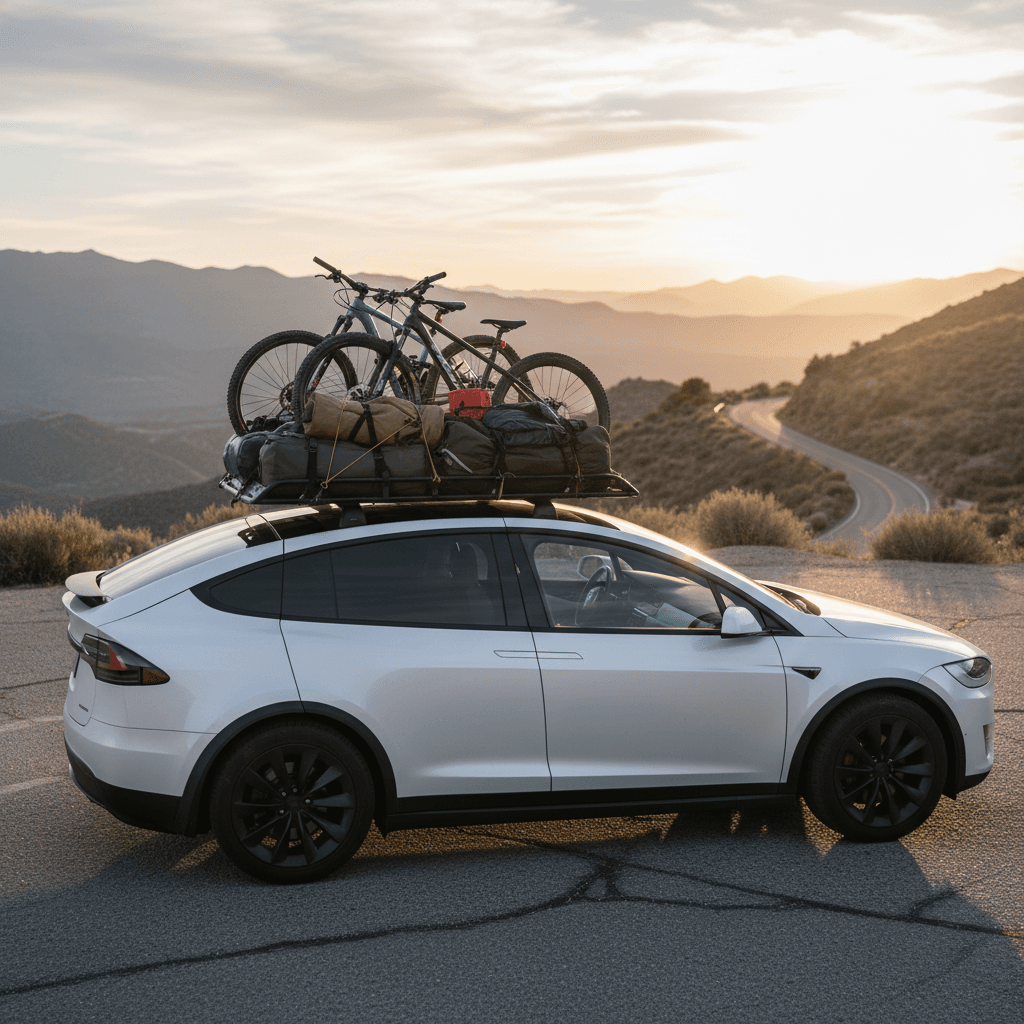
You don’t buy a Tesla Model X just to sit in traffic. You buy it for the road trips, the mountains, the soccer tournaments two states away. At some point you will look up at that sweeping glass roof and wonder: what’s the real Tesla Model X roof rack weight limit, and how much gear can I safely throw up there?
Short answer
Tesla Model X roof rack weight limit at a glance
Model X roof and cargo numbers in context
Tesla’s official documentation has evolved over the years as the Model X has changed its roof design, doors and crossbar mounting. But in broad strokes, you can think of the roof rack like an ultralight backpacking frame: it will carry a decent load, as long as you distribute weight correctly and don’t use it as a substitute for a trailer.
Dynamic vs static weight
Understanding Tesla’s weight ratings: GVWR, axle, dynamic and static
1. GVWR: the ultimate boundary
The Gross Vehicle Weight Rating (GVWR) is the maximum your Model X can weigh with everything on board: passengers, cargo in the cabin, tongue weight from a trailer, and yes, roof rack cargo. It’s listed on the driver’s door jamb label.
If you’re hauling a big family plus luggage and bikes, it’s surprisingly easy to nibble at that limit. Roof weight doesn’t get a special exemption, it all rolls up into GVWR.
2. Roof rack rating: the practical limit
The **roof rack rating** is almost always much lower than GVWR and is specific to the crossbars and mounting points. This number assumes the car is moving over bumps, in crosswinds, at highway speeds.
Think of it this way: GVWR answers “How much can the whole vehicle weigh?” while the rack rating answers “How much jiggly mass can I bolt to the glass house on top?”
- Dynamic load: Max weight allowed on the rack while driving. This is the headline number you care about for skis, bikes or a cargo box.
- Static load: Max weight while parked. This figure is higher, but unless your rack and Tesla documentation explicitly support rooftop tents, don’t assume it’s safe to exceed the dynamic rating.
- Axle loads: Heavy items on the roof can effectively move weight toward the middle of the car and slightly increase both axle loads. Overloading the roof is an easy way to stress suspension and tires.
Where to find your exact figures
Factory vs aftermarket Model X roof racks
The Model X complicates roof-rack life with its panoramic glass, falcon-wing doors and evolving trim variations. That’s why you’ll see **Tesla-branded crossbars** and a short list of **aftermarket systems** from premium rack makers that are specifically engineered for the X.
Your three main Model X roof rack scenarios
The details matter, but the discipline is the same: obey the lowest rating in the stack.
1. Tesla OEM crossbars
These are designed around the Model X’s structure, clearances and aerodynamics.
- Typically rated in the ~150–165 lb range.
- Integrate cleanly with door and roof seals.
- Best bet if you don’t want to think too hard about fitment.
2. Premium aftermarket systems
Brands that engineer feet and bars specifically for the Model X.
- Often match or slightly undercut OEM ratings.
- May offer more bar shapes and accessories.
- Always use the lower of Tesla’s roof limit and the rack maker’s limit.
3. “Universal” or misfit racks
Anything not tested and rated for the Model X’s roof is an experiment.
- Risk of glass stress, seal damage, or interference with doors.
- Weight ratings may not apply to the X at all.
- For a six-figure EV, this is false economy.
Never exceed the weakest link
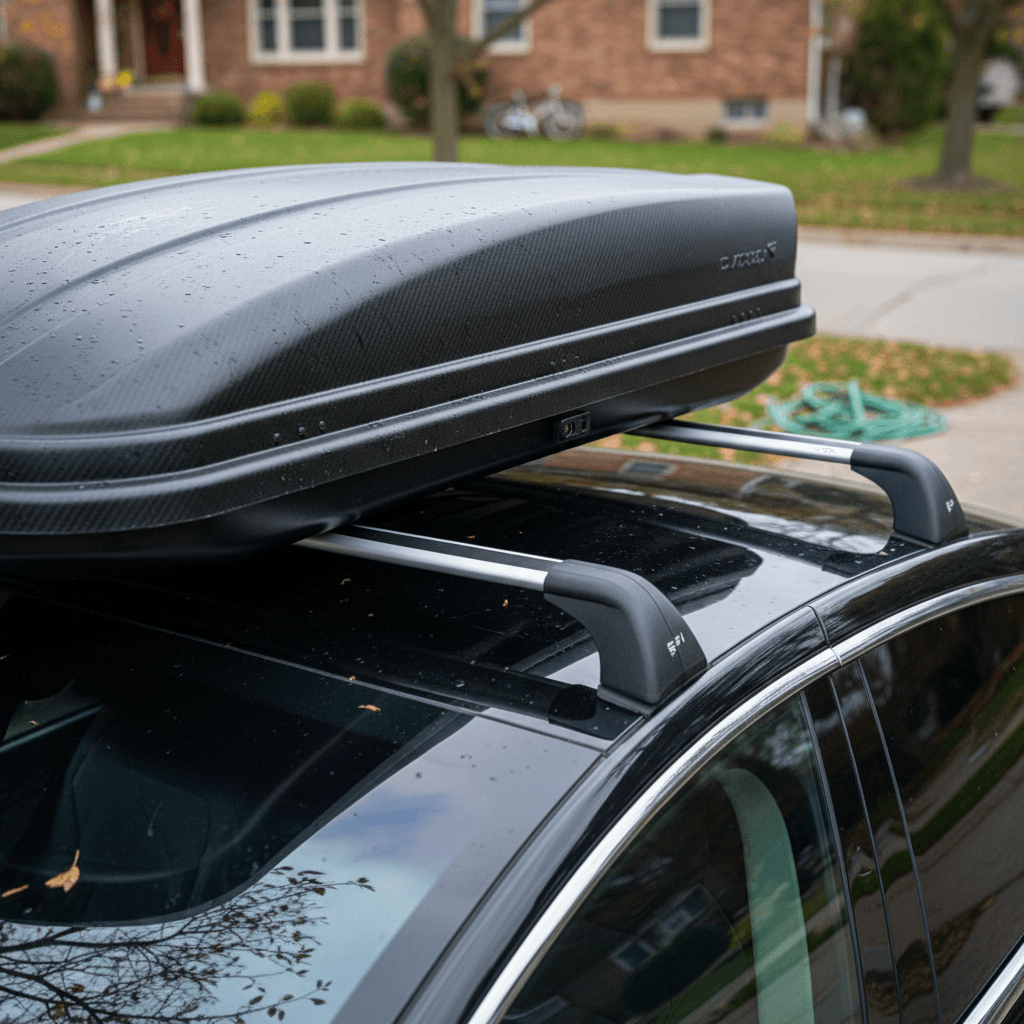
How roof cargo changes range, noise and handling
From the battery’s point of view, a roof box is a permanent uphill grade. The Model X is already a big, bluff object cutting through the air; stack a canoe and three bikes on the roof and you’ve turned it into a multi-story billboard fighting the airstream.
Three ways your loaded rack talks back
It’s not just about weight, the air and suspension have opinions too.
1. Aerodynamic drag
Even light cargo can cost you **10–25% of range at highway speeds** when it’s on the roof, especially a tall cargo box or bikes.
On a 300‑mile EPA rating, that’s 30–75 miles of real‑world loss.
2. Wind noise
Square loads and older bar designs can howl. Low‑profile boxes and aero bars are noticeably quieter, especially on the whisper‑quiet Model X cabin.
If you hear a whistling at 35 mph, something is misaligned.
3. Handling & emergency maneuvers
Weight up high raises the center of gravity. In quick lane changes, evasive moves or strong crosswinds, a heavily loaded roof makes the car feel more top‑heavy and nervous.
Stay conservative with speed when fully loaded.
Range-preserving packing order
Practical loading guide for your Model X roof rack
Step-by-step: loading a Model X roof rack the right way
1. Confirm your actual roof rating
Check the owner’s manual and your rack paperwork. Note the **maximum dynamic load** and subtract the weight of the bars, towers and accessories. What’s left is your usable cargo allowance.
2. Weigh your accessories
A big cargo box can weigh 35–50 lb empty. Some bike trays add 10–15 lb each. If your effective limit is 120 lb and your setup already weighs 60 lb, you only have 60 lb left for actual gear.
3. Keep heavy items out of the roof
Put tools, food crates, water and anything dense inside the cabin or over the rear axle in the trunk. Reserve the roof for <strong>light but bulky</strong> items like clothing, tents, sleeping pads or skis.
4. Center and spread the load
Aim to keep the center of mass in the middle of the bar spread. Avoid big left/right imbalances (e.g., two heavy bikes on one side, nothing on the other). Your steering will feel more natural and you’ll stress the mounts less.
5. Mind the door and hatch clearances
On the Model X, always do a full open/close test of the falcon-wing doors and rear hatch after installing racks or boxes. You do not want contact between moving bodywork and the rack when parked off-level.
6. Re-torque and re-check
After your first highway trip or rough-road section, stop and re-check all fasteners and straps. Electric torque is one thing; mechanical torque on aluminum and glass is another.
Don’t ignore the tongue weight
Roof boxes, bikes and skis on a Model X
The Model X is a Swiss Army knife of people movers, but it still responds best to a thoughtful packing strategy. How you carry your toys is as important as how many you carry.
Common Model X roof loads and what to watch
Always verify your specific accessory weights and ratings before loading up.
| Load type | Typical accessory weight | Usual cargo | Best practice on a Model X |
|---|---|---|---|
| Low-profile cargo box | 35–50 lb empty | Clothes, duffels, camping gear | Keep under ~75–100 lb of contents, watch overall height for garages and chargers. |
| Two bike trays + 2 bikes | 25–40 lb trays + 50–70 lb bikes | Road or mountain bikes | Favor carbon/hardtail bikes for lower weight; consider hitch rack instead for frequent trips. |
| Ski/snowboard rack | 10–20 lb empty | Skis, poles, boards | Ideal use case: long narrow loads, light, minimal drag impact compared with big boxes. |
| Kayak or canoe | 20–80 lb hull + cradles | Watercraft | Double-check length, crosswinds and strap security; many owners are better off with a trailer here. |
Approximate accessory weights and considerations for the Model X roof.
The Model X sweet spot
Towing vs roof rack on the Model X: what to choose
The Model X can tow like a proper SUV when optioned with the factory tow package, and for heavy, dense loads a trailer is simply the more elegant engineering choice. The question isn’t “Can I stick this on the roof?” so much as “Where is this weight happiest?”
When the roof rack makes sense
- You’re carrying light, bulky items and want to keep the cabin uncluttered.
- You need access to Superchargers or tight urban parking where trailers are a pain.
- You’re staying comfortably within the rack’s rated load and GVWR.
Think skis for the family weekend, not paving stones for the new patio.
When the hitch or trailer is smarter
- You’re moving heavy or awkward cargo: e‑bikes, construction materials, big coolers.
- You’re already using a roof box and need more room without stacking weight above the glass.
- You care more about highway range than you do about backing up with a trailer.
A well‑balanced trailer usually beats an overloaded roof in both safety and long‑distance comfort.
Supercharging with a trailer vs roof box
What to check on a used Model X with a roof rack
Shopping used? A Model X that’s already kitted out with a rack and box can be a win, if the previous owner treated the car like a tool, not a pack mule. This is where buying from an EV‑specialist retailer like Recharged can save you some unpleasant discoveries later.
Used Model X roof rack inspection checklist
1. Inspect the glass and paint around mounts
Look closely at the roof glass edges, paint and trim where towers clamp or bolt. You’re looking for chips, cracks, abrasion marks or discoloration that could signal over‑tightening or misfit racks.
2. Listen and feel for wind noise on test drive
On a highway test drive, note any excessive whistling, booming or vibration from the roof area. Some noise is normal with racks, but rattles and drumming can reveal poor fitment or hidden damage.
3. Ask how the rack was used
A family who used the rack for holiday luggage is one thing; someone who hauled heavy kayaks or rooftop tents beyond spec is another. Don’t be shy about asking how often and how far they drove with gear mounted.
4. Check door, hatch and falcon‑wing operation
Open and close all doors and the hatch with the rack installed. They should clear smoothly without touching bars or accessories, even on a slight incline.
5. Verify accessories and ratings
If the seller is including boxes, trays or ski mounts, confirm they’re rated for the loads you plan and that their combined weight won’t exceed the rack limit on the Model X.
6. Get a professional once‑over
At Recharged, every used EV gets a <strong>Recharged Score</strong> report, including a deep look at the body, suspension and roof structure. If you’re buying privately, consider a pre‑purchase inspection at a shop familiar with Teslas.
How Recharged can help
Tesla Model X roof rack weight limit: FAQs
Frequently asked questions about Model X roof rack weight
Key takeaways before you load up
The Tesla Model X will happily carry your family, your luggage and a respectable pile of outdoor gear, as long as you respect its physics. Treat the **roof rack weight limit** as a hard boundary, keep heavy stuff down low, and choose aerodynamic, model‑specific accessories that look and behave like they belong on a premium electric flagship.
If you’re shopping for a used Model X, take roof and towing history as seriously as you would battery health. A vehicle that’s been thoughtfully used and professionally inspected, backed by a Recharged Score report, will give you the confidence to pack up the rack, point the nose toward the horizon, and let the electrons do the work.