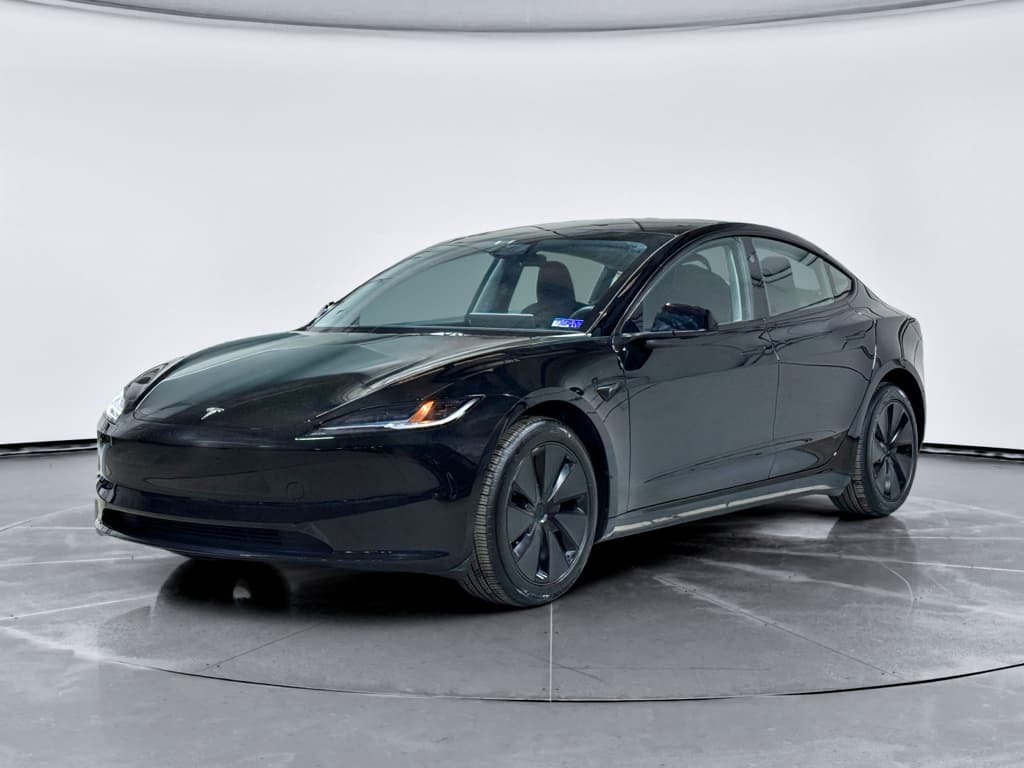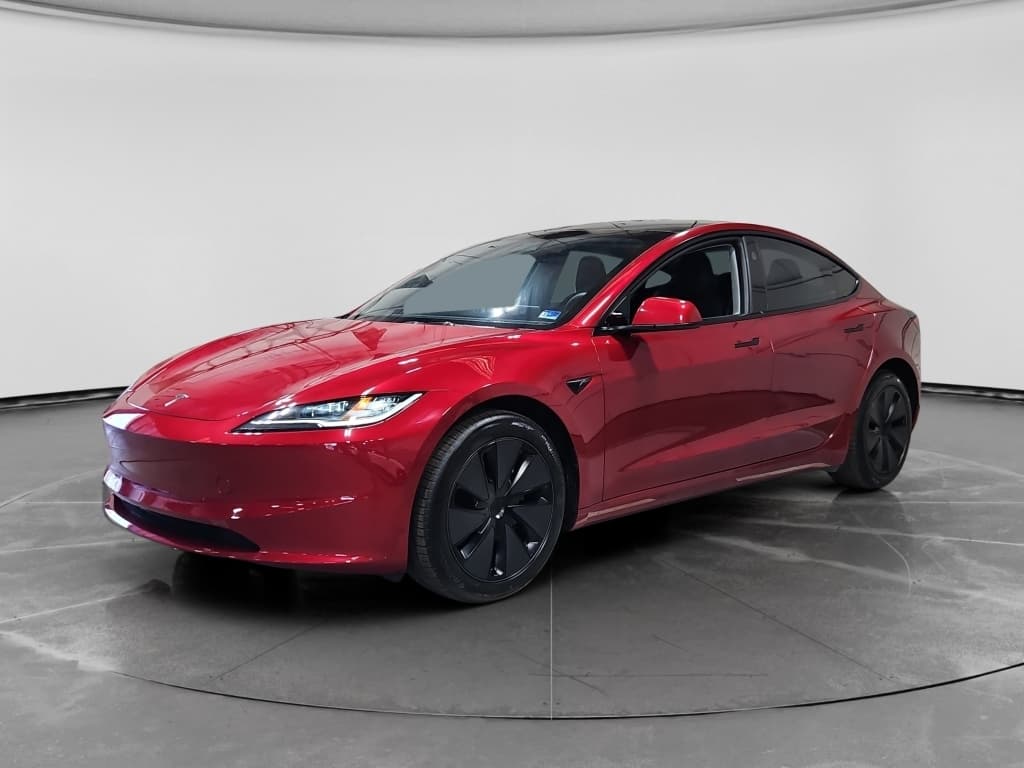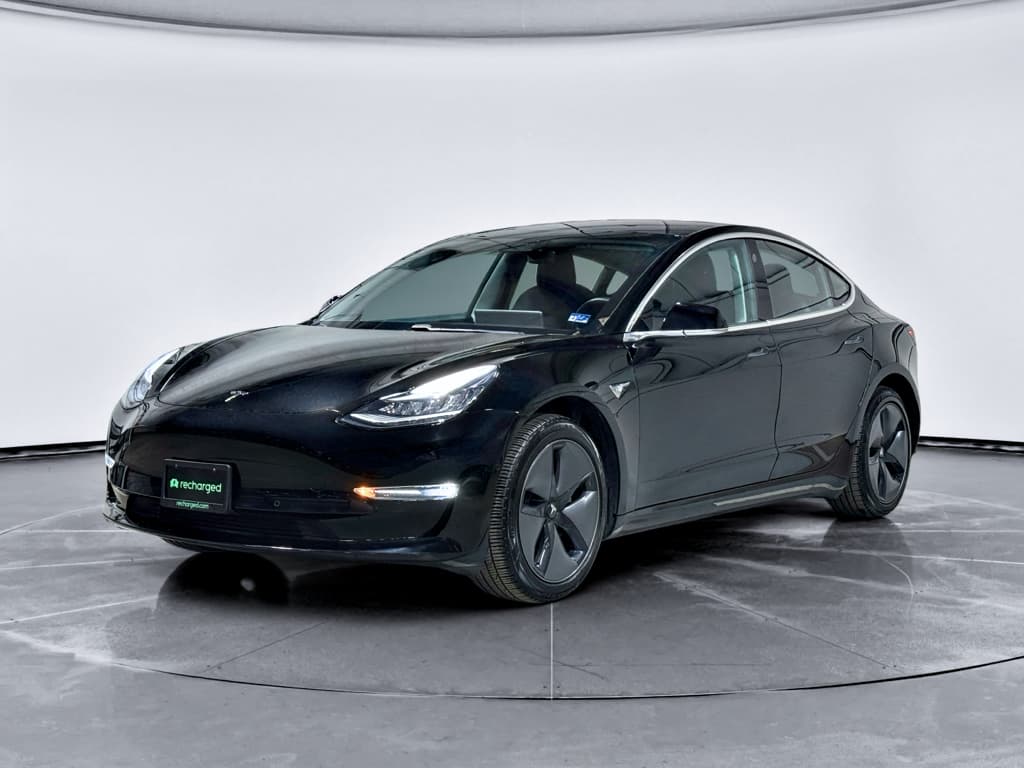
If you’re hunting for a Tesla Model 3 second hand, you’re shopping in the sweet spot of the EV market. The Model 3 has gone from cult object to commodity, and in 2025 that shift means one thing for you: serious bargains if you know how to separate the gems from the tired airport Ubers.
The short version
Why a second-hand Model 3 makes sense in 2025
Second-hand Tesla Model 3 by the numbers
From an economic perspective, the second-hand Tesla Model 3 has quietly gone from status symbol to rational choice. The early-pandemic price craziness is over; in 2025, used Model 3 prices have sagged below the broader used-car market while the average three‑year‑old car hovers around $30,000. For the first time, you’re paying less for the tech-forward EV than for the anonymous crossover at the corner lot.
Who the used Model 3 suits best
What a second-hand Tesla Model 3 really costs now
Let’s talk numbers, because this is where the Model 3 suddenly looks very mortal. Recent price indexes for the U.S. market put the average used Tesla Model 3 around $23,000, with older 2018–2019 cars dipping under $20,000 and newer 2022+ cars sitting in the mid‑$20Ks to mid‑$30Ks depending on mileage and trim.
Typical U.S. used Model 3 price bands (late 2025)
These are ballpark retail asking prices, not tax or doc-fee inclusive numbers. Condition, region, options, and mileage can swing values by several thousand dollars.
| Model year | Typical mileage | Likely trim mix | Approx. price range |
|---|---|---|---|
| 2017–2018 | 60k–100k+ | Mostly Long Range RWD / early Performance | $18,000–$22,000 |
| 2019–2020 | 40k–80k | Standard Range Plus, Long Range AWD, Performance | $20,000–$25,000 |
| 2021–2022 | 25k–60k | SR+ / RWD, Long Range, Performance | $23,000–$30,000 |
| 2023 (pre-refresh) | 15k–40k | RWD, Long Range, some Performance | $26,000–$33,000 |
| 2024–2025 (refresh/"Highland" in some markets) | Under 30k | Mostly RWD and Long Range | $33,000–$40,000+ |
Use these as guardrails, not gospel. A strong battery and clean history can justify being at the upper end.
Don’t overpay for the badge
Which second-hand Tesla Model 3 should you buy?
Tesla’s trim walk is a moving target. Over the years the company has renamed, reshuffled, and occasionally gaslit its own lineup. For the used buyer, what matters is less the marketing name and more three questions: How far does it go? How quick is it? and Does it have the features you care about?
Core second-hand Model 3 variants
Think in use cases, not just badges on the trunk.
RWD / Standard Range / "Standard Range Plus"
Best for: Value buyers and commuters.
- Real‑world range: roughly 200–260 miles when new; knock off a bit for age.
- Single motor, rear‑wheel drive.
- Plenty quick, but not violent.
- Often the cheapest way into a Tesla logo.
Long Range (Dual Motor)
Best for: Road‑trippers and all‑weather drivers.
- Dual‑motor all‑wheel drive, stronger acceleration.
- Range in the 280–330+ mile neighborhood new.
- Generally better resale and more desirable spec.
Performance
Best for: People who think stoplights are starting grids.
- Brutal 0–60 launches, bigger wheels, sportier suspension.
- Range slightly lower than Long Range.
- More tire wear, more curb‑rash, more previous-owner shenanigans.
The sensible sweet spot
Options worth paying for
- Heat pump / cold‑weather package (on newer cars): Better winter efficiency and comfort.
- Premium audio: Tesla’s upgraded system is genuinely very good, especially on road trips.
- All‑wheel drive: Adds traction, performance, and resale strength in snow states.
- Official tow package (where available): If you tow a small trailer or bike rack, factory hardware is safer than aftermarket improvisation.
Options you can skip
- Old paid Full Self‑Driving (FSD): Flashy on a window sticker, but the tech is constantly changing and value is debatable. Don’t pay thousands extra just for this line item.
- 20‑inch wheels: Look great, ride worse, eat range, and chew through pricey tires.
- Over‑accessorized interiors: Neon LEDs and dubious wrap jobs usually point to an owner who liked TikTok more than maintenance.
Battery health on a second-hand Model 3
The battery is the whole ballgame. The good news: Tesla’s packs have aged better than the doomers predicted. The bad news: you cannot eyeball battery health from a shiny detail and a Carfax printout.
Tesla’s official battery warranty
- Early degradation is usually steep (first few percent), then the curve flattens. A five‑year‑old car showing ~8–12% loss is not automatically a red flag.
- Battery health is influenced by how the car was used: lots of DC fast charging, sustained high‑speed driving and hot climates can all accelerate wear.
- Software updates can change how Tesla reports estimated range on the dash, so two cars with identical real‑world health might show slightly different numbers.
Why a third‑party battery test matters
How to evaluate battery health on a second-hand Model 3
1. Check warranty start date and VIN
Confirm the in‑service date, battery warranty runs from original delivery, not model year. A late‑registered car can effectively buy you extra time.
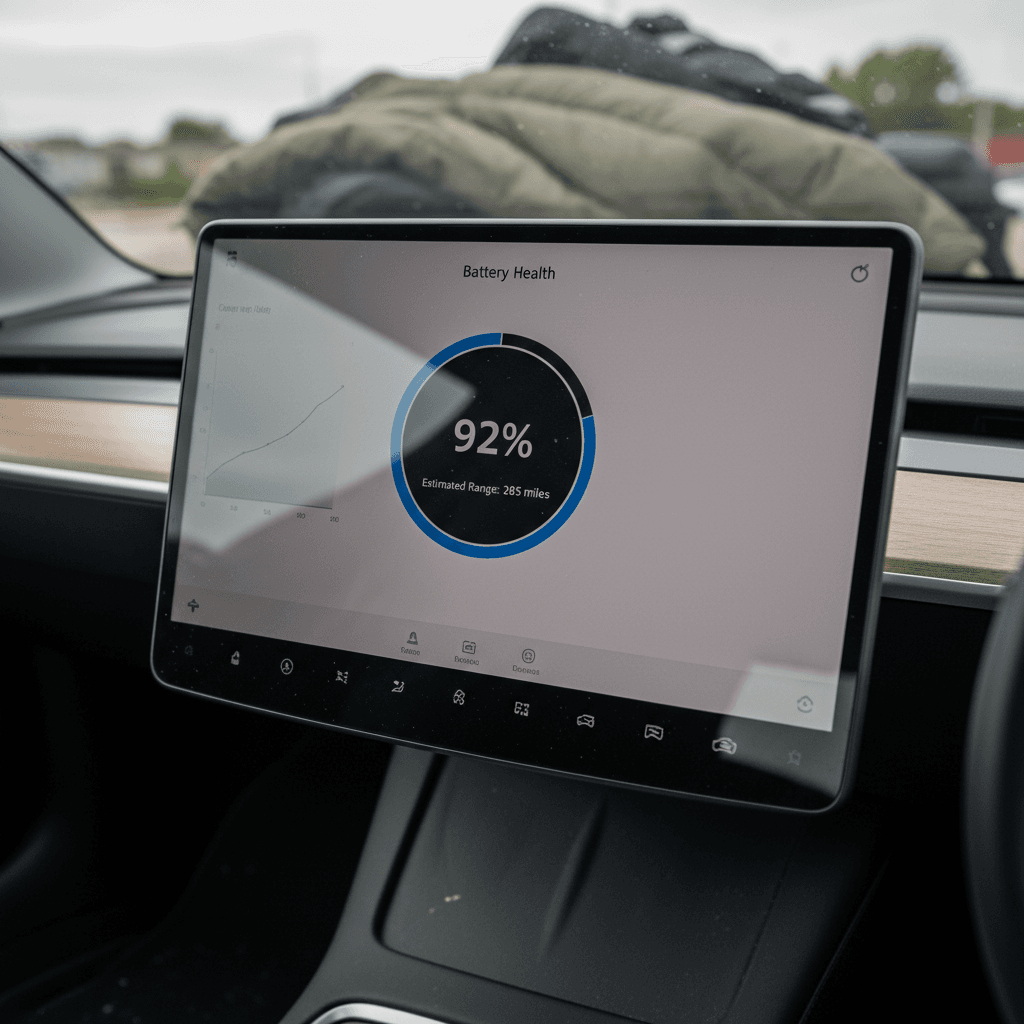
2. Look at indicated range at 100% charge
Ask the seller for a photo or to fully charge the car. Compare the displayed range to period‑correct EPA ratings to get a rough sense of degradation.
3. Ask about charging habits
Frequent Supercharging and regular 100% charges are fine in moderation; abuse over many years can shave off more capacity. Look for a mix of home charging and highway fast‑charge use.
4. Use a professional battery report
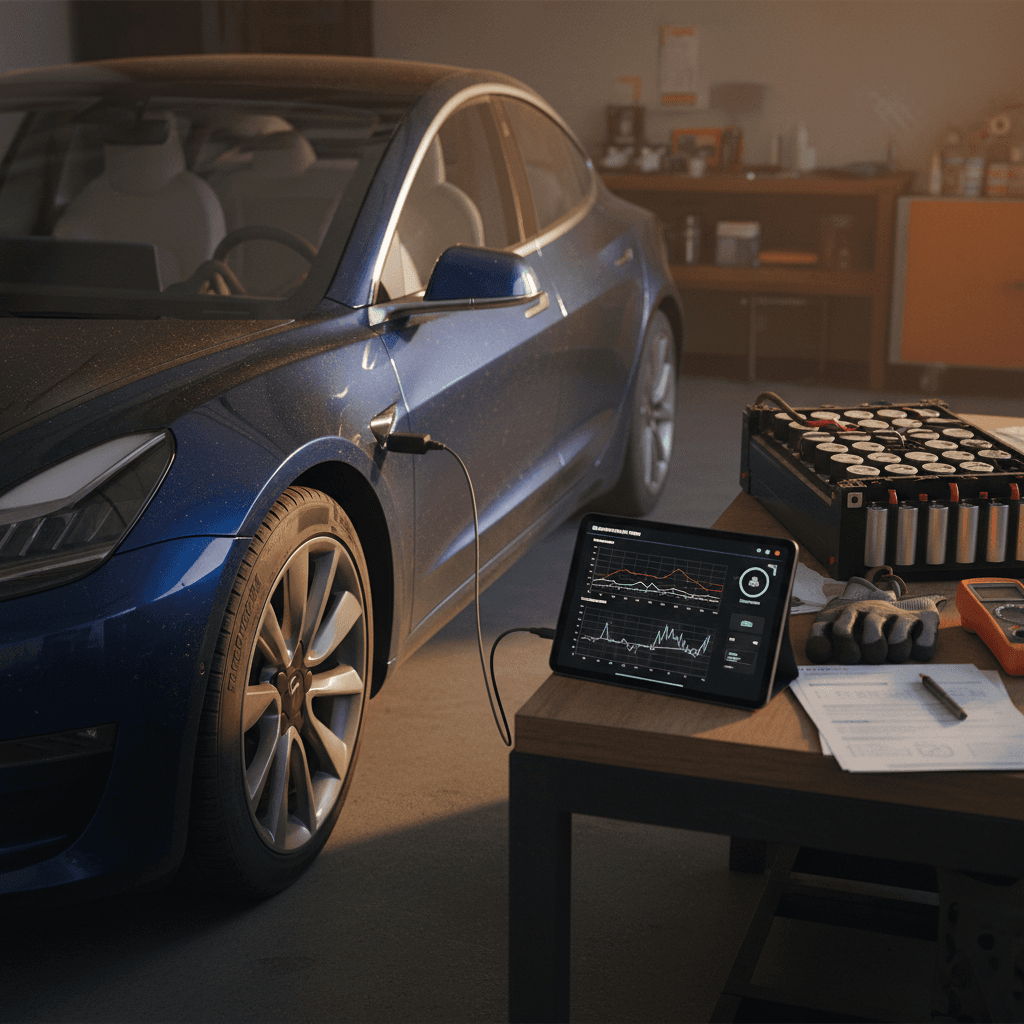
A detailed health report, like the Recharged Score, goes beyond range guestimates and checks for weak modules, imbalance, and error codes you can’t see from the driver’s seat.
5. Test real‑world efficiency
On a test drive, reset the trip computer and observe Wh/mi over 10–20 miles. Very high consumption at modest speeds can hint at underlying issues (or just very aggressive driving).
Warranty, recalls and running costs
One of the perks of a second-hand Model 3 is that you often inherit a chunk of Tesla’s original warranty. That safety net, plus relatively low maintenance costs, is why many buyers are willing to gamble on a high‑tech sedan instead of another safe but dull crossover.
What warranty might be left?
- Basic vehicle warranty: 4 years/50,000 miles from original delivery. Many 2019+ cars will be out of basic coverage but still under battery warranty.
- Battery & drive unit warranty: 8 years with 100k–120k‑mile caps depending on trim, and a 70% capacity guarantee.
- Pre‑owned warranty from Tesla: Cars bought directly from Tesla sometimes get an additional limited warranty. Read the fine print; it’s not universal.
Real‑world running costs
- Energy: Home charging typically equates to the gas‑equivalent of paying $1–$1.50 per gallon, depending on your local rates.
- Maintenance: No oil changes, fewer moving parts. Budget for tires (Teslas are heavy and torquey), cabin air filters, brake fluid checks.
- Insurance: Can run higher than average. Get quotes on the specific VIN before you buy, especially for Performance models.
Keep an eye on recalls
Common issues on used Model 3s (and what to ignore)
The Model 3 is not fragile, but it is a product of Tesla’s unique manufacturing adventure, which has occasionally involved building cars in tents. Some flaws are nuisances; others should send you back to the listings page.
Typical second-hand Model 3 quirks
What’s normal, what’s negotiable, and what’s a deal‑breaker.
Paint & panel alignment
Common on early years. Slight mismatches and orange‑peel paint are typical. Use them to negotiate, but walk away from obvious crash repairs or misaligned doors that won’t seal properly.
Wind & road noise
Teslas are quiet powertrains wrapped in sometimes‑noisy cabins. Listen for excessive wind noise around mirrors and glass. It could be a cheap seal, or it could be evidence of prior bodywork.
Screen & software gremlins
The center screen runs everything. Occasional glitches are normal and often fixed with updates. Reboots and minor lag are tolerable; repeat blackouts or ghost touches are not.
- Check suspension and steering for clunks on rough roads, high‑mileage cars that lived on cratered urban streets may need control arms or bushings.
- Inspect the underbody and battery shield where possible; impacts with debris or steep driveways can damage the pack’s protective plate.
- Verify that mobile app access, key cards, and (if equipped) phone-as-key all work properly, these are your lifelines in daily use.
- On a dual‑motor car, watch for traction‑control weirdness or error messages under strong acceleration; they can hint at drive unit issues.
Use flaws as leverage, not panic fuel
Where to buy a Tesla Model 3 second hand
You have more options than ever: Tesla’s own used inventory, traditional dealers, peer‑to‑peer marketplaces, and EV specialists like Recharged. Each channel has a personality and a risk profile.
Tesla direct used inventory
- Cars are reconditioned and often come with a limited extra warranty.
- Selection can be thin or region‑locked, and pricing is rarely the absolute cheapest.
- Buying experience is streamlined but not very negotiable.
Generic dealers & classifieds
- Biggest variety of years, mileages, and prices.
- Quality is wildly inconsistent; some stores barely understand EVs.
- Battery health and charging history are often complete mysteries.
Recharged (EV‑first marketplace)
- Every used EV, including Tesla Model 3s, gets a Recharged Score Report with verified battery diagnostics and fair market pricing.
- EV‑specialist support, financing, trade‑in options, and nationwide delivery from a fully digital buying experience.
- If you want to touch the sheetmetal first, you can visit the Recharged Experience Center in Richmond, VA.
Why buy your second-hand Model 3 from an EV specialist?
Ready to find your next EV?
Browse VehiclesInspection checklist for a second-hand Model 3
Before you wire five figures to a stranger on the internet, slow down. Use a structured inspection to keep your enthusiasm from buying the car your gut wants instead of the one your head should choose.
Pre‑purchase checklist for a Tesla Model 3 second hand
1. Verify history and ownership
Pull a full history report. Avoid cars with salvage or rebuilt titles unless you’re deeply experienced. Confirm that any prior accidents were repaired properly.
2. Confirm software status
Make sure the car is on a reasonably current software version, that it receives updates, and that connectivity features (maps, streaming, app) all function as advertised.
3. Inspect exterior and glass
Look for uneven panel gaps, mismatched paint, cracks or chips in the windshield and roof glass. Tesla glass is not cheap. Check headlights and tail lights for condensation.
4. Test drive thoroughly
Drive at city and highway speeds. Listen for wind noise, rattles, suspension knocks. Test hard acceleration and firm braking. Try Autopilot if the car has it, observing for odd behavior or warnings.
5. Test charging
If possible, plug into both AC (Level 2) and a DC fast charger. Confirm that the car initiates and sustains charge without warnings or abnormal noises from the pack or charge port.
6. Get a professional EV inspection
Even if you’re buying from a dealer, a second opinion from an EV‑literate mechanic, or a platform that provides a detailed diagnostic report like Recharged, can save you from a five‑figure mistake.
FAQ: Second-hand Tesla Model 3
Frequently asked questions about buying a Tesla Model 3 second hand
In 2019, a used Model 3 was a luxury flex. In 2025, a Tesla Model 3 second hand is simply one of the sharpest tools a practical driver can buy, fast, safe, cheap to run, and finally priced like a normal car. Your mission is to dodge the handful of bad batteries and badly treated cars hiding in the herd. Lean on proper diagnostics, be ruthless about pricing and history, and, if you’d rather skip the homework, let a specialist like Recharged hand you the keys to a Model 3 that’s already been vetted, scored, and priced to make sense.