If you’re hunting for the Tesla Model 3 best year to buy used, you’re not alone. The Model 3 is still one of the easiest EVs to live with every day, and as used prices have softened in 2024–2025, smart shoppers can get a lot of car for reasonable money, if you pick the right year and inspect the battery carefully.
Short on time? Here’s the headline
Why the used Tesla Model 3 is so attractive right now
Used Tesla Model 3 market at a glance (2025–2026)
Two big forces are working in your favor. First, Tesla has cut new-car prices several times, which drags used values down behind them. Second, a wave of post‑lease cars from the 2020–2022 boom years is hitting the market. That means more choice and more negotiating power for you, especially on well‑equipped Long Range and Performance trims.
On top of that, the Model 3’s running costs are low compared with a similar BMW 3 Series or Audi A4. Many owners report relatively modest battery degradation, and independent data suggests most packs will comfortably run well past 200,000–300,000 miles if they’ve been reasonably cared for. The trick is picking a year that balances price, reliability, and the features you actually want, and verifying battery health before you sign anything.
Quick answer: The best used Tesla Model 3 years
Best used Tesla Model 3 years by buyer type
Start with your priorities, then narrow down to a specific car’s condition and battery health.
Best value overall: 2020–2021
If you want the strongest blend of price, range, and reliability, start with 2020–2021 Model 3:
- Most early build issues ironed out
- Access to updated interior and software
- Often under 60–80k miles at attractive prices
Long-range & tech: 2021–2022
For heavy commuters and road‑trippers, 2021–2022 Long Range and Performance cars shine:
- Strong real‑world range
- Newer packs and drivetrains
- Better reliability scores than first‑year cars
Latest styling: 2024+ Highland
If budget allows, a 2024–2025 "Highland" Model 3 gives you:
- Updated exterior and quieter cabin
- Improved suspension tuning
- Very low mileage and latest hardware
Years to be more careful with
Model 3 by generation and refresh: what changed when
Phase 1: Launch and early production (2017–2019)
- 2017: Very early cars, mostly higher‑trim Long Range versions; limited build volume.
- 2018: Production ramps up. Standard Range variants appear, but many reports of fit, finish, and early‑build glitches.
- 2019: Quality improves, options shuffle. Still "first‑generation" feel, but fewer teething issues than 2017–2018.
Think of these as the pioneers: great cars when they’re good, but more variation car‑to‑car.
Phase 2: Maturity and tech upgrades (2020–2023)
- 2020: Running changes to trim and equipment; many reliability metrics start looking stronger.
- 2021 refresh: Big interior update (new console, minor styling tweaks). Heat pump arrives on some variants, improving efficiency in cold weather.
- 2022–2023: Continued software refinement, incremental range and efficiency tweaks. These years generally test well for quality and reliability.
This is the heart of today’s used market, and where you’ll find the most choice.
Phase 3: "Highland" refresh (2024+)
- 2024: Major facelift known as Highland in many markets, updated exterior, quieter cabin, reworked suspension, revised interior details.
- 2025–2026: Early Highland cars begin trickling into the used market, typically with very low miles and still within factory warranty.
If you want the newest look and feel, this is your zone, but it won’t be the cheapest.
Key feature milestones to know
- Autopilot hardware changes over the years affect which driver‑assist features you can unlock.
- Heat pump introduction improves winter efficiency vs. earlier resistance‑heater cars.
- Battery chemistry and pack design evolved, especially in Standard Range trims, which may use different cells than Long Range cars.
When you compare two cars, look beyond the year and ask what hardware and options they actually have.

Detailed breakdown: Tesla Model 3 reliability & value by year
Tesla Model 3 model years at a glance
How each model year stacks up for a used buyer in 2025–2026.
| Model year | Reliability snapshot | Typical buyer verdict | Buy / Caution / Skip |
|---|---|---|---|
| 2017 | First‑year production, low volume, more early glitches reported | Only if very cheap and well‑documented | Caution |
| 2018 | Most owner complaints overall; many early build issues now older and out of warranty | Tempting prices but more risk; inspect extra carefully | Caution |
| 2019 | Noticeable quality improvement vs. 2017–2018, still "early" cars | Good budget option if battery & history check out | Buy |
| 2020 | Strong reliability stats relative to earlier years; plenty of supply | One of the best-value years on the market | Buy |
| 2021 | Interior refresh, maturing hardware, good reliability reports | Excellent sweet‑spot year for many buyers | Buy |
| 2022 | High owner satisfaction, solid predicted reliability | Great choice if you find one at the right price | Buy |
| 2023 | Pre‑Highland cars with latest of the original design | Buy for low miles and newer tech, but price may be close to 2024+ | Buy |
| 2024–2025 | Highland refresh, very new, mostly still under warranty | Best if you want latest styling and can afford it | Buy |
Use this as a starting point, then judge individual cars on condition, battery health, and price.
Owner‑reported problem data shows that 2018 Model 3s rack up the most complaints, followed by other early years as Tesla was scaling production. Later cars, especially 2020 onward, generally see fewer issues relative to how many were sold, and third‑party reliability scores for 2022–2024 Model 3s sit in the mid‑70s out of 100, which is respectable for a tech‑heavy EV.
Think "era," not just year
Battery health and mileage: What matters more than model year
With any used EV, the battery is your heart, lungs, and circulatory system all at once. The Model 3’s packs have aged better than many skeptics predicted, but they’re not immune to abuse. Broad data across Teslas suggests around 10% range loss by about 100,000 miles, and perhaps 12–15% by 150,000 miles, assuming normal use and charging habits.
- Daily DC fast charging (Supercharging) instead of mostly Level 2 home charging
- Letting the battery sit for long periods at 0% or 100% charge
- Living its life in extreme heat without shade or garage parking
- Aggressive driving and rapid‑fire fast‑charge cycles on road‑trip duty
Two 2021 cars can look identical on paper, but a commuter car charged at home and garaged will often have much healthier cells than a former fleet vehicle that spent its life bouncing between Superchargers. That’s why an objective battery‑health report matters more than the odometer alone.
Watch for hidden salvage or Supercharger bans
How to evaluate a used Model 3’s battery
1. Get a real battery health report
Ask for a <strong>third‑party battery diagnostic</strong> or a report like the Recharged Score that quantifies remaining capacity and fast‑charge history rather than guessing from range estimates alone.
2. Compare displayed range to original spec
Check what the car shows at 100% charge (or a known SoC) and compare it to the original EPA range for that trim. A modest drop is normal; a huge gap can be a red flag.
3. Study charging history and habits
Look in the owner’s app history or ask for documentation: did they mostly charge at home Level 2, or live at Superchargers? Light, consistent use is your friend.
4. Inspect for software or warning messages
During a test drive, note any battery or charging‑related alerts. Some issues only appear under heavy acceleration or when fast‑charging.
5. Check for Supercharger access
Have the seller plug in at a Supercharger if possible to confirm access, and that charging speeds look reasonable for that state of charge.
Pricing: What you can expect to pay for the best years
Approximate used Model 3 pricing (U.S., 2025 market)
Real‑world asking ranges vary by region, mileage, and condition, but these ballparks help you set expectations.
| Model year & trim | Typical price range | Why it’s priced there |
|---|---|---|
| 2018–2019 Standard/Long Range | $18,000–$24,000 | Oldest cars, higher miles, sometimes early‑build quirks; best for tight budgets. |
| 2020 Model 3 (most trims) | $20,000–$26,000 | Strong value: mature enough for better reliability, plentiful supply keeps prices competitive. |
| 2021 Model 3 Standard Range | $22,000–$27,000 | Interior refresh, decent range, lots of off‑lease cars hitting the market. |
| 2022 Long Range | $26,000–$33,000 | Later hardware, strong range, many still with partial warranty; priced accordingly. |
| 2023 Performance | $34,000–$40,000 | Low‑mileage, high‑performance cars still command a premium, especially with desirable options. |
| 2024+ Highland | High $30ks–$40ks+ | Newest styling and tech, very low miles, usually still deep in factory warranty. |
Always compare individual cars, but use these ranges to spot outliers that are suspiciously cheap, or overpriced.
These ranges are intentionally conservative and will float with regional demand and Tesla’s own new‑car pricing. The bigger point is this: 2020–2022 cars give you a lot of Model 3 for the money, often undercutting new by thousands while feeling modern inside.
Leverage today’s soft Tesla resale values
Features to prioritize on a used Model 3
Must‑have vs. nice‑to‑have features
Focus on the features that change how the car drives and lives with you every day.
Battery & drivetrain first
- Long Range trims if you road‑trip often.
- Dual‑motor AWD for snow‑belt drivers.
- Healthy battery with verified capacity.
Climate & comfort
- Heat pump (on newer years) for better cold‑weather efficiency.
- Heated seats and steering wheel in colder states.
- Quality tires suited to your climate.
Driver‑assist & tech
- Current Autopilot hardware and software.
- Modern infotainment performance.
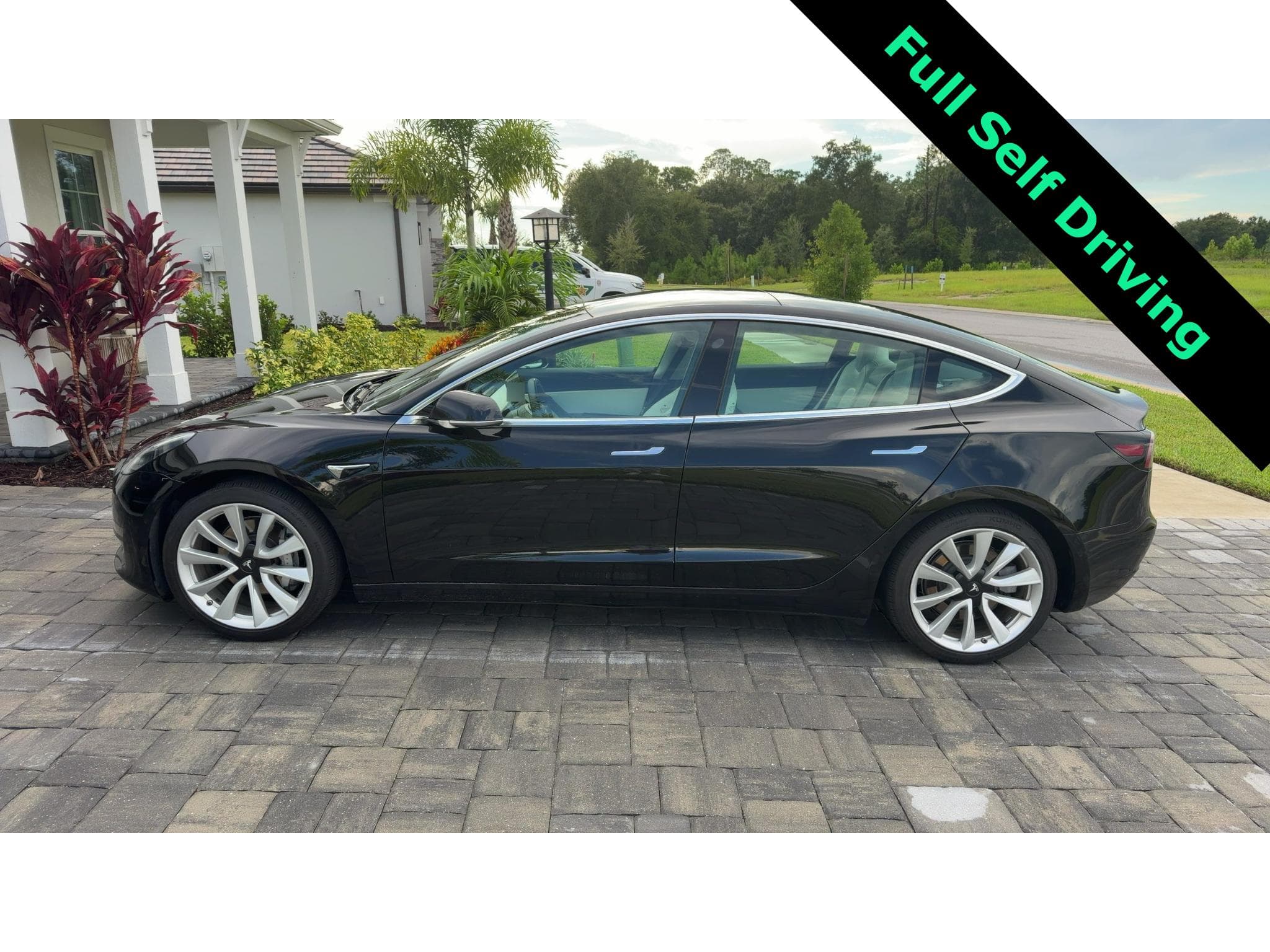
- Whether Full Self‑Driving (FSD) is included, and if you actually want to pay for it.
Paint color and wheel design are fun, but they don’t change whether the car works for your life. Prioritize range, battery health, climate hardware, and Autopilot capability. Then layer on the cosmetics if two cars are otherwise equal.
Years to approach with caution (and how to shop them safely)
You’ll see a lot of chatter online about which Model 3 years to avoid. The reality is more nuanced: there’s no single “do not buy” year, but 2017–2018 cars deserve extra scrutiny because they combine early production with age and miles.
- 2017: Very few on the market, mostly early adopters’ cars. Expect higher miles and more experimental options. Only worth it at a deep discount with stellar history.
- 2018: The most owner‑reported problems in absolute numbers and now among the oldest fleet. Many are fine; some are tired. Consider only with full service records, clean title, and verified battery health.
- High‑mileage 2019–2020 fleet cars: Rideshare and fleet vehicles can rack up 150,000+ miles quickly. Some are well maintained, others not. Let condition and battery data, not just the year, guide your decision.
Don’t chase the cheapest VIN on the page
Checklist before you buy any used Tesla Model 3
Used Tesla Model 3 pre‑purchase checklist
1. Confirm the exact trim and hardware
Is it Standard Range, Long Range, or Performance? Dual motor or RWD? Which Autopilot hardware version does it have? This affects value, range, and future software support.
2. Pull a detailed history report
Run a full history (Carfax, AutoCheck, etc.) and look for accidents, lemon/buyback history, flood damage, and any indication of salvage or rebuilt status, even if the title looks clean.
3. Get a professional EV inspection
Have an EV‑experienced technician inspect the car, not just a generic pre‑purchase once‑over. They’ll know where to look for issues like coolant leaks around the pack, suspension wear, and underbody damage.
4. Demand objective battery diagnostics
Use a report such as the <strong>Recharged Score</strong> or similar to see measured battery health, fast‑charging history, and pack behavior. This is far better than guessing from a screenshot of the dash.
5. Verify charging and Supercharger access
Test both Level 2 charging and, ideally, a Supercharger session. Confirm the car connects, charges at a reasonable rate, and doesn’t throw warnings or errors.
6. Compare price to current market
Cross‑shop comparable cars by year, trim, and mileage. If a seller is above market for a common 2020–2022 car, you should either negotiate or move on to a better‑priced example.
How Recharged helps you buy the right used Model 3
A Tesla Model 3 is still a fantastic everyday EV, but buying used without good data is like driving with the fog lights off. That’s exactly the problem Recharged is built to solve. Every car on our platform comes with a Recharged Score Report that includes verified battery health, fast‑charge history, and a pricing analysis so you can see how a specific car stacks up against the market.
If you’re trading in another vehicle or coming out of a lease, Recharged can give you an instant offer or consignment option, help you line up financing, and arrange nationwide delivery right to your driveway. Prefer to touch and feel before you buy? You can visit our Experience Center in Richmond, VA, and walk through Model 3 options with an EV specialist who does this every day.
Make the most of today’s buyer’s market
FAQ: Best used Tesla Model 3 years
Frequently asked questions about used Tesla Model 3 years
If you’re shopping for the Tesla Model 3 best year to buy used, think of 2020–2022 as your starting grid, 2019 and 2023 as strong alternates, and 2017–2018 as budget plays that demand extra homework. From there, let battery health, history, and price tell you which individual car wins your race. With today’s buyer‑friendly used Tesla market, and the right diagnostics in hand, you can be picky and still drive home in a Model 3 that will serve you well for years.