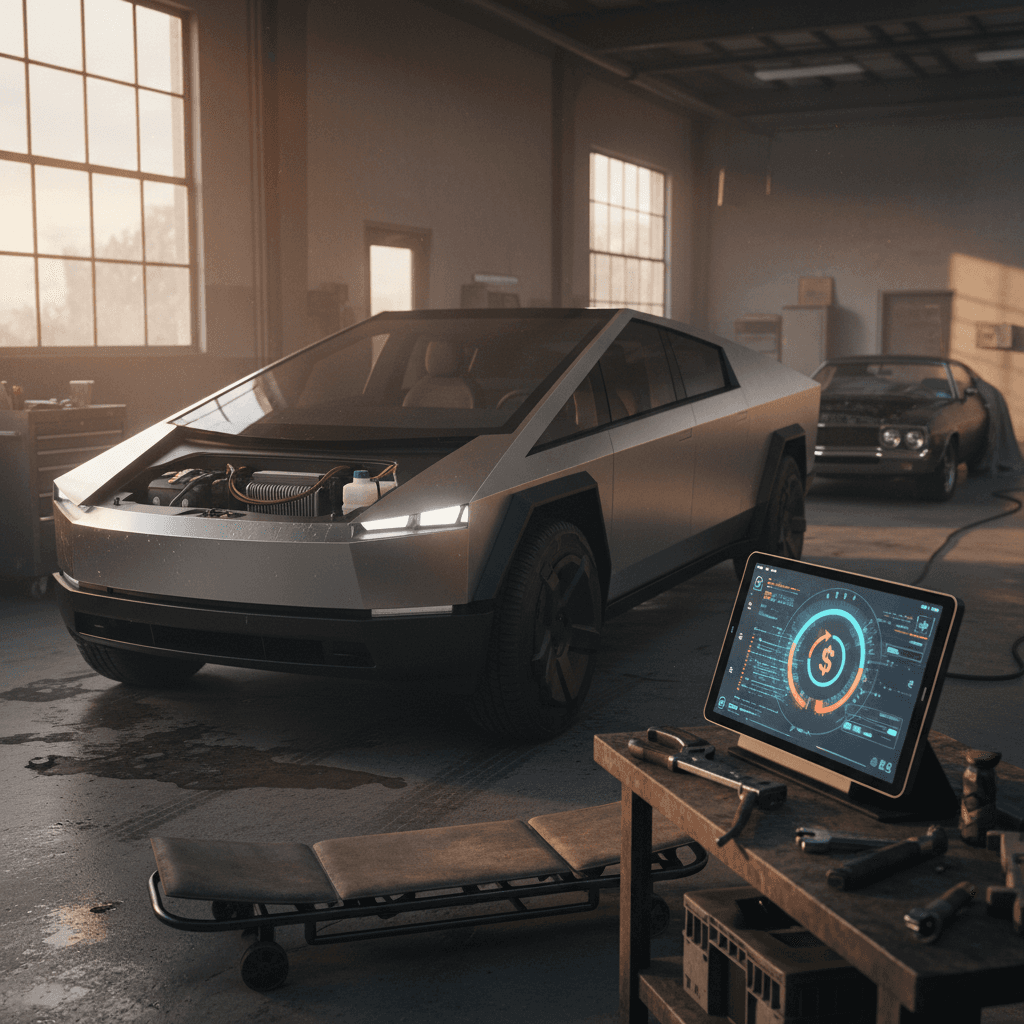
If you’re eyeing Tesla’s stainless-steel pickup, you’re probably wondering what Tesla Cybertruck maintenance cost in 2026 really looks like. EVs don’t need oil changes, but the Cybertruck is heavy, powerful and runs big, expensive tires, so where does that leave you over five years of ownership?
Why this matters
Cybertruck maintenance cost in 2026: the short version
2026 Cybertruck maintenance cost at a glance
Put simply, the Cybertruck is cheaper to maintain than a similar gas pickup, but it’s not maintenance‑free. Over a five‑year, 60,000–75,000‑mile window, plan on something in the neighborhood of $3,000 in maintenance and repair spend, heavily weighted toward tires and routine items, provided you don’t have a major collision or wheel upgrade habit.
The wildcard: insurance & body damage
How EV maintenance differs from a gas pickup
What your Cybertruck doesn’t need
- No engine oil or oil filters
- No spark plugs, belts, or exhaust work
- No traditional transmission service
- Far fewer fluids overall
That’s why EVs, on average, spend roughly half as much on maintenance and repairs over their lifetimes compared with similar gas vehicles.
What you still need to service
- Tires (often more often than you’d like)
- Brake fluid and coolant inspections
- Cabin air filters and wiper blades
- Occasional alignment and suspension components
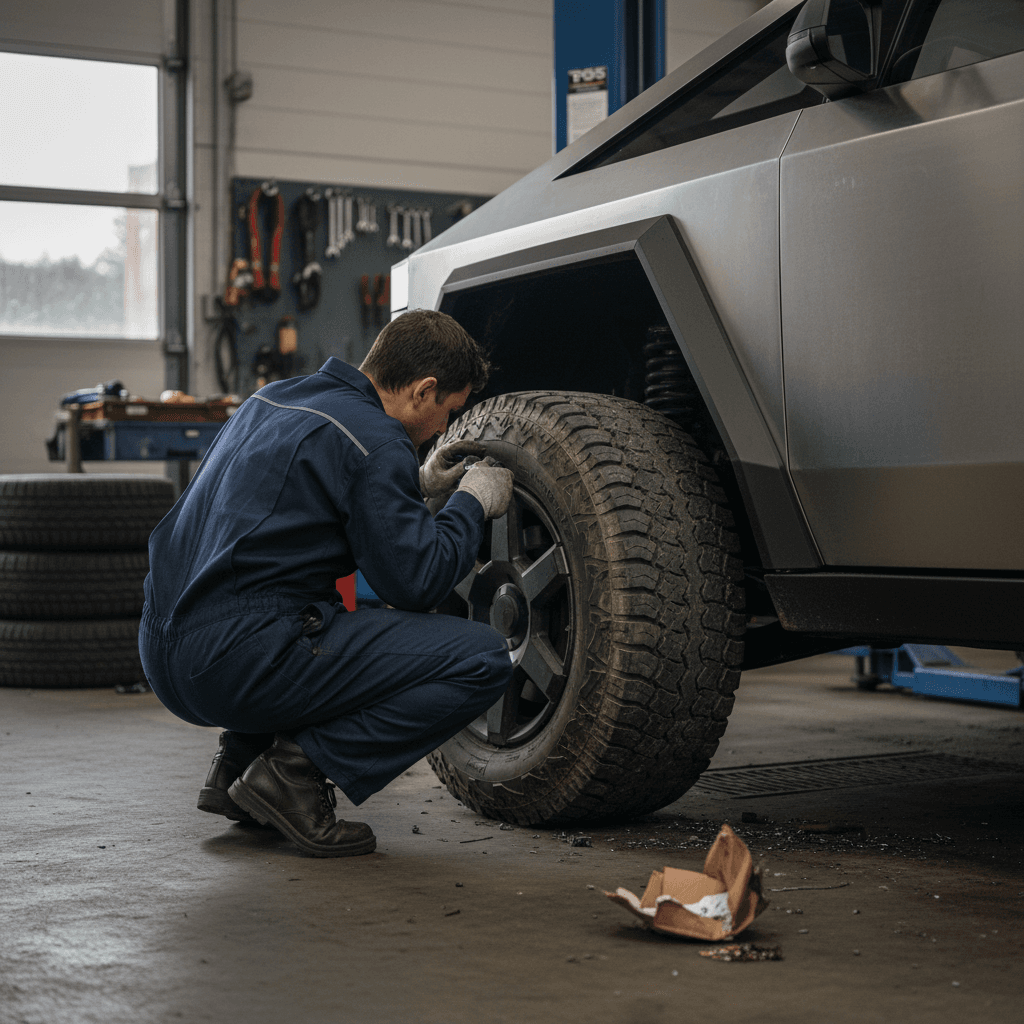
The Cybertruck’s key maintenance line item is tires. Weight plus instant torque means you’ll want to budget realistically here.
Regenerative braking is your friend
Expected annual Cybertruck maintenance cost in 2026
Estimated annual Cybertruck maintenance costs (2026, U.S.)
Ballpark yearly maintenance and repair averages for a 2025–2026 Tesla Cybertruck in typical use. These are estimates, not guarantees.
| Item | Light use (10k mi/yr) | Average use (12–15k mi/yr) | Heavy use (20k+ mi/yr) |
|---|---|---|---|
| Routine inspections & minor service | $150–$250 | $200–$300 | $250–$400 |
| Tire wear (annualized) | $200–$350 | $300–$600 | $600–$1,000 |
| Brake service (annualized) | $25–$50 | $25–$75 | $50–$100 |
| Misc. repairs & alignment (avg.) | $75–$150 | $100–$200 | $150–$300 |
| Estimated yearly total | ≈$450–$800 | ≈$600–$1,100 | ≈$1,050–$1,800 |
Real owners may spend more or less depending on driving style, mileage, terrain and wheel/tire choices.
For an average driver in 2026, a realistic planning number for Cybertruck maintenance cost is around $600–$900 per year, assuming you’re not shredding off‑road tires every season. That fits well with mainstream cost‑to‑own projections that put Cybertruck maintenance in the mid‑$600 range annually over the first five years.
Key Cybertruck wear items and what they cost
Big-ticket Cybertruck maintenance items
Where your money actually goes over 5 years
1. Tires
Reality check: This is your number‑one maintenance expense.
- Expect 35,000–45,000 miles from factory all‑terrain tires with sane driving.
- Performance or off‑road setups can drop that substantially.
- Replacement cost: $1,600–$3,000+ per full set depending on size, brand and load rating.
2. Suspension & alignment
The Cybertruck’s weight and air suspension mean alignment and suspension components matter.
- Annual or every‑other‑year alignments: $150–$250.
- Occasional control arm or bushing work is possible if you hit potholes or off‑road hard.
- Budget a few hundred dollars over the first 5–7 years for odds and ends.
3. Fluids & filters
Even EVs have some fluids.
- Brake fluid flush every few years: $150–$250.
- Coolant system inspections and eventual service: usually hundreds, not thousands.
- Cabin filters and wipers: $50–$200 every 1–2 years, depending on DIY vs Tesla Service.
Other components to keep an eye on
Less frequent, but worth budgeting for
High-voltage components
In the first 8 years/100,000–150,000 miles, the battery and drive units are generally protected by Tesla’s warranty. Out‑of‑warranty failures are rare but expensive, which is why many buyers prefer to sell or trade before that coverage expires, or buy used with verified battery health.
HVAC and accessories
Climate systems, window regulators and electronic accessories fail on EVs just like on gas trucks. Individual repairs can run a few hundred to over a thousand dollars, but they’re usually occasional, not annual, expenses.
Rotate early, rotate often
Cybertruck vs gas truck: maintenance cost comparison
Estimated 5‑year maintenance cost: Cybertruck vs gas ½‑ton pickup
Illustrative comparison for a new Tesla Cybertruck vs a similarly priced gas ½‑ton truck in 2026, assuming 12,000–15,000 miles per year.
| Vehicle | 5‑yr maintenance & repairs | Per‑mile maintenance | What drives the cost |
|---|---|---|---|
| Tesla Cybertruck | ≈$3,000–$3,500 | ≈$0.03–$0.05 | Fewer moving parts, long‑life brakes; tires and alignments dominate costs. |
| Gas ½‑ton pickup | ≈$5,000–$7,500 | ≈$0.06–$0.10 | Oil changes, transmission service, engine repairs plus similar tire and brake needs. |
Fuel and insurance are separate; this table isolates routine maintenance and repairs.
Big‑picture, a Cybertruck owner in 2026 can reasonably expect to spend thousands less on maintenance and repairs over 5 years than a similar gas truck owner. That advantage grows the more miles you drive, since per‑mile maintenance cost tends to stay low for EVs as long as you stay ahead of tires and alignments.
Where EV trucks quietly win
Ownership scenarios: light-duty vs heavy-use owners
How your use case changes Cybertruck maintenance cost
Weekend warrior (under 8,000 miles/year)
You’ll age out of tires before you fully wear them; expect a fresh set every 5–6 years regardless of tread depth.
Routine inspections and fluid checks will dominate your maintenance line; budget ≈$400–$600 per year.
If you stay mostly on pavement and avoid curb hits, alignment and suspension spend should be modest.
Typical commuter (10,000–15,000 miles/year)
Plan on a tire set about every 3–4 years depending on driving style and tire choice.
Annualized maintenance in the $600–$900 range is a reasonable planning target.
You’ll feel the benefit of lower EV maintenance compared with a gas truck, especially if you drive in traffic where regen braking shines.
Towing/off-road or high-mileage (20,000+ miles/year)
Frequent towing, high speeds and off‑road work can chew through tires faster; budget aggressively here.
You might see more frequent alignments and wear in ball joints and bushings if you live on rough roads.
Even in hard use, you’re still skipping engine and transmission work, which keeps total maintenance below a comparable gas rig, but your annual spend may creep toward $1,500+ in busy years.
Big wheels, big bill
How Tesla service, warranty and software affect costs
- Warranty coverage: A new Cybertruck includes bumper‑to‑bumper and separate battery/drive unit coverage (typically 8 years with a mileage cap). That keeps big‑ticket powertrain surprises rare in the early years.
- Mobile service: Many Cybertruck service items, like cabin filters, minor trim repairs or even some suspension work, can be handled by Tesla’s mobile technicians, saving you time at a service center.
- Over‑the‑air updates: Software updates can fix minor glitches, improve range and refine features without a shop visit. That doesn’t eliminate hardware failures, but it does trim down some of the “come back for a software flash” trips that plague other brands.
- Service schedule: Tesla generally focuses on condition‑based service instead of fixed annual packages. That’s good for cost, but it requires you to pay attention to alerts and your owner’s manual instead of just showing up every 5,000 miles.
The biggest shift for truck buyers moving to a Cybertruck isn’t the absence of oil changes, it’s getting used to a vehicle that only wants service when something actually needs attention.
Planning for long-term ownership and battery life
For 2026 shoppers, the Cybertruck’s battery pack is the elephant in the room. A replacement pack would be a major expense if it were needed outside warranty, but most owners never get there during a typical loan term. The bigger question is: how healthy will the battery be when it’s time to sell or trade?
Smart long-term Cybertruck ownership habits
1. Track fast-charging vs home charging
Heavy use of DC fast charging is convenient but can add heat stress over many years. Rely on home Level 2 charging when you can, and treat fast charging like a road‑trip tool, not a daily habit.
2. Avoid living at 0% or 100%
Keeping your state of charge mostly between about 10% and 80–90% in normal use is easier on lithium‑ion chemistry. Use the full pack when you need it, but don’t sit at 100% every night unless your schedule demands it.
3. Mind your wheels and curb strikes
Bent wheels and alignment issues show up as uneven tire wear and wandering steering feel. Fixing those early is cheaper than replacing two tires with cord showing on the inside edge.
4. Document service and software history
Well‑organized digital records help future buyers (or your insurer) understand how the truck was treated. That tends to raise resale value and make warranty conversations easier.
5. Use independent health checks when buying or selling used
If you’re looking at a used Cybertruck, or plan to sell yours, battery and high‑voltage system diagnostics, like the <strong>Recharged Score</strong>, give you hard data on pack health rather than guesses based on range alone.
How Recharged can help on a used Cybertruck
Tips to keep your Cybertruck maintenance costs low
Practical ways to tame Cybertruck maintenance costs
Small habits that pay off over 5–10 years
Stay ahead on rotations
Rotate tires on schedule and ask for a tread‑depth and wear‑pattern check each time. Catching an alignment issue early can save a nearly new tire set.
Use the built-in tools
Pay attention to tire pressure warnings, brake fluid notifications and service alerts in the Cybertruck’s display. The truck is constantly monitoring itself; let it work for you.
Shop service intelligently
Tesla Service is often the best choice for high‑voltage and safety‑critical items. For tires, alignments and cosmetic work, reputable independent shops that know EVs can save you money.
- Drive smoothly. Hard launches in a 6,000‑plus‑pound EV are fun, but they’re tough on tires.
- Avoid heavily curb‑rashed wheelsets and mismatched tires if you’re considering a used Cybertruck; they often signal hidden alignment or suspension issues.
- Factor maintenance into your financing decision. If you’re stretching for the monthly payment, a single $2,000 tire bill will sting more than it should.
- If you’re buying used, work with EV‑savvy retailers like Recharged who can walk you through expected maintenance and total cost of ownership before you sign.
Tesla Cybertruck maintenance FAQ (2026)
Frequently asked questions about Cybertruck maintenance costs
Should you worry about Cybertruck maintenance costs?
If you’re comparing a Tesla Cybertruck against a gas pickup in 2026, maintenance should actually be one of the Cybertruck’s strengths, not a drawback. You’ll trade regular oil changes, transmission service and engine repairs for a simpler checklist dominated by tires, the occasional alignment and periodic fluid checks.
That doesn’t mean the Cybertruck is cheap to own, insurance and repair costs, especially for collision damage, can be high on a cutting‑edge stainless truck. But purely on maintenance, most owners will see predictable, manageable costs that stay well below a comparable gas truck, especially as the miles pile on.
If you’re thinking about a used Cybertruck or planning to sell yours after a few years, working with an EV‑focused retailer like Recharged can help you understand battery health, real‑world maintenance expectations and fair market pricing before you commit. That’s how you turn an eye‑catching electric truck into a smart long‑term ownership decision.