If you follow Tesla even casually, you’ve heard the whispers: Cybertruck Foundation Series, $20,000 premium, “limited edition.” Now that the dust has settled in 2026 and regular Cybertruck trims are cheaper and more common, the big question for shoppers is simple: is a Tesla Cybertruck Foundation Series actually worth it, especially on the used market?
Quick answer, before the deep dive
What Is the Tesla Cybertruck Foundation Series?
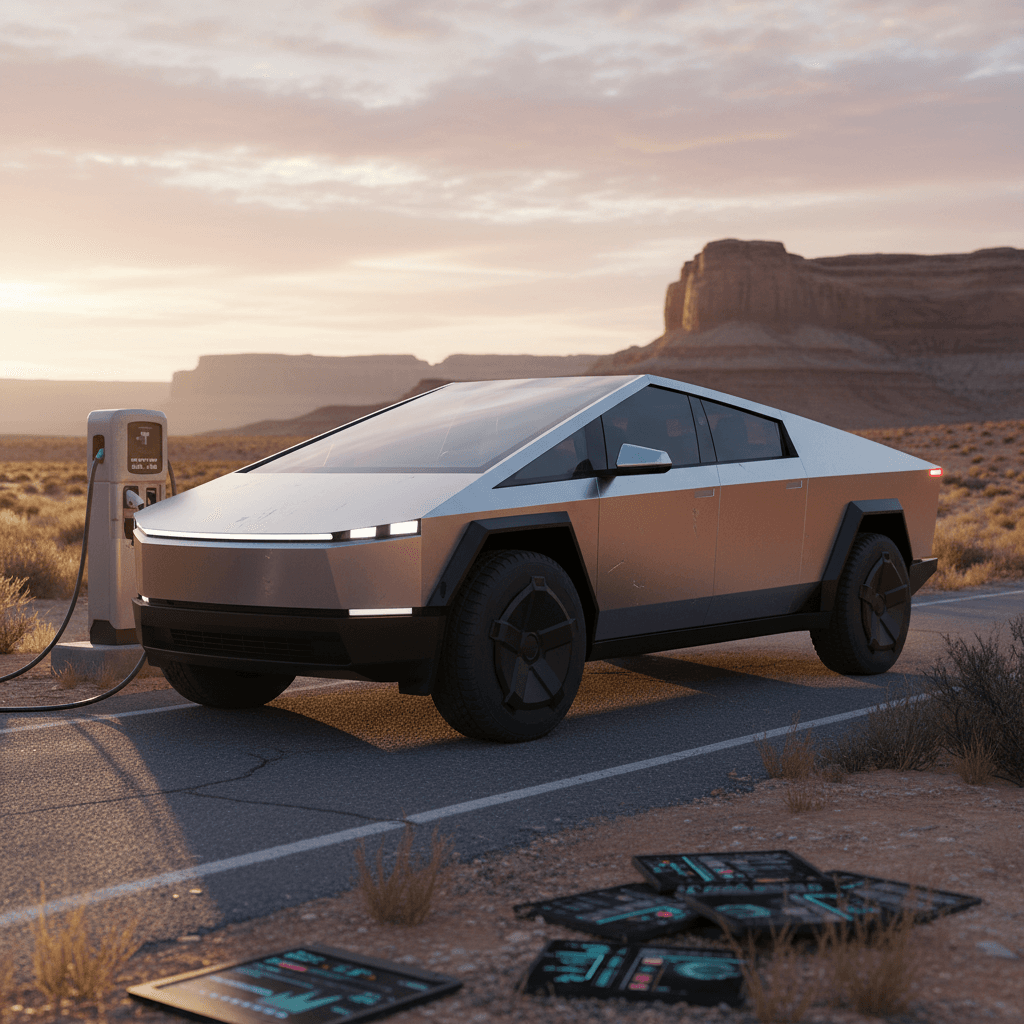
Tesla introduced the Cybertruck Foundation Series as the fully loaded launch edition in late 2023. It was pitched as a limited, early‑access run, special badging, almost every option bundled in, and the privilege of being first on your block to own Tesla’s stainless‑steel stealth bomber of a truck.
- Sold primarily through invitations to early reservation holders in late 2023 and 2024
- Built on both dual‑motor AWD and tri‑motor Cyberbeast configurations
- Capped at roughly 25,000 units globally, with the U.S. run ending in late 2024–early 2025
- Positioned as a $20,000 upcharge over the equivalent non‑Foundation configuration
On paper, that sounds like the usual limited‑edition playbook. In practice, Tesla kept cranking out Foundation trucks longer than many expected, then had to push unsold units through inventory channels and even add perks like free Supercharging to move them. The result: the "limited" story got a little threadbare.
How Much Extra Did the Foundation Series Cost?
Cybertruck Foundation Series Pricing Snapshot
Tesla effectively bolted a flat ~$20,000 surcharge onto the Cybertruck for the Foundation label. That premium was justified in marketing terms as “fully loaded", you weren’t just buying a truck, you were buying an early place in line, a pile of equipment, and the idea of future collectability.
Sticker shock in the real world
What Did You Actually Get for the Premium?
What the Cybertruck Foundation Series Included
Where the extra $20K actually went
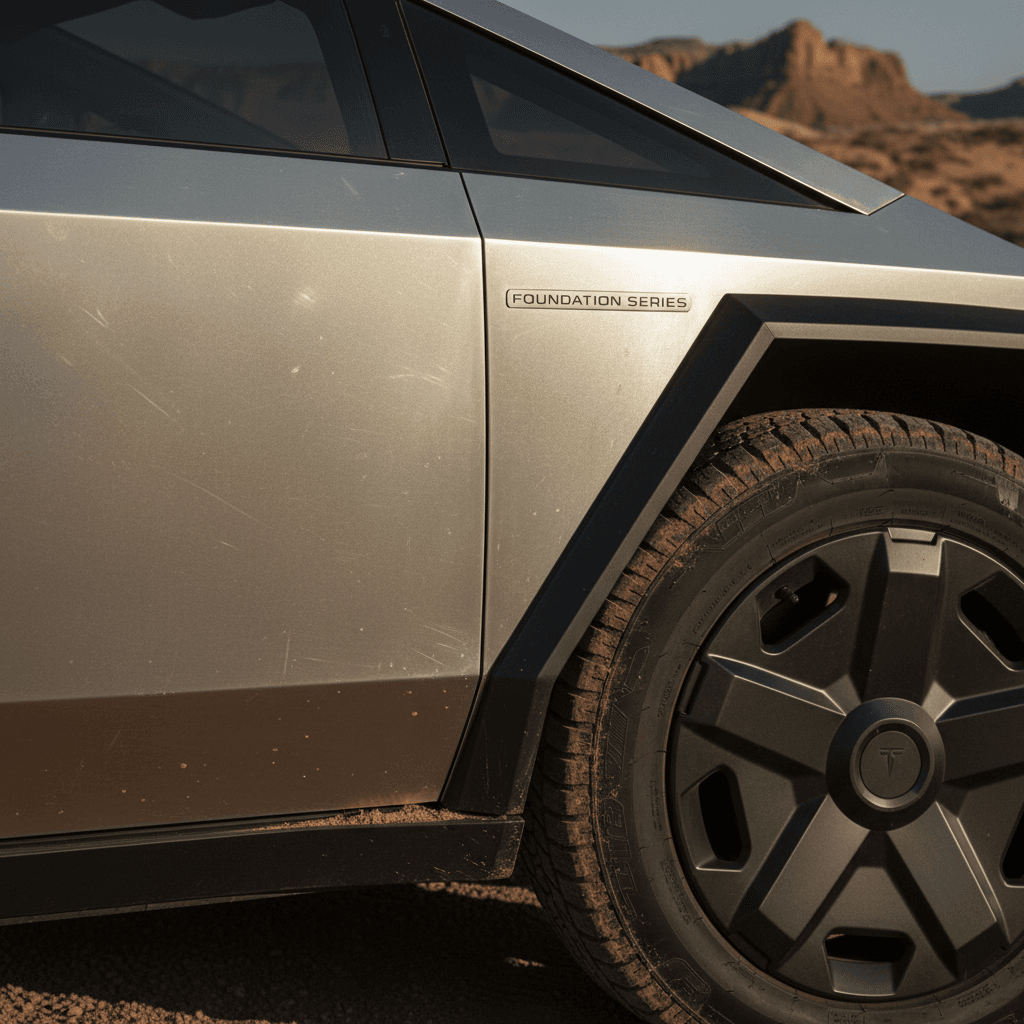
Exclusive badging
Fully optioned spec
Supervised Full Self‑Driving
Cyber wheels & tires
Powershare hardware
Connectivity & extras
Rough math on the bundle
Foundation Series vs Regular Cybertruck: Key Differences
Cybertruck Foundation Series vs Regular Trims (High Level)
How the Foundation Series compares to a similarly specced non‑Foundation Cybertruck in today’s market.
| Aspect | Foundation Series Cybertruck | Regular Cybertruck (AWD / Cyberbeast) |
|---|---|---|
| Price when new | Approx. $20K more for same drivetrain | Lower starting price, options à la carte |
| Badging & exclusivity | Laser‑etched Foundation badging, perceived "Launch Edition" status | No special launch badging |
| Software bundle | Supervised FSD typically included, lifetime premium connectivity | FSD optional, connectivity usually on subscription |
| Hardware & accessories | Powershare, Cyber wheels, all‑terrain tires, extra charging gear bundled | Available as options or aftermarket add‑ons |
| Availability today | New program ended; units only via used/inventory channels | Actively sold new with ongoing price adjustments |
| Perceived collectability | Market still undecided, limited but not ultra‑rare | Standard production; no special collectability story |
Details vary by individual truck, but this captures the biggest structural differences for most buyers.
Where Foundation looks good
- You wanted every option anyway and would have paid for FSD, Powershare, wheels, and décor separately.
- You put a premium on being first and genuinely value the early‑adopter story.
- You believe in the long‑term collector market for oddball, low‑volume EVs.
Where regular wins on value
- You mainly care about range, towing, and daily usability, not the plaque on the fender.
- You’re happy to skip FSD, or buy it later if it actually delivers on the promise.
- You’d rather keep $10–20K in your pocket (or put it into a higher‑range trim or another EV entirely).
Resale Value: Is the Cybertruck Foundation Series Holding Its Price?
This is where the romance meets the spreadsheet. Early owners hoped "Foundation Series" would behave like Porsche’s RS or BMW’s CSL badges, automatic appreciation. Reality has been cooler.
3 Big Factors Shaping Foundation Series Resale
Why the badge isn’t a guaranteed money printer
Volume, not unicorn
Early-build teething issues
Better deals later
On the used market today, sellers often ask a 5–15% premium for Foundation trucks versus similar non‑Foundation trims. Whether they get it depends on geography, mileage, and how much the next owner cares about the badge versus the bottom line.
How to sanity‑check pricing
Who, If Anyone, Should Still Want a Foundation Series?
You might be the right buyer if…
- You love the idea of owning an early-build, launch-edition Tesla.
- You’d buy FSD and Powershare anyway, and current used pricing effectively discounts them.
- You’ve found a warrantied, clean-history example at only a modest premium over a regular Cybertruck.
- You view the truck as part toy, part daily, and you’re comfortable being a conversation piece at every charging station.
You probably shouldn’t chase one if…
- Your priority is value per dollar, not automotive folklore.
- You’re wary of early-production gremlins and downtime for service.
- You don’t actually want or trust FSD and won’t use Powershare.
- You’re financing heavily and every extra $50–$100 per month matters to your budget.
Where Recharged can help
Ownership Experience: Early-Build Quirks and Perks
Owning a Foundation Series Cybertruck is a bit like living in a concept‑car prototype that escaped the auto show floor. It’s dramatic, charismatic, and occasionally exasperating.
What Owners Report Living With a Foundation Series
Beyond the spec sheet
Perk: You’re the show
Quirk: Software & trim hiccups
Perk: Community & story
None of this is catastrophic, but it matters if you’re expecting F‑150 work‑truck stoicism. The Cybertruck, especially in Foundation trim, is more tech object than farm implement. Treat it accordingly.
Buying a Used Cybertruck Foundation Series: Checklist
Cybertruck Foundation Series Used-Buyer Checklist
1. Confirm it’s truly a Foundation Series
Look for <strong>laser‑etched Foundation badging</strong>, documentation from Tesla, and a build sheet or original window sticker. Don’t pay a premium on faith.
2. Compare price to non‑Foundation comps
Pull pricing on similar‑mileage <strong>AWD or Cyberbeast non‑Foundation trucks</strong>. The premium should roughly equal what you’d pay for FSD + Powershare + wheels, minus a discount for age and early‑build risk.
3. Verify battery and drive unit health
Ask for battery health data, service records, and any high‑voltage repairs. A <strong>Recharged Score battery report</strong> can help you understand real‑world degradation and projected range.
4. Inspect panel alignment and water sealing
The Cybertruck’s stainless steel exoskeleton magnifies panel gaps. Check for <strong>uneven seams, wind noise, and water leaks</strong> around doors, tailgate, and glass.
5. Test every Foundation-only feature
Confirm <strong>FSD is active and transferrable</strong> per Tesla’s current policy, Powershare hardware is present, and premium connectivity is functioning. Missing gear should knock thousands off the ask.
6. Review warranty and buyback history
Ask whether the truck has been subject to <strong>buybacks, lemon claims, or major accident repairs</strong>. With early builds, a clean history is worth paying for.
Don’t overpay for vibes
Alternatives to Paying the Foundation Premium
If you like the idea of an electric truck but your stomach turns at the idea of paying a five‑figure markup for a launch‑edition science project, you’re not out of luck.
Smarter Alternatives to an Overpriced Foundation Series
Ways to get capability without the hype tax
Non‑Foundation Cybertruck
Other electric pickups
High-spec used EV SUV
This is where a platform like Recharged can be useful: instead of fixating on one highly specific spec, you can compare multiple used EVs side by side with verified battery health and fair‑market pricing. Often, the best truck for you isn’t the coolest story, it’s the one that fits your life and budget.
FAQ: Tesla Cybertruck Foundation Series
Frequently Asked Questions About the Cybertruck Foundation Series
Bottom Line: Is the Cybertruck Foundation Series Worth It?
Strip away the hype and you’re left with this: the Tesla Cybertruck Foundation Series was a very expensive way to be first. It wrapped useful hardware and software in a limited‑edition story that hasn’t, so far, translated into a meaningful, durable value premium.
If you stumble on a used Foundation truck that’s priced only slightly above a comparable non‑Foundation Cybertruck, and you genuinely want FSD, Powershare, the wheels, the décor, the whole sci‑fi persona, then yes, it can make sense for the right buyer. But if you’re simply trying to get into an electric truck with strong capability and manageable running costs, a regular Cybertruck or another used EV truck will almost always be the better buy.
Either way, treat the badge as a story, not a savings account. Let the numbers, the battery health, and your actual day‑to‑day needs drive the decision. And if you want a second set of eyes on the math, a Recharged Score Report and EV‑specialist guidance can keep you out of the early‑adopter trap, and into an electric truck that really earns its keep.