If you’re trying to model the Tesla Cybertruck depreciation curve over 5 years, you’re working with a paradox: there’s not much history, but there’s already a lot of drama. Early trucks traded at wild premiums, then slid hard as supply grew and incentives appeared. To make sense of the next five years, you have to separate hype from the underlying economics of electric pickups.
What this guide does (and doesn’t) do
Why Cybertruck depreciation looks different from other pickups
Traditional full‑size pickups are resale champions. A well‑optioned Ford F‑150, Chevy Silverado, or Ram 1500 can often keep 55–65% of its value after five years in normal market conditions, thanks to huge buyer demand and deep commercial use. Electric pickups, and the Cybertruck in particular, enter a very different equation: fast‑moving tech, uncertain demand, and higher MSRPs all put downward pressure on used values.
- Tech product dynamics: EVs refresh faster than gas trucks. New battery packs, driver‑assist features, and infotainment updates make older builds feel dated sooner, which tends to steepen early‑year depreciation.
- Thin buyer pool: The overlap between buyers who want a full‑size pickup, can afford a $70k–$100k EV, and like the Cybertruck’s polarizing design is smaller than early reservation lists suggested.
- Policy sensitivity: Clean‑vehicle tax credits, point‑of‑sale incentives, and changing eligibility rules can swing effective transaction prices by thousands of dollars, instantly changing the math on used trucks.
- Unconventional launch: Foundation Series pricing premiums, price cuts, and inventory‑clearing promos (including free lifetime Supercharging on some units) have already distorted the “normal” curve for early builds.
Early adopters always subsidize later buyers
Where Cybertruck values stand today (2024–2026 snapshot)
Early Cybertruck resale snapshot
Put simply, the speculative bubble has already popped. Early 2024 auction results regularly showed six‑figure Cybertrucks changing hands. By late 2025 and into 2026, asking prices have drifted back toward, sometimes below, new MSRPs, especially for higher‑mileage Foundation Series trucks. At the same time, Tesla’s own discounts and promotions have pulled the ceiling down on what used sellers can realistically expect.
Good news if you’re shopping used
A realistic 5‑year Tesla Cybertruck depreciation curve
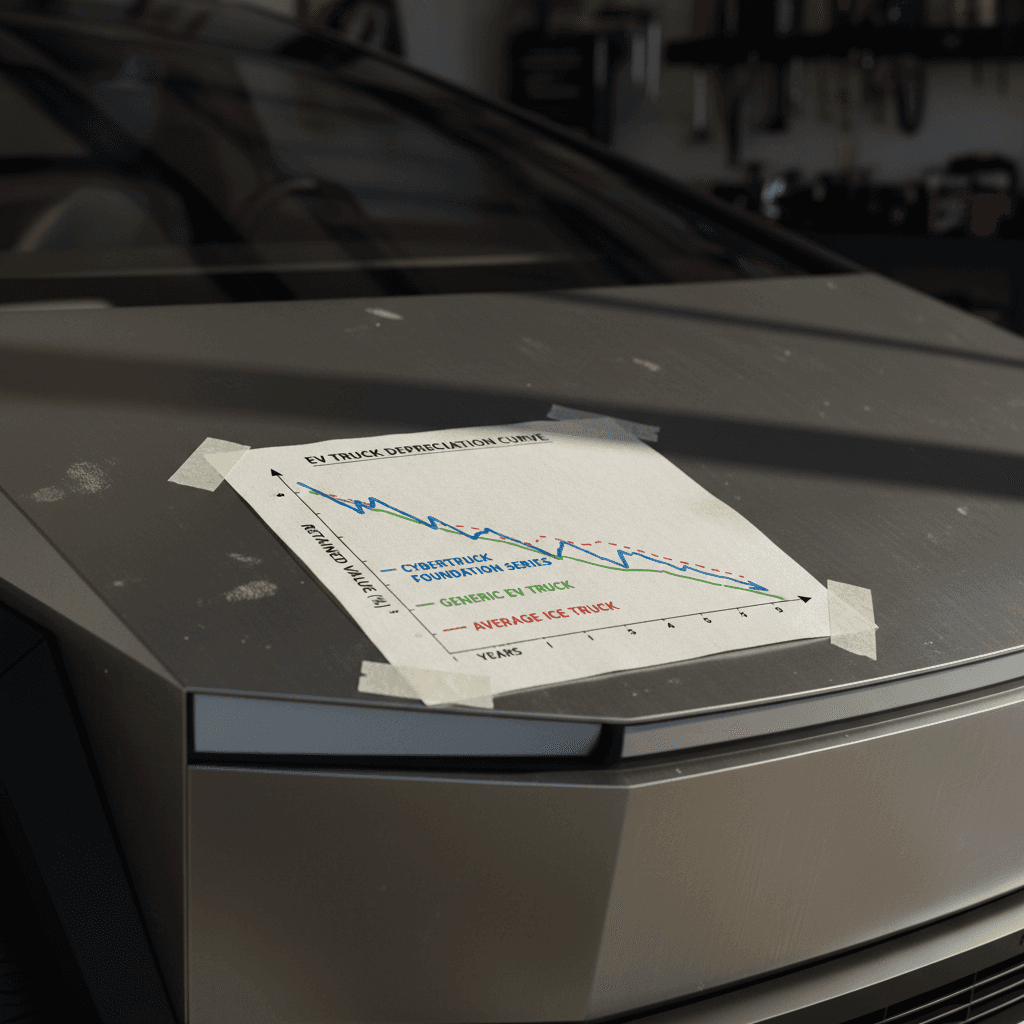
Because Cybertruck didn’t start real customer deliveries until late 2023, we have to extrapolate from what we know today: early trade‑ins, listing data, Tesla’s own pricing moves, and how other EV trucks behave. Below is a reasonable, conservative 5‑year depreciation curve for a typical dual‑motor Cybertruck bought new at around $80,000 effective price (after destination, before incentives), assuming average annual mileage.
Illustrative 5‑year Tesla Cybertruck depreciation curve
This example assumes an $80,000 new price for a non‑Foundation Series dual‑motor Cybertruck, typical U.S. driving (12,000–15,000 miles per year), and no major accidents or title issues.
| Year of ownership | Approx. age | Estimated value | Total depreciation vs. new | % of original price remaining |
|---|---|---|---|---|
| Purchase | Brand new | $80,000 | , | 100% |
| Year 1 | ~12 months | $64,000–$68,000 | $12,000–$16,000 | 80–85% |
| Year 2 | ~24 months | $56,000–$60,000 | $20,000–$24,000 | 70–75% |
| Year 3 | ~36 months | $48,000–$54,000 | $26,000–$32,000 | 60–68% |
| Year 4 | ~48 months | $44,000–$50,000 | $30,000–$36,000 | 55–62% |
| Year 5 | ~60 months | $40,000–$46,000 | $34,000–$40,000 | 50–57% |
These are directional estimates, not guarantees. Actual values will vary by trim, options, mileage, and market conditions.
How this compares to traditional and electric pickups
- Years 0–2: Expect the steepest drop as early‑adopter premiums evaporate and new incentives or trims arrive.
- Years 3–5: Depreciation should slow as the truck’s value becomes more about core utility, payload, towing, comfort, and less about being the newest thing.
- Beyond 5 years: If battery health and build quality hold up, Cybertruck could behave more like a niche full‑size truck with a long tail of value, especially in dry climates where the stainless body has advantages.
When the curve can get much steeper
How Cybertruck compares to other electric pickups
Cybertruck vs. other electric pickup depreciation
Why model choice matters if you care about resale value
Rivian R1T
Early data suggests the Rivian R1T is holding value slightly better than Cybertruck at similar age and mileage. Across multiple sources, typical depreciation after 3–4 years is often in the 30–40% range, which implies roughly 60–70% of original price remaining.
Ford F‑150 Lightning
The F‑150 Lightning has seen heavy discounting on the new side and notable used price drops. Early adopters who paid peak prices have taken large percentage losses, but today’s buyers benefit from lower entry prices and flatter forward depreciation.
Chevy Silverado EV & others
Newer entrants like the Silverado EV and upcoming Ram REV are still pricing themselves into a market that’s more price‑sensitive than 2021–2022. Their 5‑year curves will likely look closer to Lightning than to traditional gas trucks, especially for high‑MSRP trims.
The common theme across electric pickups is this: the days of guaranteed sky‑high resale because it’s an EV are over. Market share is fragmenting, incentives are common, and used buyers are more rational. Cybertruck sits on the riskier end of this spectrum because its appeal is more niche and its production story has been bumpier than rivals.
Key factors that will bend the depreciation curve up or down
Factors that support values
- Charging experience: Native access to the Tesla Supercharging network is still a major plus over some rivals, making Cybertruck easier to road‑trip.
- Unique design: For some buyers the stainless, angular look is the whole point. That cult appeal can sustain demand even as mainstream shoppers move on.
- Limited long‑term supply: If Tesla never builds Cybertruck at true F‑150 scale, scarcity could help older, well‑kept trucks hold a floor.
- Software updates: If Tesla keeps adding meaningful features over‑the‑air, earlier trucks can stay “good enough” longer, slowing tech‑driven obsolescence.
Factors that hurt values
- Quality or durability issues: Persistent stories about corrosion, panel alignment, or suspension wear will spook used buyers and lenders.
- Better second‑gen EV trucks: If a cleaner‑sheet electric F‑150 or Silverado arrives with more range, payload, or comfort at similar price, older Cybertrucks will be compared directly.
- Policy changes: If future clean‑vehicle credits favor newer trucks or certain batteries, older builds can become less financially appealing overnight.
- High insurance or repair costs: If body repairs on stainless trucks remain slow or expensive, insurers will bake that into premiums and total‑loss decisions.
How to ‘bend the curve’ in your favor
Foundation Series vs. regular Cybertrucks: different curves
The Foundation Series complicates any clean depreciation curve. These early, fully‑loaded builds carried roughly a $20,000 premium over standard trims, plus bundled options and sometimes extra perks like free lifetime Supercharging. They also bore the brunt of Tesla’s pricing experiments and the collapse of the initial flipping bubble.
How depreciation differs: Foundation Series vs. regular Cybertruck
Directionally comparing depreciation patterns for a $100,000 Foundation Series and an $80,000 regular dual‑motor Cybertruck bought around the same time.
| Truck type | New effective price | 2‑year ballpark value | Approx. 2‑year depreciation | 5‑year value range (est.) | Who this curve suits |
|---|---|---|---|---|---|
| Foundation Series | $100,000 | $70,000–$78,000 | $22,000–$30,000 (22–30%) | $55,000–$65,000 (55–65%) | Collectors, brand superfans, owners who prioritize options and perks over strict value retention. |
| Regular dual‑motor | $80,000 | $56,000–$60,000 | $20,000–$24,000 (25–30%) | $40,000–$46,000 (50–57%) | Value‑focused owners who just want capability and access to Tesla’s charging network. |
The big takeaway: Foundation Series owners tend to lose more dollars and a higher percentage of value early on, even if some unique trucks retain long‑term collector interest.
Foundation Series ‘collectible’ upside is speculative
Battery health, range loss, and value over time
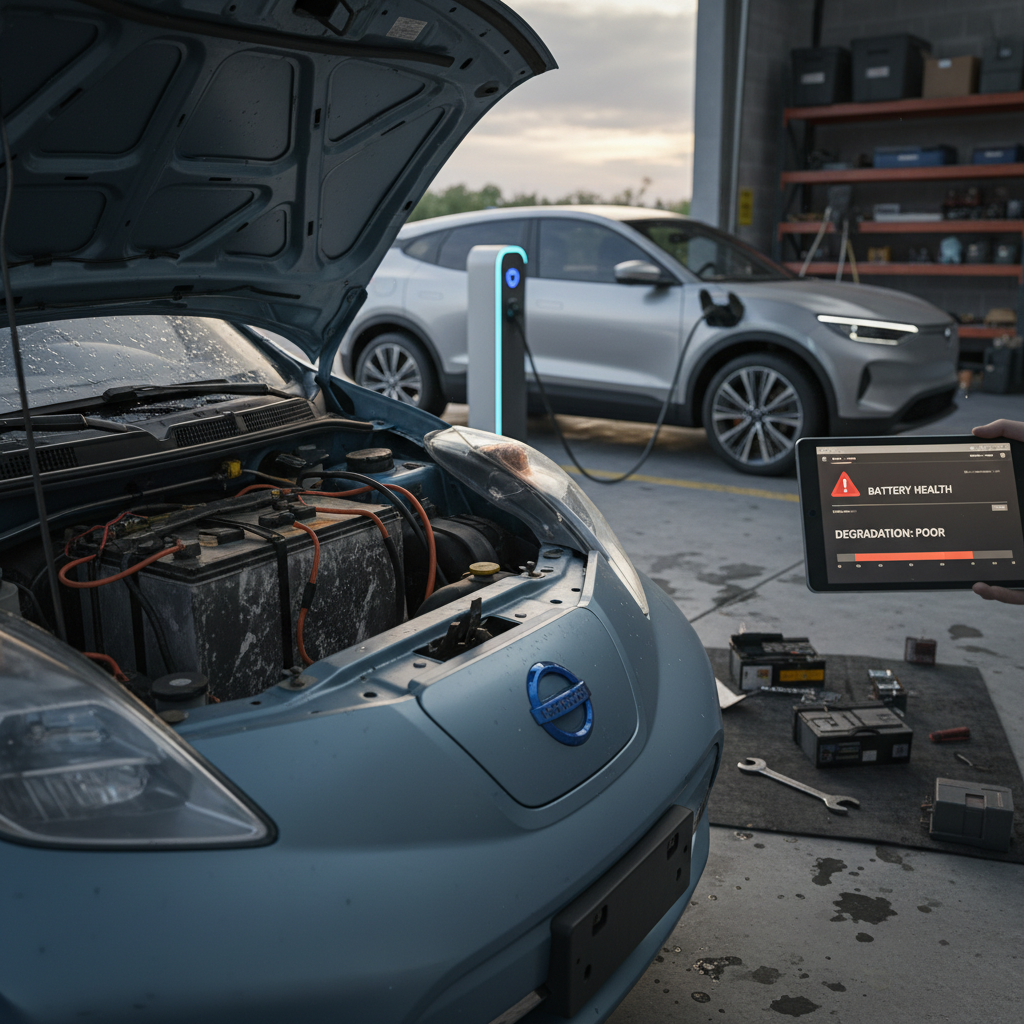
For any EV, the real long‑term value killer isn’t paint or carpet; it’s a tired battery. Buyers don’t care about the original EPA number so much as how much real‑world range the truck still delivers in year 7 or 10. Luckily, modern packs tend to degrade gradually if they’re managed well, and most Cybertruck buyers will hit time limits before mileage limits.
Battery‑health habits that protect your resale value
Keep fast‑charging in perspective
DC fast charging is part of the Cybertruck value proposition, but try not to use it as your default. Heavy reliance on high‑power Supercharging can accelerate degradation. Favor home Level 2 charging for daily use when possible.
Avoid chronic 0–100% swings
Regularly running the pack near empty and charging to 100% every night is a great way to stress it. Keeping your daily charge window roughly between 20–80% is a simple, buyer‑visible signal that you cared about the battery.
Watch software‑reported range over time
Track the truck’s estimated full‑charge range annually at similar temperatures. A modest decline is normal; sudden or large drops merit a service visit and documentation, which future buyers will appreciate.
Document all high‑voltage service
If you ever have battery, drive unit, or high‑voltage repairs done, keep every invoice and service log. A used buyer will pay more for a truck with a recent pack replacement or clearly documented repairs than for one with unknown history.
Use preconditioning smartly
In cold climates, precondition the pack before fast charging or heavy towing rather than hammering a cold battery. It improves charging speed, driving feel, and long‑term health.
How Recharged captures battery health in pricing
Buying strategies by time horizon (1, 3, and 5+ years)
Cybertruck buying playbook by time horizon
If you’ll own it ~1–2 years
Avoid paying above current new‑vehicle transaction prices; any premium will likely evaporate quickly.
Lean toward more mainstream specs (dual‑motor, common colors) that are easier to resell quickly.
Consider leasing if Tesla or third‑party lenders offer residuals that look optimistic; the bank, not you, eats the downside if values fall faster than projected.
Treat accessories and wrap/PPF as sunk costs, cosmetics rarely add dollar‑for‑dollar resale value in such a short window.
If you’ll own it ~3–5 years
Target well‑optioned but not maxed‑out trucks; mid‑trims usually have the best depreciation profile.
Prioritize clean history: no structural damage, no buybacks, no branded titles. Tiny issues loom larger for second or third owners.
Plan for one set of tires and routine maintenance in your total cost of ownership math, truck‑size EV tires aren’t cheap.
Shop where you can see battery diagnostics and detailed condition reports, not just photos. That’s where Recharged’s Score Report changes the game.
If you’ll own it 5+ years
Buy the configuration you actually want to live with, seat comfort, cabin noise, and visibility matter more than tiny differences in 5‑year resale.
Don’t overpay for limited‑run aesthetics unless you genuinely enjoy them; most cosmetic packages normalize in value over time.
Focus on long‑term reliability signals: build date relative to known fixes, service history, and how the truck was used (light personal vs. commercial).
Think about your local charging and service ecosystem. If the nearest Tesla center is hours away, downtime costs rise and resale pool shrinks.
How Recharged helps you price a used Cybertruck realistically
Trying to reverse‑engineer Cybertruck’s 5‑year depreciation curve from scattered listings is frustrating. That’s exactly the kind of opaque market Recharged was built to fix. Whether you’re buying or selling, you get a grounded view of value instead of a guess based on the loudest forum post.
What you get with a Cybertruck on Recharged
Less speculation, more signal
Recharged Score battery diagnostics
Every used EV, including Cybertruck, gets a Recharged Score Report that quantifies battery health, estimated real‑world range, and pack behavior. That turns a vague fear (“what if the battery is bad?”) into a concrete, priced‑in number.
Fair market pricing engine
Recharged blends live market data, auction results, and historical EV depreciation curves to pinpoint realistic prices. You see how a specific truck’s mileage, trim, and condition push it above or below the modeled 5‑year curve.
Specialist guidance & flexible selling
From financing and trade‑ins to instant offers or consignment, Recharged’s EV‑specialist team helps you pick the right path. You can buy fully online or visit our Experience Center in Richmond, VA, and we’ll handle nationwide delivery.
Ready to find your next EV?
Browse VehiclesTesla Cybertruck depreciation FAQ
Frequently asked questions about 5‑year Cybertruck depreciation
Bottom line: what the 5‑year curve means for you
The Tesla Cybertruck depreciation curve over 5 years isn’t a mystery so much as a moving target. Early owners have already proven that paying speculative premiums is a fast way to light money on fire, but buyers entering the market today face a different set of trade‑offs. If you treat Cybertruck like what it is, a high‑priced, tech‑heavy work and lifestyle truck, rather than a speculative asset, the depreciation picture lines up with the rest of the electric‑pickup world.
Your job is to decide where you want to sit on that curve: pay more for the newest build and accept sharper year‑one drops, or let someone else take the hit and buy nearly new at a discount. Recharged exists to make that choice transparent. With verified battery health, fair‑market pricing, financing, trade‑in options, and nationwide delivery, you can step into a Cybertruck with eyes wide open about what the next five years are likely to look like.