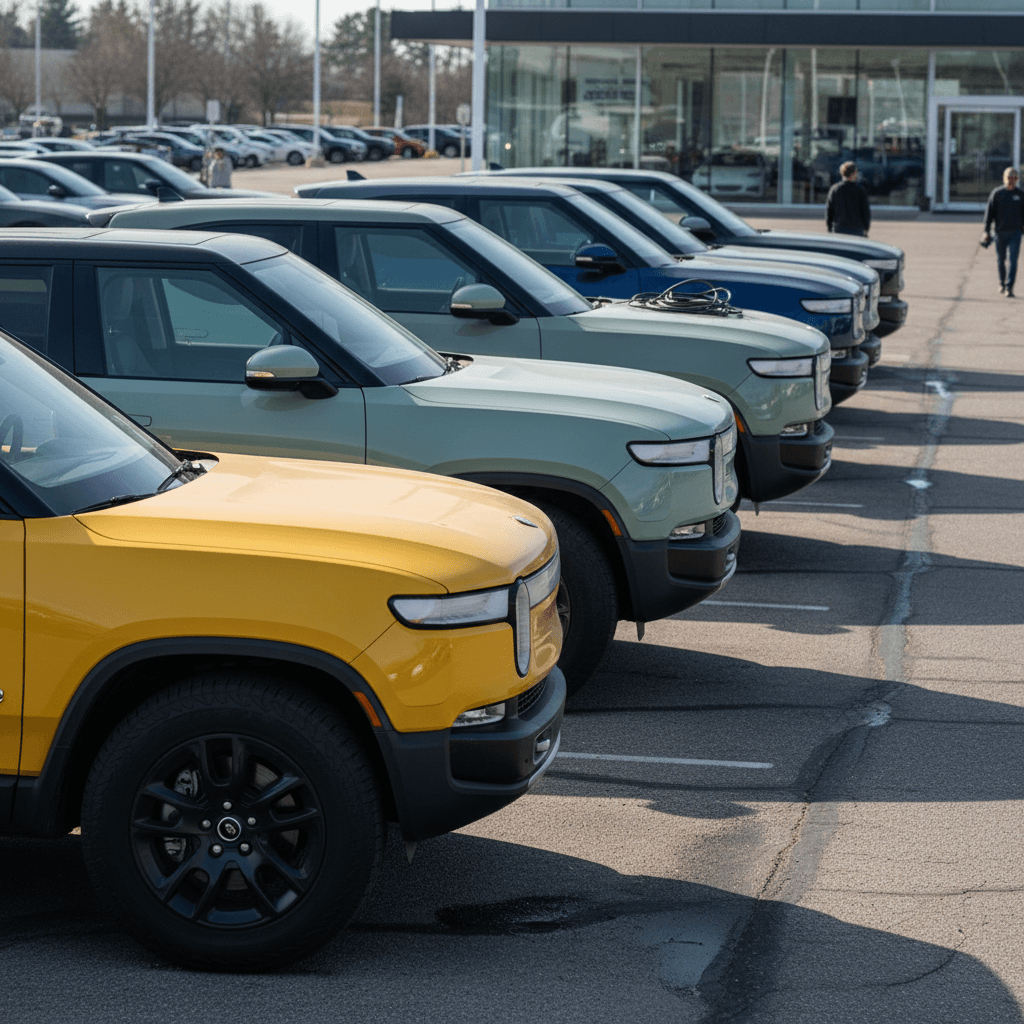
If you’re watching Rivian R1T resale value in 2025, you’re not alone. Early Rivian buyers are finally starting to sell or trade their trucks, used prices are all over the map, and new EV incentives keep shifting the goalposts. Understanding how the R1T is actually holding its value can save you thousands, whether you’re buying used, trading in, or trying to time your sale.
Quick take
Why Rivian R1T resale value matters in 2025
Electric pickup trucks are still a young segment, which means resale values are more volatile than your typical half-ton. Rivian’s R1T launched as a premium, adventure-focused truck with pricing often in the $75,000–$90,000 range. In 2025, higher interest rates, shifting federal tax credits, and more competition from Ford, Tesla, GM and Chevy mean used pricing is under pressure, but it’s not collapsing the same way across every brand.
For you as an owner or shopper, resale value is real money. Stronger-than-average retention can mean a bigger down payment on your next EV, lower total cost of ownership, and more confidence buying used, especially from a startup brand that doesn’t have decades of market history.
How is the Rivian R1T holding its value in 2025?
Rivian R1T value snapshot in 2025
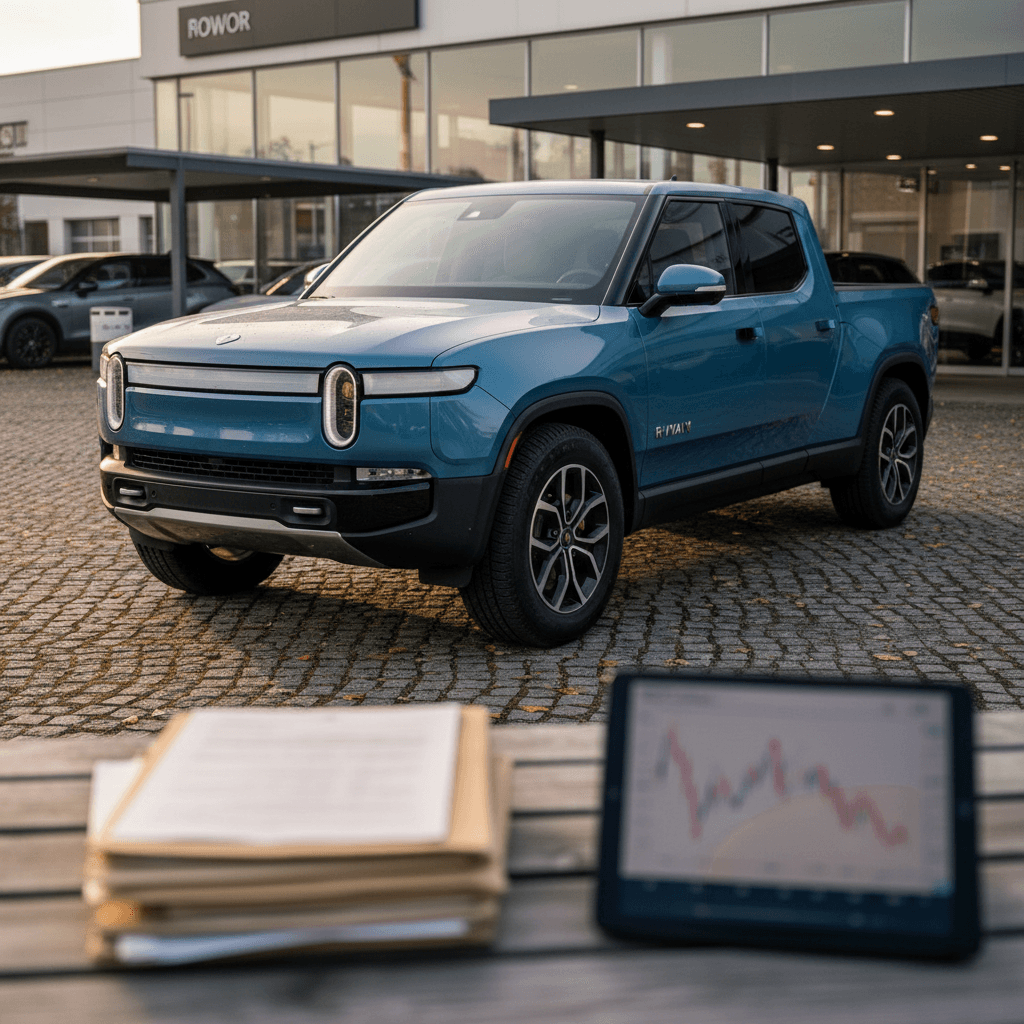
Across multiple data sources, the Rivian R1T is showing roughly 30–40% depreciation over three to four years for most trims, depending on mileage and options. That’s noticeably better than the 50–60% five‑year depreciation that’s common across the broader EV market, and it’s competitive with strong resale performers among gas trucks.
Watch the spread
Real-world used prices and depreciation data
To make sense of Rivian R1T resale value in 2025, it helps to look at three lenses: pricing guides, used‑car listings, and depreciation forecasts. None is perfect, but together they paint a consistent picture.
What different data sources say about R1T value
These examples don’t set the price of your exact truck, but they illustrate where the market is clustering in 2025.
| Source / Example | Model & Year | Odometer | Original Price* | Estimated / Listed Price | Implied Depreciation |
|---|---|---|---|---|---|
| Edmunds appraisal | 2025 R1T Dual Max | Typical use | ≈$90,000 | ≈$70,000–$72,000 (good condition) | ~20–25% after 1–2 years |
| Kelley Blue Book depreciation | 2024 R1T (all trims) | Typical use | $71,700 | $65,800 (2025 forecast resale) | ~8% first year |
| Kelley Blue Book 3‑year lookback | 2023 R1T entry model | Typical use | $74,800 | $51,400 resale | ~31% over 3 years |
| Used‑car listing example | 2024 R1T Adventure Dual Standard | 16,000 miles | $71,700 | $59,998 asking | ~16–20% after ~1 year |
Rivian R1T value snapshots from common 2025 data sources.
Guides vs. reality
The through‑line here is that R1Ts are no longer “unicorns” priced above MSRP, but neither are they being fire‑sold. A typical 2–3‑year‑old truck with reasonable mileage is often trading in the low‑to‑mid‑$50,000s, with newer or better‑equipped examples stretching into the $60,000s and low $70,000s.
How Rivian R1T resale compares to other electric trucks
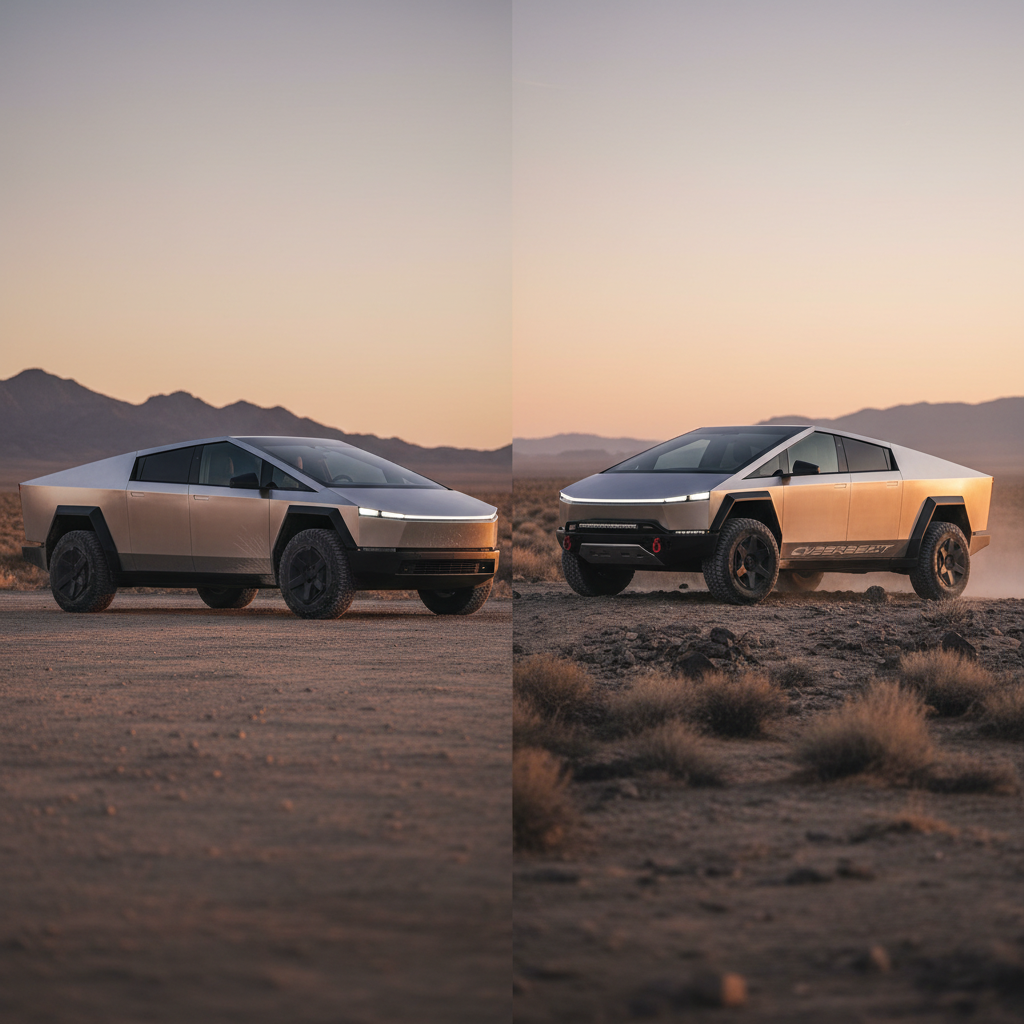
Rivian R1T vs. Tesla Cybertruck
- Early Cybertruck trade‑in data suggests losses of roughly 37–38% of value in under two years for some owners.
- By contrast, R1Ts over similar timeframes are more often showing around 29–32% depreciation, depending on trim and mileage.
- Cybertruck’s polarizing design, quality concerns and softer demand are weighing more heavily on resale right now.
Rivian R1T vs. Ford F‑150 Lightning & others
- Ford’s F‑150 Lightning started with aggressive pricing but has seen more discounting and incentives, which can drag used prices down.
- Traditional truck brands have deep fleets, so supply builds quickly; Rivian production has been more constrained, helping support values.
- Compared with the wider EV market, where 5‑year losses near 60% aren’t uncommon, R1Ts look like upper‑tier value retainers among electric trucks.
Good news for owners
Key factors that drive R1T resale value
What makes one used R1T worth more than another?
Same badge, wildly different values depending on how each truck was ordered and used.
Battery & pack size
Mileage & use
Trim & options
Accident & repair history
Region & incentives
Charging & fast‑charge history
Spec with the second owner in mind
Battery health and warranty impact on value
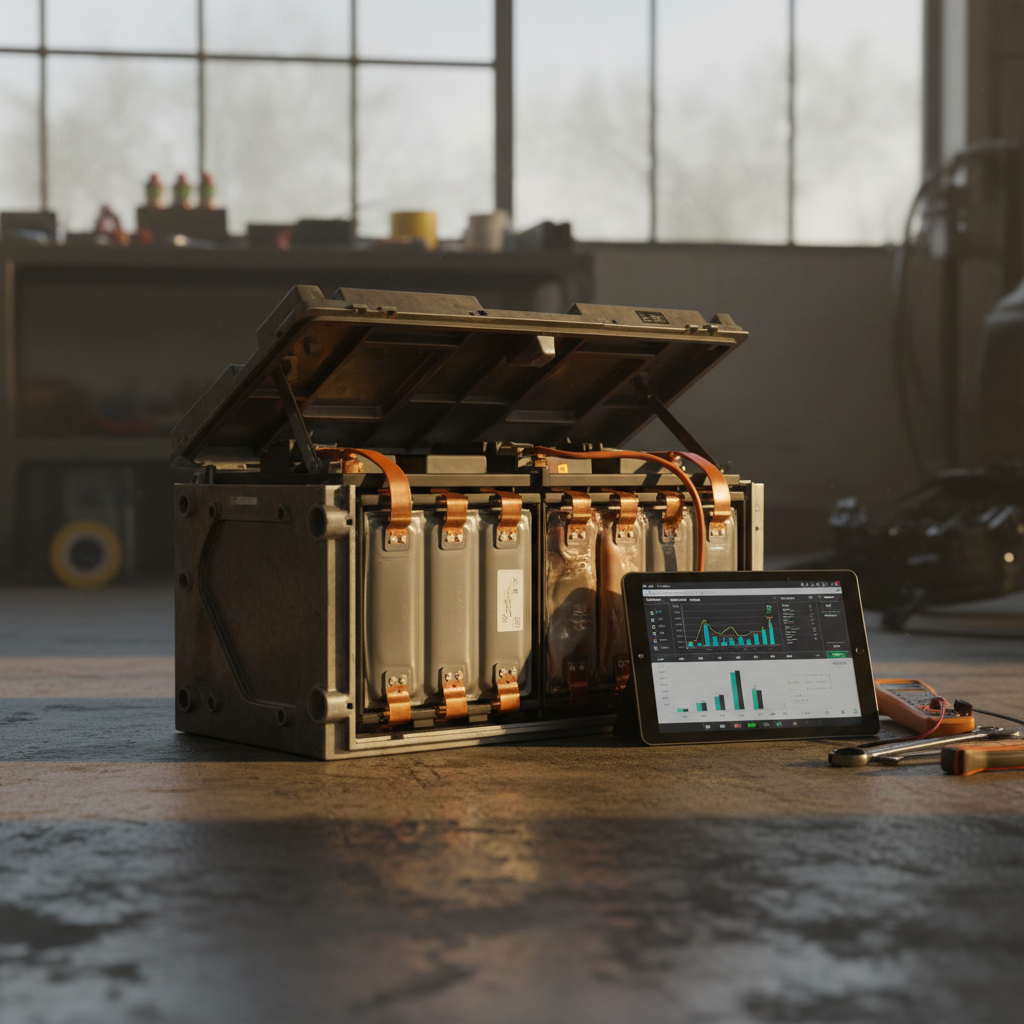
Because the R1T is an EV, the battery pack is the single most expensive component, and buyers know it. Rivian’s generous 8‑year, up‑to‑175,000‑mile warranty on the battery and drivetrain helps underwrite resale confidence, but shoppers still want to understand how the pack has been used and how much capacity it has left.
- Most buyers expect some capacity loss after several years, but large, sudden drops are red flags.
- Frequent DC fast‑charging and constant 100% charges can accelerate degradation, especially in hot climates.
- Software‑logged battery health and third‑party diagnostics can give objective data instead of vague “feels like less range” impressions.
- A truck still well within its 8‑year/175,000‑mile coverage window is less risky for second and third owners.
Silent value killer: hidden battery issues
Tips to protect your R1T resale value
6 ways to keep your R1T’s value strong
1. Treat the battery kindly
Avoid parking at 100% for long periods, limit DC fast‑charging to road trips, and use scheduled charging to keep most daily use in the 20–80% band.
2. Document everything
Keep service visits, software update notes, accessory installs, and even alignment checks in a single digital or physical folder. Well‑documented trucks sell faster and closer to asking price.
3. Stay ahead on tires and alignment
Heavy EV trucks are hard on tires. Uneven wear looks bad in listings and signals potential suspension issues. Keeping a fresh, even set can pay back at sale time.
4. Fix cosmetic issues promptly
Rock chips that become rust, cracked glass and curb‑rashed wheels all send buyers hunting for price cuts. Small body‑shop visits can preserve thousands in resale value later.
5. Avoid “too weird to sell” builds
Extreme wraps, niche wheel setups or unusual color combos may be fun, but they narrow your buyer pool. If you plan to modify, keep stock parts and be ready to revert.
6. Know your market timing
Listing before a new model year refresh, or before major incentive changes, can net you a stronger price than waiting until everyone else lists at once.
What to look for when buying a used Rivian R1T
If you’re shopping for a used R1T in 2025, you’re in an interesting spot: depreciation has taken a chunk out of MSRP, but trucks are still new enough that long‑term unknowns remain. Your goal is to separate the great deals from the problem children.
Used R1T buyer’s quick evaluation grid
Use this as a mental checklist when you’re scrolling listings or standing in front of a truck.
History & condition
- Ask for a full vehicle history report and any Rivian service records.
- Look for recurring service visits for the same issue.
- Inspect for off‑road damage underneath: skid plates, suspension arms, battery enclosure.
Battery & charging behavior
- Ask how the truck was typically charged (home Level 2 vs. constant DC fast‑charge).
- Check for any high‑voltage system warnings or range anomalies.
- When available, review a battery‑health report rather than relying on guesswork.
Mileage & use pattern
- 20,000 highway miles can be easier on a truck than 8,000 hard off‑road miles.
- Look for even panel gaps and consistent paint finish; poorly repaired damage often signals a harder life.
Price vs. value
- Compare any asking price against multiple sources, not just one guide.
- Factor in remaining warranty and any included accessories, roof racks, bed systems, or chargers add real value.
Bring data to the test drive
How Recharged helps with R1T pricing and battery health
Used EVs live or die on transparent battery health and fair pricing. That’s exactly where Recharged focuses. Every Rivian R1T we list comes with a Recharged Score Report that includes verified battery diagnostics, usage patterns, and market‑based pricing analysis, so you’re not guessing how much range you’re really buying or what the truck should be worth.
- Recharged Score battery diagnostics measure pack health beyond what the dash shows, so you can compare different R1Ts apples‑to‑apples.
- Fair market pricing blends recent sales, guidebook data and live marketplace trends, so you see where a given truck sits in the current 2025 market.
- Financing and trade‑in options let you roll your existing EV into a used R1T, or trade your R1T out with an instant offer or consignment if you’re ready to move on.
- Nationwide delivery and EV‑specialist support mean you don’t have to live next to an EV‑savvy dealer to buy a used R1T with confidence.
A smoother way to move in or out of an R1T
Ready to find your next EV?
Browse VehiclesRivian R1T resale value 2025 FAQ
Frequently asked questions about R1T resale in 2025
Bottom line: Is the Rivian R1T a good resale bet in 2025?
In a choppy 2025 EV market, the Rivian R1T stands out as one of the healthier resale stories. It’s still an expensive truck, and depreciation is real, but early numbers show Rivian owners giving up a smaller slice of value than many other EV buyers, especially those in more speculative or heavily discounted models.
If you already own an R1T, treating the battery well, documenting its history and timing your sale thoughtfully can preserve that advantage. If you’re shopping used, focusing on battery health, warranty coverage and transparent pricing will help you zero in on the trucks that justify their asking prices.
And if you’d rather not decode all of that alone, Recharged is building the used‑EV marketplace around exactly these pain points, so your next move into or out of a Rivian R1T is based on real data, not guesswork.