If you’re shopping for a used Rivian R1T or thinking about selling yours, you’ve probably already typed “Rivian R1T KBB value” into a search bar. Kelley Blue Book is still the default pricing benchmark in the U.S., but with a young, fast‑moving EV like the R1T, you need to understand what those numbers do, and don’t, actually tell you.
Quick note before we dive in
Rivian R1T KBB value at a glance
Snapshot: how KBB currently views the R1T
In plain English: KBB sees the Rivian R1T as a relatively strong‑resale electric pickup. It doesn’t hold value quite as well as the very best trucks in America, but it’s out‑performing a lot of EVs that seemed like sure bets just a few years ago.
Pricing rule of thumb
How KBB actually calculates Rivian R1T values
Kelley Blue Book doesn’t make up numbers in a vacuum. For a vehicle like the Rivian R1T, KBB blends real‑world transaction data, auction results, asking prices, incentives, and historical depreciation curves to estimate what a specific truck is worth today in different scenarios: trade‑in, private party, and dealer retail.
- Transaction data: What similar Rivian R1Ts have actually sold for at dealers around the country.
- Auction results: How R1Ts perform in wholesale lanes, which often lead retail prices by a few weeks.
- Asking prices: What dealers and private sellers are listing comparable R1Ts for right now.
- Depreciation models: How the R1T, and similar EVs and pickups, have historically lost value over time.
- Adjustments: Regional demand, seasonality, equipment, and mileage all tweak the baseline up or down.
Why EV pricing is trickier
Trade‑in value
This is what a dealer might realistically offer you for your R1T when you trade it in toward another vehicle. It’s lower because the dealer still has to recondition, market, and retail your truck, and make a margin.
Trade‑in values are the most conservative KBB numbers and tend to track closely with wholesale auction prices.
Private party & retail values
Private party value reflects what you could expect if you sell your R1T directly to another consumer. Dealer retail (or Fair Purchase Price) reflects what buyers are actually paying at franchised and independent dealers.
These numbers are higher than trade‑in, think of them as the top of the realistic price band for your truck.
Current KBB pricing ranges for used Rivian R1T models
Exact values change week to week, trim to trim, and truck to truck, but KBB’s own Rivian R1T pages give us a sense of where the market has settled for recent model years.
Illustrative KBB pricing for late‑model Rivian R1T
Approximate national‑average Kelley Blue Book Fair Purchase Prices (dealer retail) for typical‑mileage trucks in good condition. These are examples, not quotes.
| Model year & trim | Original MSRP (approx.) | Recent KBB Fair Purchase Price* | Implied depreciation |
|---|---|---|---|
| 2024 R1T Dual Motor Standard pack | $71,700 | ≈$52,000–$53,000 | ~25–30% off MSRP |
| 2024 R1T Dual Motor Large pack | $78,700 | ≈$56,000–$57,000 | ~25–30% off MSRP |
| 2024 R1T Dual Motor Max pack | $85,700 | ≈$62,000–$63,000 | ~25–30% off MSRP |
| 2022–2023 R1T Launch / early Dual Motor | High $60Ks–$80Ks+ | Often mid–high $40Ks to low $50Ks | ~30–40% off original MSRP |
Always run your exact VIN, mileage, options, and ZIP code on KBB for current values.
What these numbers really mean
Rivian R1T depreciation vs other EVs and trucks
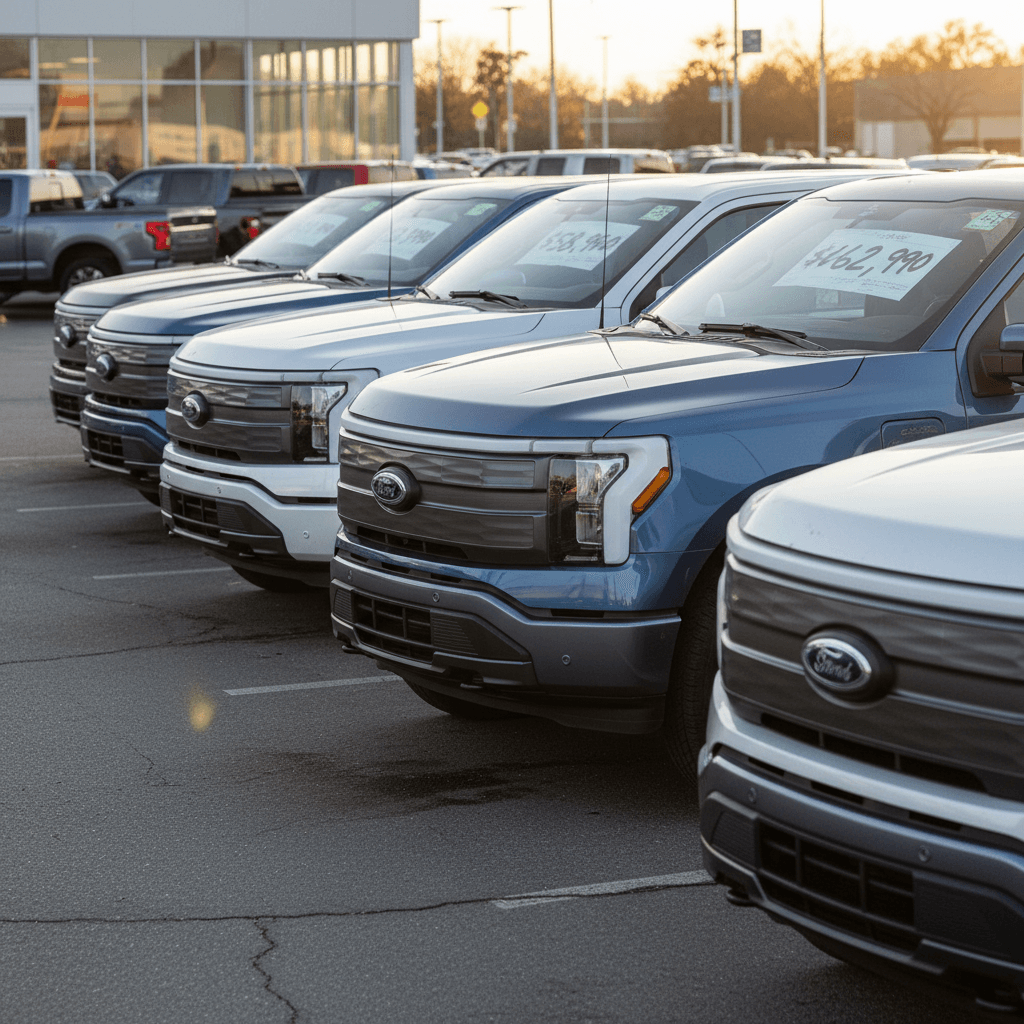
The real story behind any KBB value is depreciation: how fast a vehicle sheds its original MSRP. Here, the Rivian R1T is quietly outperforming the broader EV market, even if it still trails some traditional pickups.
How the R1T stacks up on resale
Electric pickups are still new, but patterns are emerging.
Vs. other electric pickups
Analyses of 5‑year resale projections show the R1T retaining around 47% of its value. That’s slightly behind the Ford F‑150 Lightning, but ahead of some other battery trucks.
Vs. luxury EV SUVs
Vs. all vehicles
The bottom line on depreciation
Factors that move your R1T’s KBB value up or down
KBB gives you a single number (or a narrow range), but the real market for a used Rivian R1T is a spectrum. Small differences in spec, condition, and timing can move value by thousands of dollars either way.
Key value drivers for Rivian R1T KBB value
1. Battery pack and range
Max and Large pack trucks with higher EPA range typically command a premium, especially in regions where road‑tripping or towing is common. A Standard‑pack truck with obvious degradation may sit below KBB’s midline.
2. Motor configuration & software
Quad Motor and higher‑performance Dual Motor variants, plus paid software unlocks (extra power or range), can justify pricing above a basic KBB estimate, if those options are clearly documented and transferrable.
3. Mileage and usage profile
KBB adjusts for mileage, but usage matters too. A 40,000‑mile R1T that’s lived on the highway and charged gently can be more attractive than a lower‑mileage truck with harsh duty cycles or lots of DC fast charging.
4. Cosmetic and structural condition
Panel damage, off‑road scars, or interior wear can drag a truck below its KBB number. Conversely, a clean, well‑maintained truck with full records can credibly ask at or slightly above KBB’s retail range.
5. Market timing and incentives
Sudden factory price cuts, federal or state incentive changes, or big swings in interest rates can move used EV values quickly. KBB’s data usually catches up, but there can be a lag of weeks or months.
6. Brand headlines & recalls
High‑profile recalls or scary headlines can momentarily chill demand, even when the fix is a simple over‑the‑air update. Savvy buyers use these moments to negotiate; sellers may see offers briefly dip below KBB.
Don’t ignore title status
How to use KBB value when buying a used Rivian R1T
If you’re a buyer, the point of looking up a Rivian R1T KBB value isn’t to find a magic “correct” price. It’s to establish a realistic band, then adjust up or down based on what you find when you dig into a specific truck.
Buyer checklist: turning KBB value into a smart deal
1. Start with KBB’s Fair Purchase Price, not MSRP
Use the Fair Purchase Price for a truck with similar year, trim, and mileage as your anchor. If an asking price is far above that, the seller should have a compelling story (and documentation) to back it up.
2. Compare multiple pricing sources
Cross‑check KBB with live listings on Rivian’s own used inventory, third‑party marketplaces, and EV‑focused retailers like <strong>Recharged</strong>. Real‑world asking prices will reveal if your market is running hot or soft.
3. Ask for battery and charging history
KBB doesn’t see how a truck was charged or how its pack is aging. Ask the seller for current usable range at 100%, DC fast‑charging habits, and any battery‑related service history.
4. Get a third‑party inspection and battery health report
Because the battery is the heart of your R1T’s value, a standard mechanical inspection isn’t enough. Services like the <strong>Recharged Score</strong> pair physical checks with EV‑specific battery diagnostics so you know what you’re really buying.
5. Price in future software and charging changes
Rivian has already shown it can unlock more range or power via paid software. Access to the Tesla Supercharger network is also rolling out. Trucks that are fully updated, with transferrable upgrades, may justify pricing at the top of KBB’s band.
How Recharged fits in
How to use KBB value when selling or trading your R1T
As a seller, KBB helps you avoid two big mistakes: leaving money on the table by underpricing a desirable truck, or chasing an unrealistic number and watching your listing go stale.
For trade‑ins and instant offers
Start by running your R1T through KBB’s trade‑in tool with honest condition and accurate options. That gives you a realistic floor, what a traditional dealer might be willing to pay wholesale.
Then compare that to instant‑offer tools and EV‑specialist buyers. At Recharged, for example, we combine KBB‑style market data with our own EV pricing models and battery diagnostics to generate competitive instant offers or handle your sale on consignment.
For private‑party or consignment sales
Use KBB’s private party or Fair Purchase Price as your target band, then:
- Price near the top of the band for low‑mileage, clean‑history, desirable‑spec trucks.
- Price mid‑band for average trucks in good condition.
- Dip below band if there’s cosmetic damage, heavy use, or obvious battery concerns.
If you’d rather not handle tire‑kickers and test drives yourself, a consignment sale through an EV‑focused marketplace can often net you more than a simple trade‑in while staying grounded in KBB‑driven pricing.
When you can beat KBB
Battery health: why KBB isn’t the whole story
For gas trucks, KBB can get surprisingly close just by knowing the VIN, mileage, and options. For a modern EV like the Rivian R1T, battery health and charging behavior are just as important, and KBB can’t see either directly.
What KBB assumes
KBB’s algorithms effectively assume a battery that’s aging more or less in line with the average for that model. Mild range loss is baked into the depreciation curve, but edge‑cases, hard‑used towing rigs or DC‑fast‑charged road‑warriors, get averaged out.
That’s fine when you’re looking at big national patterns, but it can miss the real story on a specific truck.
What the market will actually pay for
Individual buyers, lenders, and EV‑centric marketplaces care a lot about:
- Actual usable range today at 100% charge versus factory spec.
- DC fast‑charging history and charging patterns over time.
- Error codes or early warning signs in battery and thermal systems.
A truck that looks “average” to KBB but shows strong battery health can justify real‑world pricing at the high end, or above, its KBB range.
How Recharged’s battery data complements KBB
FAQ: Common questions about Rivian R1T KBB values
Frequently asked questions about Rivian R1T KBB value
Key takeaways on Rivian R1T KBB value
- Kelley Blue Book currently sees the Rivian R1T as a relatively strong‑resale EV pickup, with late‑model trucks often valued in the $50,000–$60,000 range depending on spec and miles.
- Depreciation so far has been better than the average EV and competitive with other electric pickups, even if it still trails the best gas trucks.
- KBB is a starting point, not a verdict. Battery pack, range, charging history, and cosmetic condition can easily move a specific truck above or below its KBB number.
- As a buyer, use KBB’s Fair Purchase Price to anchor negotiations, then layer on battery data, inspection results, and live market comps to decide what a given R1T is really worth to you.
- As a seller, KBB helps you set realistic expectations and spot lowball offers. If your truck is a standout spec with strong battery health, you may be able to defend pricing at the top of, or slightly above, its KBB range.
- Marketplace specialists like Recharged sit between KBB’s national model and the messy reality of EV pricing. With tools like the Recharged Score, financing support, trade‑in or consignment options, and nationwide buyers, we help you turn a theoretical KBB value into a fair, transparent real‑world deal.
If you remember nothing else, remember this: KBB tells you how the average Rivian R1T is valued; your job is to prove why a specific truck is better, or be honest when it’s worse. Use KBB for guardrails, then let battery health, history, and real‑time market data do the fine‑tuning. That’s where platforms like Recharged are built to shine.