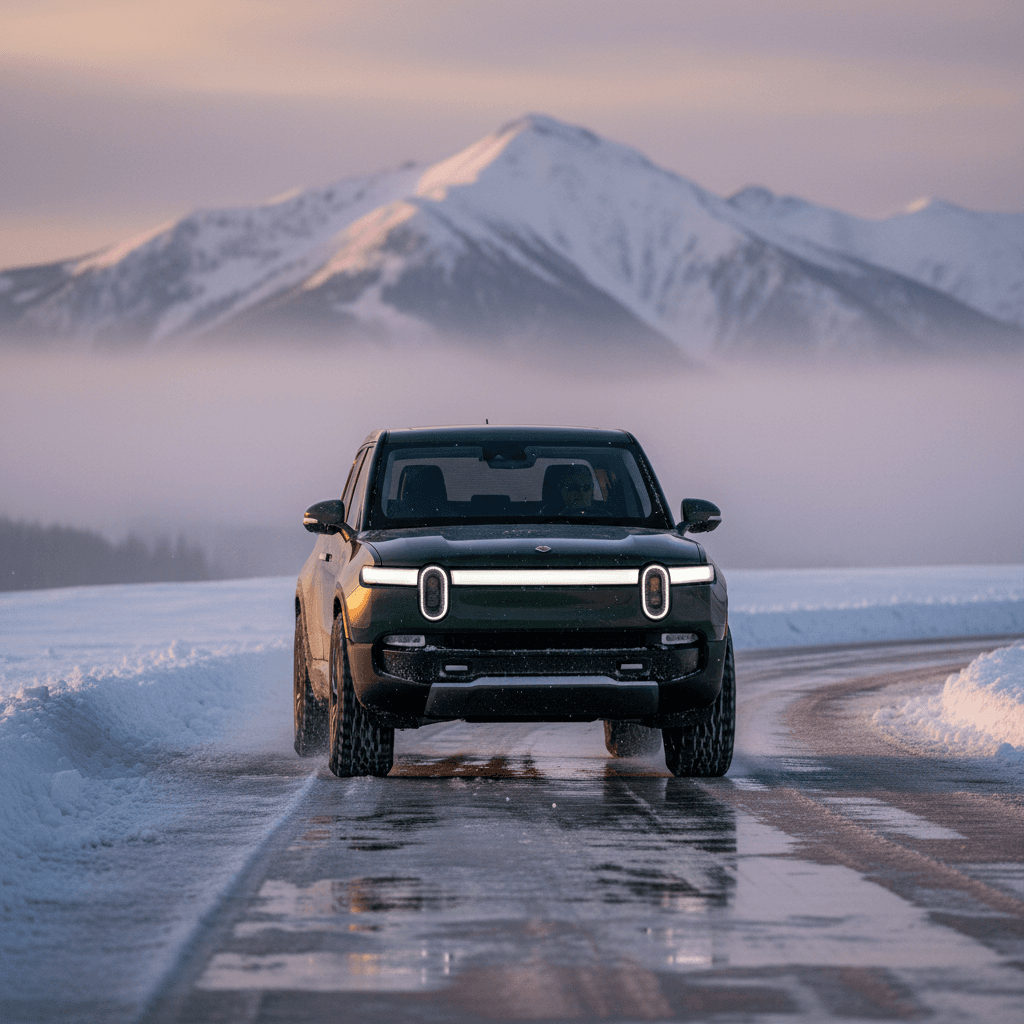
If you live where winter is serious, you don’t just want an electric truck that *can* handle snow and ice, you want one that feels like it was built for it. The question many shoppers ask is simple: **is the Rivian R1T the best EV truck for snow and ice**, or should you look elsewhere? Let’s unpack how it really behaves when the roads turn white and slick.
At a glance: R1T in winter
Rivian R1T in Winter: Quick Overview
Rivian R1T winter capability snapshot
On paper, the R1T reads like a winter specialist: dual‑ or quad‑motor all‑wheel drive, an adjustable air suspension, dedicated **Snow** and **All‑Terrain** modes, and a heavy battery pack mounted low in the chassis. In practice, owners often describe it as feeling like a luxury snowcat: remarkably sure‑footed on snow and surprisingly capable on unplowed roads, provided you respect its weight and choose the right tires.
Is the Rivian R1T Good in Snow and Ice?
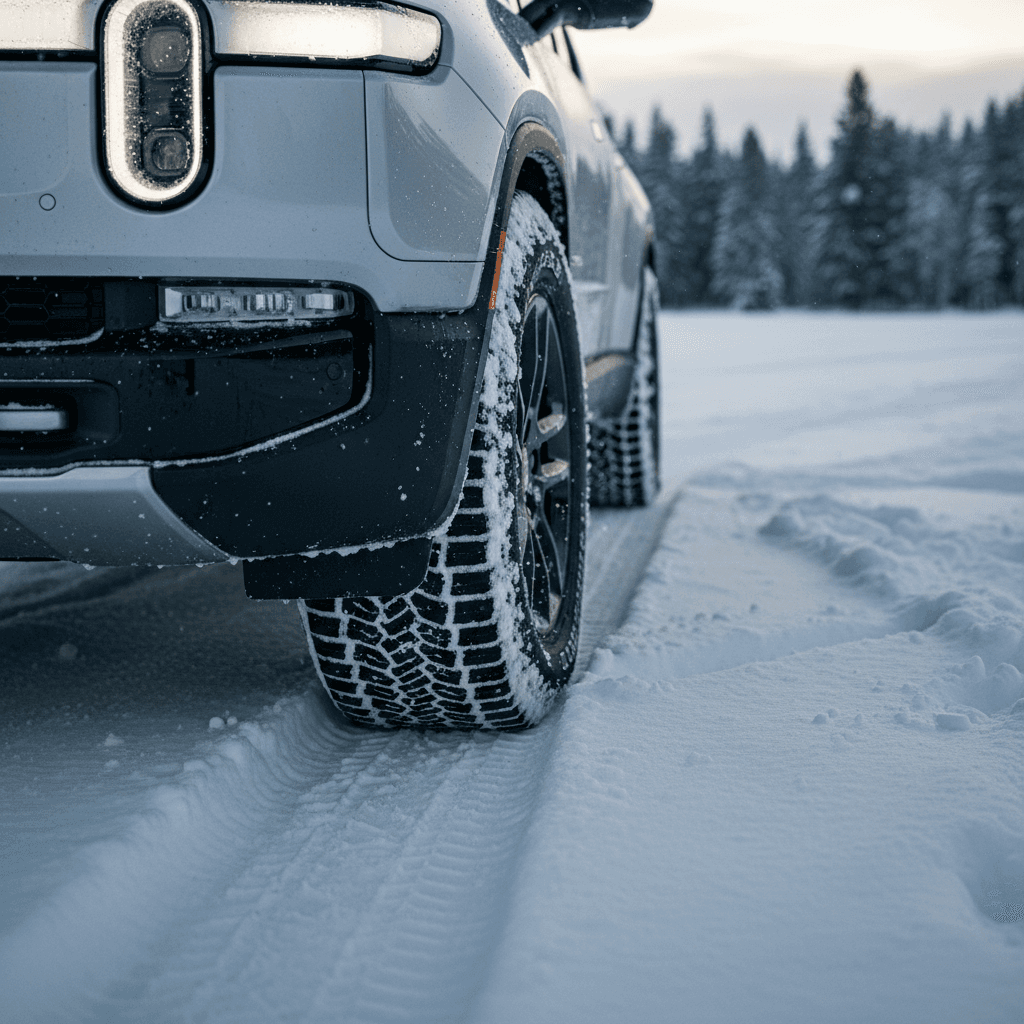
In a word, **yes**, with proper winter tires, the Rivian R1T is excellent in snow and respectable on ice. Compared with gas 4x4 pickups, it feels more planted and more precise because its electric motors can meter torque in tiny, rapid adjustments that are basically impossible with a traditional transfer case and mechanical differentials.
Why the R1T feels so composed on winter roads
Electric torque control and smart chassis tuning are doing a lot of the work for you.
Instant, precise torque control
Low center of gravity
Refined Snow mode tuning
Where the R1T really impresses is on **snow‑covered pavement**: city streets after a storm, resort‑town access roads, and packed‑snow highways. Traction off the line is strong, and the truck tracks straight even when the surface is uneven or partially plowed. On pure ice, it behaves like any heavy vehicle: capable but entirely dependent on tire grip and your following distance.
Weight cuts both ways
Winter Strengths vs. Limitations
Key winter strengths
- Superb traction electronics: The R1T’s stability and traction control systems react far faster than a human with a 4WD lever ever could.
- Adjustable ride height: Air suspension lets you raise the truck for rutted snow or lower it for stability and efficiency on the highway.
- Excellent throttle modulation: Snow mode’s softened pedal makes it easier to pull away smoothly on slick inclines.
- Standard AWD: Every R1T is all‑wheel‑drive, whether you choose dual‑motor or quad‑motor.
Real‑world limitations
- Mass and momentum: There’s no getting around the physics of a 3‑plus‑ton truck. Downhill control on ice demands restraint.
- Wheel and tire choice: The 22‑inch road‑focused wheels are not ideal for heavy snow. Even the all‑terrain 20s benefit from true winter tires in harsh climates.
- Cold‑weather range: Expect to lose a chunk of rated range in freezing temperatures, especially on short trips without preconditioning.
- Slower DC fast charging: Pack and charger both work harder in extreme cold, so road‑trip stops take longer if you don’t precondition.
Think "traction system + tires," not just truck
Best Rivian R1T Settings for Snow and Ice
Rivian gives you a long menu of drive modes. For winter, you don’t need to overthink it, but you **do** need to pair the mode with the conditions you’re actually in.
Rivian R1T drive modes for winter conditions
Which modes make sense for snow, slush, and ice, and when to avoid them.
| Condition | Recommended mode | Ride height | Regen & throttle feel | Notes |
|---|---|---|---|---|
| Light snow / wet roads | All‑Purpose | Standard → Low at speed | Normal | Good all‑round choice when surfaces have decent grip. |
| Plowed but slick snow / ice | Snow | Standard → Low at speed | Reduced regen, softer pedal | Designed for snowy pavement and mixed slush/ice conditions. |
| Unplowed side streets / deep ruts | All‑Terrain (Off‑Road) | High | Normal to reduced | Raises the truck and prioritizes traction for uneven or deeper snow. |
| Deep, heavy snow off‑road | All‑Terrain (Off‑Road) | High | Normal | Treat this like off‑roading, go slow and avoid burying the truck on its belly. |
| Highway in winter | All‑Purpose or Snow | Low at speed | Normal or reduced | Snow mode adds a bit more stability confidence on slick highways. |
| Conserve mode | Avoid in low‑traction | Low | Higher FWD bias | Conserve is tuned for efficiency, not grip; it can reduce winter traction. |
Exact labels and behavior can vary slightly by software version and drivetrain, but the basic guidance below holds for most R1T builds.
For day‑to‑day winter commuting on plowed streets, **Snow mode** is your default choice. When you’re headed up a rutted mountain road after a fresh storm, switching to **All‑Terrain** and raising the ride height dramatically improves clearance and traction. What you don’t want is **Conserve** in bad weather, it can reduce stability because of its front‑biased power delivery and efficiency‑oriented tuning.
Quick setup: R1T settings for a winter storm
1. Choose the right drive mode
Use <strong>Snow</strong> for plowed, slick roads; <strong>All‑Terrain</strong> for deeper, uneven snow; and skip Conserve when traction is marginal.
2. Raise ride height when appropriate
If you expect ruts or unplowed sections, bump the suspension to <strong>High</strong>. Return to Standard or Low once you’re back on clear roads for better handling and efficiency.
3. Turn on seat and wheel heaters first
They draw less energy than blasting cabin heat. Use them to get comfortable quickly, then fine‑tune the HVAC so you’re not wasting range.
4. Precondition before you leave
If the truck is plugged in, use the app to warm the cabin and battery. That preserves range and improves regen and fast‑charging performance.
5. Dial back regen on ice
Snow mode already reduces regen, but if a surface is especially slick, prioritize smoother braking and more following distance over aggressive one‑pedal driving.
6. Save your mode presets
If your truck supports it, create a winter preset (Snow + Standard ride height + reduced regen), so you aren’t hunting through menus every storm.
Tires: Which R1T Setups Work Best in Snow?
When you hear wildly different opinions about the R1T in winter, you can almost always explain them with one variable: **tires**. This truck is heavy and powerful; that magnifies whatever your tires are good, or bad, at.
Common R1T wheel/tire combos in winter
Choose based on how serious your winters are, not how they looked in the configurator.
20" All‑Terrain wheels
21" "Range" wheels
22" Sport wheels
Don’t count on weight to replace winter tires
- 20‑inch wheels with a dedicated winter tire, ideally bearing the three‑peak mountain snowflake (3PMSF) symbol.
- Keep your more efficient 21s or more stylish 22s for the warmer months.
Ground Clearance and Deep Snow Performance
One of the R1T’s biggest advantages over many EVs and crossovers is its **adjustable ground clearance**. With the air suspension at maximum height, you’re looking at roughly 14 inches of clearance, pickup‑truck territory that helps you avoid getting hung up on ruts or drifts.
- Use High or equivalent in All‑Terrain mode when plowing through fresh, uneven snow.
- Avoid driving so fast that the truck rides up on packed snow and drags on its belly, once you’re high‑centered, the best traction control in the world won’t pull you out easily.
- Watch for hidden obstacles: deep snow can hide rocks, curbs, and drainage cuts that can damage low‑hanging components or wheels.
- Remember that clearance doesn’t change the laws of physics on ice; it’s about avoiding getting stuck, not about stopping shorter.
R1T vs. typical EV crossover in deep snow
Range Loss and Charging in the Cold
All EVs lose range in winter; the Rivian R1T is no exception. The combination of a big cabin to heat, a large battery pack, and short trips can turn a rated 300‑plus‑mile truck into a **realistic 170–230‑mile** winter vehicle in tough conditions. That’s normal, not a defect.
How cold affects your R1T’s usable range
Illustrative examples based on owner reports and testing, assuming a truck rated around 320 miles.
| Usage pattern in winter | Outside temp | Typical usable range | What’s happening |
|---|---|---|---|
| Mixed city / suburban, short trips | 10–25°F | 170–200 miles | Cabin and pack cool off between drives, so you keep reheating everything. |
| Highway, steady 65–70 mph | 20–35°F | 200–230 miles | Better efficiency once everything’s warm, but cold air and rolling resistance still eat into range. |
| Long ski‑weekend drive with preconditioning | 15–30°F | 200–240 miles | Starting with a warm pack and cabin reduces initial losses and improves regen and DC‑fast‑charge speeds. |
Your exact numbers will vary with speed, elevation, wind, tire choice, and how much you precondition.
How to protect winter range
Fast charging is also slower when the pack is very cold. If you roll up to a DC fast charger after a short, frigid drive without preconditioning, don’t be surprised if the truck initially charges below its advertised peak rate. Give it time and, when possible, **navigate to the charger in the Rivian nav so the truck can warm the battery on the way**.
Winter Safety Tips for R1T Owners
Practical safety habits for snow and ice
1. Double your following distance
The R1T can accelerate briskly on snow, which can lure you into following too closely. Braking is where its mass shows, give yourself extra space, especially on downhills.
2. Favor gentle inputs
Smooth steering, throttle, and brake inputs make the most of your traction. Let Snow mode’s softer pedal and reduced regen work with you, not against you.
3. Keep windows, sensors, and lights clear
Packed snow can obscure cameras and radar, limiting driver‑assist performance. Clear off headlights, taillights, sensors, and the top of the truck before every drive.
4. Bring a winter kit
Pack a snow brush, scraper, gloves, a small shovel, traction boards or sand, and a charging‑cable cleaning rag. In remote areas, add blankets and a portable power bank for your phone.
5. Know when to raise, and lower, the truck
Use High for deep or rutted snow, but drop back to Standard or Low when speeds rise. Lower ride height improves stability and helps handling on mixed‑traction highways.
6. Watch your state of charge at ski areas
Cold trucks sitting all day can lose a few percent just from low temps. Aim to arrive at the mountain with extra buffer or plug in if the resort offers EV charging.
Buying a Used Rivian R1T for Winter Driving
If you’re shopping the used market, a Rivian R1T can be a fantastic four‑season workhorse and ski‑trip machine, provided you pick the right spec and understand how its battery has lived. This is where a transparent used‑EV marketplace like Recharged is especially helpful.
What to look for in a winter‑ready used R1T
A few choices at purchase time make a big difference on the first snowy morning.
1. Wheel and tire package
2. Battery health and cold‑weather history
3. Drive unit choice
4. Software and updates
How Recharged helps winter‑focused buyers
Ready to find your next EV?
Browse VehiclesFAQ: Rivian R1T in Snow and Ice
Common questions about the R1T in winter
Bottom Line: Is the R1T the Best Winter EV Truck?
If your top priority is **confidence on snowy and icy roads**, the Rivian R1T belongs at the very top of your shopping list. Its combination of smart drive modes, generous ground clearance, and sophisticated traction control make it feel tailor‑made for winter, especially when you pair it with the right tires.
You do have to accept EV realities, meaningful range loss in deep cold and slower DC charging, but that’s true of every electric truck today. What sets the R1T apart is how natural and secure it feels once you’re actually out in the storm.
If you’re considering a **used Rivian R1T as your year‑round, snow‑country truck**, take a close look at battery health, wheel/tire setup, and software history. Working with Recharged gives you a head start on all three, thanks to the Recharged Score Report, expert EV guidance, and nationwide delivery. Get those basics right, and the R1T can be one of the very best trucks you can buy for snow and ice, electric or otherwise.