If you’re searching for a Rivian R1T 50,000 mile review, you’re probably asking a simple question that’s hard to answer from a 3‑day press loan: what’s this electric truck like to actually live with over years and tens of thousands of miles? In this guide we pull together real owner data, long‑term reports, and market insights to show how the R1T holds up at 50k miles, and what you should look for if you’re considering a used one.
How we built this 50k-mile picture
Why a 50,000-Mile Rivian R1T Review Matters
For most trucks, 50,000 miles is just the end of the honeymoon period. It’s when suspension components start to show wear, tires and brakes have often been replaced once, and software quirks have either been ironed out, or become part of daily life. On a relatively young brand like Rivian, a 50k‑mile R1T isn’t just a used truck; it’s a stress test of the company’s engineering, service network, and financial discipline.
Key 50,000-Mile Rivian R1T Ownership Metrics
Rivian R1T at 50,000 Miles: The Big Picture
The simplest summary from high‑mileage owners is this: the R1T remains an absurdly capable truck at 50,000 miles, and most of its charm survives the initial novelty. Air suspension and adaptive dampers continue to make it more comfortable than most body‑on‑frame trucks, and the dual‑ or quad‑motor powertrains still feel wildly over‑powered for daily commuting.
Where the R1T still shines
- Performance: Instant torque never gets old, even with a bed rack or trailer.
- Capability stack: Off‑road modes, adjustable ride height, and clever packaging (gear tunnel, frunk) continue to pay dividends.
- Refinement: Cabin materials and noise isolation hold up well compared with legacy pickups.
Where age starts to show
- Software fit and finish: Updates have added features but also the occasional bug or regression.
- Service friction: Limited service centers and mobile coverage can turn small issues into long waits.
- Suspension/tires: Heavy curb weight means tires and some suspension components work harder than in smaller EVs.
Think like a fleet manager
Battery Health and Range After 50,000 Miles
Battery health is the existential question for any high‑mileage EV. At ~50,000 miles, the emerging story on the R1T is reassuring: owners who avoid chronic 100% fast‑charges generally report only modest, sometimes barely noticeable range loss. That aligns with what we see across modern large‑pack EVs: chemistry and thermal management matter more than odometer alone.
How to Judge R1T Battery Health at 50k Miles
You won’t get a lab report, but you can triangulate the truth.
1. Realistic Range at Your Use Case
Ask the seller what they actually see at 80–90% charge in their normal driving. For a Large Pack R1T used mostly on highways, 200–260 miles at 80–90% is common, depending on tires and racks.
2. Charging Curve Behavior
On a test DC fast‑charge, healthy packs ramp up quickly and hold decent power through ~50–60% state of charge. Chronic throttling or early tapering can hint at cell imbalances or frequent high‑heat fast‑charging.
3. Thermal Management Noise
Listen during and after fast‑charging. It’s normal for cooling fans to run, but constant, loud fan operation in mild weather can suggest the pack is working harder than it should to manage heat.
Don’t overreact to one range number
Real-World Efficiency and Charging Habits
Efficiency is where real‑world data is especially valuable. One detailed 50,000‑mile R1T owner log shows an average of about 1.98 miles per kWh over two and a half years, including winter driving, off‑roading, and time with a bed rack and roof‑top tent. That’s roughly in line with what you should expect from a heavy, high‑power electric truck that spends a lot of time doing truck things rather than hypermiling.
- Most R1T owners see 1.8–2.2 mi/kWh in mixed driving depending on tires, speed, and climate.
- Aggressive adventure setups (lifted stance, all‑terrain tires, racks, tents) can add a 10–25% energy penalty.
- High‑speed interstate road trips are where efficiency suffers most; think more in terms of charging stops than EPA range.
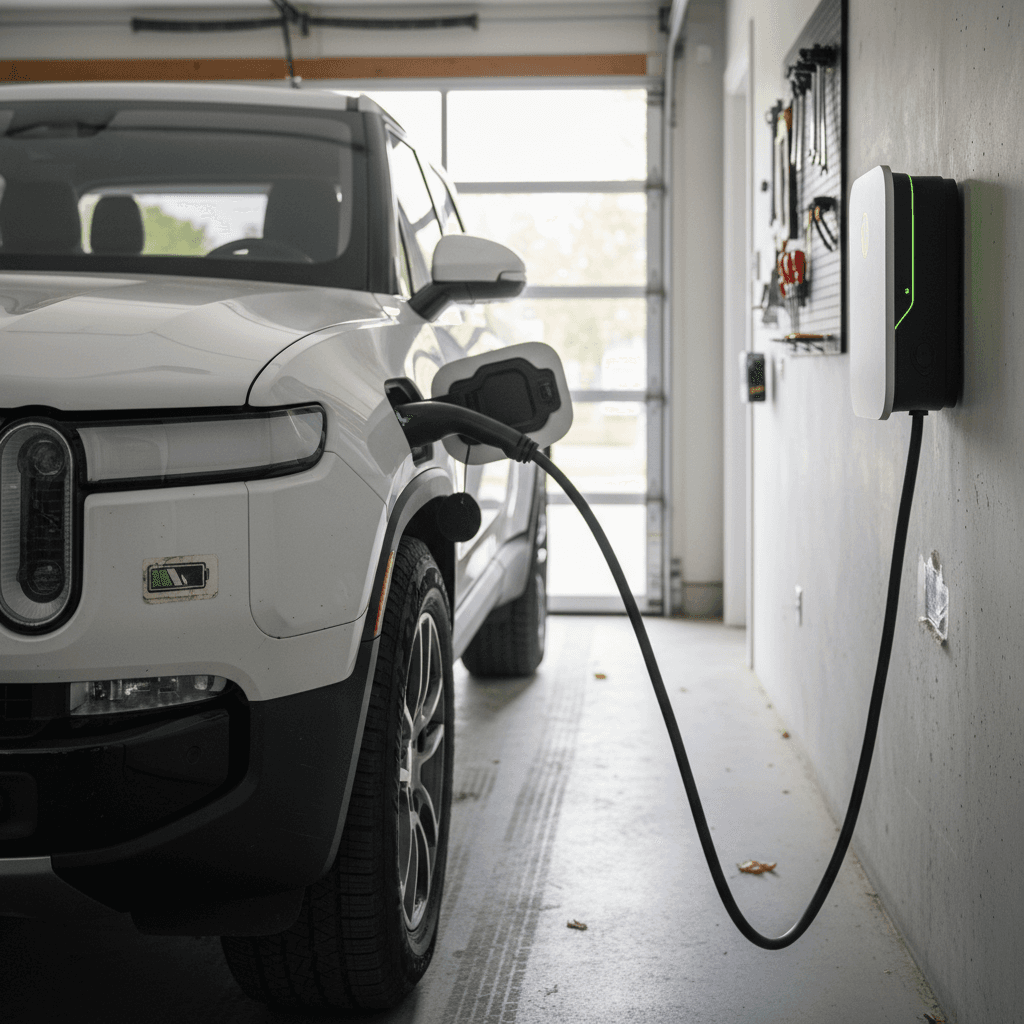
Home vs public charging balance
Charging Costs vs. Gas After 50,000 Miles
At 50,000 miles, the fuel‑cost story becomes very tangible. Using that same 50k‑mile owner log as a representative case, total electricity cost landed around $0.09 per mile with a blend of mostly home charging, a small amount of public Level 2, and a meaningful chunk of DC fast‑charging on road trips. For context, a comparable gas truck at 18 mpg and around $3.80/gal would land closer to $0.21 per mile in fuel.
Fuel Costs Over 50,000 Miles: R1T vs. Gas Truck
Illustrative comparison using real‑world electricity costs and a typical full‑size gas pickup benchmark.
| Vehicle | Energy Type | Assumed Efficiency | Energy Price | Cost per Mile | Total at 50,000 mi |
|---|---|---|---|---|---|
| Rivian R1T (real owner log) | Electricity | ~2.0 mi/kWh | Blended home + public | $0.09 | $4,500 |
| Full‑size gas pickup | Gasoline | 18 mpg | $3.80/gal | $0.21 | $10,500 |
Your exact numbers will depend on electricity rates and driving style, but the directional gap is consistent: the R1T’s energy costs are roughly half those of a comparable gas truck over 50k miles.
Where the savings actually show up
Maintenance, Repairs, and Recalls
Traditional trucks tend to rack up oil changes, transmission services, and exhaust or emissions work by 50,000 miles. The R1T simply doesn’t have those systems. Routine care is mostly tires, cabin filters, brake fluid, and the occasional alignment. Real‑world owner reports and third‑party cost‑to‑own models suggest total maintenance plus repair spending in the first five years is materially lower than comparable internal‑combustion trucks, even if Rivian’s hourly labor rate is premium‑priced.
Common 0–50k Mile R1T Maintenance Items
What you should expect to have been done by the time you’re shopping a used truck.
Tires (Possibly Twice)
The R1T is heavy and torquey. Expect at least one tire replacement set by 40–50k miles, sooner if the truck wears aggressive all‑terrains or tows regularly.
Alignment & Suspension Checks
Impacts, off‑road use, or big wheels can put stress on suspension. A clean alignment record and even tire wear are good signs of careful ownership.
Brake Fluid & Misc. Service
Regenerative braking means pads and rotors often look surprisingly fresh at 50k, but brake fluid age, not mileage, still matters. Expect at least one fluid service on time‑conscious owners.
Stay on top of recall and service bulletins
Ride, Comfort, and Utility Over Time
The R1T’s adjustable air suspension and adaptive dampers are central to its character. At 50,000 miles, most owners report the truck still feels tightly controlled and comfortable, with none of the float or harshness you sometimes get in aging air‑suspension vehicles, assuming it hasn’t been abused off‑road without proper care. Cabin squeaks or rattles can emerge, especially in trucks that spend a lot of time on washboard roads, but outright structural looseness is not a common complaint.
Everyday usability
- Crew cab comfort: Seats and interior materials generally hold up well; check for bolster wear on lighter colors.
- Gear tunnel & frunk: Hinges, struts, and seals should feel solid; water ingress is rare but worth checking with a hose test if you off‑road or live in wet climates.
- Bed and tailgate: Power tonneau covers on early trucks were a known weak point; make sure any repair or retrofit work is documented.
Adventure and towing wear
- Off‑road scars: Skid plates, lower control arms, and underbody plastics tell you how hard a truck’s first 50k miles have been.
- Towing history: Occasional towing is fine, but chronic heavy towing will show in tire wear, hitch condition, and possibly in rear suspension bushings.
- Accessories: Bed racks and tents are great, but look for wiring hacks or poorly sealed mounting points.
Software Experience and Ownership Quirks
Rivian leans heavily on software to differentiate the R1T, and 50,000 miles is more than enough time to experience both the benefits and the rough edges. Over‑the‑air updates have added meaningful features and efficiency improvements, but they’ve also occasionally introduced new bugs or regressions. A few owners describe a "two steps forward, one step back" rhythm to software life with the truck.
- Navigation, drive modes, and camera views remain well‑integrated and genuinely useful off‑road and while towing.
- Phone‑as‑key and digital key cards generally work well, but there are still isolated reports of intermittent key recognition glitches.
- Driver‑assist features are capable but still evolving; recent software recalls around highway assist underline that you’re living on the frontier of new features rather than a mature, set‑and‑forget system.
Ask about the software life story
Is a 50,000-Mile Used Rivian R1T a Good Buy?
From a value perspective, the R1T has already burned through a significant chunk of its depreciation curve by 50,000 miles. That can make a well‑cared‑for truck compelling, especially when you weigh lower energy and maintenance costs against a similarly priced late‑model gas pickup. The key is separating trucks that have simply done a lot of miles from trucks that have had a hard life or unresolved issues.
Who a 50k‑mile R1T is ideal for
- Drivers who regularly use a truck, hauling, home projects, bikes, or camping gear, rather than just commuting.
- Owners who can install Level 2 home charging and don’t rely on DC fast‑charging for daily use.
- Shoppers comfortable with a younger brand whose service network and software are still evolving.
Who might be happier elsewhere
- People with no home charging and limited local public infrastructure.
- Shoppers who want a set‑and‑forget experience with decades of dealer coverage, something like an F‑150 or Silverado.
- Buyers who are deeply risk‑averse around recalls, OTA updates, or startup financial headlines.
How Recharged fits into this
Checklist: What to Look For on a High-Mileage R1T
50,000-Mile Rivian R1T Inspection Checklist
1. Verify battery and charging history
Ask how the truck was typically charged: home vs fast‑charging, usual charge limits, and any DC fast‑charge issues. With a Recharged Score battery health report, you can see objective pack data instead of relying purely on anecdotes.
2. Inspect tires, alignment, and suspension
Look for uneven tire wear, wandering on the highway, or clunks over bumps. On a heavy EV truck, those are early signs of alignment or suspension wear that may need attention soon.
3. Confirm all recalls and campaigns are completed
Ask for documentation or a printout showing software recalls, suspension campaigns, and other service bulletins marked as completed. This is especially important on early‑build trucks or those that have had major service work.
4. Test every door, hatch, tunnel, and tonneau
Open and close the gear tunnel, frunk, power tailgate, and (if equipped) powered tonneau multiple times. Watch for binding, water intrusion, or inconsistent latching, these are expensive, high‑tolerance components.
5. Drive it hard and gentle
Take a short, spirited drive to confirm power delivery is smooth and consistent, then cruise at highway speeds to listen for wind noise, rattles, or drivetrain whine that may not show up in city traffic.
6. Live in the software for 15 minutes
On the test drive, spend time in drive modes, navigation, audio, and driver‑assist menus. Confirm cameras load quickly, settings save properly, and there are no persistent error messages.
Rivian R1T 50,000-Mile Review FAQ
Frequently Asked Questions About 50k-Mile R1Ts
Bottom Line: Should You Live With an R1T Long-Term?
By 50,000 miles, the Rivian R1T has proven that it’s not just a flashy tech product, it’s a genuinely capable truck that can rack up real work and adventure miles without falling apart. Battery health and efficiency look solid so far, energy costs undercut comparable gas trucks by a wide margin, and maintenance needs are light compared with internal‑combustion rivals. The trade‑offs are mostly about living with a young brand: evolving software, a growing but still limited service footprint, and a steady stream of recalls and updates as the platform matures.
If you can live with that frontier feel, a well‑documented 50k‑mile R1T can be one of the most interesting and versatile vehicles you can buy right now, especially on the used market. And if you want help separating solid trucks from risky bets, browsing vehicles that already include a Recharged Score battery health report, expert inspection, and fair‑market pricing can remove a lot of the guesswork from going electric with a high‑mileage adventure truck.