If you’ve watched Porsche Taycan listings over the last few years, you’ve seen it: six‑figure MSRPs turning into surprisingly attainable used prices. With 2026 around the corner, many shoppers want a clear Porsche Taycan price forecast for 2026, not hype, but a realistic view of where values are heading and how to buy smart.
Quick take
Why Taycan prices in 2026 look so interesting
The Taycan is a strange mix of classic Porsche scarcity and modern EV market volatility. New models saw big price jumps for 2025, with U.S. MSRPs on refreshed cars now commonly starting around the low six figures before options. At the same time, used examples from 2020–2023 have taken some of the steepest hits in the luxury EV segment, as lease returns, higher interest rates, and more competition from Tesla, Audi, BMW, and Lucid all collide.
For you as a 2026 shopper, that combination can be powerful: big discounts from original sticker with far less risk of another 40–50% value drop, as long as you buy the right year, trim, and battery condition.
Taycan value snapshot heading into 2026
About the numbers
Where Porsche Taycan prices sit heading into 2026
To forecast 2026, you need a sense of where Taycan pricing is right now.
- New Taycan pricing: With the 2025 refresh, U.S. base sedans generally land around the $100,000 mark before destination and options, while Turbo, Turbo S and Turbo GT models can easily climb well north of $170,000–$230,000.
- Used early‑generation cars (2020–2022): Many of these launched with MSRPs from the high‑$80,000s to $150,000+ depending on trim and options. Today, it’s not unusual to see clean examples advertised at 40–55% below original sticker, especially for sedans without rare options.
- Lease returns stacking up: Three‑ and four‑year leases from the Covid‑era boom are maturing. That stream of off‑lease inventory is one reason you’re seeing so many Taycans on used platforms at once.
- Segment pressure: Aggressive pricing moves from Tesla and new entries like the BMW i5, Audi Q8 e‑tron, and future Polestar models are forcing sellers to be realistic on Taycan asking prices.
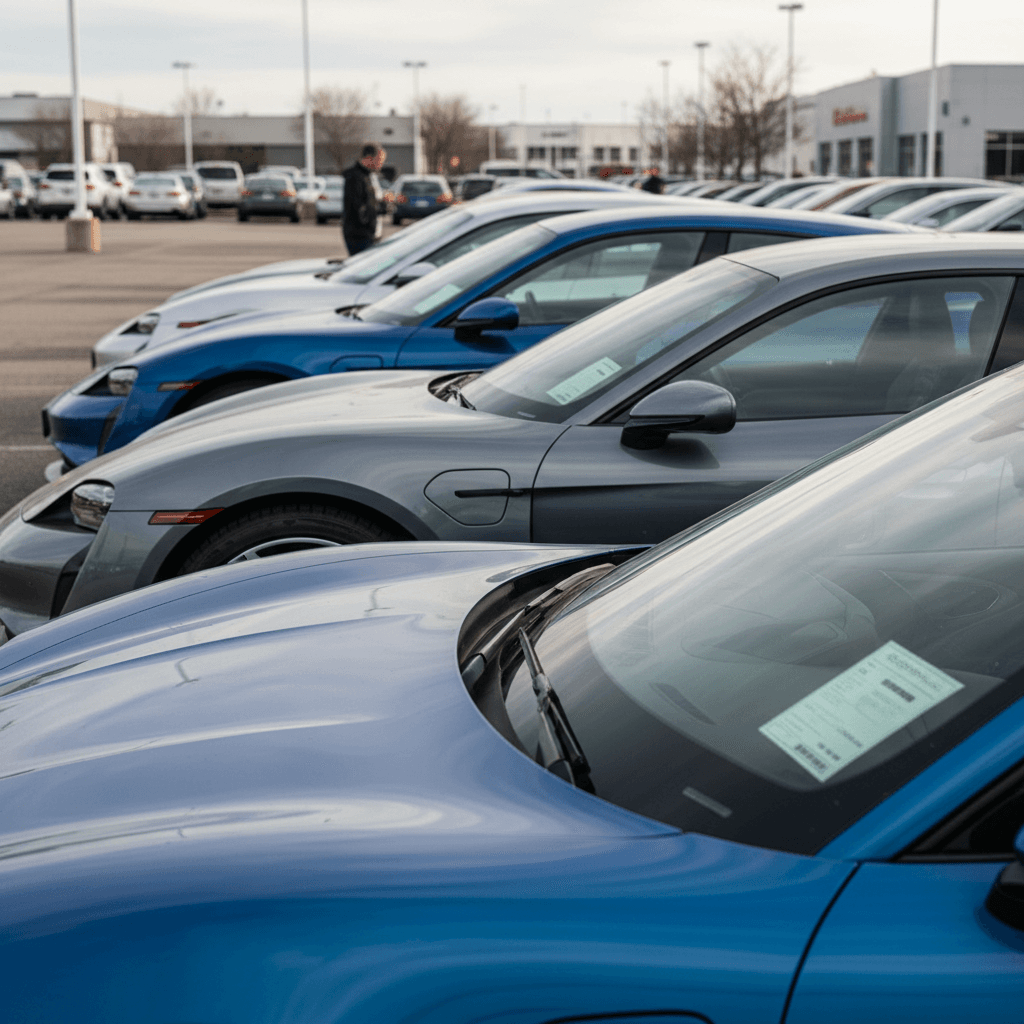
Porsche Taycan price forecast for 2026: Big-picture view
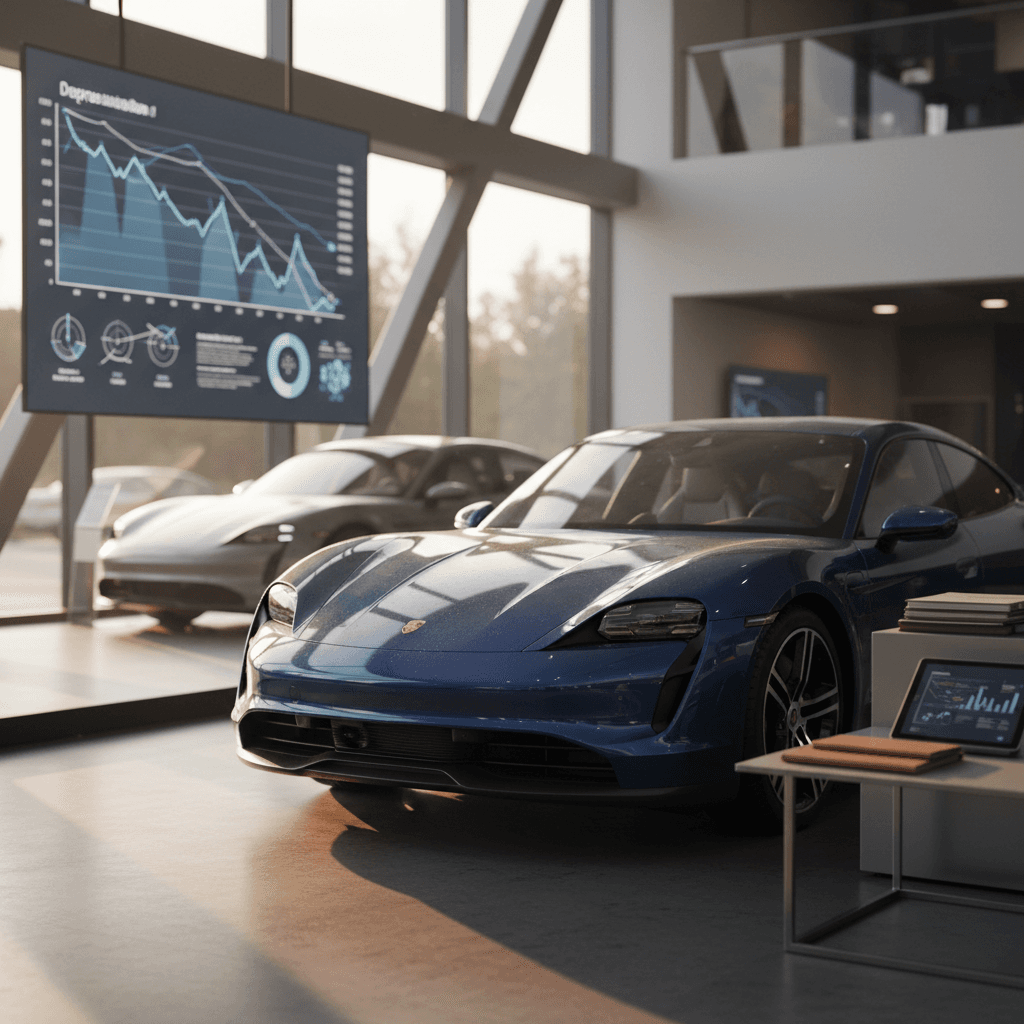
Looking specifically at the Porsche Taycan price forecast for 2026, expect a tale of two markets: older first‑gen cars that continue to normalize toward traditional luxury‑EV values, and refreshed 2025–2026 models that see faster depreciation early on but hold a bit more at the back end thanks to improved range and performance.
Our 2026 Taycan pricing scenarios
How we expect the U.S. used market to behave by late 2026
Base & 4 / 4S Sedans
Forecast: Continued softening.
- Early 2020–2022 cars: deeper into the $45k–$65k bracket depending on miles and options.
- Newer 2023–2024: settling around 55–65% of original MSRP after 3–4 years.
Cross Turismo / Sport Turismo
Forecast: Relatively stronger.
- Wagon body and all‑weather capability support demand.
- Expect resale to sit a notch above equivalent sedans.
GTS / Turbo / Turbo S / Turbo GT
Forecast: Volatile but desirable.
- Big MSRP means big dollar drops in absolute terms.
- Best‑spec cars with low miles should stabilize earlier.
Rule of thumb for 2026
Trim‑by‑trim Taycan price forecast for 2026
Below is a directional view of where common Taycan variants are likely to land on the U.S. used market by late 2026 if macro conditions stay roughly similar, no massive EV tax policy swing, no deep recession, and no radical technology shock.
Indicative 2026 used price bands by Taycan variant
Approximate U.S. used asking‑price ranges we expect to see in late 2026 for well‑kept, clean‑title examples. Actual pricing will vary by mileage, options, region, and battery health.
| Model / Body | Typical Original MSRP (new) | Likely 2026 age sweet spot | Indicative 2026 used price range* | Notes |
|---|---|---|---|---|
| Taycan (base sedan, RWD) | ~$90k–$105k depending on year | 4–6 years (2020–2022 cars) | $45k–$60k | Great value entry point if battery checks out; many will be ex‑lease. |
| Taycan 4 / 4S sedan | ~$100k–$125k+ with options | 3–5 years | $55k–$75k | More power and AWD help demand; wide spread based on options and wheels. |
| Taycan GTS sedan | ~$135k–$150k+ | 2–4 years | $80k–$105k | Enthusiast‑favored spec could keep values firmer than base/4S. |
| Taycan Cross Turismo (4 / 4S) | ~$105k–$130k+ | 3–5 years | $60k–$85k | All‑weather wagon appeal, often better‑equipped from new. |
| Taycan Sport Turismo | Similar to Cross Turismo | 3–5 years | $65k–$90k | Rarer body style; niche but loyal demand. |
| Taycan Turbo | ~$155k–$175k+ | 3–5 years | $85k–$115k | Huge MSRP means big dollar discounts; expect more price negotiation room. |
| Taycan Turbo S | ~$185k–$205k+ | 3–5 years | $100k–$135k | Still serious money, but often 40–50% off original sticker by year 4–5. |
| Taycan Turbo GT / Turbo GT Weissach | ~$230k+ | 1–3 years | $160k–$200k+ | Ultra‑high‑performance niche; limited production should support residuals. |
Price bands assume average mileage and solid service history. Exceptional specs or high‑mileage cars will sit above or below these ranges.
How to read this table
What’s driving Taycan depreciation (and what could slow it down)
Forces pushing prices down
- Front‑loaded EV depreciation: Like many premium EVs, Taycans lose the most in the first 3–4 years as tech evolves fast and early buyers move into the next thing.
- Lease return wave: A flood of 2021–2023 cars coming off lease adds supply just as some first‑time EV owners decide they’re happier back in a gas or hybrid model.
- New competition: Rivals like the BMW i5/i7, Audi’s e‑tron GT, and future Polestar and Mercedes models keep pressure on used Taycan pricing.
- Financing costs: Higher interest rates make high‑MSRP performance EVs tougher to swing, especially at franchise dealers that price optimistically at first.
Forces supporting values
- Porsche brand equity: Long‑term, Porsche nameplates usually hold value better than peers. Taycan may end up similar to Panamera: a fast‑depreciating first owner car that stabilizes later.
- Hardware quality: Strong performance, chassis tuning, and premium interiors help used shoppers justify prices against more anonymous EV sedans.
- Charging improvements: Network expansion and faster charging infrastructure can make older EVs more livable, extending their desirability window.
- Limited build on niche trims: GTS, Sport Turismo, and certain spec combinations could retain more value because fewer exist.
The wildcards
How long will Taycan “deal territory” last?
At some point, the market runs out of easy money. Our view is that the most dramatic, headline‑grabbing Taycan price drops are already in the rearview mirror, those 40–60% off original MSRP stories mostly came from 2020–2022 cars bought at peak Covid‑era pricing and sold in a cooler market.
Taycan value phases through 2030
Why 2026–2027 may be the best compromise between price and risk
2024–2025: Free‑fall phase
Steep declines as early adopters exit and lease returns hit. Shoppers willing to stomach uncertainty scored the craziest deals on 2020–2021 cars.
2026–2027: Opportunity phase
A large pool of 3–6‑year‑old Taycans to choose from, with prices well below new, and more real‑world reliability and battery‑health data to lean on.
2028–2030: Stabilization phase
Values likely flatten as the market figures out long‑term battery health and the most desirable specs separate from the rest.
If you’re considering a Taycan in 2026, you’re aiming right at that middle phase, still benefiting from heavy early depreciation, but with less guesswork about what living with a used electric Porsche is really like.
How to shop a used Taycan in 2026 without getting burned
Price forecasts are helpful, but your experience will come down to the specific car you buy. A cheap Taycan with weak battery health or spotty history can erase any savings fast. Here’s how to stack the odds in your favor.
2026 Taycan buying checklist
1. Start with battery health, not paint color
Battery condition is the single biggest driver of long‑term EV value. Look for a <strong>verified state‑of‑health report</strong> instead of vague comments about “feels strong.” Every vehicle sold on Recharged includes a Recharged Score battery diagnostic so you can see real data, not guesswork.
2. Target the right age and mileage band
For most buyers, a 3–5‑year‑old Taycan with 25,000–50,000 miles hits the sweet spot: a big discount off MSRP but still squarely inside Porsche’s 8‑year / 100,000‑mile high‑voltage battery warranty window (check the original in‑service date to confirm coverage).
3. Favor spec that will stay desirable
Well‑optioned cars with popular colors, premium audio, adaptive air suspension and driver‑assistance packages usually sell easier later. Over‑the‑top builds with extreme wheels or niche colors may be harder to move in a softening market.
4. Look closely at charging history
A car fast‑charged daily at very high power for its whole life may see more battery stress than one that mostly used AC home charging. Ask for any available charging history or usage notes and pair that with a health report.
5. Compare total cost, not just sticker
Factor in insurance, maintenance, tires, potential brake work, and charging costs. Porsche service isn’t cheap; Porsche’s own 6‑year Taycan maintenance plan is priced in the mid‑four figures, and those underlying realities affect long‑term ownership cost.
6. Use flexible financing and exit options
In a still‑evolving EV market, you might not want to be locked in for 7 years. Shorter loans, ballon structures, or consignment‑friendly platforms like Recharged give you more options if the market shifts again.
How Recharged can help
Ready to find your next EV?
Browse VehiclesTaycan vs other luxury EVs: Is it a bargain or a trap?
Compared with peers like the Tesla Model S, Audi e‑tron GT, BMW i5/i7 and Mercedes EQE/EQS, the Taycan sits in an odd but attractive spot in 2026.
Where Taycan looks like a bargain
- Performance per dollar: A used Taycan 4S or GTS can deliver supercar‑grade acceleration and chassis tuning for well under six figures if you buy at the right age.
- Brand cachet: Porsche’s performance reputation and design language give used Taycans a halo many rivals can’t match.
- Charging speed: In real‑world conditions, Taycan remains one of the faster‑charging EVs on the market when you find a modern DC fast‑charger.
Where Taycan can still sting
- Upfront complexity: More options, more variants, and more performance hardware mean more to understand, and potentially more to repair outside warranty.
- Operating costs: Tires, brakes, and out‑of‑warranty repairs land squarely in Porsche territory, not mainstream EV territory.
- Range perception: While later Taycans improved efficiency and rated range, some shoppers will still compare it unfavorably to newer high‑range competitors.
Think in 5‑year terms
Porsche Taycan price forecast 2026: FAQ
Frequently asked questions about Taycan prices in 2026
Bottom line: Is 2026 the right time to buy a Taycan?
Putting it all together, the Porsche Taycan price forecast for 2026 points to a market that’s still softening, but more rational than the roller‑coaster of the last few years. Early cars have already taken massive hits, newer refreshed models are just starting down the depreciation curve, and the sweet spot is opening up for 3–6‑year‑old examples with good options and strong battery health.
If you’re patient, willing to compare trims, and insist on real data rather than vibes, 2026 could be an excellent time to step into a Taycan. Focus on the fundamentals, battery diagnostics, warranty coverage, total ownership cost, and let pricing forecasts guide, not dictate, your decision.
When you’re ready to explore specific cars, Recharged can help you compare used Taycan listings, understand each vehicle’s Recharged Score, line up financing, and even arrange nationwide delivery. That way, you’re not just chasing a deal, you’re buying the right Taycan, at the right time, for the right price.