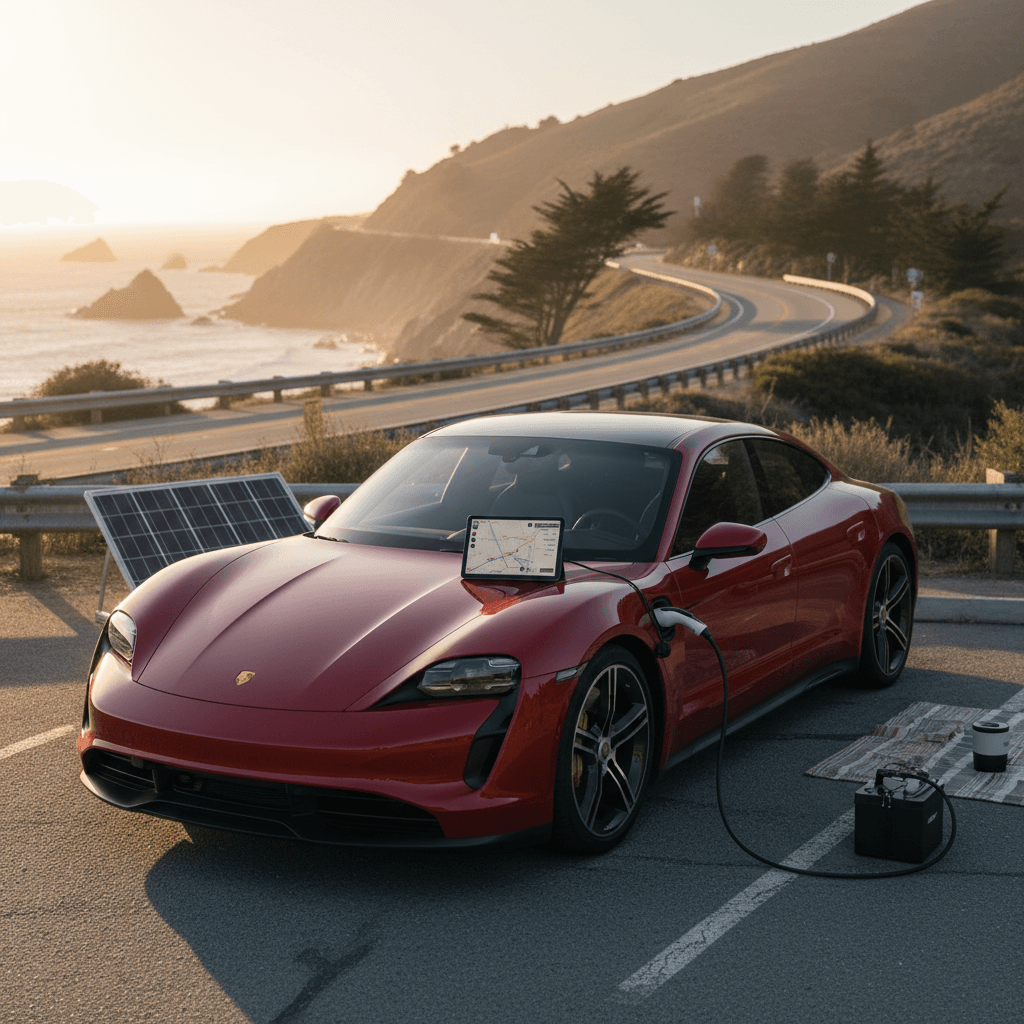
Planning a long-distance trip in a Porsche Taycan can feel intimidating the first time, especially if you’re used to gas road trips. The good news: with smart planning and a few Porsche-specific tricks, the Taycan is an excellent long-distance cruiser, quiet, quick, and comfortable. These Porsche Taycan long distance driving tips will help you get the range, charging experience, and peace of mind you’re looking for.
Who this guide is for
Why the Porsche Taycan Can Be a Great Road-Trip EV
On paper, some Taycan EPA range ratings look modest compared to other long-range EVs. In real-world highway driving, though, the Taycan’s 800-volt architecture, repeatable fast-charging and rock-solid stability make it one of the better highway cars for people who don’t want to sacrifice driving feel.
Taycan Strengths on Long-Distance Drives
Used Taycan buyers
Know Your Taycan Battery and Real-World Range
Porsche offers the Taycan with different battery sizes (Performance Battery and Performance Battery Plus) and many trims. Instead of memorizing brochure numbers, focus on your realistic highway range for planning. At 70–75 mph, many owners see 65–80% of the official rating, depending on weather, wheels, and driving style.
- Check your exact trim and battery (Performance vs Performance Plus) in the vehicle menu or owner’s manual.
- Use your last few weeks of consumption (in kWh/100 mi or mi/kWh) as a baseline rather than the EPA number.
- For planning, assume a conservative highway range (for example, plan on 180–220 miles between full charges in many U.S. conditions instead of the absolute maximum. Adjust up or down with your own data).
- Remember that big wheels, roof boxes, and winter tires can meaningfully reduce range.
Don’t plan to 0%
Smart Charging Strategy for Taycan Road Trips
The Taycan’s charging curve is excellent when you use it correctly. The goal on a long drive is more short, fast charges, not one big 0–100% session. You’ll travel faster overall by bouncing between roughly 10–15% and 60–70% state of charge.
Efficient Taycan Charging Strategy
Structure your stops around the Taycan’s fast-charging sweet spot.
Aim for 10–60% SOC
The Taycan charges fastest at lower states of charge. Plan to arrive around 10–20% and unplug around 60–70% unless the next leg is unusually long.
Prefer 150–350 kW DC
Look for high-power DC fast chargers (150 kW+). The Taycan can take advantage of these, especially when the battery is properly preconditioned.
Think minutes, not percent
On a road trip, it’s often better to charge from 15–55% in 18–25 minutes and drive again, instead of waiting an extra 20 minutes just to reach 90%.
Preconditioning matters
Using Planners and Apps to Map Your Route
Good tools take much of the stress out of Taycan trip planning. You’ll want at least one EV-specific planner plus the Taycan’s native navigation so you can precondition the pack on the way to a fast charger.
1. Start with an EV route planner
Apps and web tools that know your vehicle type, such as popular EV trip planners, can estimate energy use, suggest charging stops, and account for elevation and weather. Enter your exact Taycan trim, then add your passengers, cargo, and preferred speed to get realistic results.
Once you have a plan, you can mirror those stops in the Taycan’s built-in navigation so preconditioning still works.
2. Use multiple charging networks
In North America, your Taycan will primarily use CCS fast-charging networks today, with growing access to NACS as networks and adapters roll out. Install the apps for major networks on your phone, set up payment ahead of time, and bookmark stations along your route.
Cross-check a few stations in different apps so you have backups if a site is busy or under maintenance.
Save your ‘Plan B’ chargers
Drive Modes and Speed: How to Maximize Range
One of the biggest levers you control is speed. The Taycan loves cruising fast, but air resistance climbs quickly with speed, and so does energy use. The right combination of drive mode and pace can add dozens of miles of usable range on a tank of electrons.
Taycan Drive Modes for Long-Distance Trips
How common Taycan drive modes affect your efficiency on the highway.
| Mode | When to Use | Effect on Range | Notes |
|---|---|---|---|
| Range | Long, tight legs; low traffic | Best | Lowers power, adjusts climate, may reduce top speed. |
| Normal | Balanced everyday highway driving | Good | Good compromise between comfort and efficiency. |
| Sport | Short fun stints, clear roads | Lower | Sharper throttle and higher cooling demand use more energy. |
| Sport Plus | Track or spirited mountain sections | Lowest | Maximum performance; only use in short bursts on road trips. |
Exact names and behavior can vary by trim and software version; consult your owner’s manual for details.
Watch your speed
Climate Control and Comfort Without Killing Range
Heating and cooling the cabin is another big energy draw, especially in cold climates. The Taycan’s HVAC system is efficient, but smart settings will still pay off over hundreds of miles.
- Use seat and steering wheel heaters first in cold weather; they use less energy than blasting hot air.
- Precondition the cabin while plugged in before you leave a hotel or home charger so the pack and interior are already at temperature.
- In moderate weather, consider ECO or lower fan settings and avoid large temperature swings (like cooling from 85°F to 68°F in one shot).
- If range is tight on a specific leg, temporarily reduce cabin temperature by a degree or two and rely more on seat heaters or lighter clothing.
Packing and Weight Tips for Better Efficiency
The Taycan is a heavy car to begin with, and every extra pound you add makes the motors work a little harder. You don’t need to travel like a backpacker, but a few packing decisions can improve your efficiency and comfort.
Packing Smart for a Taycan Road Trip
Prioritize essentials
Pack what you truly need and avoid turning the rear cargo area and frunk into a rolling storage unit. Less clutter also makes it easier to access charging cables and emergency gear quickly.
Avoid unnecessary roof boxes
Roof boxes and racks create aerodynamic drag that hurts range, especially at highway speeds. If you must use one, factor in lower efficiency and more frequent charging stops.
Balance weight front to rear
Distribute luggage between the rear hatch and frunk where possible. Good weight balance preserves the Taycan’s handling and braking on mountain passes or in sudden maneuvers.
Keep charging gear accessible
Store your charging cable, adapters, and RFID cards near the top of the trunk or frunk so you’re not digging through bags at a dark charger late at night.
Winter and Bad-Weather Long-Distance Driving
Cold temperatures, rain, and snow all reduce EV range, including in the Taycan. The impact is strongest on short drives; on long highway stints, the pack will eventually warm up, but you’ll still want extra margin and a slightly different strategy.
Adjusting Your Strategy in Tough Conditions
Give yourself more buffer and let the Taycan’s systems help you.
In cold weather
- Precondition while plugged in before departure.
- Expect reduced range and plan shorter legs between chargers.
- Use Range or Normal mode, and rely more on heated seats.
In heavy rain or snow
- Slower speeds increase safety and improve efficiency.
- Allow more time for stops and traffic delays.
- Use the Taycan’s traction and stability systems rather than aggressive throttle inputs.
Safety first
Battery Care on Long Trips: Fast Charging the Right Way
Long-distance travel means frequent DC fast charging. Modern packs in vehicles like the Taycan are designed for it, but smart habits can still protect long-term battery health, especially if you own the car for many years or buy it used.
- Use DC fast charging mainly on trips. For daily commuting, AC Level 2 at home or work is easier on the pack.
- On road trips, try to operate mostly in the 10–70% state-of-charge window when possible to limit time spent at extreme high or low charge levels.
- Don’t worry about occasionally charging to 100% before a uniquely long leg, but avoid leaving the car parked full for many hours in hot weather.
- Enable battery preconditioning to hit chargers warm; this shortens fast-charging sessions and reduces time at higher pack temperatures.
Good news for used buyers
Ready to find your next EV?
Browse VehiclesPractical Checklist Before You Hit the Road
Before a long trip, a quick preflight check will make your Taycan feel as straightforward as any gas car, but with better acceleration and a quieter cabin.
Taycan Long-Trip Preflight Checklist
Confirm charging accounts and payment
Install major charging network apps, create accounts, and add payment methods. Keep at least one RFID card or backup payment option in the car.
Update vehicle and navigation software
Make sure your Taycan’s software and maps are up to date so you get the latest charging locations, routing logic, and battery preconditioning features.
Check tires, pressures, and tread
Set tire pressures to the recommended values when cold. Under-inflated tires hurt range and stability, especially at highway speeds.
Plan primary and backup chargers
Use an EV-specific trip planner for your main plan. Then identify at least one backup charger for each long leg in case of traffic, weather, or station issues.
Pack charging gear and essentials
Include your mobile connector (if you carry it), any adapters, a flashlight, gloves, charging cards, and basic roadside items like a tire inflator or sealant.
Set realistic daily distance targets
Instead of trying to brute-force 800+ miles a day, choose a daily mileage that allows for relaxed charging stops and meals without constant range anxiety.
Common Taycan Road-Trip Mistakes to Avoid
Most bad EV road-trip stories come from the same handful of mistakes. Avoid these with your Taycan and your long-distance experience should be uneventful, in the best way.
- Relying on a single charging app or network instead of spreading risk across several.
- Planning legs to arrive at 0–5% with no backup charger identified along the way.
- Driving at very high speeds with a roof box, then being surprised by low efficiency.
- Skipping preconditioning and wondering why the fast charger isn’t delivering full power.
- Insisting on charging to 95–100% at every stop instead of doing multiple shorter, faster sessions.
Think like a frequent flyer
FAQ: Porsche Taycan Long-Distance Driving
Frequently Asked Questions
Conclusion: Making Long-Distance Travel Easy in a Taycan
Long-distance driving in a Porsche Taycan doesn’t have to be an experiment every time you leave your zip code. Once you understand your real-world range, build a smart charging strategy around 10–60% state of charge, and lean on good route-planning tools, the Taycan becomes a fast, quiet, and confidence-inspiring road-trip machine. Weather and traffic will still throw surprises at you, but energy planning doesn’t need to.
If you’re considering a Taycan specifically for road trips, buying used can be a smart way to get into the car without paying new-car prices. A transparent battery health report, like the Recharged Score provided on vehicles listed with Recharged, helps you understand exactly what kind of range to expect on your first big journey. Combine that insight with the tips in this guide, and your next long-distance drive in a Taycan should feel like what Porsche intended: effortless, fast, and memorable for the right reasons.