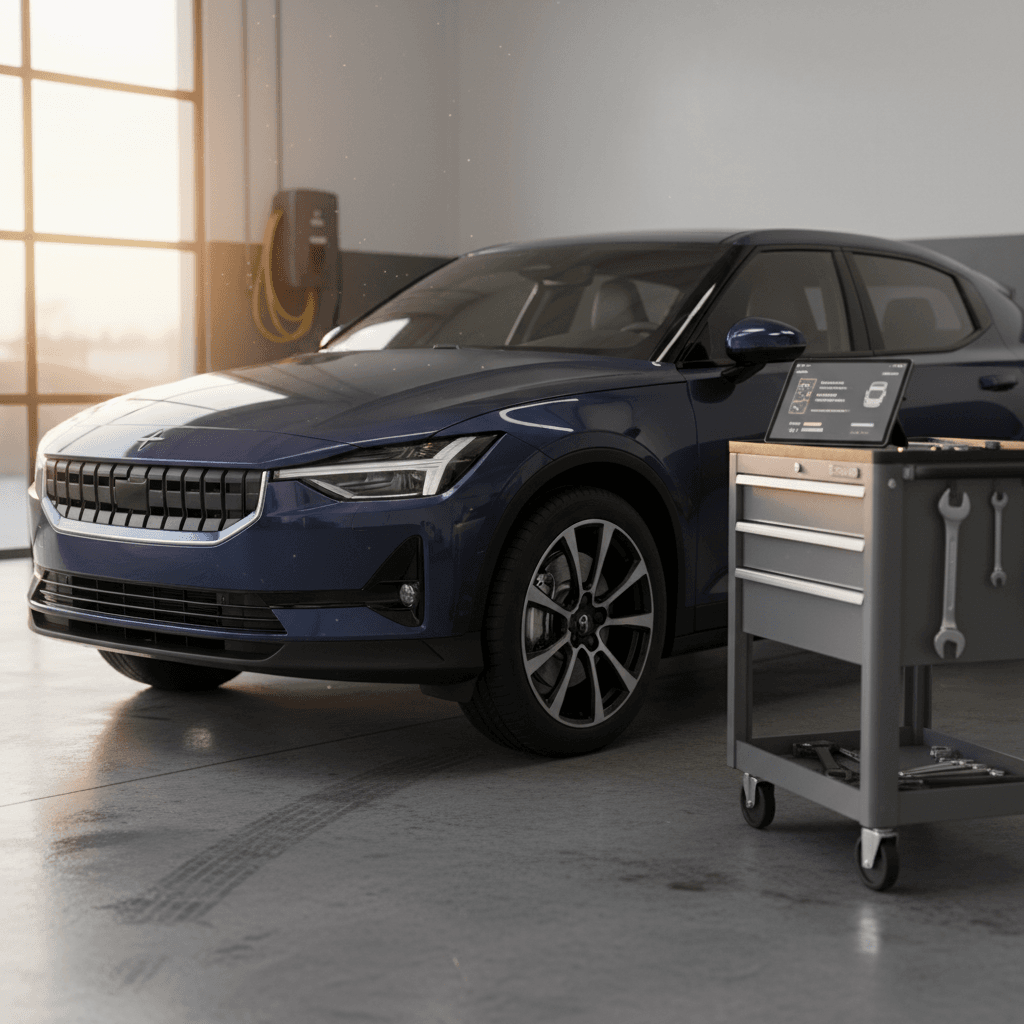
If you’re driving, or shopping for, a Polestar 2, you’ve probably heard that electric vehicles need less maintenance than gas cars. That’s true, but it doesn’t mean “no maintenance.” Understanding the Polestar 2 maintenance schedule helps you avoid unexpected costs, protect your battery warranty, and know what to look for when you’re buying used.
Quick takeaway
Polestar 2 maintenance schedule at a glance
Polestar 2 maintenance in numbers (typical U.S. experience)
Unlike many gas-powered luxury cars that call you in every 10,000 miles, the Polestar 2 keeps things simple. You’ll see a “regular maintenance” reminder in the cluster when you’re due by time or mileage. The key is knowing what’s actually supposed to happen at each visit, and what’s just nice-to-have.
Official Polestar 2 service intervals: 20,000 miles or 2 years
Polestar’s factory guidance for the Polestar 2 is straightforward: plan a scheduled service every 20,000 miles or 2 years, whichever comes first. Many owners see the reminder right around 18,000–20,000 miles, or when the car hits its second birthday, even if mileage is lower.
- Service reminder: appears on the driver display and in the Polestar app when you’re approaching the interval.
- Trigger: either reaching 20,000 miles since the last service, or about 2 years since the previous visit.
- Flexibility: you usually have a few thousand miles’ grace, but don’t ignore the warning for months, especially if you’re under warranty or leasing.
Warranty & lease fine print
Polestar 2 service items by mileage and time
So what actually happens at a Polestar 2 maintenance visit? The core factory schedule is light compared with an internal‑combustion car. Here’s a simplified overview of common items around each interval. Always confirm against your owner’s manual for your model year.
Typical Polestar 2 maintenance schedule
High-level view of what’s usually inspected or replaced at each 20,000‑mile / 2‑year interval. Exact menus vary by market and dealer.
| Odometer / Time | Key items | Notes |
|---|---|---|
| 0–20,000 miles (Up to 2 years) | • Cabin air filter replacement • Wiper blade replacement • Tire rotation (if needed) • Comprehensive inspection & software checks | First visit is often included with the car. Dealers may bundle pick‑up, cleaning, and a loaner. |
| 20,000–40,000 miles (Years 2–4) | • Repeat of 20k‑mile service items • Brake system inspection • Basic fluid checks (brake fluid, coolant, washer fluid) | Expect to pay out of pocket if the first service was free. Many owners report ~$250–$300 for the standard visit. |
| 40,000–60,000 miles (Years 4–6) | • Cabin filter & wipers again • More detailed brake inspection, possible pad/rotor replacement • Brake fluid change if needed • High‑voltage system & cooling inspection | Brake wear depends heavily on your driving and use of regen. City driving and frequent hard stops will wear pads sooner. |
| 60,000+ miles (Beyond year 6) | • Repeated 20k‑mile services • Battery coolant/thermal system service as required • Suspension, steering, and driveline checks • Tire replacements as needed | By this stage, tire replacements and any out‑of‑warranty repairs tend to dominate your costs rather than routine services. |
Use this as a planning tool, not a substitute for your official maintenance booklet.
Where to find your exact schedule
Fluids, tires, and brakes: what still needs attention on an EV
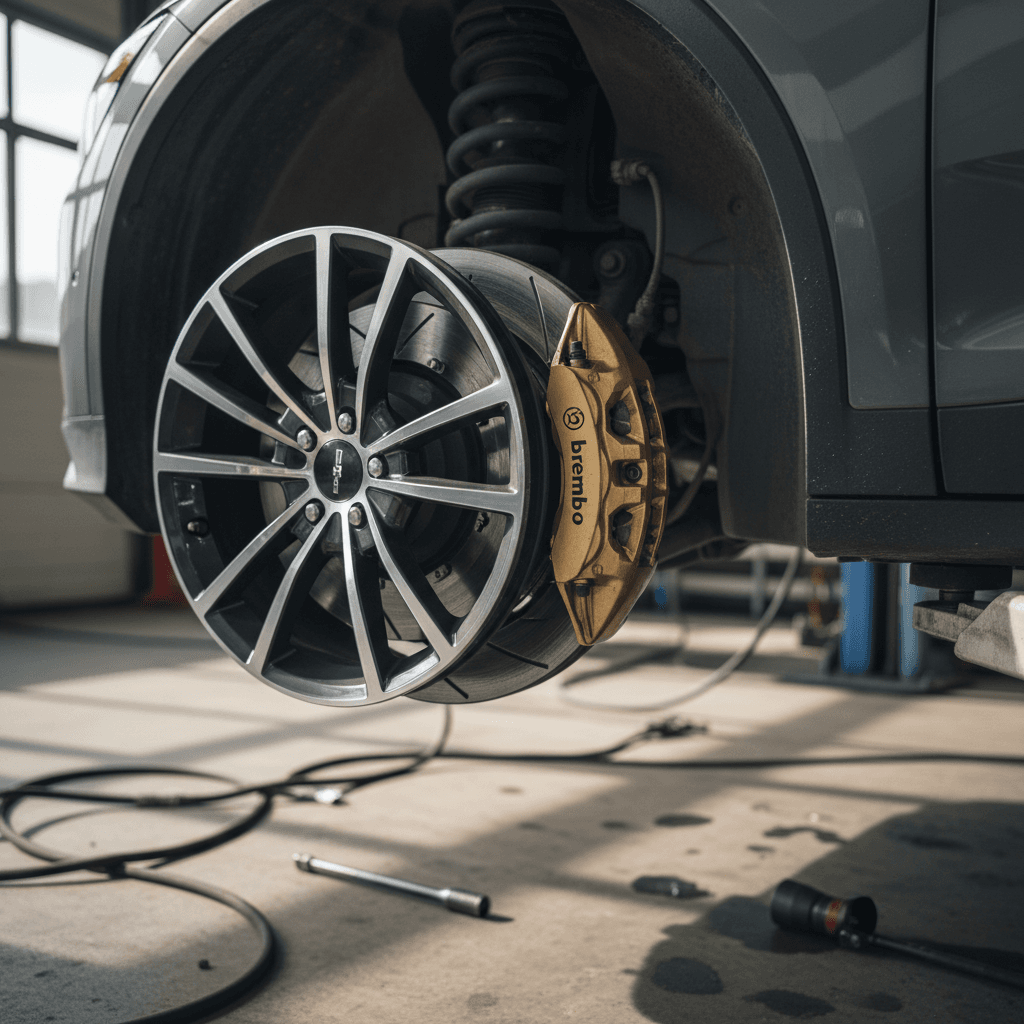
Even though a Polestar 2 doesn’t need oil changes or spark plugs, it still has several wear items and fluids that keep it safe and smooth to drive. Staying ahead of these is the difference between a predictable maintenance budget and surprise repairs.
Key Polestar 2 systems to keep an eye on
These are the items that most often show up on real‑world service invoices.
High-voltage battery & thermal system
The battery pack is sealed and covered by an 8‑year/100,000‑mile warranty in most markets. What you can control is thermal management: don’t ignore cooling system warnings, and have coolant serviced when the manual calls for it.
Tires & alignment
Polestar 2 is a heavy, torquey EV. Expect faster tire wear than on a compact gas car, especially on performance tires. Plan on regular rotations and occasional alignments to maximize tread life.
Brakes & brake fluid
Regenerative braking means pads can last a long time, but they still need inspection. Brake fluid absorbs moisture over time; most shops recommend testing or replacing it every few years.
Don’t skip brake fluid checks
Polestar 2 maintenance costs: what to budget
Polestar 2 maintenance costs are generally lower than similarly sized luxury gas sedans, but they’re not zero. Independent analyses and owner reports suggest that routine maintenance (inspections, tires, filters, wipers, brake checks) typically lands in the low hundreds of dollars per year, averaged over several years of ownership.
Sample Polestar 2 maintenance cost ranges (U.S.)
Approximate out-of-pocket prices at independent EV‑savvy shops or dealers. Actual costs vary by region and model year.
| Service item | Low | Average | High | Typical frequency |
|---|---|---|---|---|
| Annual inspection & basic EV service | $120 | $250 | $450 | Every 12–24 months, often combined with tire rotation |
| Tire rotation & alignment | $60 | $90 | $160 | Rotation every 6,000–10,000 miles, alignment as needed |
| Brake fluid replacement | $80 | $120 | $180 | About every 2–4 years, depending on test results |
| Cabin air filter & wiper blades | $20 | $40 | $70 | Often replaced at the 20,000‑mile / 2‑year service |
| Battery coolant / thermal service | $100 | $180 | $260 | Infrequent; based on age, mileage, and factory guidance |
| Full set of tires (installed) | $800 | $1,100 | $1,400 | Every 25,000–45,000 miles, depending on driving style |
Use these numbers for budgeting, your quotes may differ based on labor rates and parts choices.
How this compares to gas cars
Checking maintenance history on a used Polestar 2
If you’re shopping for a used Polestar 2, the maintenance schedule becomes a checklist. You want proof that the previous owner didn’t ignore those 20,000‑mile / 2‑year reminders, and that any campaigns or recalls were completed.
Used Polestar 2 maintenance checklist
1. Verify each 20,000‑mile / 2‑year service
Ask for <strong>itemized invoices</strong> or digital records showing the cabin filter, wiper blades, inspections, and any software or campaign work done at each interval.
2. Look for brake and tire documentation
Review notes on <strong>brake pad thickness</strong>, rotor condition, and tread depth. Uneven tire wear can hint at alignment or suspension issues.
3. Confirm software and recall history
Polestar pushes over‑the‑air updates, but some campaigns still require a service visit. Make sure important updates and recalls have been completed.
4. Ask about brake fluid and coolant service
If the car is several years old with no record of <strong>brake fluid tests or coolant checks</strong>, budget for those soon after purchase.
5. Inspect for service reminders on the dash
During your test drive, check if the car is displaying “Regular maintenance due” warnings. That can signal an overdue visit, and a negotiation point.
6. Review warranty and CPO coverage
A Polestar 2 may still carry original factory coverage or Certified Pre‑Owned extensions. Understand what’s left and whether maintenance compliance is a condition.
How Recharged helps with used Polestar 2s
DIY vs dealer for Polestar 2 service
For a lot of Polestar 2 owners, the first scheduled maintenance is done at a Polestar or Volvo dealer, often with pick‑up, cleaning, and a loaner baked in. After that, you have choices. Some items are DIY‑friendly; others are better left to EV‑experienced shops.
What’s reasonable to DIY?
- Cabin air filter – Many owners swap this themselves with basic tools and a $20–$40 part.
- Wiper blades – Easy driveway job if you buy compatible blades.
- Tire checks – Monitoring pressure, tread wear, and rotating wheels if you have the equipment.
- Washer fluid & visual inspections – Topping off fluids and checking lights, tires, and wipers regularly.
If you go this route, keep receipts and notes so you still have a paper trail for warranty or resale.
When to use a dealer or EV specialist
- High-voltage or cooling system work – Anything involving the traction battery, orange cables, or coolant loops.
- Brake fluid service – Proper bleeding procedures matter for safety and ABS/ESC performance.
- Software or campaign work – Some updates can only be completed by a factory‑authorized shop.
- Complex diagnostics – Warning lights, charging issues, or range loss deserve the right scan tools.
If you live far from a Polestar center, look for independent shops with EV training and Volvo/Polestar experience.
Be careful resetting service reminders
Practical Polestar 2 maintenance tips for daily drivers
- Use one trusted shop: Whether it’s a Polestar center or an EV‑savvy independent, building a relationship with a single shop makes diagnostics and history tracking easier.
- Align services with your driving: If you’re a high‑mileage driver, you might hit 20,000 miles faster than 2 years; light‑mileage owners will hit the time interval first.
- Watch range and charging behavior: Sudden changes in range, charging speed, or cooling‑fan noise are often early clues that something needs attention.
- Rotate tires religiously: This simple step is one of the best ways to control long‑term EV ownership costs.
- Keep records organized: Save invoices, digital work orders, and even screenshots from the app. This pays off at trade‑in time or if you sell privately.
The Polestar 2’s maintenance schedule is refreshingly simple: a 20,000‑mile / 2‑year rhythm focused on inspections and a few wear items instead of a long list of engine services. For owners, that means fewer surprises and more predictable costs, as long as you stay on top of tires, brakes, and basic fluids. If you’re considering a used Polestar 2, taking the time to verify service history and battery health upfront can make the difference between a confident purchase and an expensive mystery. That’s exactly the gap Recharged is built to close with transparent reports, EV‑specialist support, and a buying process that takes the guesswork out of used EV ownership.