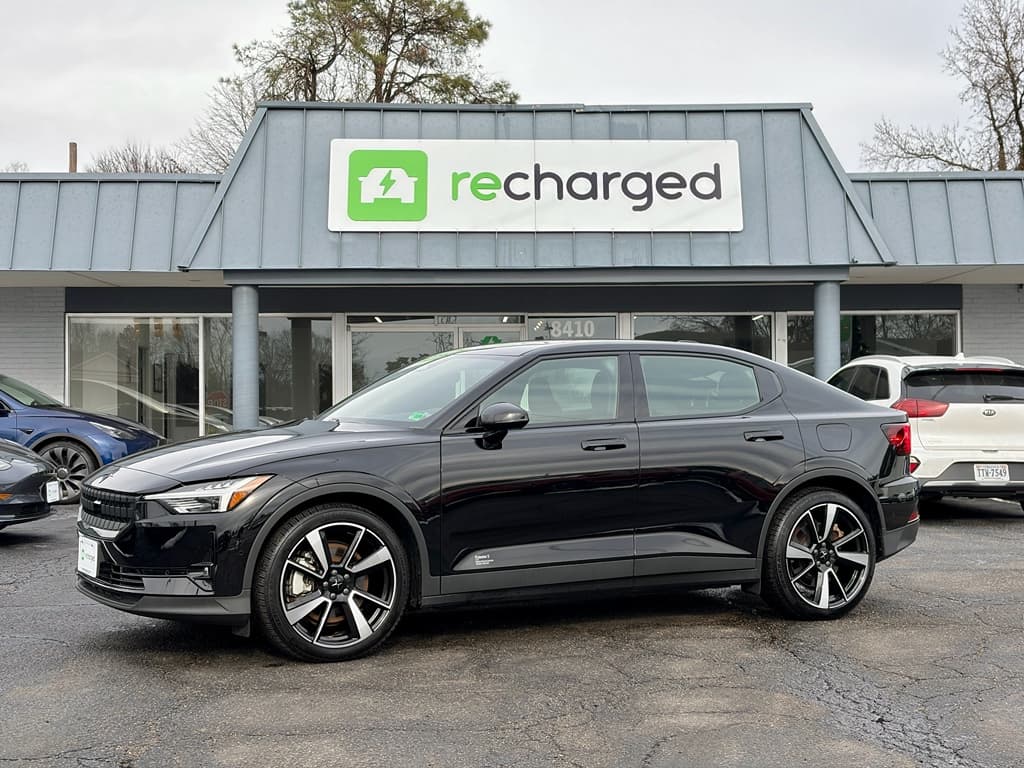
If you’re considering a Polestar 2, you’re probably asking a very practical question: **what does the Polestar 2 depreciation curve look like over 5 years?** That curve determines your real cost of ownership if you’re buying new, and whether a used Polestar 2 is a bargain or a money pit if you’re shopping the secondary market.
Why depreciation matters more for EVs
Polestar 2 depreciation over 5 years at a glance
Estimated Polestar 2 value retention (United States)
Different data sources slice the numbers slightly differently, but the story is consistent: the **Polestar 2 loses about half of its new price over a 5‑year period**, landing in the low‑ to mid‑50% value‑retention range. That’s a bit steeper than the average gas luxury sedan, but it’s very much in line with the broader EV market, where five‑year depreciation around 55–60% is common.
Quick rule of thumb
How the Polestar 2 depreciation curve actually works
Years 0–3: The steep part of the curve
- Year 1: Biggest percentage drop as the car becomes “used,” incentives change, and new‑car discounts show up.
- Year 2: Software and hardware updates on newer model years put additional pressure on earlier cars.
- Year 3: Many lease returns hit the market, increasing used supply and nudging prices down.
Years 4–7: The “glide path” phase
- By year 4, a lot of the easy depreciation has already happened.
- From years 4–7, the annual dollar loss typically shrinks; condition and battery health start to matter more than model year.
- For buyers, this is often the sweet spot: much lower price, but plenty of useful life left.
If you plotted **Polestar 2 depreciation over 5 years**, it would look like a ski slope that flattens into a long, gentle run. The first 3 years are steep, especially for the earliest 2021–2022 cars that launched at higher MSRPs, while years 4 and 5 tend to be more forgiving. That’s typical EV behavior: rapid innovation early in the product’s life punishes older examples, then the curve moderates as the tech story stabilizes.
Mind the incentives effect
Year‑by‑year Polestar 2 value retention
Illustrative 5‑year Polestar 2 depreciation curve
This simplified model assumes a well‑optioned Polestar 2 with a $55,000 original MSRP, average U.S. mileage (12,000–15,000 miles per year), and clean history. Real‑world values vary by trim, region, and condition.
| Age | Estimated value | % of original MSRP | Typical market context |
|---|---|---|---|
| New (MSRP) | $55,000 | 100% | Sticker price before discounts, dealer incentives, and tax credits. |
| Year 1 | $43,000–$45,000 | 78–82% | Demo and nearly‑new cars set the bar; incentives on new cars weigh on values. |
| Year 2 | $37,000–$40,000 | 67–73% | Early off‑lease and higher‑mileage examples appear; shoppers compare to newer range/feature updates. |
| Year 3 | $30,000–$34,000 | 55–62% | Many 36‑month leases return; depreciation slows in percentage terms but remains visible in dollars. |
| Year 4 | $28,000–$32,000 | 51–58% | Battery health, options, and accident history create larger spreads between ‘average’ and ‘great’ cars. |
| Year 5 | $26,000–$30,000 | 47–55% | Well‑kept cars with strong battery scores command a premium; rough or high‑mileage examples undercut the averages. |
Approximate depreciation curve for a typical Polestar 2 over five years of ownership.
How this compares to published data
What drives Polestar 2 depreciation
Key factors shaping a Polestar 2’s 5‑year curve
Some are universal EV realities; others are specific to Polestar’s brand position.
Original MSRP & options
Brand & market awareness
Battery health & range
Mileage & usage pattern
Policy & incentives
Condition & software
Where Polestar 2 quietly shines
Polestar 2 vs other EVs and gas cars
Zooming out, it helps to benchmark the **Polestar 2 depreciation curve over 5 years** against the broader market. Across the U.S. fleet, EVs currently depreciate faster than comparable gas cars, but not all segments are equal.
Typical 5‑year depreciation: Polestar 2 vs peers
High‑level comparison using recent resale‑value studies and observed market behavior. These are generalized ranges, not guarantees for individual cars.
| Vehicle type | Typical 5‑year depreciation | Notes |
|---|---|---|
| Mainstream gas sedan | 45–50% | Toyota Camry / Honda Accord class; strong demand keeps values relatively high. |
| Luxury gas sedan | 50–55% | BMW 3‑/5‑Series, Audi A4/A6; incentives and fleet sales hurt residuals. |
| Mainstream EV | 55–65% | Leaf, Kona EV, ID.4; price cuts and rapid tech improvements hit early buyers hardest. |
| Premium EV sedan (incl. Polestar 2) | 50–60% | Polestar 2 sits here, similar to Tesla Model 3 and other compact luxury EVs. |
| High‑end flagship EV | 55–70% | Large luxury EVs can lose huge dollar amounts, even when percentage loss is similar. |
How the Polestar 2’s 5‑year depreciation compares with other segments.
In other words, the Polestar 2 isn’t a depreciation outlier in either direction. It behaves like what it is: a premium compact EV from a younger brand. You’re not getting the bulletproof resale of a Toyota hybrid, but you’re also not suffering the catastrophic drops seen on some niche EVs with weak demand or discontinued tech.
Real‑world used Polestar 2 prices
So what does this look like in actual asking prices and transactions? Looking across U.S. listings and Recharged’s own marketplace data in early 2026, a few patterns emerge:
- **2021 Polestar 2**: Early cars that launched with higher MSRPs now tend to trade in the high‑$20,000s to low‑$30,000s, depending on mileage, options, and history. Many have already lost just over half of their original price.
- **2022 Polestar 2**: Benefit from slightly lower MSRPs and incremental updates. Clean, mid‑mileage examples often land in the low‑ to mid‑$30,000s range.
- **2023–2024 Polestar 2**: Still in the steeper part of the curve. Well‑optioned cars frequently list in the upper‑$30,000s to mid‑$40,000s, with Performance Pack and very low‑mileage builds on the high side.
- **2025 Polestar 2**: Too new to show a full depreciation story yet. Early used examples mainly reflect initial incentive structures and dealer pricing, rather than a mature market value.
Use trims, not just years, as your guide

How battery health impacts your Polestar 2’s value
For EVs, the depreciation curve is really a story about **battery confidence**. Two Polestar 2s built in the same month can be thousands of dollars apart in value if one shows strong, validated battery health and the other shows meaningful degradation or a history of abuse.
Battery factors that move the depreciation needle
These are usually invisible on a spec sheet, but very visible to a savvy buyer.
State of health (SoH)
Fast‑charging history
Climate & storage
Software & efficiency
How Recharged quantifies battery health
When to sell your Polestar 2 for the best return
If you already own a Polestar 2, the 5‑year depreciation curve raises a practical question: **when’s the best time to exit?** The answer depends on whether you prioritize payment savings, tech freshness, or total cost of ownership.
Strategic exit points along the 5‑year curve
At 2–3 years (post‑lease sweet spot)
Selling or trading around the 30–40,000‑mile mark lets you avoid the steepest part of the curve beyond year 3 while your car is still attractive to second owners who want something that “feels new” but is markedly cheaper than new pricing.
At ~5 years (value‑use balance)
Holding to around year 5 lets you spread that early depreciation over more years of use. You’ll have taken the bulk of the hit but still retain a meaningful resale floor, especially if your battery health and maintenance record are strong.
Avoiding the “new model shock”
Major refreshes (hardware, range, interior tech) can temporarily accelerate depreciation on previous years. If Polestar announces a heavily updated successor, it’s often better to sell into the anticipation than after the new one floods showrooms.
Watching incentives and finance promos
If new Polestar 2s get stacked rebates and ultra‑low APRs, used prices often soften in the following quarters. Selling just before a major incentive wave can mean a healthier check at trade‑in or consignment.
Use multiple exit options
How to read a Polestar 2 depreciation curve when buying used
For used buyers, the Polestar 2’s depreciation curve is an opportunity. Someone else has already eaten that first‑owner hit; you’re deciding whether you’re catching the curve at the smart point, or buying too early and leaving money on the table.
Value‑focused buyer: Years 3–5
If your goal is to pay the least per mile of usable life, look at Polestar 2s that are 3–5 years old:
- Most of the heavy depreciation has already happened.
- There’s enough history to judge reliability and battery health.
- You still get modern safety tech and a contemporary interior.
This is where Recharged spends a lot of time hunting inventory, cars that live in the flatter part of the curve but still feel like a modern premium EV.
Tech‑chaser: Years 1–3
If you want the latest battery chemistry and infotainment, focus on late‑model, low‑mileage cars:
- You’re paying a premium, but you skip the biggest 0–1 year drop.
- Look for builds that undercut new‑car pricing by at least 15–20% for similar spec.
- Verify software is up to date and check for any open campaigns or service actions.
Think of this as leasing via the used market: you’re trading some savings for a faster technology cadence.
Used Polestar 2 depreciation checklist
1. Anchor yourself to original MSRP
Before you look at asking price, find the original window sticker or build price. A $34,000 ask on a car that stickered at $50,000 is very different from $34,000 on a $60,000 build. You’re buying a spot on a curve, not just a number.
2. Compare against age‑adjusted ranges
Use the example table above as a sanity check. If a 4‑year‑old car is priced like a 2‑year‑old, the seller is ignoring the curve. If it’s priced like a 6‑year‑old, you should ask why.
3. Demand objective battery data
Ask for <strong>third‑party battery health results</strong>, not just an on‑screen range estimate. On Recharged, that’s built into the Recharged Score report; elsewhere, it’s worth paying for an independent EV inspection.
4. Think in monthly cost, not just price
A slightly more expensive Polestar 2 that holds value better can be cheaper over 3–5 years than a bargain‑priced car that sinks faster. Run the math on expected resale, not just today’s payment.
Red flags that a car is off the curve
FAQ: Polestar 2 depreciation and resale value
Common questions about the Polestar 2 depreciation curve
Bottom line: Is the Polestar 2 a smart 5‑year bet?
Viewed through a 5‑year depreciation lens, the Polestar 2 is neither a hidden gem nor a horror story, it’s a **solidly average‑to‑better‑than‑average premium EV**. You should expect to give up about half of your purchase price over that period, but in return you get a well‑built car with distinctive design, strong safety performance, and a driving experience that still feels modern years down the line.
Where you can really win is in **how you position yourself on the curve**. Buying used after the worst early‑year drop, prioritizing strong battery‑health data, and exiting before a major model shake‑up can all tilt the math in your favor. That’s exactly the space Recharged is designed for: giving you clear depreciation context, verified battery diagnostics, and expert support whether you’re buying, trading in, or getting an instant offer for your Polestar 2.
If you’re ready to turn the theory into numbers, start by browsing used Polestar 2 listings on Recharged or pulling an offer on your current car. Once you see where a specific VIN lands on its **Polestar 2 depreciation curve over 5 years**, the ownership decision tends to get a lot simpler.