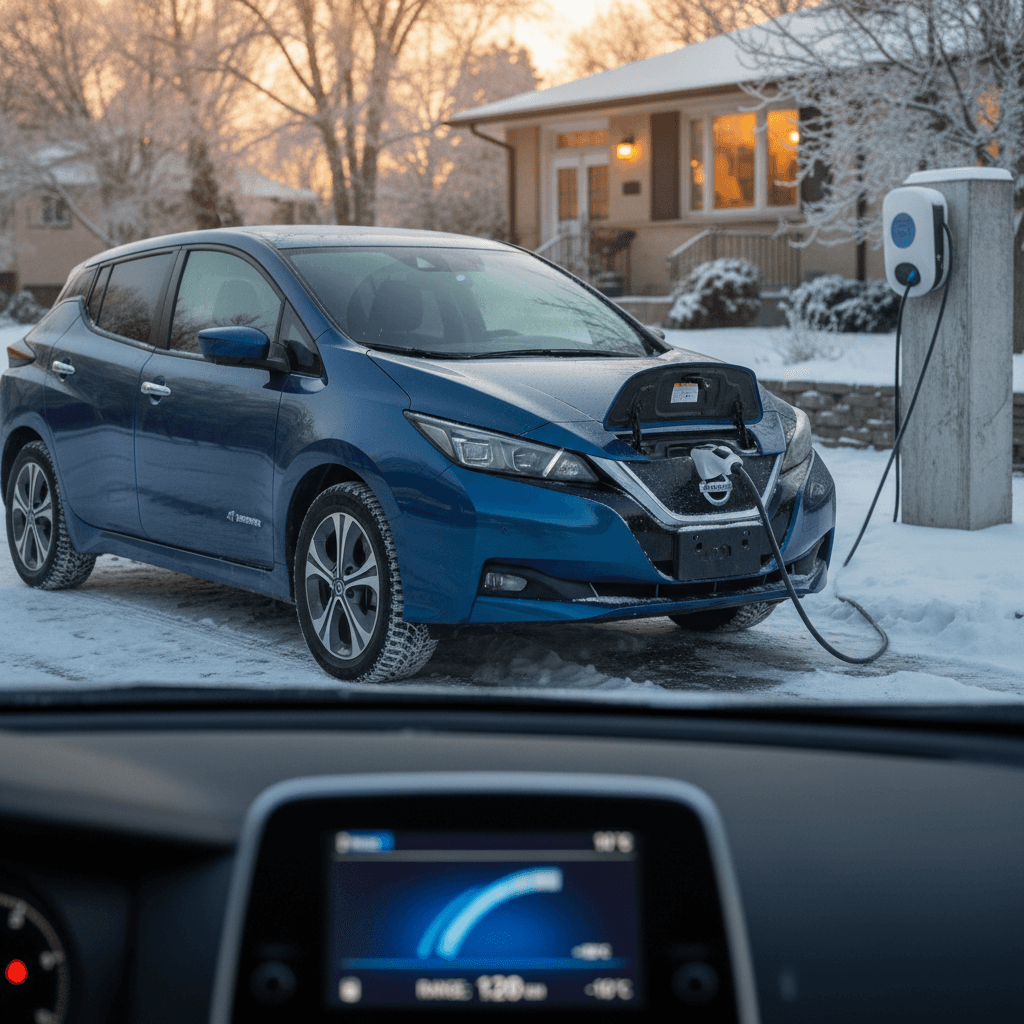
If you live where winters are real, think freezing temps, slushy roads, and long nights, you’re smart to ask how a Nissan Leaf’s range changes in cold weather. Every EV loses range in the cold, but the Leaf’s relatively small battery and simple thermal management mean you feel that loss sooner than in some newer models. Understanding what to expect, and how to drive around those limits, is the difference between winter confidence and white‑knuckle range anxiety.
Key takeaway up front
Nissan Leaf winter range overview
On paper, recent Nissan Leafs are rated at up to 149 miles (40 kWh pack) and about 212 miles (60 kWh pack) of EPA range in mild conditions. Those are decent numbers for city commuting, but they don’t tell you what happens on a dark January morning when it’s 20°F with the heater blasting and traffic moving at 70 mph.
Typical Nissan Leaf winter range snapshot
The good news is that for many owners with shorter commutes, a Leaf still works fine year‑round. The bad news is that if you’re planning 100‑plus‑mile winter trips without convenient charging, you need to be realistic and build in a safety buffer, especially with older or smaller‑battery Leafs.
How much Nissan Leaf range loss to expect in cold weather
Let’s start with the ballpark numbers most shoppers and owners care about. These aren’t promises, but they’re reasonable planning figures for a healthy battery in typical U.S. winter conditions (around 20–35°F, heat on, mix of city and highway driving).
Typical Nissan Leaf winter range vs EPA rating
Approximate winter range loss assuming a healthy battery and the heater in normal use.
| Leaf battery / trim | EPA rated range (mild weather) | Mild winter (around freezing) | Harsh winter (single digits, highway heavy) |
|---|---|---|---|
| 24 kWh (2011–2016) | 73–84 mi | 50–65 mi | 35–50 mi |
| 30 kWh (2016–2017) | ~107 mi | 70–85 mi | 50–65 mi |
| 40 kWh (2018–present S) | 149 mi | 100–120 mi | 75–95 mi |
| 60–62 kWh (2019–present SV/SL Plus) | ~215–226 mi (varies by year) | 145–175 mi | 110–150 mi |
Use these numbers as conservative planning tools, not guarantees, your driving style and local climate matter.
In other words, if your healthy 40 kWh Leaf realistically delivers 130–150 miles in mild weather around town, don’t be surprised when that becomes 90–110 miles in a cold snap with mixed driving, and even less if you’re spending hours at 70–75 mph.
Watch your buffers
Winter range by Nissan Leaf battery size and model year
Because the Leaf has been around since 2011, used buyers face a wide spread of batteries, ranges, and real‑world winter performance. Here’s how the major generations behave when temperatures drop.
Leaf generations in the cold: what to expect
From early 24 kWh cars to newer 60 kWh models, winter behavior varies a lot.
1st‑gen Leaf: 24 & 30 kWh packs (2011–2017)
These early Leafs have small packs and more degradation by now, so winter is where their limitations really show.
- 24 kWh (2011–2015): Many used examples now see 60–75 miles in mild weather. In true winter, that can look more like 40–60 miles per charge.
- 30 kWh (2016–2017): A healthier 30 kWh car might do 90–100 miles in mild weather, and roughly 60–85 miles in winter depending on speed.
If you regularly drive more than 40–50 miles in a day in the cold, you’ll want home charging and probably midday top‑ups.
2nd‑gen Leaf: 40 & 60+ kWh packs (2018–present)
The redesigned Leaf brought bigger batteries and better efficiency, but winter losses are still noticeable.
- 40 kWh (Leaf S): EPA 149 miles. Many drivers see 130–150 miles in mild weather, and 100–120 miles in winter mixed driving if they’re gentle.
- 60–62 kWh (Leaf Plus): EPA just over 200 miles depending on year; real‑world winter mixed driving often lives around 140–180 miles, with highway‑heavy trips at the low end.
For most commuters, the 60 kWh Leaf behaves like a reliable 120–150‑mile winter car when you include a comfortable buffer.
Why the Nissan Leaf can struggle more than other EVs in the cold
Every EV loses range in winter because cold batteries are less efficient and cabin heat is energy‑hungry. The Leaf adds a few wrinkles that can make it feel more sensitive to temperature than some newer competitors.
- Smaller battery packs on many trims: A 40 kWh pack simply has less energy to give than the 70–80+ kWh batteries in many newer EVs. When you lose 30% of a small pack, you feel it sooner.
- Limited active thermal management: The Leaf’s pack relies mostly on passive cooling and simple warmers rather than a sophisticated liquid thermal system. That’s cheaper and simpler, but it can mean slower warming and more variation in cold performance.
- Resistive cabin heater on many models: Unlike EVs with heat pumps, older Leafs and some trims use a traditional electric resistance heater that can draw several kilowatts by itself, dramatically cutting range on frigid days.
- Older packs may be degraded: A 2013 or 2015 Leaf with 70–80% state of health (SOH) is already starting with less usable energy. Stack cold‑weather losses on top of that and effective winter range shrinks quickly.
Heat pump vs resistive heat
Real-world winter driving scenarios for Leaf owners
Instead of staring at spreadsheets, it’s often more useful to walk through practical scenarios. Here’s how different Leafs tend to behave in everyday winter use, assuming a healthy pack and proper tires.
Scenario 1: Short urban/suburban commute
Use case: 15–25 miles per day, mostly city streets, overnight home charging.
- 24/30 kWh Leaf: Still workable in most winters, especially if you can plug in nightly. Even with 30–40% winter loss, you’re using a fraction of the battery each day.
- 40/60 kWh Leaf: Winter is almost a non‑issue. You might charge every few days, even with the heater on.
Verdict: All Leaf batteries can handle this comfortably with home charging, even in cold climates.
Scenario 2: 60–80‑mile round‑trip commute
Use case: Mostly highway at 65–75 mph, limited charging at work.
- 24 kWh Leaf: This is asking a lot in winter; you’ll be watching the gauge closely and slowing down or cutting heat on the coldest days.
- 30 kWh Leaf: Borderline but possible if speeds are moderate and you start at 100% daily.
- 40 kWh Leaf: Reasonable with a buffer, but harsh cold or strong headwinds can make it tight.
- 60 kWh Leaf: Comfortable, though you’ll still notice the car feels “smaller” on range than many new EVs.
Verdict: For this kind of commute in a cold‑winter state, a 40 or 60 kWh Leaf is strongly preferred.
Scenario 3: Weekend winter road trip
Use case: 120–180 miles each way, mostly interstate, charging at public DC fast chargers.
- 24/30 kWh Leaf: Technically possible, but you’ll be stopping often and planning carefully. Cold‑soaked packs also charge more slowly, further stretching travel time.
- 40 kWh Leaf: Expect multiple charging stops and significant planning. Not ideal if you’re in a hurry.
- 60 kWh Leaf: Doable with fewer stops, but still not as effortless as long‑range EVs.
Verdict: The Leaf isn’t a winter road‑trip hero. It shines as a daily commuter and local‑errand car.
Scenario 4: Steep hills and snow days
Use case: Hilly region, frequent snow, lots of defrost and traction control use.
- Climbing hills and pushing through snow both eat energy, and the Leaf’s front‑drive layout means traction control may kick in often.
- Expect your realistic winter range to land near the lower end of the estimates in our tables, especially if you’re regularly climbing long grades at speed.
Verdict: Add extra buffer for elevation changes, and don’t be shy about topping off whenever you can.
How to maximize your Leaf’s range in cold weather
You can’t beat physics, but you can stack the deck in your favor. A few habits make a surprisingly big difference in how far your Leaf will go when the temperature drops.
Winter range checklist for Nissan Leaf owners
1. Preheat while plugged in
If you have home or workplace charging, use the Leaf’s climate‑control timer or your key fob/app to warm the cabin <strong>before you unplug</strong>. That way the grid, not your battery, pays for the energy‑hungry warm‑up.
2. Use seat and steering‑wheel heaters first
Heated seats and steering wheels draw far less power than cranking the cabin heater. Set the cabin temperature a bit lower, rely more on the seat heaters, and you’ll see a noticeable range bump.
3. Slow down 5–10 mph on the highway
At 70–75 mph in the cold, aerodynamic drag and heater use can slash range. Dropping to 60–65 mph may feel modest, but it can turn a nail‑biter into a comfortable trip.
4. Choose Eco mode strategically
Eco mode softens throttle response and can reduce HVAC energy use. It won’t magically add miles, but it encourages smoother driving that preserves range, especially in stop‑and‑go traffic.
5. Keep your tires properly inflated
Cold air lowers tire pressure, increasing rolling resistance. Check pressures at least once a month in winter and set them to the manufacturer’s recommended cold‑inflation numbers.
6. Plan charging stops with extra margin
In mid‑summer you might arrive at a charger with 10–15% remaining without stress. In winter, aim to arrive closer to <strong>20–25%</strong>, especially on unfamiliar routes or windy days.
Think in kWh, not just miles
Charging a Nissan Leaf in winter: what to know
Cold doesn’t just affect how quickly the Leaf uses energy; it also affects how quickly the pack can accept a charge. Because the Leaf’s battery pack doesn’t have sophisticated liquid pre‑conditioning, you’ll see some specific behaviors in winter.
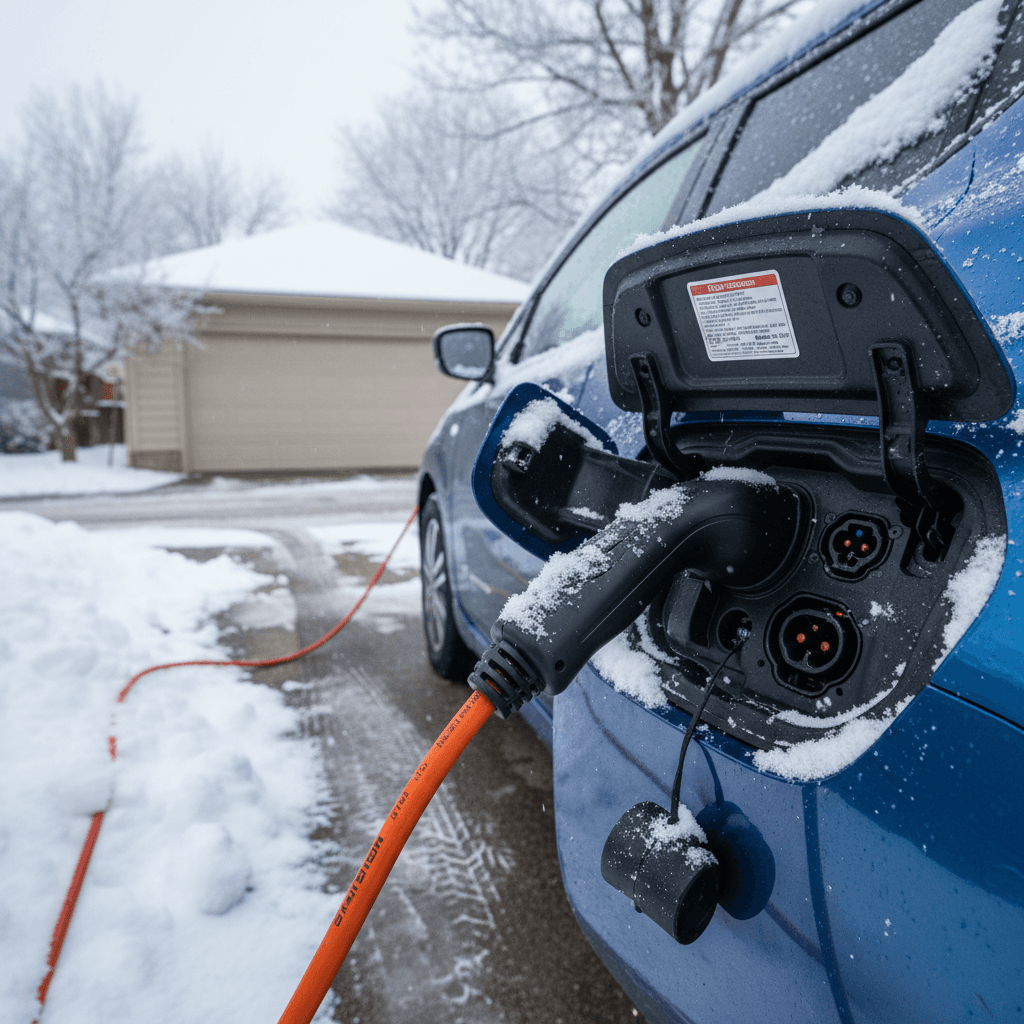
- Level 2 (240V) home charging remains your best friend. Even if DC fast charging slows down a bit in deep cold, a dedicated 240V charger at home will reliably refill a Leaf battery overnight.
- DC fast charging can be noticeably slower on a cold‑soaked pack. If the car has been sitting outside all day in single‑digit temps, don’t be surprised if a quick‑charge session starts slowly until the battery warms.
- Multiple DC sessions in a day can heat the pack up. On longer trips with repeated fast charges, the Leaf’s pack will warm, which can help winter charge speeds, but can also raise long‑term degradation concerns in hot weather. Winter trips are usually less of a thermal‑stress worry than summer road‑tripping.
- Preconditioning helps here too. If you can start a fast‑charge session right after a highway stint, the pack will already be warmer and more accepting of power than if the car has been sitting still in the cold.
Safety first around 120V outlets
Buying a used Nissan Leaf for a cold climate
If you’re shopping for a used Leaf in Minnesota, Colorado, upstate New York, or any place with serious winters, you need to evaluate range and battery health together. Paper specs alone won’t tell you how the car will feel on a January commute five years from now.
Used Nissan Leaf + cold climate: key shopping questions
Focus on the right battery, real range, and charging setup.
1. Which battery size fits your life?
Be brutally honest about your winter driving.
- If your typical day is under 30–40 miles round‑trip, even an older 24/30 kWh Leaf can work with reliable home charging.
- If you regularly drive 60–80 miles or more without charging, aim for a 40 or 60 kWh car.
- If you want winter flexibility for 100‑plus‑mile days, the 60 kWh Leaf is the safer bet.
2. What’s the real battery health?
Two Leafs of the same year can have very different remaining capacity.
- Ask for a recent battery health report or LeafSpy readout to see state of health (SOH).
- Cars that fast‑charge often or live in hot climates may have more degradation.
- At Recharged, every used EV includes a Recharged Score battery health diagnostic so you know exactly what you’re buying.
3. Do you have the right charging at home?
In a cold‑winter state, home charging is almost mandatory for Leaf ownership.
- Budget for a 240V Level 2 charger if you don’t have one. That makes it easy to start each winter day near 100%.
- Think about where the car will park: a garage spot keeps the pack warmer than street parking in sub‑zero temps.
How Recharged can help
Ready to find your next EV?
Browse VehiclesWhen the Leaf is, and isn’t, the right winter EV choice
After more than a decade on the market, the Leaf has carved out a clear niche: it’s an affordable, simple EV that’s excellent for short to medium daily driving. Winter doesn’t change that basic character, but it does narrow the situations where a Leaf is a good fit.
When a Leaf shines in cold weather
- You have reliable home Level 2 charging and can start most days near full.
- Your winter driving is mostly local trips under 60–70 miles between charges.
- You’re comfortable building in a buffer and occasionally slowing down or planning a mid‑trip charge.
- You value low running costs and don’t need 300‑mile range.
In this world, a Leaf, especially a 40 or 60 kWh model, can be a delightfully inexpensive winter commuter.
When you should consider something else
- You routinely drive 100–150 miles in a day in freezing temperatures with limited charging options.
- You need to tow, haul heavy loads, or climb long mountain passes in the snow.
- You want a “set it and forget it” road‑trip EV that behaves like a 300‑mile SUV year‑round.
Here, a larger‑battery EV with robust battery thermal management and a heat pump will serve you better, even if the Leaf looks appealing on price.
Nissan Leaf winter range FAQ
Frequently asked questions about Nissan Leaf range in cold weather
Bottom line: Living with a Nissan Leaf in cold weather
The Nissan Leaf will never be a 300‑mile, go‑anywhere winter road‑trip machine, and that’s okay. Where it excels is as a simple, affordable electric hatchback that can handle daily commuting and local errands year‑round, even in cold climates, as long as you pair the right battery size with the right charging setup and realistic expectations.
If your winter driving is mostly short trips with reliable home charging, a Leaf, especially a 40 or 60 kWh model, can be a smart, low‑cost entry into EV ownership. If you’re eyeing a used Leaf and want to know how its range in cold weather will really feel, working with a marketplace like Recharged that provides verified battery health and expert guidance can take the guesswork out of the decision and help you find a car that stays comfortable when the temperature drops.