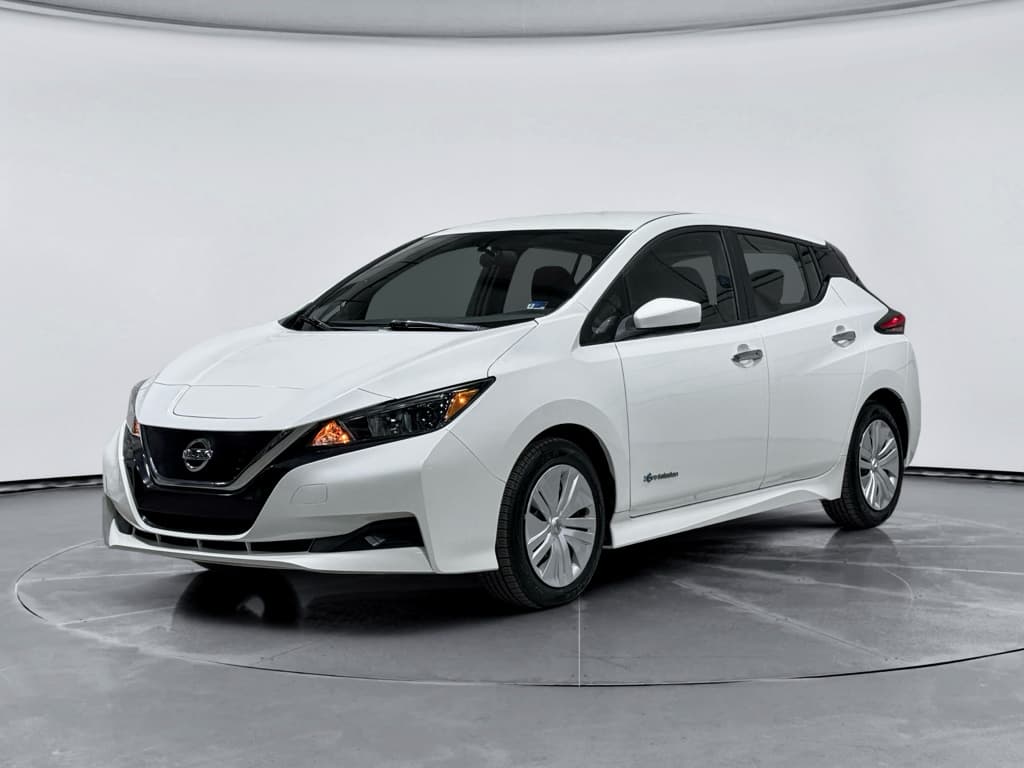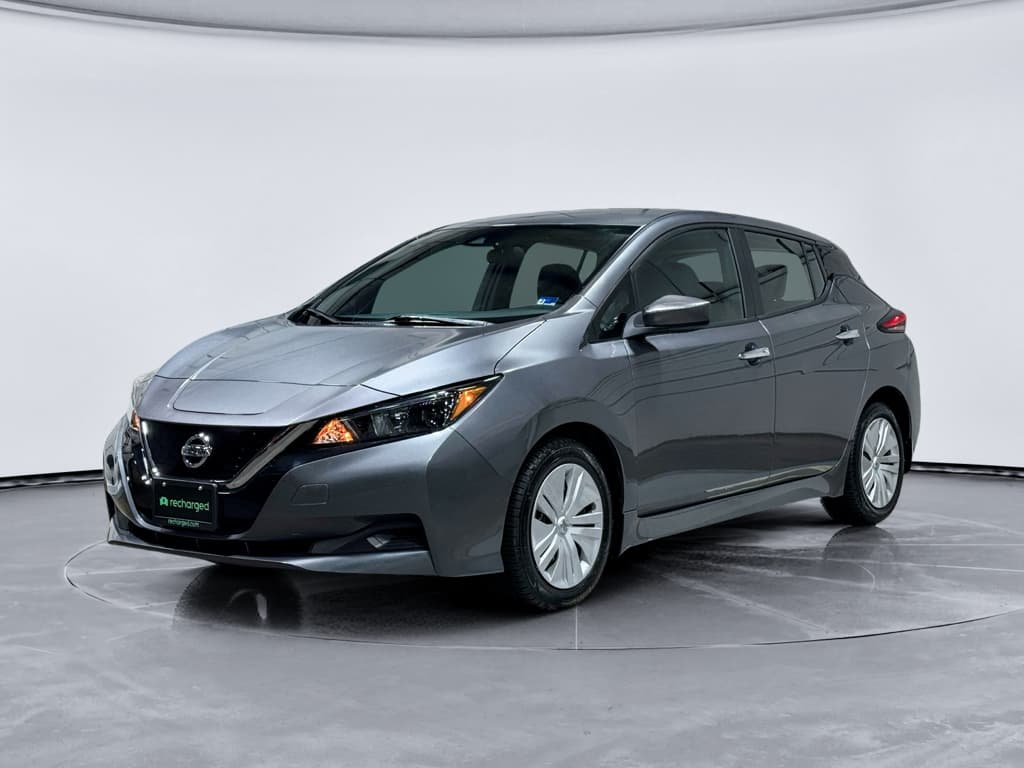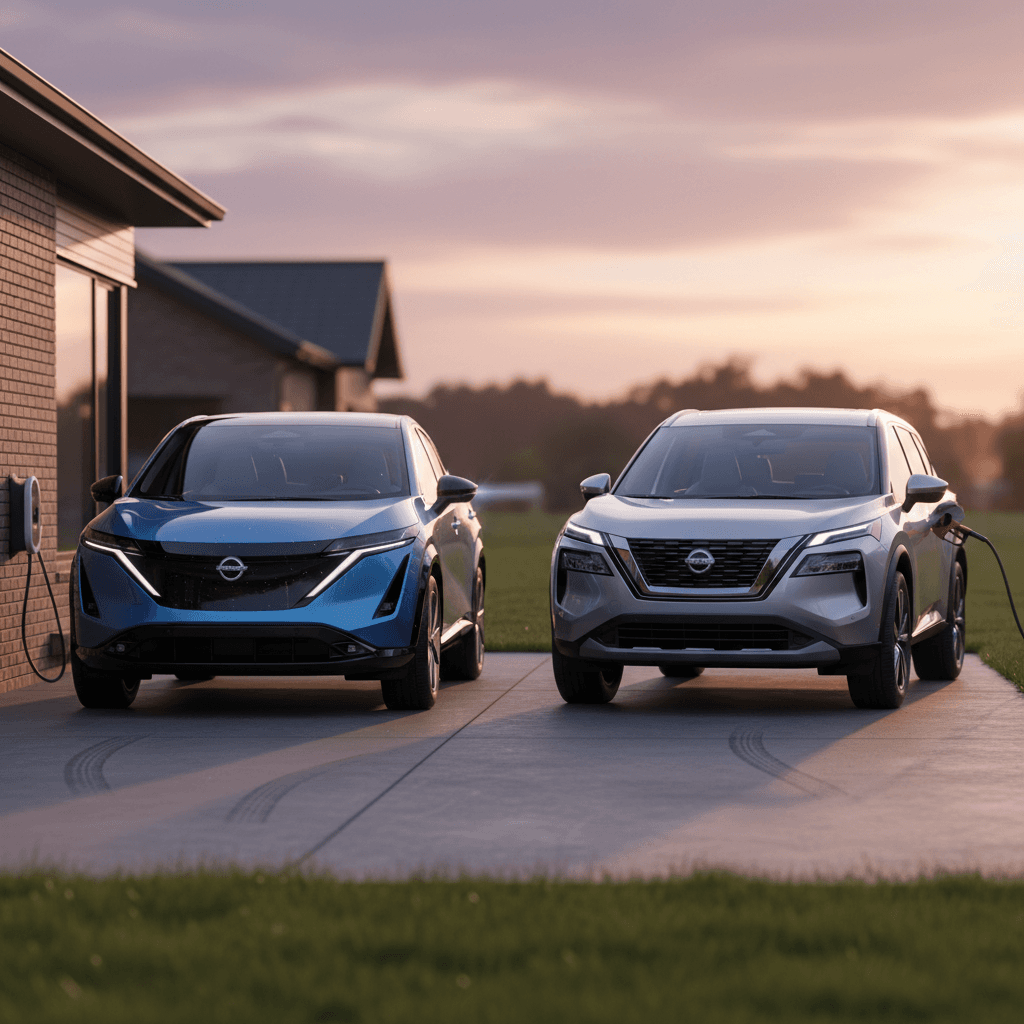
You’re cross-shopping the Nissan Ariya vs Nissan Rogue and wondering which you should buy. On paper they’re both compact crossovers from the same brand, but one burns gas and the other is a fully electric SUV. The right answer depends far more on how you drive and what you spend on energy than on any single spec-sheet number.
Key context for 2026 shoppers
Nissan Ariya vs Nissan Rogue: Quick Take
Ariya: Quiet, quick, future-proofed
- Powertrain: Fully electric, 63 or 87 kWh battery, up to ~289 miles EPA-rated range depending on trim.
- Energy cost: Typically less per mile than gas, especially if you can charge at home.
- Drive feel: Instant torque, smooth and quiet, optional e-4ORCE AWD with strong traction.
- Best for: Daily commuters, tech-forward families, buyers who can charge at home and want lower running costs.
Rogue: Familiar, flexible, road-trip ready
- Powertrain: 1.5L turbo three-cylinder gas engine, ~201 hp, up to around 30 mpg city / 37 mpg highway in FWD trims.
- Fueling: Quick refueling anywhere, no planning around chargers.
- Space: Slightly more cargo height and a more conventional rear area.
- Best for: Apartment dwellers with no reliable charging, frequent long road trips, and buyers prioritizing lowest possible purchase price over long-term fuel savings.
Headline Numbers: Ariya vs Rogue at a Glance
Who the Ariya and Rogue Are Really For
Match the SUV to Your Life, Not Just Your Budget
Think about where you park, how you commute, and what you value most.
You have home charging
You live in an apartment
You road‑trip often
Think in years, not months
Pricing, Incentives and Used Market Reality
On sticker price alone, the Nissan Rogue looks cheaper. But once you factor in used pricing, incentives, and fuel, the "Nissan Ariya vs Nissan Rogue which should you buy" question gets more nuanced, particularly in the used market, where Ariya depreciation has been steeper.
Typical 2023–2025 Pricing Snapshot (U.S., Early 2026)
Approximate price ranges you’ll commonly see; exact numbers vary by mileage, trim, market, and condition.
| Model / Year | Typical Used Price Range | Original New MSRP (approx.) | Notes |
|---|---|---|---|
| 2023–2024 Nissan Ariya Engage / Venture+ | Low–mid $20,000s–low $30,000s | Low $40,000s | Deep discounts and incentives plus EV demand cooling have pushed many Ariyas well below original MSRP on the used market. |
| 2023–2024 Nissan Ariya Evolve+ / Platinum+ | High $20,000s–mid $30,000s | Mid–high $40,000s | Higher trims with the big battery and e‑4ORCE AWD cost more but often undercut comparable new EVs. |
| 2022–2024 Nissan Rogue S / SV | Mid–high $20,000s | High $20,000s–low $30,000s | Rogue holds its value reasonably well as a mainstream gas SUV. |
| 2022–2024 Nissan Rogue SL / Platinum | High $20,000s–low $30,000s | Low–mid $30,000s | Top trims add luxury touches but don’t fall off a pricing cliff the way some EVs have. |
Use these as directional ranges, not quotes, always compare real listings in your area.
EV tax credit reality check
If up‑front price is your single biggest constraint and you can’t finance much, a used Rogue may be easier to fit into your budget. But if you can qualify for competitive EV financing, the Ariya’s lower operating costs, electricity instead of gas, fewer moving parts, no oil changes, can make the monthly total cost of ownership surprisingly close.
Powertrain, Range and Real-World Efficiency
On the spec sheet, the Ariya looks like the more powerful and more efficient choice in city driving, while the Rogue leans on cheap highway miles and universal refueling. Here’s how the two stack up when you look beyond badges and marketing copy.
Ariya vs Rogue: Powertrain and Efficiency Comparison
Representative specs for popular trims; always verify exact numbers for the specific VIN you’re considering.
| Feature | Nissan Ariya (FWD, 63 kWh) | Nissan Ariya (FWD, 87–91 kWh) | Nissan Ariya (e‑4ORCE AWD) | Nissan Rogue (FWD) | Nissan Rogue (AWD) |
|---|---|---|---|---|---|
| Horsepower (approx.) | 214 hp | 238 hp | up to 389 hp | 201 hp | 201 hp |
| EPA efficiency | ~98–103 MPGe | Similar range depending on wheel size | Slightly lower with AWD | ~30/37 mpg (city/hwy) | ~28/35 mpg (city/hwy) |
| Rated range | ~216–230 mi | Up to ~289–300 mi | Slightly lower with AWD | Gas range depends on tank and mpg | Gas range depends on tank and mpg |
| Energy source | Electricity (home/public) | Electricity (home/public) | Electricity (home/public) | Gasoline | Gasoline |
| Cold‑weather impact | Noticeable range loss but manageable with preconditioning and heat pump on many trims | Same as left | Same as left | Small mpg drop in winter | Small mpg drop in winter |
Ariya specs shown for common U.S. trims; Rogue specs represent typical recent gas models.
Cold weather and EVs
How to Compare Your Real Energy Costs
1. Estimate your annual mileage
Add up your commute, errands, school runs, and road trips. Many U.S. drivers land around 12,000–15,000 miles per year.
2. Look at your electric rate
Check your $/kWh on your utility bill. Multiply that by an Ariya’s typical efficiency (about 3 mi/kWh in mixed driving) to estimate cost per mile.
3. Look at local gas prices
Use your expected mpg in a Rogue and your area’s $/gallon to get cost per mile. Divide price per gallon by mpg to compare directly with electricity.
4. Factor in maintenance
An Ariya has no oil changes, no exhaust system, and fewer wear items. A Rogue’s scheduled maintenance (fluids, filters, spark plugs) adds both time and money over 5–8 years.
5. Consider your driving mix
Lots of stop‑and‑go city driving heavily favors the Ariya (EVs excel there). Mostly long highway slogs narrow the gap because gas engines are more efficient at steady speeds.
Space, Comfort and Everyday Practicality
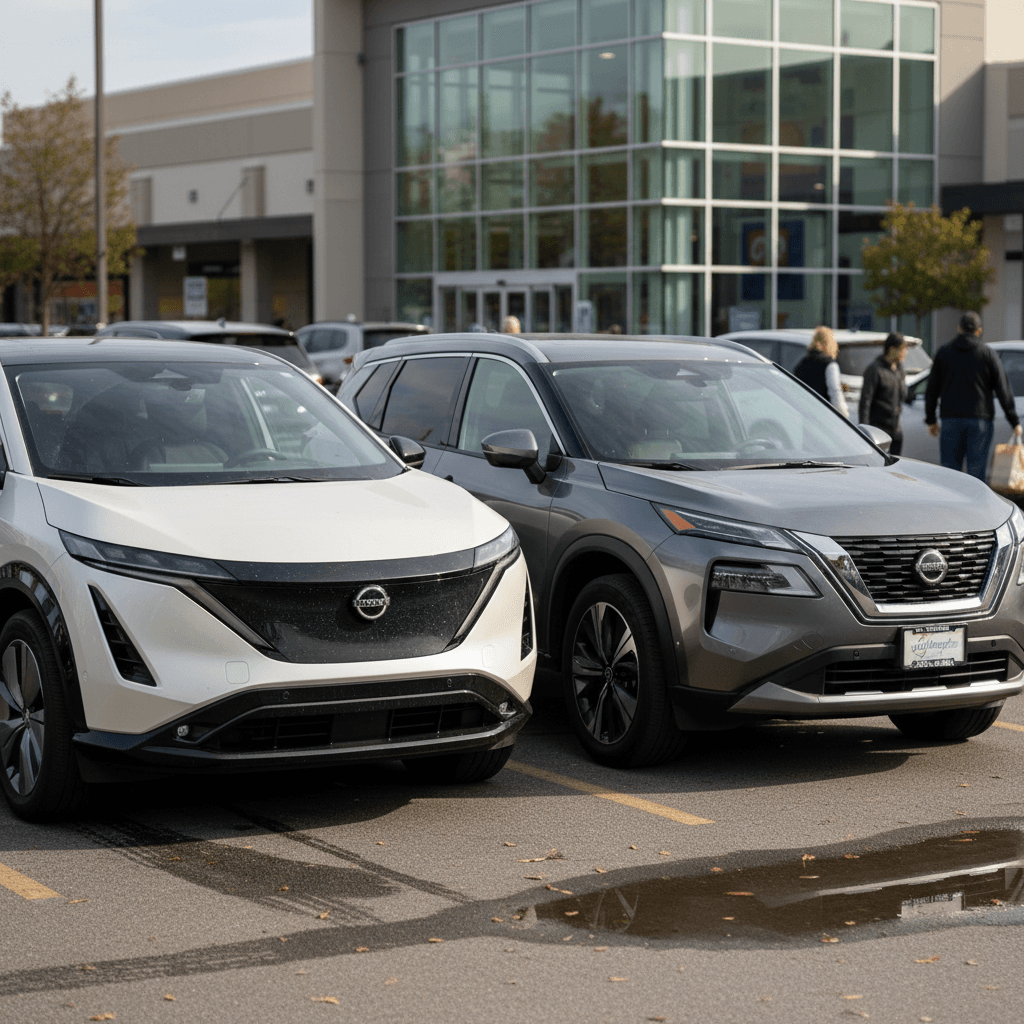
Both SUVs are family‑friendly, but they package space a bit differently. The Rogue is closer to a classic small crossover formula, while the Ariya leans into a more premium, lounge‑like EV interior that trades a bit of cargo height for cabin ambiance.
Interior Space and Cargo: Ariya vs Rogue
Approximate characteristics based on recent U.S. models; exact volume numbers vary slightly by trim and seat configuration.
| Aspect | Nissan Ariya | Nissan Rogue |
|---|---|---|
| Seating | 5 seats, very flat floor, airy front cabin | 5 seats, more traditional SUV layout |
| Rear legroom | Comfortable for adults, flat floor helps middle passenger | Also adult‑friendly, conventional center tunnel |
| Cargo floor height | Slightly higher floor, lower vertical clearance | Lower floor, more vertical cargo height |
| Rear seat fold | Split‑fold, nearly flat load surface | Split‑fold, versatile two‑level cargo floor on some trims |
| Cabin vibe | More upscale, EV‑lounge feel, available ambient lighting | Functional, straightforward, more hard plastics on lower trims |
Think not just in cubic feet, but in how you actually use the space.
Bring your actual stuff
Driving Experience and In-Car Tech
Nissan positions both SUVs as comfortable, confidence‑inspiring daily drivers, but the Ariya feels more like a quiet near‑luxury EV, while the Rogue feels like a well‑sorted mainstream crossover with a strong emphasis on value.
How They Feel Behind the Wheel
Both are easy to drive. Only one feels like the future.
Ariya driving character
- Instant torque: Even base FWD Ariyas feel more responsive off the line than a Rogue.
- Refinement: No engine noise or gearshifts; e‑4ORCE AWD trims add impressive composure in rain and snow.
- One‑pedal feel: Strong regenerative braking means less footwork in traffic once you get used to it.
- Tech: Wide digital display, ProPILOT Assist 2.0 on higher trims, and over‑the‑air software updates on many systems.
Rogue driving character
- Predictable and familiar: Turbo three‑cylinder plus CVT is tuned for smoothness, not thrills.
- Noise: More engine and CVT drone under heavy throttle compared to the whisper‑quiet Ariya.
- Confidence: Available AWD, good outward visibility, and friendly steering make it an easy family hauler.
- Tech: ProPILOT Assist, modern infotainment, and available digital cluster, but generally a step behind Ariya in wow factor.
Driver-assist systems
Safety, Reliability and Long-Term Confidence
Safety is a strong suit for both vehicles, but the Ariya benefits from the inherent advantages of an EV platform, low center of gravity and generous crash structure, plus excellent crash-test performance so far.
- The Ariya has earned top-tier crash ratings from major testing bodies, including high marks in small-overlap and side-impact tests once early headlight issues were corrected in 2023.
- Recent Rogues also score well, but their average crash-test scores tend to land just a notch below the Ariya’s best marks.
- Both models offer a full suite of active safety tech: automatic emergency braking, blind-spot monitoring, lane-keep assistance and available adaptive cruise control.
The IIHS moderate-overlap wrinkle
On reliability, long‑term data is still maturing for the Ariya, but EVs in general have fewer wear‑prone components than gas SUVs. The Rogue, by contrast, uses a small turbocharged engine and CVT, both technologies that can be durable when maintained, but that add complexity. A rigorous pre‑purchase inspection matters for either model, but especially for high‑mileage gas Rogues.
5-Minute Decision Guide: Ariya vs Rogue
Pick Your Path in 5 Minutes
Choose the Ariya if…
You can reliably charge at home or work and don’t mind installing a Level 2 charger if needed.
Most of your driving is under 150 miles per day, with only occasional longer trips.
You care about a quiet, refined drive and modern tech more than maximum cargo height.
You’re planning to keep the vehicle at least 4–5 years and want lower running costs over time.
You like the idea of buying an EV after the steepest depreciation has already happened.
Choose the Rogue if…
You have no dedicated parking or charging access and mostly rely on street parking.
You routinely do multi‑state road trips where charging infrastructure is sparse or time is tight.
Up‑front purchase price and mainstream serviceability at any Nissan dealer or independent shop matter most.
You prioritize simple, familiar ownership and don’t want to think about charging apps, networks, or kilowatts.
You’re buying for someone who’s less comfortable with new technology and just wants a "normal" SUV.
What to Do on Your Test Drives
Compare cabin noise levels
Take each SUV on the same loop that includes a rough road and a highway on‑ramp. The Ariya’s lack of engine noise should be immediately obvious; decide if that’s worth potential charging trade‑offs.
Test the driver-assist tech
Engage ProPILOT Assist in light traffic in both vehicles. Pay attention to how naturally it centers the car and how smoothly it handles curves and slowdowns.
Practice “fueling” scenarios
In the Ariya, visit a nearby fast charger and walk through plugging in, paying, and watching charge rates. In the Rogue, time a full gas station stop. The real‑world difference will help you internalize day‑to‑day life with each.
Sit in every seat
If you have kids, install at least one car seat in both vehicles, adjust the front seats for tall drivers, and sit in the rear middle position. Comfort and ease-of-use trump spec-sheet numbers.
Bring a long-term mindset
Ask yourself not just which SUV excites you today, but which one you’ll be happier with after 60,000–100,000 miles of commutes, Costco runs, and road trips.
Buying a Used Ariya or Rogue with Recharged
Because Nissan has paused new Ariya imports to the U.S. for the 2026 model year, the action has shifted to the used market. That’s where Recharged focuses: helping you buy a used EV like the Ariya with transparent battery health and fair pricing, or explore other electric options if a Rogue-style gas SUV still feels like the safer bet for now.
How Recharged Helps If You Lean Ariya
We’re built around used EV transparency, not guesswork.
Verified battery health
Fair market pricing & financing
Trade-ins and nationwide delivery
Ready to find your next EV?
Browse VehiclesNear Richmond, VA?
FAQ: Nissan Ariya vs Nissan Rogue
Frequently Asked Questions
Final Thoughts: Which Should You Buy?
If you have reliable charging and mostly drive within a 50–150 mile daily radius, the Nissan Ariya is the more compelling long‑term play. It’s quieter, quicker, better‑equipped in many trims, and, on the used market in 2026, often cheaper than you’d expect for the level of technology and refinement you get. For many households, the Ariya will simply be a nicer place to spend time, with fuel and maintenance savings that quietly pay you back over the years.
If, on the other hand, you lack home charging, do frequent long‑distance drives on thin charging corridors, or just want a familiar gas SUV with straightforward ownership, the Nissan Rogue remains a rational choice. It won’t wow you like the Ariya, but it will get the job done with minimal lifestyle change.
So when you weigh Nissan Ariya vs Nissan Rogue, which should you buy? the real question is: do you want to keep living in the gas world, or are you ready to live a little more in the EV world? If you’re even leaning toward EV, a well‑vetted used Ariya with a Recharged Score Report can de‑risk that jump and give you a clearer picture of battery health, price fairness, and long‑term costs before you sign anything.