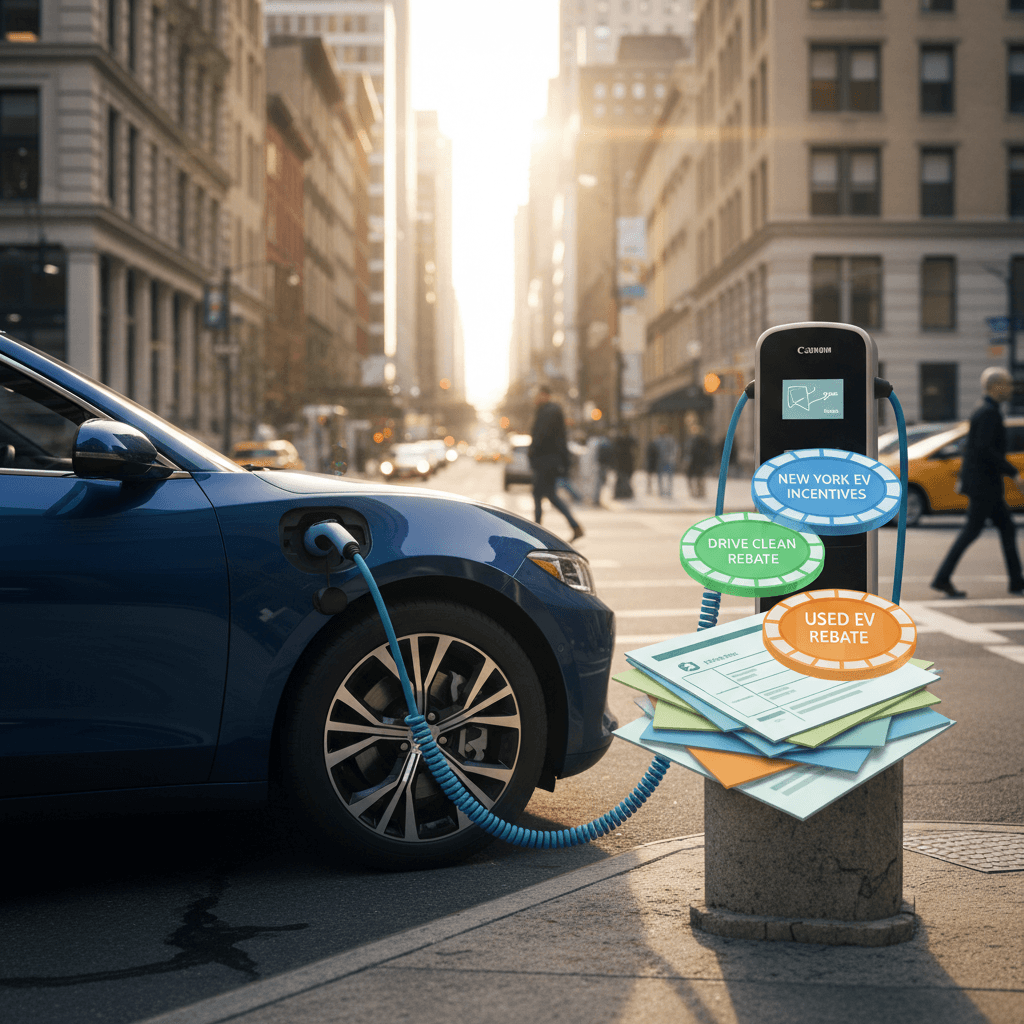
If you live in New York and you’re thinking about an electric vehicle in 2026, the natural question is: **what rebates and incentives are still on the table?** With federal tax credits changing and state programs evolving, the landscape looks different than it did just a year or two ago. This guide breaks down the **New York electric car rebate options in 2026**, what’s confirmed, what’s proposed, and how to plan your purchase so you don’t leave money on the table.
Key point for 2026
Overview: New York electric car rebates in 2026
New York’s EV market at a glance
Think of New York’s 2026 EV incentives as three layers: - **State point‑of‑sale rebates** on new EVs through the Drive Clean Rebate. - **Emerging or proposed rebates for previously owned EVs**, aimed at replacing now‑expired federal used‑EV credits. - **Local and utility programs** that can cut the cost of home charging equipment or public fast charging. If you’re shopping a new or used EV in 2026, the biggest single line‑item discount you’ll see at the dealership is still the **Drive Clean Rebate**, and that’s where we’ll start.
How the NY Drive Clean Rebate works in 2026
The **Drive Clean Rebate**, administered by NYSERDA, is New York’s flagship incentive for new electric cars. It’s a **point‑of‑sale rebate**, you see the discount right on your buyer’s order or lease contract at a **participating New York dealer**, instead of waiting for a tax refund. As of 2026, it still offers **up to $2,000** off the manufacturer’s suggested retail price (MSRP) for qualifying new battery‑electric and plug‑in hybrid vehicles.
Typical Drive Clean Rebate amounts in 2026
Exact rebate amounts depend on vehicle type and electric range. This table shows the general structure many shoppers will see at the dealership.
| Vehicle type | Electric range (approx.) | Illustrative rebate amount | Notes |
|---|---|---|---|
| Battery‑electric (BEV) | 200+ miles | $2,000 | Most long‑range BEVs at mainstream prices qualify for the top tier. |
| Battery‑electric (BEV) | 100–199 miles | $1,000 | Shorter‑range EVs and some city‑focused models fall here. |
| Plug‑in hybrid (PHEV) | 25+ electric miles | $1,000 | Long‑range PHEVs with useful EV‑only range. |
| Plug‑in hybrid (PHEV) | Less than 25 electric miles | $500 | Smaller‑battery PHEVs may still qualify for a reduced rebate. |
| Fuel‑cell EV (FCEV) | N/A | $2,000 | Few models in NY, but they’re generally treated like BEVs. |
Always confirm the exact rebate amount for your specific VIN on the NYSERDA eligible models list before you sign.
Where the rebate shows up
New York topped up Drive Clean funding with an additional **$30 million announced in April 2025**, and state budget documents for FY 2025–26 and FY 2026–27 continue to reference EV support programs, a strong sign that **Drive Clean is expected to run through at least the 2026 model year**. That said, these funds are not infinite. In past years, high demand has temporarily exhausted the budget, forcing NYSERDA to pause or trim rebate levels until new money became available.
Watch the remaining budget
Eligibility rules for the 2026 Drive Clean Rebate
Who and what qualifies
- Vehicle type: New battery‑electric (BEV), plug‑in hybrid (PHEV), or fuel‑cell EV.
- New only: The vehicle must be new and titled for the first time. Used EVs don’t qualify for Drive Clean.
- Price limits: NYSERDA maintains maximum MSRP caps by model; most mainstream EVs sold in New York fall under these caps.
- Where you buy: The rebate is only available through participating New York dealerships that are enrolled in the program.
- Registration: The vehicle must be registered in New York State shortly after purchase or lease.
Important fine print
- Leases count: Qualifying leases typically need to be at least 36 months.
- One rebate per vehicle: Once a VIN has been used for Drive Clean, it can’t be used again.
- Stacking rules: Drive Clean can usually be combined with **utility, local, and (pre‑Sept 2025) federal incentives**, as long as you meet each program’s rules.
- Dealer paperwork: The dealer submits the rebate application to NYSERDA; you shouldn’t have to file anything yourself for Drive Clean.
Don’t assume every EV on the lot qualifies
Used EV rebates in New York: what exists and what’s coming
When federal used EV tax credits ended for purchases after **September 30, 2025**, New York lawmakers moved to fill part of that gap at the state level. Several bills in the **2025–2026 legislative session** aim to create or expand **rebates for previously owned zero‑emission vehicles**, separate from the existing Drive Clean program for new cars.
The evolving picture for used EV rebates in New York
Here’s what’s on the table as of early 2026.
Pre‑owned ZEV rebate proposals
State bills have been introduced to create a dedicated previously owned zero‑emission vehicle rebate program. A recent Assembly memo describes a plan that would run through 2029 and sit alongside Drive Clean.
The goal is to replace the value of the lost federal used‑EV tax credit for lower‑ and moderate‑income buyers.
Scrappage + EV rebate concepts
Other proposed legislation would add a **$500+ rebate** when a buyer scraps an older gasoline or diesel vehicle and replaces it with a new EV. While focused on new cars, incentives like this can loosen up budgets and make **late‑model used EVs** more attractive trade‑ins.
What’s actually available in 2026?
As of April 2026, much of this is **still in the legislative or early implementation stage**. That means you’ll want to treat used‑EV rebate talk as a potential bonus, not as guaranteed cash, until final program rules and budgets are published.
Always confirm the current status with NYSERDA or the New York State government before you factor a used‑EV rebate into your purchase math.
Good news for used‑EV shoppers
What happened to the federal EV tax credit, and what’s left
If you followed EV incentives during the Inflation Reduction Act years, you may remember the **$7,500 federal tax credit for new EVs** and up to **$4,000 for used EVs**. That changed dramatically with federal tax legislation passed in 2025. Under the so‑called **One Big Beautiful Bill Act**, federal clean‑vehicle credits are **phased out by September 30, 2025** for most purchases. By 2026, shoppers in New York are largely depending on **state and local programs**, not Washington, for EV purchase help.
- If you **took delivery of a qualifying EV on or before September 30, 2025**, you may still be dealing with the paperwork or tax reporting, but the value of that federal credit is already locked in.
- If you buy or lease a new or used EV in **calendar year 2026**, you should not expect a traditional federal EV tax credit to reduce your cost, focus instead on **New York and utility incentives**.
- Some transitional tax provisions (like deductions for auto loan interest on certain vehicles) may still benefit you indirectly, but they’re not EV‑specific rebates and don’t change the dealership price the way Drive Clean does.
Don’t rely on out‑of‑date federal EV content
How to stack New York rebates with other savings
Even without federal credits, New York drivers can still do surprisingly well by **stacking multiple state, utility, and local incentives**, especially on a reasonably priced EV. Here’s how a typical 2026 deal might come together.
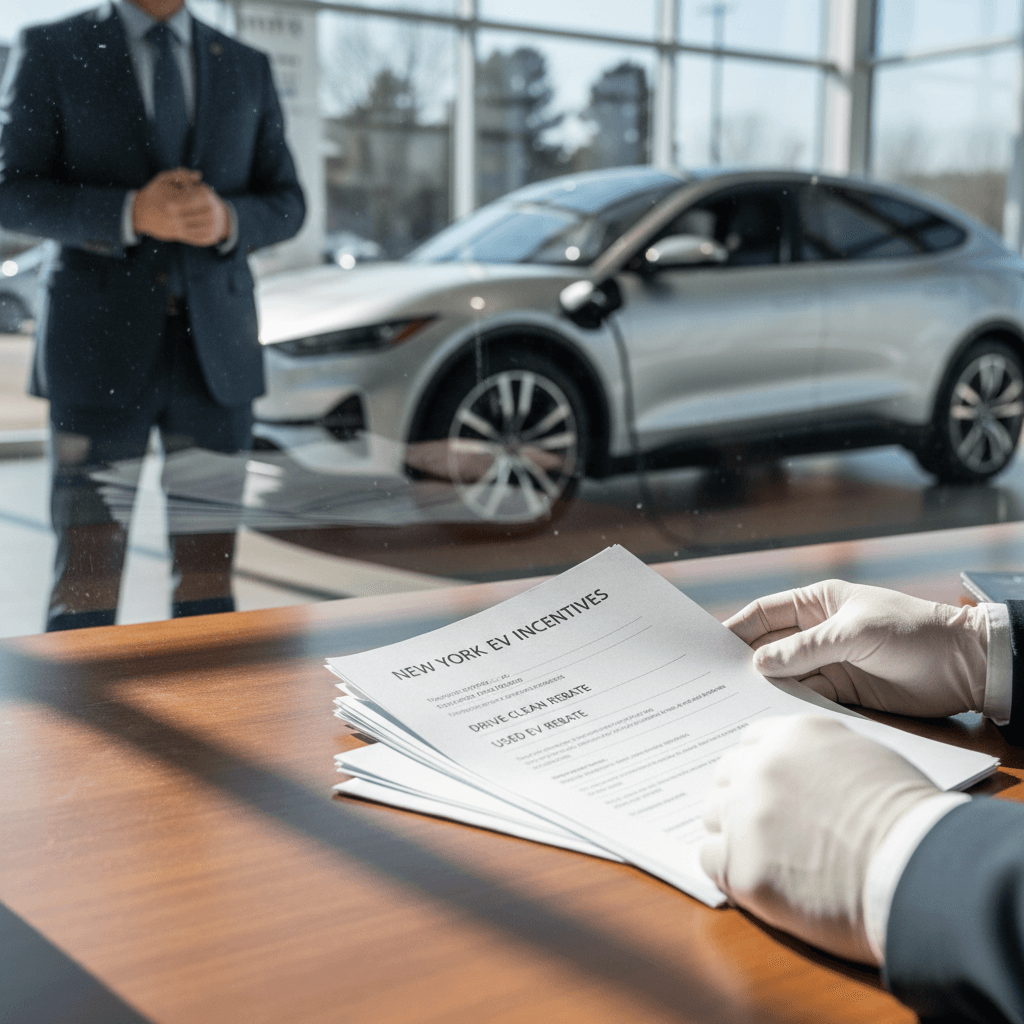
Typical 2026 EV savings stack in New York
1. Start with dealer discount and manufacturer incentives
Treat the factory rebate and dealer discount as the first layer. Negotiate as if there were **no government incentives at all**, then layer rebates on top. That keeps you focused on the real transaction price.
2. Apply the NY Drive Clean Rebate at the point of sale
Once you’ve honed in on a specific VIN, ask the finance manager to confirm the **exact Drive Clean amount for that vehicle** and show it on the buyer’s order or lease worksheet. This instantly lowers your capitalized cost or purchase price.
3. Add utility and charging incentives
New York utilities and NYSERDA programs like **EV Make‑Ready** and **Charge Ready NY** can help pay for home charging equipment or reduce your electricity rates for EV charging. Those won’t show up in the vehicle price, but they can shave hundreds off your first‑year ownership cost.
4. Look for local and employer perks
Some municipalities and employers offer **discounted parking, toll credits, or free workplace charging** for EV drivers. While smaller than Drive Clean, these perks add up, especially if you commute into New York City regularly.
5. Consider financing and interest deductions
Depending on how 2025–2028 federal tax rules shake out, you may be able to deduct a portion of car‑loan interest, even without an EV‑specific credit. This is a conversation for your tax advisor, but it’s part of the overall cost picture.
Where Recharged fits in
Ready to find your next EV?
Browse VehiclesTiming your purchase: 2026 rebate and market strategy
With federal credits gone for new 2026 purchases, your timing decisions revolve around **state budgets, product cycles, and your own needs**, not IRS deadlines. Here’s how to think about it.
Reasons to move sooner in 2026
- Drive Clean funding is live now: Waiting risks running into a future funding pause or reduced rebate tiers if the budget gets tight.
- High‑demand models sell fast: Popular EVs with strong range and all‑wheel drive often have limited allocations in the Northeast.
- Winter performance planning: Buying before next winter gives you time to understand your EV’s cold‑weather range and charging needs.
Reasons you might wait
- Possible used‑EV rebates: If lawmakers finalize a robust previously owned EV rebate for lower‑ and middle‑income buyers, waiting could net you extra help on a used EV.
- Model refreshes: Many automakers are updating EV lineups around 2026–2027, which can push down prices on current‑generation models, especially in the used market.
- Home charging readiness: If you need to upgrade electrical service, it can be smart to get that work quoted and scheduled before you commit to a specific EV.
Watch both car prices and rebates
Checklist: How to make sure you actually get the rebate
New York Drive Clean Rebate checklist (2026 edition)
Confirm the dealer is enrolled in Drive Clean
Ask directly whether the dealership participates in the **NYSERDA Drive Clean Rebate program**. If they’re not enrolled, you won’t get the point‑of‑sale discount there, even if the car itself would qualify.
Verify your specific VIN on NYSERDA’s eligible list
Before you sign, have the dealer show you the **eligible models list** or confirmation from NYSERDA that your exact VIN qualifies and what the **current rebate tier** is.
Check for MSRP and trim‑level limits
Make sure the trim, options, and MSRP on your chosen EV don’t push it over New York’s caps. A heavily optioned version of a model can sometimes exceed the price limit even if the base trim qualifies.
Get the rebate amount in writing on the buyer’s order
Your purchase or lease agreement should clearly list the **Drive Clean Rebate amount** as a line item. Take a photo or keep a copy; it’s your proof of the discount if questions arise later.
Confirm timing and delivery details
Drive Clean is typically tied to the **date the vehicle is delivered and registered** in New York. Make sure you and the dealer are on the same page about timing, especially if you’re ordering a vehicle or trading out of a lease.
Ask how other incentives are handled
If the deal also involves utility rebates, scrappage incentives, or employer programs, clarify whether those are **instant discounts, mail‑in rebates, or tax‑time benefits** so you can plan your cash flow.
Common ways NY shoppers lose their rebate
FAQ: New York electric car rebate 2026
Frequently asked questions about NY EV rebates in 2026
Is 2026 a good year to buy a used EV in New York?
For New Yorkers, **2026 is a transition year**. The era of stacking rich federal credits on top of state rebates is largely behind us, but New York has stepped in to keep EVs competitive with a **robust Drive Clean Rebate** and a clear policy focus on both new and used electric vehicles. If you need a car now and you want the biggest guaranteed discount, a reasonably priced **new EV that qualifies for the full Drive Clean amount** is tough to beat. If you’re more price‑sensitive and intrigued by the value in the **used EV market**, 2026 may offer excellent deals, especially when you factor in lower fuel and maintenance costs, even before any statewide used‑EV rebate becomes official.
Whichever path you choose, make your decision based on **total cost of ownership**, not just the size of a single rebate. That means looking at purchase price, electricity rates, insurance, maintenance, and likely resale value. A well‑priced used EV with strong battery health, something Recharged’s **Recharged Score Report** can help you verify, can go toe‑to‑toe with a new EV that carries a bigger upfront incentive. In New York’s fast‑moving EV market, the winning move in 2026 is to combine **solid homework on incentives** with a clear-eyed view of how you’ll actually use the car over the next five to ten years.