If you drive, or are thinking about buying, an electric car in New York, the question isn’t just **“What EV should I get?”** It’s **“Will I be able to charge it where I actually live and drive?”** New York’s electric car charging network has grown fast, from curbside chargers under the PlugNYC banner to DC fast‑charging hubs blanketing highways through EVolve NY and new federal NEVI funding. But coverage and reliability still vary a lot by neighborhood and by route.
Snapshot: Where New York stands in 2025
How New York’s electric car charging network is built
When people talk about the **New York electric car charging network**, they’re really talking about a patchwork of public and semi‑public systems run by cities, state agencies, utilities, and private operators. Understanding who does what makes it much easier to predict where you’ll actually find plugs.
Key players in New York’s EV charging build‑out
Different agencies and companies focus on different parts of the map
NYC PlugNYC & DOT
What they do: Build curbside Level 2 chargers, municipal-garage fast chargers, and lead citywide EV planning.
Where you feel it: On-street chargers in dense neighborhoods, public parking facilities, and city fleets opening select sites to the public.
NYPA EVolve NY
What they do: Develop a statewide DC fast-charging corridor network along interstates and at urban hubs.
Where you feel it: Highway plazas, big-box parking lots near exits, and city charging hubs in Albany, Syracuse, Rochester and Buffalo.
NYSERDA & Utilities
What they do: Offer rebates and make-ready funding for workplace, multifamily, and public Level 2 and DC fast chargers.
Where you feel it: Chargers at apartments, offices, hotels, campuses and municipal lots that wouldn’t pencil out without incentives.
New York EV charging by the numbers
Think in “ecosystems,” not a single network
NYC public EV charging: PlugNYC, curbside, hubs and garages
New York City is the most complex, and most rapidly evolving, piece of the New York electric car charging network. The city is trying to serve two very different realities at once: drivers with garages or driveways, and the huge share of New Yorkers who rely on street parking.
PlugNYC curbside Level 2 chargers
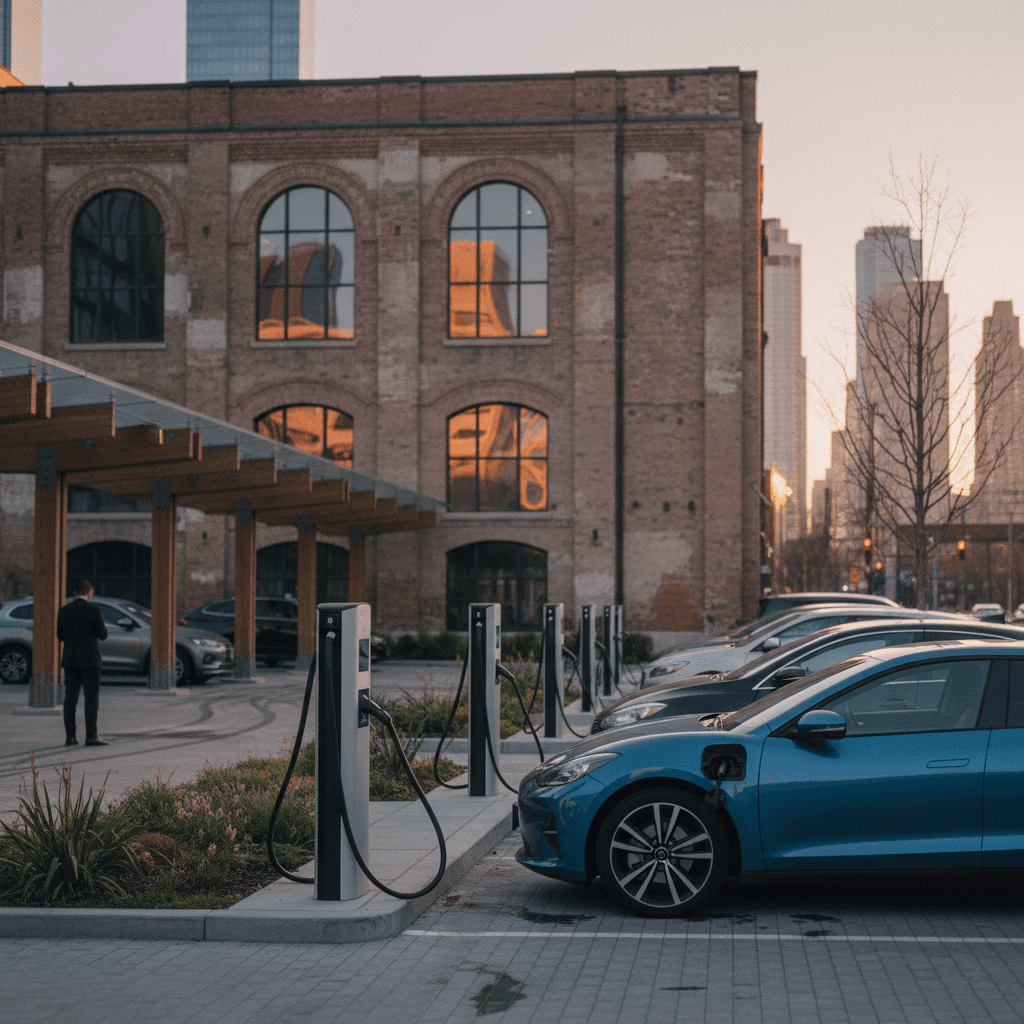
Through the PlugNYC program, NYC DOT and Con Edison have installed around 100 curbside Level 2 ports across the five boroughs as part of a multi‑year pilot. These use standard J1772 connectors (Teslas can use an adapter) and are run by FLO, with app or tap‑to‑pay billing.
Early utilization numbers have blown past expectations, with some locations seeing very high use and near‑continuous uptime, proof that curbside charging solves a real pain point for street‑parked EV owners.
Municipal garages and fast‑charging hubs
DOT has also installed **DC fast chargers** in city‑owned garages, like the Delancey‑Essex and Court Square facilities, to serve both the public and a growing fleet of electric taxis and for‑hire vehicles. These hubs typically offer 50–150 kW DC charging with discounted rates for commercial fleets.
On top of that, the Department of Citywide Administrative Services has built more than 1,600 charging ports for the City’s own fleet, with a portion of sites opened to the public for a fee.
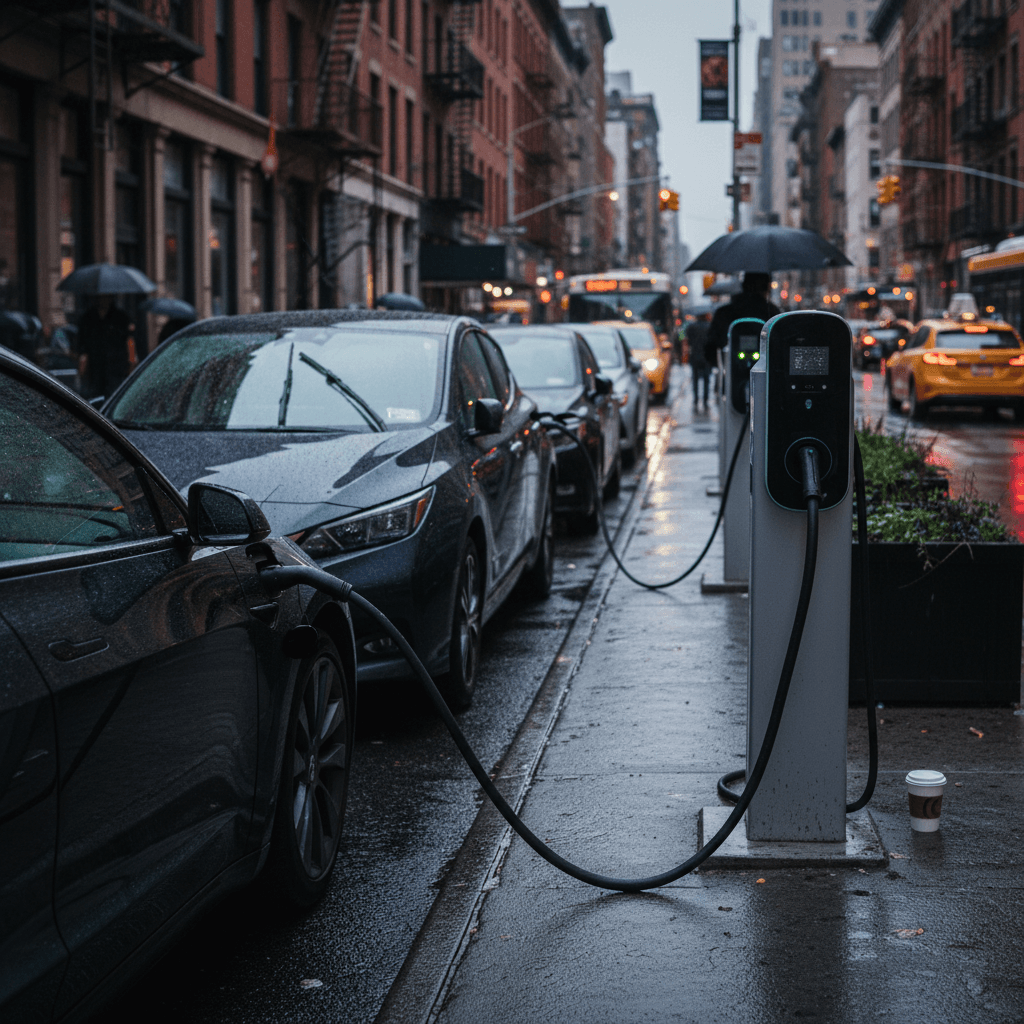
Curbside reality check
Highway fast charging: EVolve NY and NEVI corridors
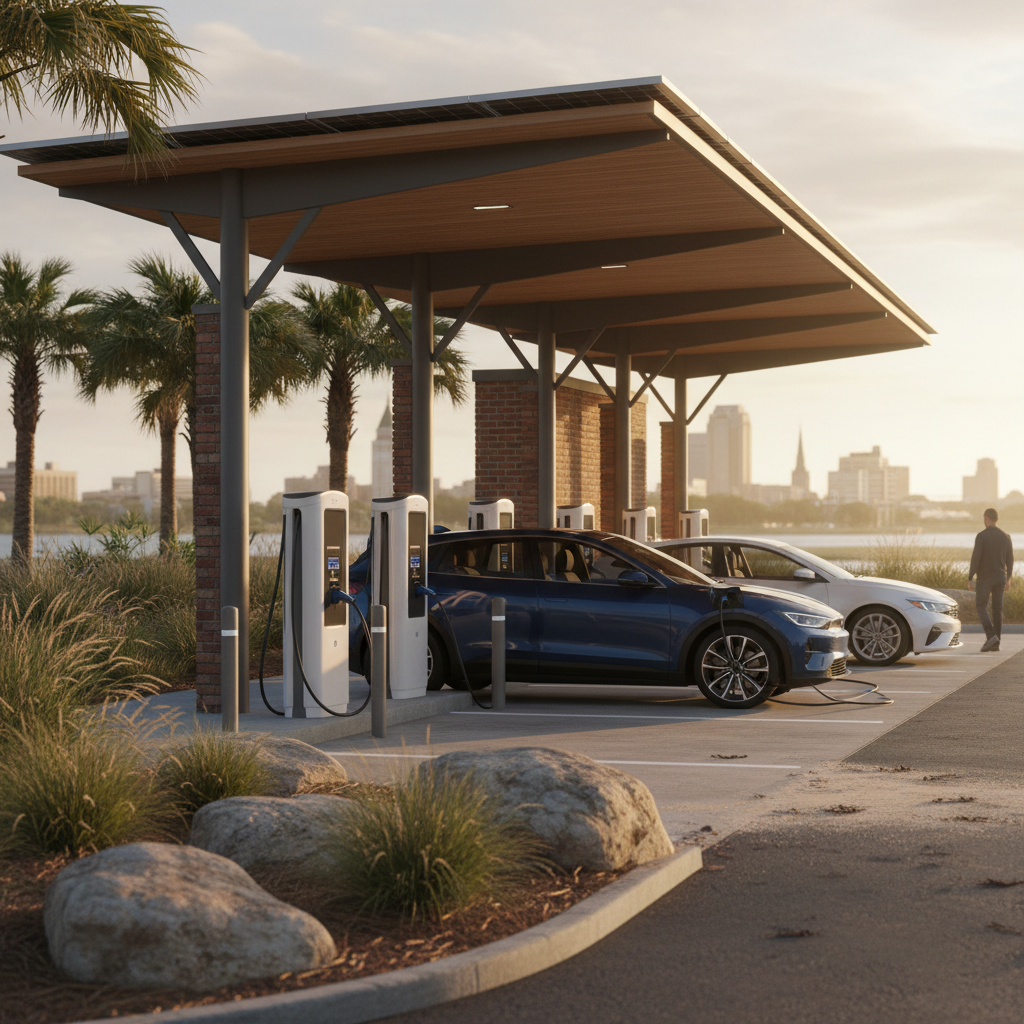
Outside the five boroughs, your experience hinges on **DC fast‑charging coverage along major travel corridors**. That’s where New York Power Authority’s EVolve NY program and new federal **NEVI** funding come in.
What to know about New York’s fast‑charging corridors
If you road‑trip, this part of the network matters most
EVolve NY corridor network
EVolve NY is building DC fast‑charging sites roughly every 50 miles along key interstates and in urban hubs like Albany, Syracuse, Rochester, and Buffalo.
- Most sites support at least 150 kW.
- Multiple DC fast connectors (CCS today, NACS coming) and several stalls per site.
- Pricing is session‑ or kWh‑based, visible in network apps and on‑screen.
Federal NEVI build‑out
The first round of New York’s NEVI funding, about $21 million, targets gaps along and north of I‑84, including I‑81, I‑86, I‑87 north of I‑84, I‑88, I‑90, I‑190, I‑390, I‑490 and key state routes.
Sites must be within one mile of an exit, publicly accessible 24/7, host at least four fast‑charging ports delivering 150 kW or more each, and meet strict reliability standards.
Good news for non‑Tesla drivers
Level 2 vs DC fast charging in New York
In a dense state like New York, you’re likely to interact with **both Level 2 and DC fast charging**. Each has a clear role, and a clear impact on your time and wallet.
Level 2 vs DC fast charging, how they fit into New York life
Rough charging speeds and best‑use scenarios for New York EV drivers
| Charging type | Typical power | Miles of range added | Best use cases in New York | Where you’ll see it |
|---|---|---|---|---|
| Level 1 | 1–1.8 kW | 3–5 mi/hour | Overnight top‑ups if you have a driveway or garage | Single‑family homes, some small businesses |
| Level 2 | 6–19 kW | 20–35 mi/hour | Daily charging for most drivers; good for 4–8 hour sessions | Apartments, workplaces, garages, curbside, hotels |
| DC fast (50–150+ kW) | 50–350 kW | ~75–200 mi in 20–40 minutes | Highway travel, quick daytime top‑ups, taxis and ride‑hail | Interstates, urban hubs, service plazas, some NYC garages |
Actual speeds depend on your vehicle’s onboard charger and battery, but these ranges are typical.
How most New Yorkers actually charge
Finding chargers: apps, maps and local tips
The good news: New York’s electric car charging network is big. The bad news: it’s spread across multiple apps and brands. To keep things manageable, build a small toolkit and learn which networks dominate in your usual territory.
Core tools for navigating New York’s charging network
Mix and match a few apps instead of chasing every network
Network & aggregator apps
- PlugShare: Crowdsourced check‑ins and photos, essential for reliability intel.
- A Better Routeplanner (ABRP): Great for EV‑specific trip planning.
- ChargePoint, Electrify America, EVgo: Needed to start sessions on their networks.
New York–specific resources
- PlugNYC / NYC.gov: Maps city curbside and municipal chargers.
- EVolve NY site map: Shows state‑backed fast‑charging locations on major routes.
- Utility and municipal sites often list chargers installed with state incentives.
Local driver knowledge
Apps can’t capture everything. Join New York EV owner groups on social media, forums, or apps. You’ll pick up tips on:
- Which garage chargers stay open late.
- Which highway sites are most reliable.
- Where curbside chargers are routinely ICE‑blocked.
Quick checklist before you head to a new charger
1. Confirm live status
Use your network app or an aggregator like PlugShare to see whether the station is reporting as online and when it was last used.
2. Check connector type & power
Make sure there’s a connector your EV supports (CCS, NACS, CHAdeMO, J1772) and that the power level matches your needs for the stop.
3. Look at recent check‑ins
Scan user comments for notes about broken stalls, blocked access, or limited hours, especially important in New York winters.
4. Confirm access hours & parking rules
Garages, campuses, and municipal lots may have gate hours or separate parking fees. Curbside chargers may have time limits during the day.
5. Identify a backup within 5–10 miles
Before you leave, pick a second option on your map. If your first choice is down or full, you won’t be scrambling on a low state of charge.
Costs and incentives for charging in New York
Charging costs in New York vary widely, from relatively cheap off‑peak home charging to premium‑priced DC fast sessions at busy highway sites. On the flip side, state and federal programs are pouring money into making chargers cheaper to install and operate.
What you’ll typically pay
- Home Level 2: If you can charge at home, off‑peak rates often land well below the per‑mile cost of gasoline, even with New York electricity prices.
- Public Level 2: NYC curbside and garage Level 2 rates are usually competitive with or slightly cheaper than gas on a per‑mile basis, assuming longer sessions.
- DC fast charging: Expect to pay a premium for speed. DC fast in New York often pencils out closer to, or slightly above, gas on a per‑mile basis.
Programs that shape the network
- NYSERDA Charge Ready NY 2.0: Offers up to $3,000–$4,000 per Level 2 port for workplaces, multifamily and hotels, with higher incentives in disadvantaged communities.
- Utility “make‑ready” programs: Help cover the cost of bringing power to chargers so site hosts can focus on the hardware.
- Tax credits: Federal and state credits can offset up to 30%–50% of eligible installation costs for some public and workplace chargers.
Why incentives matter for drivers
Real‑world pain points, and how to avoid them
Even in a relatively well‑served state like New York, public charging can still be frustrating. National studies put non‑Tesla charger reliability in the high‑70% range, and local issues, ICEing, poor signage, slow repairs, add another layer of uncertainty. You can’t fix the network yourself, but you can drive defensively.
Common New York charging headaches and practical workarounds
Plan like the system is imperfect, because it is
ICE‑blocked or misused spots
The issue: Curbside and garage chargers in NYC are sometimes blocked by gas vehicles or EVs that are done charging.
Workaround: Travel with extra buffer in the city (20–30% state of charge). If your usual spot is blocked, you’ll have time to circle to a backup.
Out‑of‑order fast chargers
The issue: Highway sites sometimes have several stalls down, especially in harsh winter conditions.
Workaround: Avoid arriving at unfamiliar DC fast sites under 10–15% state of charge. Use recent user check‑ins to steer toward the most reliable locations.
Slow charging in cold weather
The issue: In upstate winters, your battery may charge well below the advertised peak rate until it warms up.
Workaround: Precondition the battery if your car supports it, and budget a little extra time for winter fast‑charging stops.
Restricted access sites
The issue: Some chargers listed as "public" are behind gates, limited to business hours, or require parking tickets.
Workaround: Tap into local knowledge. Recent PlugShare reviews and New York EV groups often flag access quirks and better alternatives nearby.
Don’t treat 0% as a strategy
Planning a New York EV road trip
A well‑planned EV road trip through New York can be painless, and sometimes cheaper and quieter than driving a gas car. The key is to plan around where the state has already invested heavily, and where it hasn’t yet caught up.
Sample strategies for different New York trips
NYC ↔ Upstate weekends
Anchor your route on EVolve NY and major private fast‑charging sites along I‑87 (to Albany and Lake George) and I‑90 (to Syracuse, Rochester, Buffalo).
Target one substantial DC fast stop each way, ideally at a plaza with restrooms and food so the time is useful.
If you’re staying at a hotel, strongly prefer one with Level 2 on‑site so you can leave each morning with a full battery.
In winter, shorten legs by 10–20% to account for reduced range and slower charging.
In‑state business travel
Map out Level 2 options near your destination, municipal garages, workplaces, campuses, so your car can charge while you’re in meetings.
Use fast charging only to bridge gaps or get home; it’s more expensive and adds logistical complexity.
If you’ll visit the same sites regularly, test chargers once at a comfortable state of charge so you aren’t troubleshooting on a tight schedule.
Save a few favorite, reliable sites in your apps as "go‑to" backups on every route.
Scenic upstate and Adirondack routes
Study coverage carefully, these areas still have meaningful gaps between fast chargers.
Consider leaving NYC or Albany with a higher state of charge than you would for a typical highway run.
Layer backup plans: know where slower Level 2 chargers are in small towns in case a DC fast site is offline.
In shoulder seasons, check for seasonal access issues at remote sites (parking lots that close early, trailhead areas, etc.).
How Recharged fits into New York’s EV landscape
The health of New York’s electric car charging network doesn’t just matter for policy reports, it matters for whether a used EV actually works for your life. That’s where platforms like Recharged add an extra layer of clarity when you’re shopping.
Matching the car to your charging reality
Every vehicle listed through Recharged comes with a Recharged Score Report, including verified battery health. That lets you understand not just how far the car could go when it was new, but how much real‑world range you’re working with today in New York’s conditions.
If you live in a Brooklyn walk‑up and rely on PlugNYC curbside charging, your ideal EV may look different than if you own a house in Westchester with a 240‑volt outlet in the garage. Recharged’s EV‑specialist advisors can help you think through those trade‑offs before you buy.
From financing to delivery, tuned for EV ownership
Recharged offers financing, trade‑in options, instant offers or consignment, and can arrange nationwide delivery, so you’re not limited to whatever used EVs happen to be parked on a local lot.
If you’re unsure how an EV will fit your New York lifestyle, you can visit the Recharged Experience Center in Richmond, VA, or work fully digitally with specialists who walk through charging, range, and battery health step‑by‑step.
Buying with a charging plan
New York EV charging network FAQ
Common questions about New York’s electric car charging network
New York’s electric car charging network is no longer a novelty map of a few green pins, it’s a fast‑maturing system that already works well for many drivers, even if it’s still uneven and occasionally frustrating. If you understand how PlugNYC, EVolve NY, NEVI corridors and private networks fit together, and you buy a used EV whose battery health and charging capabilities match your daily routes, owning an electric car in New York becomes a lot less intimidating and a lot more practical.