If you’re looking at six‑figure German luxury for the price of a lightly optioned crossover, the Mercedes EQS will keep popping up in your search results. In 2026, the question isn’t “Is the EQS impressive?”, it is. The question behind every search for “Mercedes EQS reliability 2026” is whether you’re buying an electric S‑Class spaceship… or a long‑term science experiment.
Quick take for 2026
Overview: Mercedes EQS reliability in 2026
The EQS sedan (V297) and EQS SUV (X296) have now been on U.S. roads long enough, 2022 through 2025 model years, to assemble a real‑world reliability picture. Hard data from owner surveys and quality studies shows the EQS landing in the “average to slightly below-average” zone for reliability among luxury brands, with most problems clustered in electronics and software rather than the battery pack or motors.
Mercedes EQS reliability by the numbers (early 2026)
What this means in plain English: the EQS is not the disaster some forum horror stories make it out to be, but it also isn’t a Corolla with massage seats. It’s a high‑complexity flagship EV. When you get a good one, it’s whisper‑quiet, bullet‑train smooth, and drama‑free. When you get a bad one, it’s usually death by a thousand software cuts, not a catastrophic battery failure.
Expect variance, not certainty
How the market views the EQS today
The EQS has become one of the most heavily discounted luxury EVs on the used market. Aggressive new‑car incentives, a soft EV market in 2025, and Mercedes’ own pricing resets mean a three‑year‑old EQS can sticker for the price of a new midsize mainstream SUV. That raises a fair question: are you getting a deal, or inheriting someone else’s tech migraine?
Why the EQS is so cheap used, and what that signals
Bargain or burden? It depends how you buy.
Massive depreciation
MSRPs north of $100,000 met a cooler‑than‑expected EV market. Heavy incentives and lease deals pushed values down fast, which now benefits used‑car shoppers, if they buy carefully.
Complexity discount
The EQS packs an enormous amount of software, sensors, and MBUX screens. Shoppers know complex tech can mean complex problems, and the market bakes that risk into the price.
Warranty safety net
Many 2022–2024 cars still sit well within their 4 yr/50k basic and 8 yr/100k battery coverage. Buying within these windows can turn volatility into value.
How to read EQS pricing
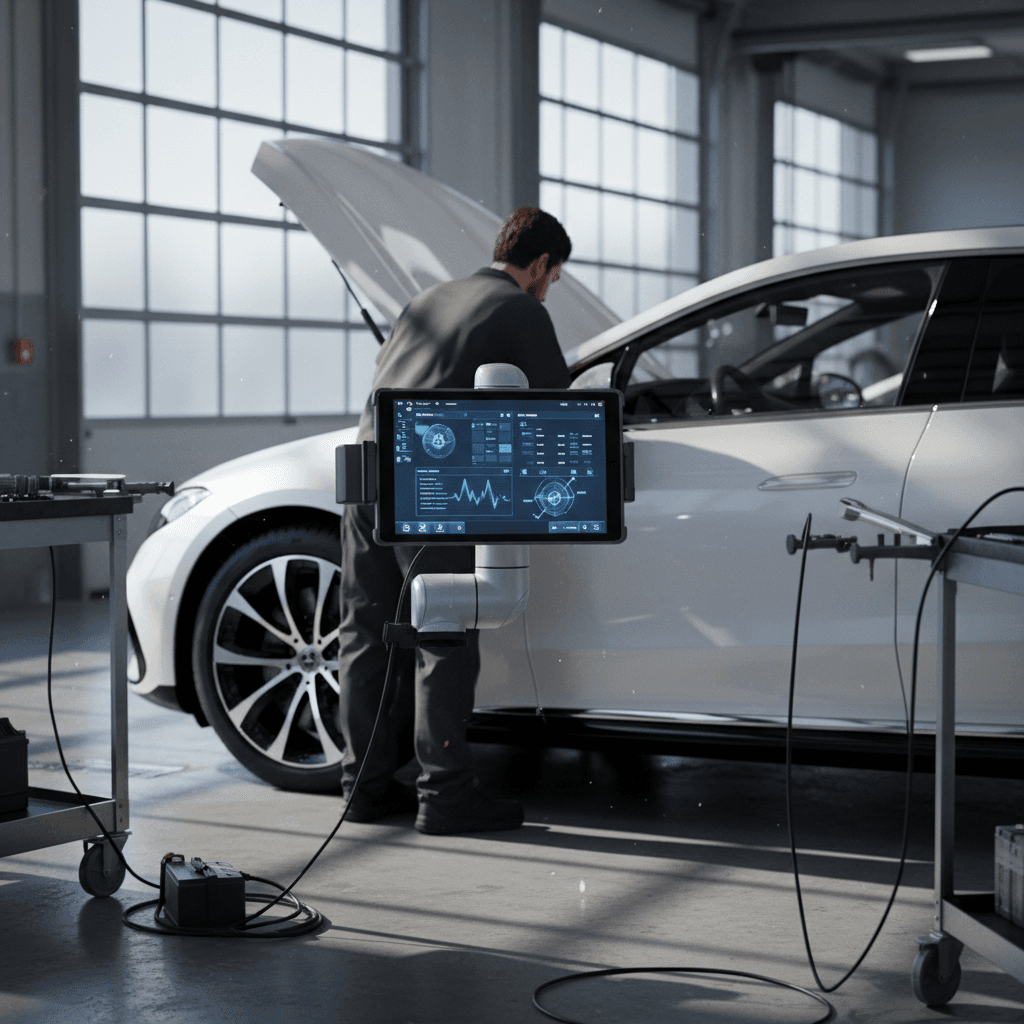
Battery and drivetrain: are they actually solid?
The best news in the EQS story is the high‑voltage hardware. So far, there’s little evidence of widespread battery‑pack failures or extreme degradation. Real‑world owner reports and early‑life data show normal, gradual range loss, think single‑digit percentage over the first several years, rather than dramatic collapse.
- Most EQS reliability complaints are not about failed packs or motors, but about how the car’s software talks to them.
- Later 2024–2025 builds benefit from updated battery management software and minor hardware tweaks that smooth charging behavior and efficiency.
- Mercedes backs the pack with a long high‑voltage warranty window, which is your financial firewall against a rare early failure.
What the Recharged Score looks at on an EQS
What usually goes right
- Permanent‑magnet motors have proven durable, with very few documented failures.
- Pack chemistry has behaved like other modern luxury EVs: modest early‑life degradation, then a long plateau.
- Thermal management is sophisticated, helping the EQS retain range in cold and hot climates when driven normally.
Where problems show up
- Battery‑management glitches that throw spurious warnings despite a healthy pack.
- Charge‑port locks or contactors that misbehave and make DC fast charging unreliable on certain stations.
- Over‑the‑air (OTA) updates that stall or fail, leaving the car on buggy firmware until a dealer intervenes.
Software, MBUX, and tech gremlins
If the EQS has an Achilles’ heel, it’s the software stack wrapped around that beautiful glass dashboard. The MBUX Hyperscreen, stretching pillar to pillar in many trims, is a showstopper and also the source of a disproportionate share of owner complaints.
Common MBUX and electronics issues on the EQS
Most are annoying more than dangerous, but they can sour the ownership experience if they’re frequent.
| Issue | What owners report | Why it matters |
|---|---|---|
| Screen freezes/reboots | Center or passenger display goes black, system restarts mid‑drive. | You lose navigation, audio, or climate controls until it recovers. |
| Buggy OTA updates | Updates hang at 80–90% or claim they’ll install later but don’t. | Leaves the car on older, potentially buggier software; may require dealer visit. |
| Settings won’t stick | Ambient lighting, massage, or driver profiles reset unpredictably. | Annoying in a car sold on personalization and comfort. |
| Random warning messages | Parking sensors, cameras, or safety features report faults intermittently. | Undermines trust in the car’s driver‑assist and parking systems. |
Issues vary by car; what matters most is whether problems are one‑offs or recurring themes in the service history.
Why software issues are a big deal
Modern luxury cars don’t break the way they used to. The metal holds up fine; it’s the ghost in the machine that gets you.
ADAS and safety-system complaints
Driver‑assistance systems are the other major fault line in the EQS reliability story. You’ll find plenty of owners praising smooth, confidence‑inspiring adaptive cruise and lane centering, and another cohort reporting lane‑keeping that tugs at the wheel, systems that drop out unexpectedly, or repeated false collision warnings.
- Unintended steering inputs or overprotective lane‑keeping that makes normal lane changes feel like a wrestling match.
- Adaptive cruise or lane‑keeping systems that deactivate mid‑drive with cryptic messages, only to work fine the next day.
- Parking and 360° camera systems that occasionally fail to load, then spring back to life after a restart.
When ADAS issues cross the line
Charging issues and fast‑charge behavior
The EQS supports high‑power DC fast charging and, when everything behaves, can gobble electrons quickly enough for relaxed road‑trip stops. Where owners get frustrated is not usually raw speed, but reliability, especially at third‑party fast‑charging networks.
Typical EQS charging complaints
Again, it’s mostly about software and communication, not the pack itself.
Sessions that abort
DC fast‑charge sessions that stop with a generic error, often blamed on the station. On some EQS examples, this happens more often than it should.
Stuck connectors
Rare but alarming cases where the connector locks into the port and the car refuses to release it or shift into Drive until the fault clears or the dealer intervenes.
Picky behavior
Cars that happily charge on one network and act fussy on another, suggesting handshake quirks between the EQS and certain chargers rather than a failing battery.
Road‑trip charging sanity check
Build quality, interior, and suspension wear
Inside, the EQS largely earns its S‑Class ambitions: rich materials, serious sound insulation, and a cabin that still feels special in 2026. But like many modern luxury cars, small flaws stand out precisely because the baseline experience is so high.
- Squeaks and rattles from the panoramic sunroof rails or headliner, sometimes requiring significant dealer work to correct.
- Wind noise or minor seal issues on early builds, often improved in later 2024–2025 cars.
- Random cabin‑electronics gremlins: ambient lighting zones or reading lights that intermittently stop working until a software reset.
- On EQS SUV models, weak 3rd‑row HVAC performance in very hot or cold climates, a common issue in three‑row EVs, not just Mercedes.
Suspension and ride hardware
The EQS rides on complex air suspension with adaptive dampers. Most owners report excellent comfort even as miles accumulate, but a few high‑mileage examples show premature wear in control‑arm bushings or air struts. These are fixable problems, but not cheap ones, so an underbody inspection is essential.
What to check on a test drive
- Listen for clunks or knocks over sharp bumps.
- Note any persistent pull, vibration, or tramlining on the highway.
- Try all seat adjustments, massage, and folding mechanisms, especially the third row on EQS SUVs.
Recalls, warranty, and coverage in 2026
Like most modern EVs, the EQS has seen a handful of recalls, many of them software‑related and handled through dealer visits or over‑the‑air updates. Exact recall history depends on year, trim, and market, so you should always run a VIN check before you buy.
Warranty basics to know
Pre‑purchase recall and warranty checklist
1. Run a VIN recall search
Use the NHTSA website or a Mercedes dealer to confirm whether the specific EQS has any open recalls, especially for drivetrain software or high‑voltage components.
2. Verify in‑service date
Warranty clocks start when the car was first sold or leased, not by model year. An early‑titled 2022 can have much less coverage left than a late‑sold one.
3. Confirm battery warranty terms
Ask the seller or dealer for written confirmation of remaining high‑voltage coverage and any degradation guarantees that apply in your region.
4. Look for recall completion proof
For completed recalls, there should be documentation in the service history. Lack of records doesn’t automatically mean neglect, but it’s a prompt for more questions.
Used Mercedes EQS 2026 buying checklist
If you treat the EQS like an ordinary used sedan, kick the tires, admire the ambient lighting, sign, you’re volunteering to beta‑test software on your own dime. The right way is to approach it like a rolling server rack: obsess over logs, history, and uptime.
Smart‑buyer checklist for a used EQS
1. Demand a full service history
Look for patterns, not just single repairs. Repeated visits for ADAS faults, charging errors, or MBUX resets are a sign to walk away, no matter how pretty the spec sheet.
2. Get a battery‑health report
Ask for a recent high‑voltage battery diagnostic from a Mercedes dealer or an independent EV specialist. With Recharged, every EQS listing includes a <strong>Recharged Score</strong> report that quantifies pack health and charging behavior.
3. Scan for stored fault codes
A pre‑purchase scan can reveal lurking issues with sensors, charging, or OTA updates that haven’t yet lit the dash with a warning.
4. Test all driver‑assist systems
On your test drive, deliberately exercise adaptive cruise, lane‑keeping, parking assist, and cameras. Note any warnings, dropouts, or odd steering behavior and don’t hand‑wave them away.
5. Do a real‑world fast‑charge test
If possible, plug into a DC fast charger and watch for session stability and charging‑curve behavior. A finicky EQS will often reveal itself right here.
6. Inspect the glass and interior trim
Squeaks, rattles, and sunroof noises are fixable but can be time‑consuming. Combine what you hear with any prior interior or glass‑related repairs in the history.
Where Recharged changes the equation
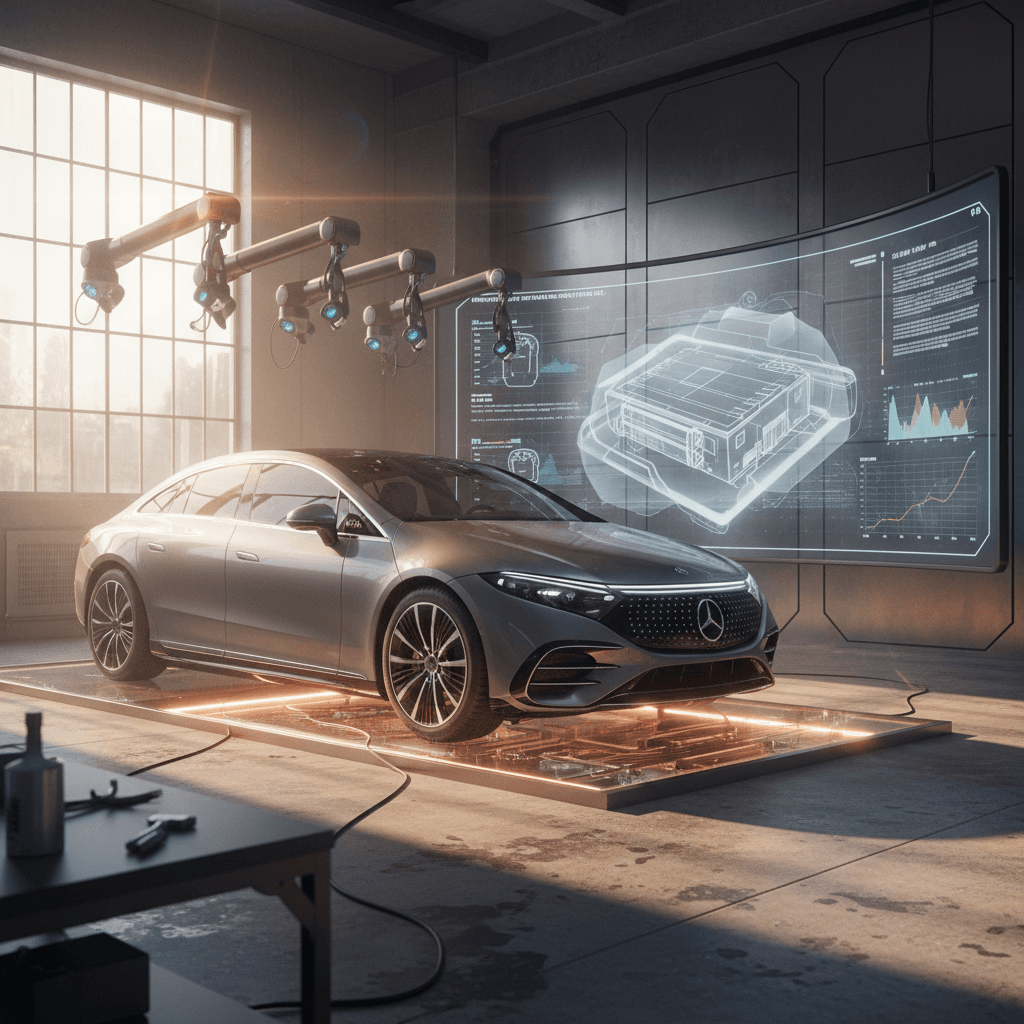
How Recharged evaluates EQS battery health
Because the EQS’s most expensive component, the battery pack, has so far behaved better than its software reputation, the smart move is to measure that pack precisely and then price the car accordingly. That’s exactly what Recharged was built to do.
Inside an EQS Recharged Score Report
What we look at before we put our name on an EQS listing.
Usable capacity vs. spec
We compare measured usable kWh to factory specs to understand real‑world degradation, rather than trusting optimistic range estimates on the dash.
Fault‑code history
We pull and interpret trouble codes from the battery‑management system, inverter, charge port, and ADAS modules to catch hidden issues early.
Pricing vs. risk
We line up that health data with current market pricing, so you can see whether a given EQS is cheap for a reason or genuinely good value.
Ready to find your next EV?
Browse VehiclesFor shoppers who love the EQS idea
You get the futuristic cabin, the quiet, and the comfort that made the EQS famous, plus transparency about battery health, prior issues, and fair market value. That’s how you enjoy the discount without inheriting the previous owner’s headaches.
For current EQS owners considering selling
If you’re ready to move on from your EQS, Recharged can help you sell or consign your car with a battery‑health report that builds buyer confidence and justifies stronger pricing than a generic trade‑in offer.
FAQ: Mercedes EQS reliability in 2026
Frequently asked questions about Mercedes EQS reliability in 2026
Bottom line: is a used Mercedes EQS worth it?
In 2026, the Mercedes EQS is a fascinating contradiction. As a machine, it’s deeply impressive: serene, quick, and genuinely luxurious. As a product, it’s been undercut by a choppy EV market and its own software ambition, which is why you can now buy one for a fraction of its original MSRP. That doesn’t make the EQS a bad car; it makes it a high‑leverage decision. Buy the wrong example, and you’ll spend too long in loaner cars. Buy the right one, and you’ll quietly enjoy one of the most advanced luxury EVs on the road for used‑Camry money.
The key is refusing to treat the EQS like an ordinary used luxury sedan. Demand data on the battery, on the software, on the charging behavior. Let pricing reflect real risk instead of vague fear. And whenever possible, lean on EV‑specialist marketplaces like Recharged that pair every EQS with a Recharged Score Report, expert guidance, and nationwide delivery. In a car this digital, information is your real warranty.