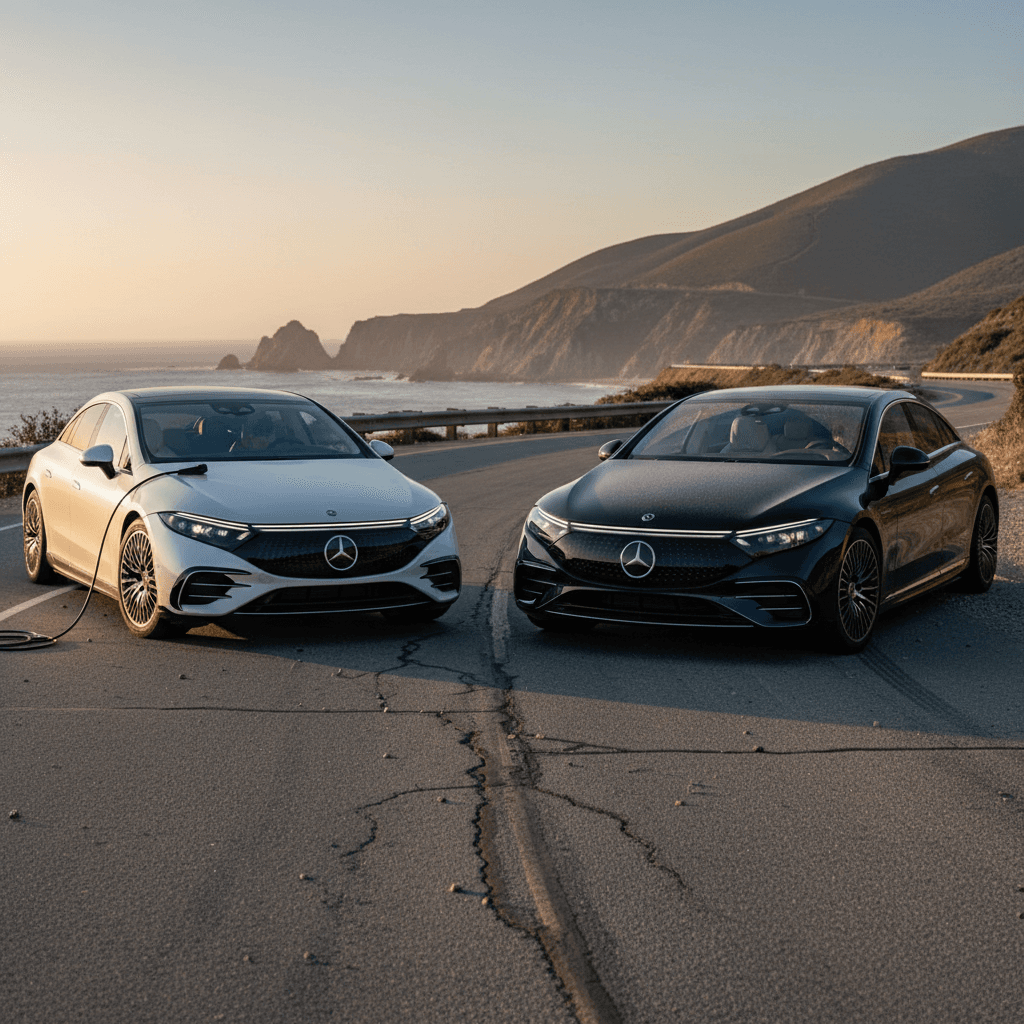
If you’re cross-shopping the Mercedes EQS 450 vs 580, you’re already looking at one of the most comfortable long-range luxury EVs on the market. What’s less obvious is which version actually makes the most sense, especially as a used EV, where prices and equipment can vary a lot.
EQS naming basics
Mercedes EQS 450 vs 580: Quick Take
2024 EQS 450+ vs EQS 580 4MATIC at a glance
Both cars share the same basic platform, huge battery pack, and whisper‑quiet cabin. The EQS 450+ focuses on maximum range and efficiency with rear‑wheel drive. The EQS 580 4MATIC layers on serious power, standard all‑wheel drive, and more high‑end tech, in exchange for higher price and slightly less efficiency.
tl;dr recommendation
Powertrain and performance: single motor vs dual motor
EQS 450+/450 4MATIC: Smooth, efficient power
- EQS 450+ (RWD, sedan): single rear motor with about 355 hp and 419 lb-ft of torque.
- EQS 450 4MATIC (AWD, sedan): dual motors with similar horsepower but up to 590 lb-ft of torque.
- 0–60 mph is roughly in the 5.3–6.2 second range depending on trim and model year.
- Same big ~108 kWh usable battery (earlier cars) or ~118 kWh on refreshed 2025 models.
This setup feels more than quick enough for everyday driving, with smooth, confident passing power and less complexity than the 580.
EQS 580 4MATIC: Flagship performance feel
- Dual-motor all‑wheel drive standard.
- Output around 516–536 hp and over 600 lb-ft of torque depending on model year.
- 0–60 mph in the low 4‑second range, seriously fast for a big luxury sedan.
- Same battery size, but extra motor and weight trim a bit of range.
If you regularly merge into fast traffic, drive in mountains, or just like to feel pinned back in your seat, the 580 delivers that big‑EV surge.
Think in terms of “enough” power
Real-world range and efficiency
Range is where the EQS lineup quietly shines. For 2024 sedans, the EQS 450+ is rated at about 352 miles of EPA range, while the EQS 450 4MATIC and EQS 580 4MATIC sit around 345 miles, all using essentially the same 107.8–108.4 kWh usable battery pack. Later refreshed models add a slightly larger usable battery (around 118 kWh) and can match or even beat those early range figures despite the added weight and hardware.
Approximate EPA range and efficiency: 2024 EQS sedan lineup
Representative EPA ratings for 2024 model‑year EQS sedans. Exact figures can vary slightly by wheel size and options, so always verify a specific VIN.
| Model | Drive | Motors | Approx. EPA Range (mi) | Approx. Combined MPGe |
|---|---|---|---|---|
| EQS 450+ | RWD | Single | 352 | 96–97 |
| EQS 450 4MATIC | AWD | Dual | 345 | 95–103 |
| EQS 580 4MATIC | AWD | Dual | 345 | 95 |
| AMG EQS 53 | AWD | Dual (high-output) | ~305 | 77 |
EQS 450+ is the range champ, but the 580 4MATIC isn’t far behind.
Real-world expectations
Between the EQS 450 and 580, the important takeaway is this: range isn’t dramatically different. The 450+ gives you a small edge, but if a particular used EQS 580 has the wheels and tires you want, range alone usually isn’t a reason to walk away.
Features, tech, and luxury differences
Where the EQS 580 generally goes beyond the 450
Same basic cabin formula, different default equipment levels
More standard tech
- MBUX Hyperscreen (in many but not all builds)
- More advanced driver‑assist options
- Enhanced ambient lighting and audio
Luxury appointments
Convenience & safety
On the inside, an EQS 450 with the right packages can feel nearly identical to an EQS 580, same airy cabin, quiet ride, and S‑Class‑level materials. The key difference is that the 580 bundles more of that content into the higher trims, while the 450 lineup tends to rely more on options.
Watch build‑to‑build variation
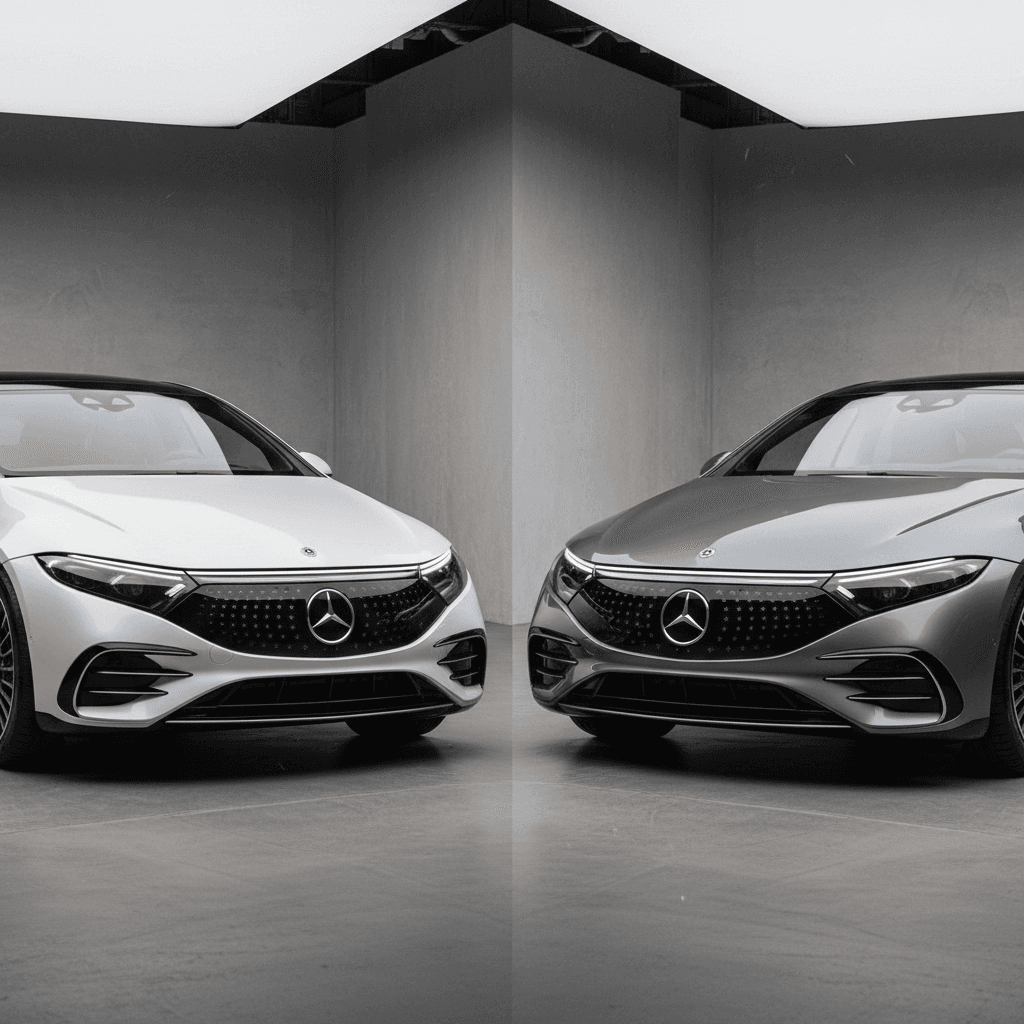
Pricing, depreciation, and used-market value
On paper, new‑car pricing for the EQS sedan has moved around as Mercedes responds to a tougher U.S. EV market, including trims being added, dropped, and the possibility of price cuts on later model years. Historically, the EQS 580 4MATIC has stickered roughly $15,000–$25,000 higher than a comparable EQS 450+ when new, depending on options and trim lines like Premium, Exclusive, and Pinnacle.
Representative new‑MSRP ladder for EQS sedans (earlier model years)
Approximate starting MSRPs when new for earlier EQS sedans. Actual prices vary by model year, trim, and incentives.
| Trim (sedan) | Approx. original MSRP (USD) | Notes |
|---|---|---|
| EQS 450+ Premium | ≈$104,000 | Base rear‑drive sedan, strong range |
| EQS 450 4MATIC Premium | ≈$107,000 | Adds dual‑motor AWD |
| EQS 580 4MATIC Premium | ≈$126,000 | Big jump in power & equipment |
| AMG EQS 53 4MATIC+ | $147,000+ | Performance flagship |
The 580 4MATIC sits at the top of the EQS sedan price ladder.
EV market context matters
Luxury EVs like the EQS typically see heavy first‑owner depreciation. A rough rule of thumb from current EV data: after three years, some premium EV sedans can lose 35–50% of original MSRP, depending on mileage, options, and local demand. Because the EQS 580 starts higher, it often loses more dollars but can represent a strong value on the used market if you’re agnostic about running costs.
How to evaluate EQS 450 vs 580 value as a used buy
1. Compare price per mile of range
Divide asking price by EPA range. An EQS 450+ often delivers the lowest cost per mile of rated range, while a well‑priced 580 can be close behind if heavily discounted.
2. Look at real equipment, not badges
Pull the full build sheet or window sticker. A highly optioned 450+ may be more satisfying than a bare‑bones 580, and cheaper to buy and insure.
3. Consider depreciation from original MSRP
Because the 580 started so much higher, a 3‑year‑old EQS 580 might be only slightly more expensive than a similarly aged EQS 450+, even though it cost far more new.
4. Factor in insurance and tire costs
More power and larger wheels on many 580s can mean higher insurance and pricier tire replacements. Get quotes before you commit.
Ownership costs, charging, and daily usability
Good news here: underneath the power and trim differences, EQS 450 and EQS 580 ownership feels very similar. Both use essentially the same battery pack, DC fast‑charging hardware, and cabin layout, and they weigh roughly the same within a few hundred pounds.
- Charging speed: Both versions can DC fast charge up to around 200 kW at compatible stations, adding roughly 150 miles in under 20 minutes in ideal conditions.
- Home charging: On a 240V Level 2 charger, plan on an overnight charge from low state of charge to full for either variant, thanks to the large battery.
- Maintenance: Routine costs are largely identical, brakes, tires, cabin filters, and software updates, though higher‑trim 580s may wear larger, more expensive tires.
- Ride and comfort: All EQS sedans focus on comfort first, with adaptive air suspension and rear‑axle steering commonly equipped on both 450 and 580 models.
Battery health is more important than trim
Which EQS fits which type of driver?
Match the right EQS to your driving profile
Efficiency‑first commuter
You value range and comfort over outright speed.
Daily driving is mostly highway and suburban commuting.
You’re cost‑sensitive on insurance and long‑term running costs.
Best fit: <strong>EQS 450+</strong> with smaller wheels and comfort‑oriented tires.
All‑weather family driver
You live where it snows or where traction is a concern.
You want extra grip for ski trips or steep driveways.
You still care about range but want AWD reassurance.
Best fit: <strong>EQS 450 4MATIC</strong> or a well‑equipped EQS 580 4MATIC, depending on budget.
Performance‑leaning luxury buyer
You’re coming from high‑output gas sedans or performance EVs.
You want instant, effortless acceleration at any speed.
You care about having most features standard without option hunting.
Best fit: <strong>EQS 580 4MATIC</strong>, or AMG EQS 53 if you’re okay trading range for speed.
Value hunter on the used market
You want maximum luxury EV for the dollar.
You’re cross‑shopping S‑Class, Lucid Air, and Model S.
You’re flexible on color and exact spec if the price is right.
Best fit: Whichever of <strong>EQS 450 or 580</strong> offers the best combination of battery health, equipment, and price on the specific cars you’re considering.
Run the numbers both ways
How Recharged can help you shop a used EQS
Because the EQS is still relatively new, condition and battery health vary widely from car to car. That’s exactly the gap Recharged is built to close. Every EV we list, including Mercedes EQS 450 and 580 models, comes with a Recharged Score Report so you know what you’re getting before it shows up in your driveway.
Shopping EQS 450 vs 580 with Recharged
Transparency matters more than badges when you’re buying a used luxury EV
Verified battery health
Fair market pricing
Trade‑in and instant offers
Nationwide delivery, local support
Frequently asked questions: Mercedes EQS 450 vs 580
Common questions about EQS 450 vs 580
Bottom line: should you pick the EQS 450 or 580?
If you strip away the badges, the Mercedes‑Benz EQS 450 and EQS 580 are more alike than different: both deliver long range, ultra‑quiet cabins, and true flagship‑level comfort. The EQS 450+ leans toward efficiency and value, especially as a used EV, while the EQS 580 4MATIC trades a bit of that efficiency for serious power and a richer standard equipment list.
For most drivers, a well‑specced EQS 450+ or 450 4MATIC hits the sweet spot: plenty of performance, excellent range, and lower acquisition and running costs. If you want all‑weather traction, stronger acceleration, and as much tech as you can reasonably get in one car, the EQS 580 4MATIC earns its place at the top of the lineup, especially when depreciation has already taken the first big bite out of MSRP.
Whichever way you lean, take the time to compare specific cars on battery health, equipment, and price rather than just trim names. If you’d like help lining up a fair comparison, or finding a used EQS that fits your budget, Recharged’s EV specialists can guide you from short list to driveway delivery with transparent data at every step.