If you’re eyeing a Mercedes EQE, or already own one, you’ve probably heard the whispers: “luxury EVs drop like a rock.” There’s some truth there, but the real Mercedes EQE depreciation rate story is more nuanced. How fast the EQE loses value depends on model year, battery health, incentives, and even the broader EV market mood.
Quick take
Mercedes EQE depreciation rate at a glance
Mercedes EQE value snapshot (recent market data)
Different data providers use different assumptions, so you’ll see slightly different numbers. Some mainstream valuation sites model the 2024 EQE as losing more than half its value within three years in a soft EV market, while EV‑specific analysts looking at EQE 350+ data suggest closer to 15% per year in the early years. Either way, this isn’t a slow‑depreciating car, but that can create excellent value on the used side.
How fast does the Mercedes EQE depreciate?
Let’s put some real‑world structure around the Mercedes EQE depreciation rate. We’ll use a typical EQE 350+ sedan with an original MSRP around $75,000 as our reference point. Your exact numbers will move up or down with trim, options, and current incentives, but the pattern is similar.
Illustrative Mercedes EQE 350+ depreciation curve
Example scenario for a Mercedes EQE 350+ with a ~$75,000 original MSRP in a typical U.S. market. Real‑world values vary by mileage, region, incentives and market swings.
| Vehicle age | Approx. value | Value retained vs. MSRP | What this usually looks like |
|---|---|---|---|
| New (MSRP) | $75,000 | 100% | Factory‑fresh, full warranty, often discounted or incentivized. |
| 1 year | $63,000–$65,000 | 84–87% | First big drop is already baked in; many demos and early leases re‑enter the market. |
| 2 years | $52,000–$55,000 | 69–73% | Sweet spot for used buyers: heavy initial depreciation already taken, but still modern tech. |
| 3 years | $44,000–$48,000 | 59–64% | Luxury EV realities show here, especially if incentives and prices on new EQE models have been cut. |
| 5 years | $32,000–$38,000 | 43–51% | Battery reputation, software support and EV demand matter more than the original sticker price. |
These numbers are directional, not guaranteed trade‑in offers. Always check current market data before buying or selling.
Market whiplash matters
- Year 1: The EQE takes its biggest percentage hit as soon as it stops being “new.”
- Years 2–3: Depreciation remains noticeable but steadier; miles, condition and battery health start to separate strong cars from weak ones.
- Years 4–6: The curve can flatten if the EQE proves durable and software support continues, or steepen if buyers are nervous about out‑of‑warranty battery repairs.
What drives Mercedes EQE depreciation?
Four big forces behind EQE depreciation
It’s more than just the three‑pointed star on the nose.
1. Rapid EV tech turnover
New EVs improve quickly: more range, faster charging, better software. When the latest model year makes yours feel old after just 2–3 years, used‑car buyers demand a discount.
For the EQE, that means newer models with updated infotainment, range tweaks, or charging improvements can put pressure on earlier cars.
2. Incentives & price cuts
Tax credits and MSRP changes can move the goalposts overnight. When new EQE prices drop or incentives disappear, used values often readjust.
Recent price cuts across the EQ lineup and shifting U.S. EV tax credit rules have made depreciation look steeper on paper for some early buyers.
3. Battery health & range confidence
On an EV like the EQE, buyers shop the battery, not just the body. Verified state‑of‑health, consistent range and fast‑charging performance heavily influence resale.
Two otherwise identical EQEs can differ by thousands of dollars based purely on battery reports and charging history.
4. Brand, perception & demand
Mercedes is a premium name, but that doesn’t immunize the EQE from market shifts. Slower EV adoption in some regions and buyer uncertainty about long‑term costs can tug values down.
On the flip side, if the EQE earns a reputation as the "quiet, comfortable, long‑legged" choice, demand can stabilize used prices.
Look past the sticker
Mercedes EQE vs other luxury EV depreciation
Tesla Model S & other luxury EVs
- Tesla Model S historically depreciated quickly in the first 3–4 years, then leveled out as the car proved durable and over‑the‑air updates kept it fresh.
- Legacy luxury EVs (Audi e‑tron, BMW iX, earlier EQ models) often see heavy early depreciation when newer tech arrives.
- Brand‑new architectures and shifting charging standards (like the move toward NACS connectors) add uncertainty that shows up in resale.
Where the EQE fits
- EQE depreciation looks similar to many premium EVs: painful for first owners, compelling for second owners.
- Compared with a gas E‑Class, the EQE will likely lose value faster in the short term, but it can be cheaper to own when you add in fuel and maintenance savings.
- As Mercedes refines its EV lineup and pauses some EQ models for the U.S., scarcity of well‑kept EQEs could actually support used values in certain trims or specs.
Why this can be good news
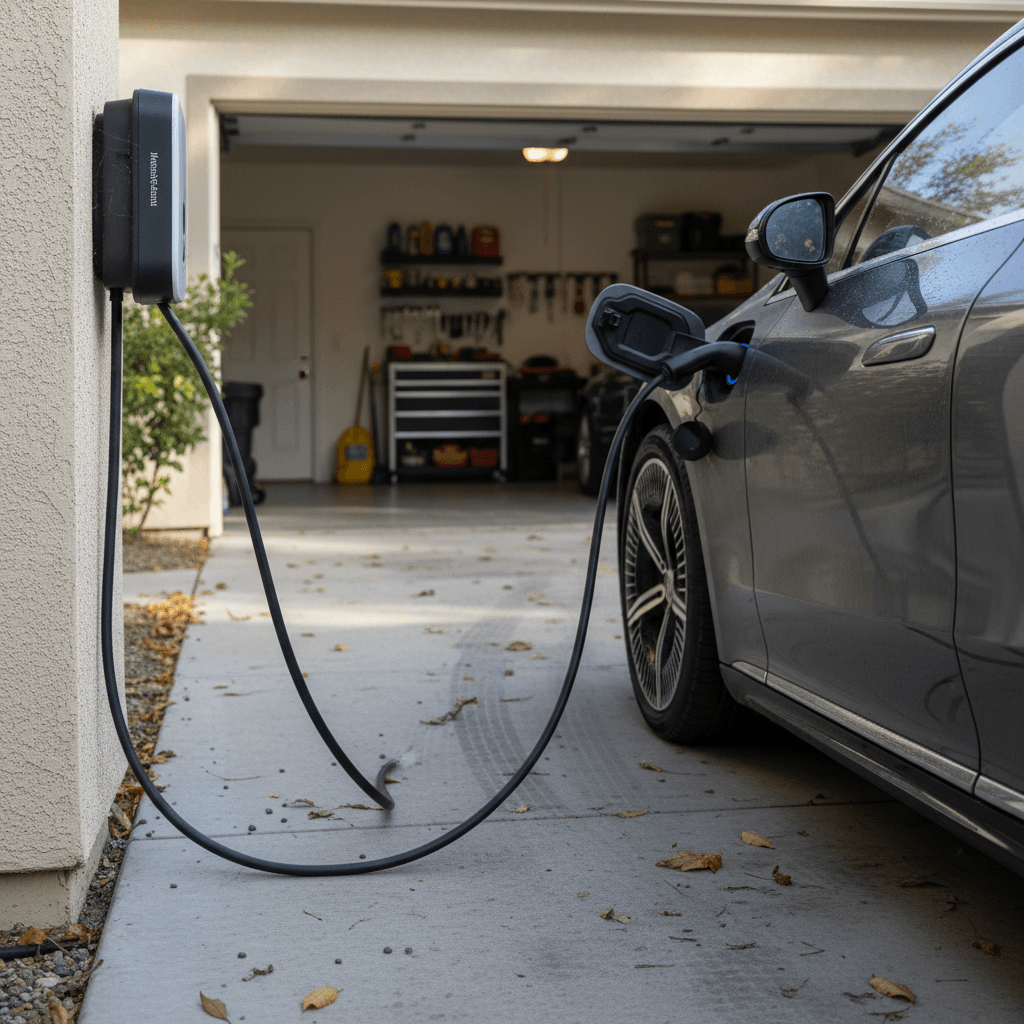
Battery health, range and EQE resale value
If you remember nothing else about EQE depreciation, remember this: the battery is the value. An EQE with a well‑documented, healthy pack will keep buyers interested longer and soften the depreciation blow compared with one whose range has fallen off a cliff.
How battery condition shapes EQE value
Same badge, same color, totally different resale stories.
Strong battery health
What it looks like: Solid state‑of‑health report, consistent real‑world range, no history of frequent 100% fast charges.
Value impact: Buyers pay closer to top‑of‑market money for these cars, especially with clean service history and remaining factory battery warranty.
Moderate degradation
What it looks like: Noticeable but manageable range loss, maybe 10–15% versus new. Car still meets most daily needs.
Value impact: Expect a discount, but not a cliff. Transparent documentation can keep depreciation from snowballing.
Heavy degradation or unknowns
What it looks like: Significant range loss, inconsistent charging, or no credible battery data at all.
Value impact: This is where depreciation gets brutal. Many buyers will simply walk away, forcing prices down sharply.
Where Recharged fits in
How to limit depreciation on a Mercedes EQE
Practical ways to protect your EQE’s value
1. Treat the battery kindly
Avoid living at either extreme, don’t fast‑charge to 100% every day, and don’t let the car sit empty for long. Keeping your EQE mostly between about 20% and 80% charge is friendlier to long‑term battery health.
2. Keep software and records up to date
Buyers of a high‑tech EV want to see that updates were installed and recalls were handled. Save service invoices, recall notices, and any battery‑health reports in a single folder you can hand to the next owner.
3. Watch your mileage mix
Luxury EV buyers are sensitive to mileage. Highway miles aren’t a crime, but piling on 25,000+ miles per year will push your EQE down the value ladder faster than clean, moderate use.
4. Stay ahead on cosmetic upkeep
Wheel rash, interior wear, and curb scrapes don’t sink an EV the way a weak battery does, but they do push you into "auction special" territory. Fix small items as you go rather than handing a long to‑do list to the next owner.
5. Time your sale around market shifts
Big changes, like new‑car price cuts, the end of certain tax credits, or a pause in new EQE orders, can move used values. If possible, sell before a major incentive ends or a refreshed model lands in showrooms.
6. Consider third‑party battery reports
Independent battery health documentation, like the diagnostics used in the Recharged Score, can provide hard data to back your asking price and reassure cautious buyers.
What hurts EQE value most
Buying a used Mercedes EQE: finding the sweet spot
From a value standpoint, the best Mercedes EQE is often the one someone else bought new. Your job as a used buyer is to let the first owner eat the steepest part of the curve while you pick up a well‑cared‑for car with plenty of life left.
The “value sweet spot” for EQE
- Age: Roughly 2–4 years old tends to balance modern tech with a big chunk of depreciation already taken.
- Miles: Somewhere in the 20,000–45,000‑mile window is ideal for many buyers, assuming strong battery health.
- Warranty: Look for remaining factory battery warranty and, if possible, some basic bumper‑to‑bumper coverage.
How Recharged can help
On Recharged, every used EQE includes:
- A Recharged Score Report with detailed battery diagnostics, so you’re not guessing about pack health.
- Pricing anchored to current fair‑market data, not wishful thinking.
- Expert EV‑specialist support to walk you through depreciation, charging costs, and total cost of ownership before you commit.
You can shop and complete the purchase fully online, with financing, trade‑in and nationwide delivery available.
Which used EQE age range fits your situation?
Match your driving profile to a depreciation sweet spot.
| Buyer type | Best EQE age range | Why it works |
|---|---|---|
| Payment‑sensitive daily commuter | 3–5 years old | Lower purchase price, depreciation has slowed, but plenty of usable range remains. |
| Technology‑focused driver | 1–3 years old | You get newer software and hardware without taking the full new‑car hit. |
| First‑time EV owner | 2–4 years old | Good compromise between price, remaining warranty, and current‑generation EV experience. |
These are general profiles, there are always exceptions if you find an especially well‑cared‑for car.
Selling or trading in your EQE
If you’re on the other side of the equation, looking to sell or trade in your Mercedes EQE, the goal is to present your car as the safe, known‑quantity choice in a sea of unknowns. Depreciation is baked in, but how you package your car can nudge you toward the top of the value range.
Steps to get stronger money for your EQE
1. Gather records and reports
Pull every service receipt, software update record, recall notice, and any battery‑health report you have. Turn your glovebox archaeology into a clean, organized file for the next owner.
2. Fix the easy wins
Detail the car, touch up curb‑rashed wheels if possible, replace burned‑out bulbs, and address simple maintenance items. You’re selling confidence as much as metal.
3. Get a battery health snapshot
If you’re not listing on a platform that includes diagnostics, consider an independent battery test. A clean bill of health can justify a higher asking price or trade‑in value.
4. Compare retail vs. trade‑in
Trade‑in is quicker, private sale can bring more money, and consignment or online marketplaces like Recharged can split the difference by handling the heavy lifting for you.
5. Time the market if you can
If a new EQE refresh or major price cut was just announced, buyers may expect discounts. If order banks are paused or supply is thin, that can be your moment to list.
Using Recharged to sell or trade in
Ready to find your next EV?
Browse VehiclesMercedes EQE depreciation FAQs
Frequently asked questions about Mercedes EQE depreciation
Bottom line: Is Mercedes EQE depreciation a deal-breaker?
Depreciation is not kind to the Mercedes EQE, especially for early adopters who paid full sticker in a shifting EV market. But if you zoom out, the pattern is familiar: luxury EVs fall fast from new, then settle into a more reasonable glide path. For buyers, that can be an opportunity to own a genuinely comfortable, high‑tech Mercedes EV for far less than its original MSRP. For current owners, smart battery habits, solid records, and good timing can keep you on the right side of the value curve.
Whether you’re stepping into an EQE for the first time or thinking about your exit strategy, focus on real, current market data and verifiable battery health, not just generic depreciation charts. That’s exactly the lens Recharged uses for every used EV we list, so you can make a clear‑eyed decision about what the EQE is worth to you today, and what it’s likely to be worth when it’s time for whatever comes next.